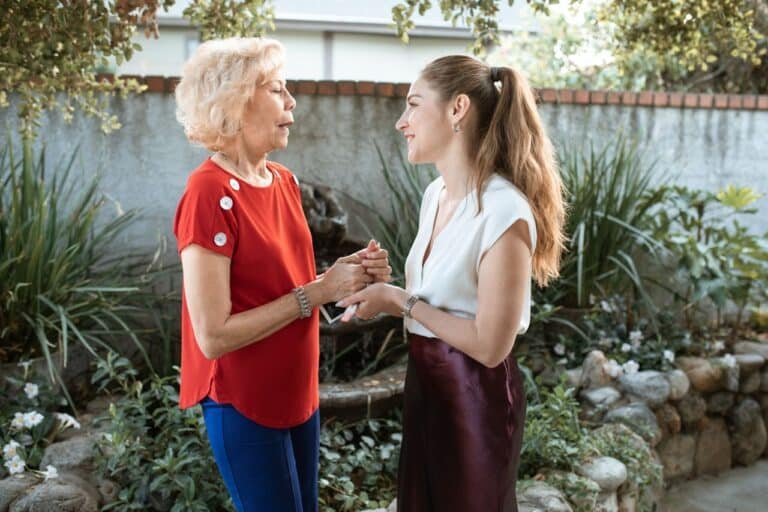


Image Credit @pixabay
Last Tuesday I grabbed my usual corner table at the coffee shop. The barista took my order without once making eye contact — not rude, just blank, like I’d quietly dissolved into the wallpaper. 🙂
That moment lodged in my brain. Two years after my career wrapped up, I kept asking myself, “Who am I now?” Plenty of us hit that question and almost nobody says it out loud.
So this piece names the things women over 55 tend to carry in silence. We wrestle with identity and self-worth, and most of us won’t bring it up over dinner — but that doesn’t make it any less real.
I’ve grouped what I found into five buckets: who we are now, what our bodies are doing, how relationships shift, what the future stirs up, and the quiet fight to be heard. **Naming these out loud is how we stop feeling so alone with them.**
Struggles With Identity and Self-Worth
When the roles that once defined your adult life fade, something quietly tilts. The labels — mother, professional, the one who always hosts — lose their grip, and you’re left wondering who’s standing there now.
These struggles don’t announce themselves. They chip at your confidence in small, everyday ways that are tough to put into words for anyone else.
Feeling Invisible in Public and Social Settings
I once stood at the pharmacy counter for what felt like ten minutes. The clerk helped two other people first, then finally turned to me. Small thing — but it stings.
Restaurants seat me last. Salespeople drift toward the younger shopper beside me. Half the time I wonder if I’m imagining it, and the other half I know I’m not.
Social gatherings are worse. People talk around me instead of to me, and when I jump in, the conversation slides right past. Those moments nibble at my self-worth until I start doubting myself.
**I’m not overreacting, and neither are you.** It keeps happening, and that tells me it’s not in my head.
Wondering If Their Best Years Are Behind Them
Some nights, in the quiet, I catch myself wondering if the good years are already behind me. Never bothered me in my forties — now it loops on repeat.
Old photos make me feel like I’ve lost my spark. Hearing about someone else’s promotion or adventure makes me feel like I’m watching from the sidelines.
Younger coworkers grab the challenges I used to crave, and I hesitate — am I just quitting early? That belief reshapes my days: I turn down invitations and play it safe. The future starts to feel like something to survive, not build.
Losing a Sense of Purpose After Kids Leave or Careers End
When my youngest moved out, I floated. Nobody needed me, and the freedom felt more like free-fall.
Retirement baffles a lot of women. The empty calendar looks threatening. Rebuilding confidence gets hard once your identity packs its bags.
I’ve dabbled in hobbies and volunteering. Some days it clicks. Other days I wonder what the point is. Still figuring out new meaning.
Friends tell me to enjoy the freedom — but that’s not the same as feeling purposeless. **Learning to tell those two apart has been its own project.**
Comparing Themselves to Who They Used to Be
I measure myself against the woman I was constantly. She had more energy, more certainty, more bounce.
It’s unfair but automatic. I remember hosting a party without crashing, speaking up without second-guessing. That version feels out of reach now.
This habit blocks the person I’m becoming. Every limit gets graded against my past self — a brutal curve to fail. Letting go of those comparisons is hard; the old me feels safer than the uncertain future me.
Struggles With the Body and Health
Sooner or later you notice your body changed without asking permission. The shifts after 55 sneak in small, then suddenly they’re just part of the day.
A jar sits too high, the stairs leave you winded. None of it is failure — it’s adjustment, and we’re all making it.
Adjusting to a Body That Feels Unfamiliar
The mirror sometimes shows a stranger. My skin has gone soft and loose; the face looking back is mine, yet someone I’m still meeting.
Clothes that once fit now bunch at the waist. I’ve bought new jeans because my shape moved on without consulting me.
My joints complain every morning. Getting out of bed takes a mental warm-up, then a slow stretch to remind my body how.
Temperature control quit making sense. I’m chilly when everyone’s fine, then suddenly roasting. I pack a cardigan even in July. 😉
Navigating Menopause and Its Lingering Effects
Menopause was supposed to be a brief visit. Its leftovers stick around long after the obvious symptoms leave. Hot flashes ambush me at the worst moments.
Sleep is now a managed project. My bedroom runs cooler than my husband appreciates. I’ve learned which fabrics help and which make night sweats worse.
My metabolism slowed to a crawl. Foods that used to slide right off now settle at my middle, so I’ve reworked portions and expectations.
Mood swings blindside me — irritable or teary for no clear reason. I’ve learned to pause and cut myself some slack.
Handling all this takes daily effort. I dress for the flash and plan around my energy. The self-acceptance shows up slowly.
Worrying About Energy and Mobility Slipping
I used to bounce back from a big day by morning. Now a full day costs me a full day of recovery, and I’ve learned to pace differently.
Getting down to play with the grandkids is easy. Getting back up? That’s a strategy. Certain moves now need real forethought.
High shelves defeat my shoulder. I reorganized the kitchen so the everyday stuff stays within reach.
The real worry is forward-looking. Will I still travel, still keep my independence? Those questions are exactly what keep me moving.
Workout recovery drags now — a good session leaves me sore for two or three days. I’ve lowered the bar without quitting.
Feeling Pressure to Look Younger Than They Are
Ads promise to wind the clock back. Magazine covers show women my age who look decades younger. Even friends say “you look so young” — as if aging openly needs an apology. :/
Women I know drop thousands chasing smoother skin. I don’t judge, but I feel the pull. Society still ties worth to youth, full stop.
Family suggests treatments too, meaning well, and still it stings — the subtext being my current face isn’t enough.
The tug-of-war is between caring for myself and fighting time. I lean toward health over appearance, and I have to re-choose that daily.
A healthy self-image here means making peace with gray and lines, honoring my body with movement and good food. Hard in a youth-obsessed culture, but worth the fight.
Struggles With Relationships
Life has drifted us from the people closest to us — not from fault, just from different directions. Bonds that felt rock-solid shifted, and I started questioning my place in them.
These changes brought challenges I never saw coming. I’m figuring out who I am now that the connections defining me have moved.
Relationship struggles after 55 tend to be quiet and slow, easy to miss precisely because they’re so subtle.
Drifting Apart From a Long-Term Partner
My partner and I share a room yet feel worlds apart. We built a life, raised kids, weathered storms — and now we mostly trade logistics.
Retirement was meant to pull us closer. Instead it showed how different we’ve grown. He wants to stay home and tinker; I’m itching to travel. We’re yanking in opposite directions, unsure how to meet.
Our energy no longer syncs. By the time I’m ready to go out, he’s ready for bed. Those small gaps build tension and make me wonder if we drifted.
I’m hunting for my place in this marriage. Am I even a partner if we barely connect? Lonely — especially with everyone assuming long marriages only get easier.
Grieving Friendships That Have Faded
Losing friends without a fight or betrayal stings most. I think of Susan, my closest friend — we talked weekly, laughed till we cried.
Four months now without a call. She moved near her grandkids; I’ve been buried in my mom’s health. Our lives forked, and the gap widened past bridging.
Other friends vanish too. One cares for her husband post-stroke. Another can’t leave the house. We meant to stay close; life got in the way.
The grief is real even if mourning something that faded feels silly. I miss the friends who knew me before “caregiver” or “grandmother” — they held pieces of me I can’t find elsewhere.
Save this article
Enter your email and we’ll send it straight to your inbox.
Feeling Caught Between Aging Parents and Adult Children
I’m stretched between generations. Mom needs help with appointments and meds; my daughter needs me to watch the kids so she can work.
Everyone wants something, and I’m the one who’s supposed to hold it together. Tuesday I drive Dad to physical therapy, Thursday I help my son move, and my own life squeezes into the margins.
The tired isn’t only physical. It’s carrying three generations while my needs sit dead last. I worry about my parents, feel guilty I can’t do more for my kids, and wonder when holding everyone together became my job.
That leaves no room to ask what I want. My identity has become “how well I serve everyone” — and I’m not sure who I am outside that role.
Loneliness That’s Hard to Admit Out Loud
I feel lonely even when I’m rarely alone. Holidays fill the house, my kids text, my husband sleeps next door — yet I’m isolated in a way that sounds ungrateful to say.
Truth is, I can be surrounded by family and still feel unseen. Nobody asks how I really am. Talk stays on logistics. I’ve forgotten what it’s like to be truly known.
Admitting loneliness at this age carries a stigma. I’m supposed to be content, grateful. Saying “I’m lonely” sounds like complaining, so I swallow it.
These identity shifts cut deep because I’m relearning connection — realizing physical closeness doesn’t guarantee emotional closeness. A hard lesson I’m still living with.
Struggles With the Future
The future used to feel distant and manageable. Now it’s a pile of questions I’m not sure how to answer — did I prepare enough, plan enough, save enough?
These aren’t the excited what-ifs of youth. They’re the 2 a.m. fears that grow in the dark.
Anxiety About Financial Security in Retirement
I check my retirement number more than I’d like. Will it last? What if inflation eats my fixed income?
Prescription costs scare me. So does a new car or a roof repair. At the grocery store I weigh whether I can afford my favorite brand or should pocket the difference.
Helping my adult kids worries me too. They face student loans and housing costs I never knew. But if I bail them out, do I risk my own cushion later?
I second-guess small purchases. Dinner out? Maybe skip it. That trip I’ve dreamed of? Probably not practical.
The fear of outliving my money never fully lifts. I worry about needing care in fifteen years — will anything be left?
Fear of Becoming a Burden to Loved Ones
I’ve watched friends lose independence and seen what that does to a family. The thought of putting my kids through it is almost unbearable.
I tell myself I’ll stay independent as long as I can — active, eating well, mind sharp. But some of this is out of my hands.
What if I need daily help? Can’t drive or manage my meds? Draining my family’s time, energy, and money feels too heavy to picture.
I’ve started planning quietly — paperwork in order, long-term care options researched. Hope I won’t need them, but I’d rather be ready.
Guilt still creeps in. Guilt for needing care, guilt for not being the strong, capable rock I’ve always been. I rarely say this out loud; it feels like conceding before anything happened.
Uncertainty About What the Next Chapter Holds
The roadmap from my earlier years is gone. No clear next step, no obvious path. The not-knowing is scary and, sometimes, weirdly freeing.
People ask my plans, my retirement dreams. Honestly? I’m still meeting who I am now, let alone mapping what’s next.
Beating identity confusion is the key to a meaningful future. How do I picture the years ahead if I’m unsure what matters to me now? The forty-year-old me had priorities; this me is still emerging.
Society offers few models for this stage. What if I want something different, something I haven’t imagined yet?
There’s pressure to have it all figured out — best life, passions pursued, freedom embraced. Some days I just feel lost.
I’m learning to sit with the not-knowing. Maybe the next chapter doesn’t need writing yet. Maybe one step at a time is enough.
Struggles With Being Heard
The fight to be heard is usually quiet — it lives in the small dismissals that pile up. Words talked over at dinner, concerns waved off with a smile.
It’s not about grabbing the spotlight. It’s about feeling like what you say matters, like your experience counts in rooms that decide your life.
The pattern shows up everywhere — doctor’s offices, family dinners, work, casual chats. Past a certain age, listening starts to feel optional for women.
Feeling Dismissed by Doctors and Professionals
I’ve left too many appointments feeling unheard. You describe symptoms precisely, and they land as “just aging” or “probably stress.” The exam feels rushed; your worry gets minimized.
The interruptions tell the story. You’re mid-sentence and the doctor’s already typing or checking the clock. Pain that wrecks your sleep becomes “something we all get at this age.” Push for answers and you get an impatient sigh.
Friends report the same. One named her heart palpitations five times before anyone referred her. Another lived with joint pain two years before a real workup. Being taken seriously shouldn’t be this hard.
Holding in Opinions to Avoid Seeming Difficult
Before I speak in some rooms, I do quiet math: is this worth the reaction? Will I get tagged as bitter or oversensitive? It happens so fast I barely notice — but it’s there, weighing silence against the cost of speaking.
At family gatherings I’ve learned which topics to skip, which observations earn an eye-roll. At work or in the community, younger colleagues talk over me without a flicker of awareness. Assert an opinion and the room shifts, like I broke some rule by not smoothly agreeing.
That self-censoring wears you down. Building self-worth means trusting your perspective has value — decades of experience earn a voice. But when honesty risks “difficult” or “out of touch,” plenty of us choose quiet. We’ve been trained to smooth things over, keep the peace.
Carrying Emotional Labor No One Notices
The invisible work never stops, and nobody credits it. I’m the one who remembers my brother-in-law’s gluten issue and my niece’s vegetarianism at holiday planning. I track birthdays, send the cards, call the relatives who’d otherwise feel forgotten.
This labor runs deeper than tasks. It’s anticipating needs, managing logistics across households, smoothing fights between relatives not speaking. It’s remembering everyone’s coworkers’ names so I can ask well. It’s holding the family story together — albums, gatherings, thank-you notes that keep the threads alive.
The work only turns visible when it stops. Miss one birthday and suddenly people notice the system that ran quietly for years. **The care is real, but recognition would help.** A simple “I see you” would make the load feel less lonely.
| Type of Invisible Work | What It Looks Like | Why It Goes Unnoticed | Emotional Cost |
|---|---|---|---|
| Relationship Maintenance | Birthday cards, check-in calls, remembering details | Appears effortless or automatic | Feeling taken for granted |
| Family Logistics | Coordinating schedules, planning events, tracking details | Results seem to “just happen” | Exhaustion without recognition |
| Emotional Management | Conflict mediation, mood regulation, anticipating needs | Successful management is invisible | Carrying others’ emotional weight |
| Knowledge Keeping | Tracking preferences, histories, important information | Treated as innate, not learned | Being the only reference point |
Letting Others’ Needs Come Before Their Own
I’ve said yes when I meant no more times than I can count. Someone needs help moving, planning, kid-watching, errand-running — and my schedule rearranges itself. My own plans feel negotiable in a way other people’s don’t. The dentist appointment slides again; the rest afternoon gets handed off.
This pattern runs deep. Taking the tasks nobody volunteers for becomes automatic. Accommodating everyone while shelving yourself becomes default. Your needs sink to the bottom because someone’s always more urgent.
Breaking it means building the self-worth to believe your time matters, that saying no isn’t selfish. Being heard starts with believing you deserve to be heard. The shift isn’t overnight — it starts with one kept promise to yourself, one stated preference, one boundary instead of automatic accommodation.
These struggles with being heard tie to something bigger than one conversation. They echo messages we absorbed about whose voice counts. **Spotting the pattern is the first step to changing it.**
The Strength Beneath the Struggles
I walked you through these because they’re real and they deserve naming. But they don’t sit alone — alongside them runs a strength that only comes from living decades of actual life.
Why This Season Holds More Power Than It Seems
This stage brings clarity about what matters. You smell dishonesty a mile off. You handle crises without falling apart. You’ve earned the confidence to walk from what drains you.
The freedom of having less to prove is real. You don’t perform for anyone or pretend to be someone else. Your opinions carry weight because they’re built on experience, not guesswork.
This season offers an authenticity that wasn’t available while you juggled everyone’s expectations. You finally get to define yourself on your own terms.
How Naming These Struggles Begins to Ease Them
Saying these quiet difficulties out loud shrinks their grip. Name what you’re feeling and you realize you’re not the only one — and that validation matters.
There’s relief in hearing someone else say the thing sitting heavy on your chest. Acknowledgment opens room for change, or at least for struggling without shame.
These struggles don’t have tidy fixes, and that’s okay. You carry both the challenge and the strength, often at once. Both deserve recognition. Both are your story right now.
Wrapping It Up
If any of this landed, you’re in good company — these quiet struggles touch far more women over 55 than anyone admits. **The thread through all of it is simple: you’re not imagining it, and you’re not alone.**
Naming what you carry is where the relief starts. Pick one thing from this list that echoed for you and say it out loud today — to a friend, a journal, or just the mirror. What did you recognize most? I’d love to hear which one hit home. 🙂
Save this article
We’ll email you the link so you can find it again later.