As I step into the realm of interior design, my affinity for the refined and the resplendent naturally draws me to Neoclassical design interiors. This style, a harmonious blend of classic interior design principles and modern luxury, resonates with those of us who admire enduring sophistication. With its roots in antiquity, this design philosophy relishes in the symmetry, simplicity, and muted grandiosity that evoke a sense of timeless elegance. The infusion of pale palettes, luxurious materials like marble and brass, and the incorporation of classic ornaments define this enduring approach, ensuring that every space I encounter withstands the fleeting whims of design trends.
The neoclassical aesthetic appeals to the minimalist who covets a touch of grandeur, as well as the maximalist who yearns for order and grace. It is this very versatility that has cemented Neoclassical design interior as a mainstay in the pantheon of interior styles. In my own ventures, I have found that it fosters an aura of opulence without brash extravagance—a sanctuary of refinement that pays homage to the architectural elegance of bygone eras while fully catering to the demands of contemporary living. Quite simply, the Neoclassical design is where the past and present dance in flawless coalescence.
Key Takeaways
- The charm of Neoclassical design lies in its balance and proportion—resulting in a serene and inviting atmosphere.
- Elegant materials such as marble and brass are cornerstones of Neoclassical interiors, providing a rich texture and luster.
- A pale color palette is essential to creating the light, airy feel that is synonymous with Neoclassical elegance.
- Luxurious accessories and classic furniture are selectively integrated, forging a bridge between time-honored tradition and current-day luxury.
- The Neoclassical style is a response to today’s craving for interiors that are both majestic in appearance and practical for modern lifestyles.
The Allure of Neoclassical Design Interior
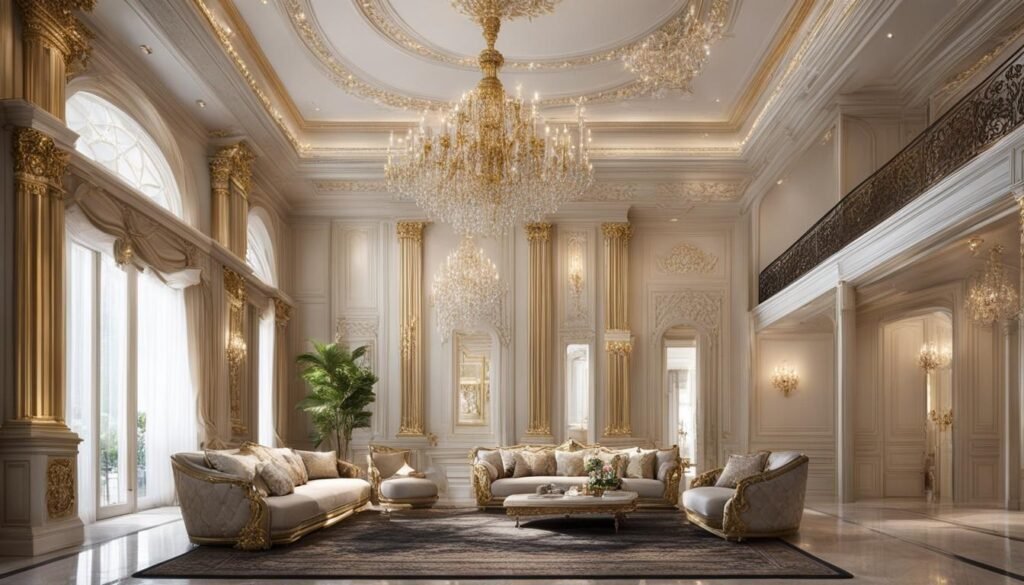
As I consider the current landscape of interior styles, neoclassical interior architecture stands out as the embodiment of classic design reborn in the modern era. For those of us drawn to the timeless elegance of the past, yet living squarely in the present, the resurgence of neoclassical home decor offers a comforting bridge between two worlds. It’s not just about bringing a touch of the past into our homes; it’s about reimagining the virtues of classic design with a keen modern sensibility. Let’s explore how this style is reviving the luxury and symmetry we yearn for, blending meticulously with a contemporary touch to infuse both serenity and grandeur into our living spaces.
A Return to Classic Roots in Modern Homes
The whisper of historical influence within the walls of my home is a constant reminder of the richness that classic design imbues. In modern neoclassical interiors, I observe a deliberate reappraisal of timeless motifs and principles. There’s a renewed appreciation for order and symmetry, which provides structure and elegance – a much-needed respite from the erstwhile ubiquitous minimalism. My own inclinations steer me towards this style, where the whispers of an ornate past meet the demands of contemporary design.
The Revival of Luxurious Symmetry and Order
There’s a comforting rhythm in the symmetry and order inherent in neoclassical home decor. It’s as if the balance translates to a physical manifestation of internal calm within the living space. Each element, from the architectural flourishes down to the fabric choice, is a testament to a meticulousness that feels both grand and deliberate. Imagine walking into a room where every furnishing, every accent, is in harmonious dialogue with its counterparts – this is the luxurious order that modern neoclassical design captures, a revival that satisfies our craving for sophistication.
Neoclassicism Interiors: Blending Past and Present
In a world that relentlessly marches forward, I find neoclassicism to be a tender glance back, melding the essence of bygone eras with the functionality of the present-day. The allure of neoclassical design lies in its duality – it offers both a contemplative retreat and a canvas for imaginative expression. This blend of past and present is not just a fusion; it’s a thoughtful curation of elements that speaks volumes about our shared heritage while catering to modern living. It’s in this intersection that neoclassical interior architecture finds its unique and enduring appeal.
A Historical Perspective on Neoclassical Interiors
As a professional in the world of design, I regard the neoclassical revival as both a homage to the grandeur of classical architecture and a testament to the enduring appeal of historical interior design. This movement isn’t just about aesthetics; it’s about summoning the spirit of antiquity and melding it with modern sensibilities. Neoclassical interiors have a rich narrative, stretching back to the late 18th century, an era where the sophistication of ancient Greek and Roman cultures was rediscovered and celebrated in home decor.
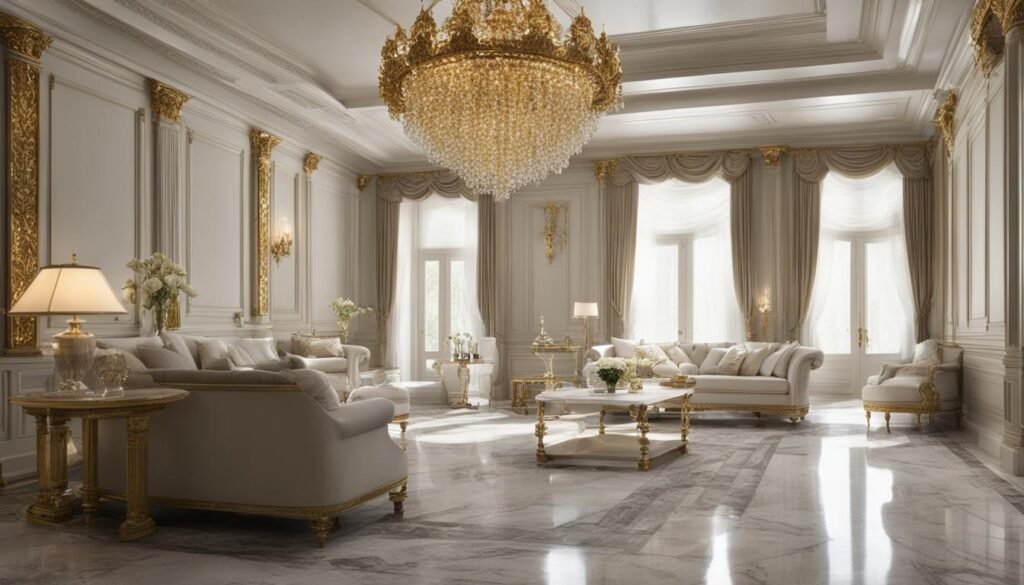
Where Rococo was flamboyant, neoclassicism is measured—it is the design equivalent of a carefully composed sonnet. Its beauty lies in its poised minimalism, with Grecian-inspired embellishments adding both gravity and subtlety to living spaces. When I discuss neoclassical design with colleagues like Jerad Gardemal, we often focus on its disciplined approach to balance and symmetry, an approach that quietly commands respect and directs attention to the minute details and superior craftsmanship without overwhelming the senses.
- The scale and proportion in neoclassical design echo a respect for historical precision, from the elegant fluting of a Corinthian column to the deliberate spacing of a series of pilasters along an entryway.
- Quality finishes and clean lines are non-negotiable; they are the threads that connect modern iterations of the style to its storied past.
Through the neoclassical lens, interiors are transformed into galleries housing the narrative of human artistic endeavor. Each selection, from the arcs of a ceiling’s mold to the choice of marble inlay, messages a grand yet sophisticated ethos, deeply anchored in our collective architectural history.
Identifying Key Elements of Neoclassical Interior Architecture
As a connoisseur of the neoclassical house interior, I find that the infusion of classical details into modern spaces creates environments of unparalleled elegance. The interplay of luxurious materials, timeless furniture, and opulent accessories culminates in a style that exudes sophistication.
Time-Honored Materials: Marble, Brass, and Silky Fabrics
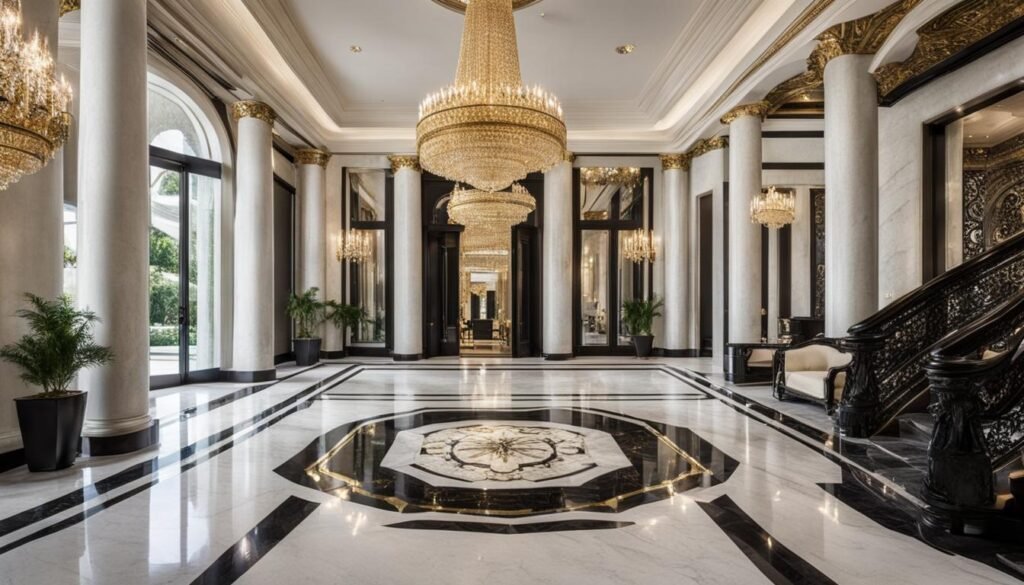
The allure of the past is captured through the use of rich, durable materials that have been pivotal in craftsmanship for centuries. Marble surfaces gleam with a pristine finish, while fixtures of brass shimmer, reflecting the meticulous attention to quality that is essential in a neoclassical decor scheme. To soften these enduring textures, silky fabrics cascade with an effortless grace, infusing the interior with a sense of indulgent warmth.
Iconic Furniture Pieces: From Chaise Longues to Pedestal Tables
The dignified silhouettes of iconic neoclassical furniture add to the legacy of this storied design philosophy. I am particularly drawn to the elongated elegance of chaise longues, the sculptural form of contoured sofas, and the commanding presence of pedestal tables — each piece resonates with timeless allure.
- Chaise Longues for lounging
- Sculpted Sofas for sophisticated seating
- Pedestal Tables as focal points
Emphasizing Balance: The Role of Symmetry
In my work, maintaining a harmonious balance is not mere coincidence but an intentional design choice. Symmetry is the silent guardian of proportion and order; it requires that each visual element complements its counterpart, creating a serene and balanced atmosphere. This principle of equilibrium is not just visually satisfying but also echoes the grandeur of classical architecture — a trademark in an opulent, neoclassical house interior.
The Rise of Modern Neoclassical Interior Design
As a journalist who’s observed the evolution of interior design trends, I’m witnessing a compelling resurgence of modern neoclassical interior design. This style masterfully weaves the rich tapestry of classicism with the crisp lines of neo classical design, creating a look that’s both opulent and tastefully understated.
Kathy Kuo, a reputed name in interior design, argues that modern neoclassical interiors convey an “intentional minimalism” while still paying homage to the grandeur of Greek and Roman architecture. Elements such as columns, pilasters, and architraves are infused with modern materials and lines, making these spaces timelessly elegant yet approachably modern.
Avoiding the excesses of past interpretations, today’s neoclassical decorating styles capitalize on transitional design— a corridor between the old and the new. It’s fascinating to observe how this design philosophy circumvents the old-fashioned pitfalls of extravagance, instead cultivating an environment where balance and proportion reign supreme.
- Preservation of classical motifs and architectural details
- Fusion with modern textiles and colors
- Introduction of clean lines and forms
- Emphasis on proportion and balanced layouts
Transitional design, a concept often interlinked with the neoclassical, speaks to the art of bridging eras. It operates on the conviction that a space doesn’t need to commit to a single time period but can instead gracefully blend influences into an exquisite, coherent whole.
Color Palettes and Materials in Modern Neoclassical Design
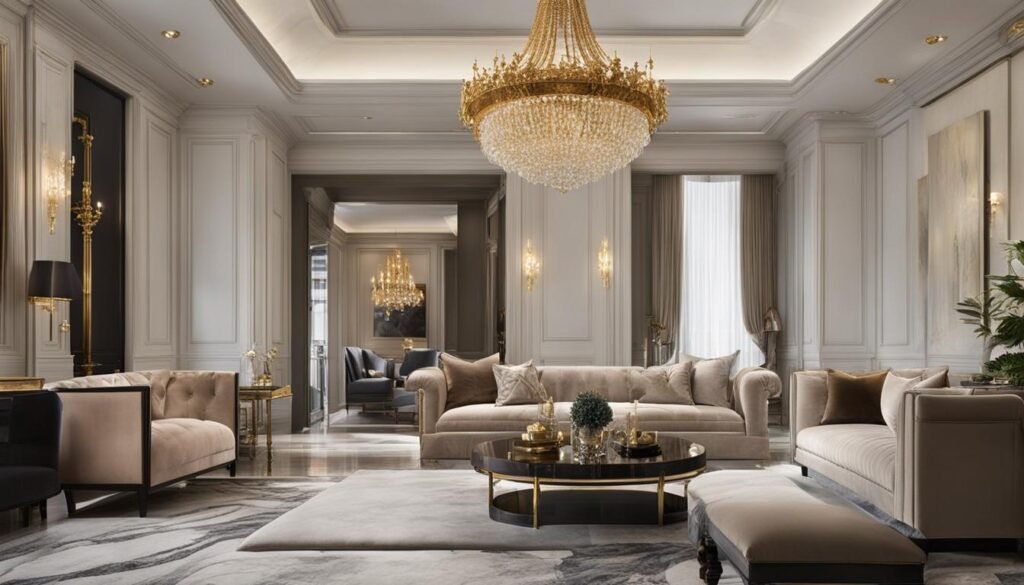
As I immerse myself in the realm of modern neoclassical design, my attention gravitates towards the restrained yet utterly elegant color palettes that typify this style. A neutral color palette lays the groundwork for incorporating luxurious visual accents into the living spaces, fostering an air of timeless sophistication. Below, I explore the nuances of these colors and materials that contribute to the enduring appeal of classical design.
Pale Tones and Luxurious Textures
Envision a canvas awash with light – whites, creams, and subtle pastels come to life in neoclassical interiors. These pale hues not only serve as a backdrop to the opulence that will follow but they amplify the sense of space and reflect natural light, creating an enviable luminosity. Together with sumptuous textures such as silk or ultra-soft velvets, these tones achieve a quiet opulence. In the quest for the ethereal, I consistently see how they marry comfort with luxury.
Metallic Accents and Visual Harmony
Metallic elements, particularly those with a graceful patina, infuse warmth into the monochromatic spectrum of a neoclassical setting. Bronze, gold leaf, and crystal not only introduce an element of warmth but also serve as focal points that catch and delight the eye. These reflective surfaces contribute to a visual harmony where light plays a central role in defining volumes and textures, and the entire room resonates with understated grandeur.
The Sophistication of Stain-Resistant Fabrics
In my forays into design, advances in material technology command attention for their practical contributions to luxury. Specifically, stain-resistant fabrics such as those offered by FibreGuard bridge the gap between elegance and everyday use. The ability to include luxurious textures in high-traffic areas without the worry of permanent damage is a game-changer. Velvets and other rich fabrics now come with the promise of longevity, making them a smart choice for those who appreciate the finer things in life but refuse to compromise on functionality.
Neoclassical Furniture and Décor Selections
As I immerse myself in the world of neoclassical style, I’m drawn to the sophisticated charm that neoclassical furniture brings to any space. It’s a dance of historical elegance and traditional design, with each piece showcasing graceful curves and ornate details. French Regency-style chairs, for instance, become not just seating but a testament to timeless craftsmanship.
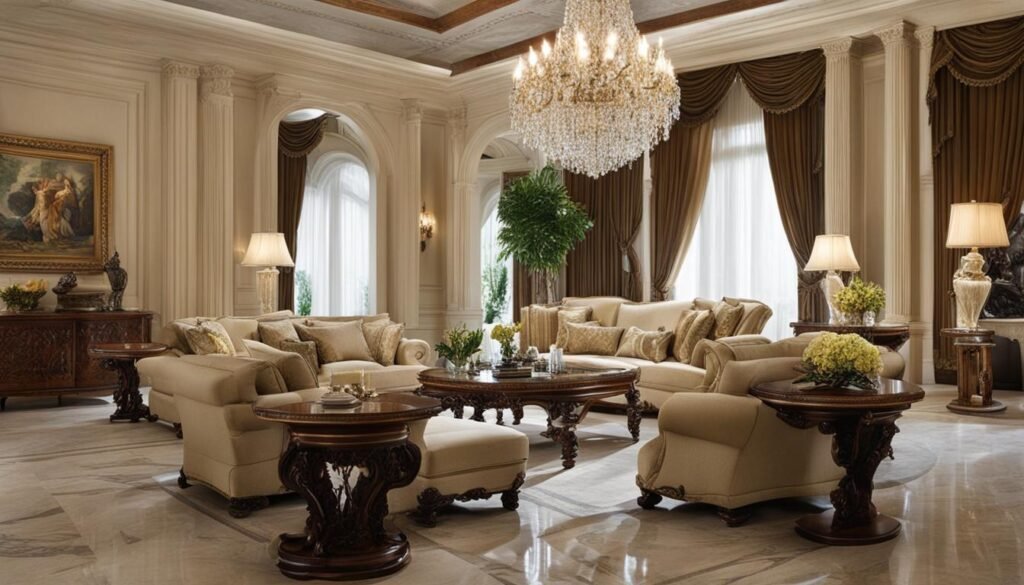
These staples of neoclassical decor are not standalone; they’re part of a larger symphony that plays out in a room’s layout. Symmetry, a principle revered in neoclassical style, ushers in calm and order, creating interiors where balance sits at the core of the design.
Elegant Lines and Historical References
The neoclassical furniture in my collection boasts not only of its finesse but also of a connection to the past. The traditional design elements hark back to an era where details were king—each leg, armrest, and backrest meticulously shaped to reflect historical beauty.
Creating Calm with Symmetrical Arrangements
In my neoclassical decor projects, I adopt symmetrical arrangements to foster serenity. Placing furniture in careful alignment sets a room’s tone to one of peaceful symmetry, allowing for a meditative stillness amidst the luxury.
Accessorizing with Classical Art and Mirrors
- Gold-framed mirrors which not only amplify light but also act as focal points of opulence
- Classical art including Roman busts, echoing the grandeur of ancient empires
- Antique paintings that tell stories of yesteryear, anchoring the neoclassical theme
Imagine a mirror, its frame gilded and ornate, hanging above a marble-top console, or a Roman bust looking onward from a bookcase. These aren’t mere accessories; they are conduits of the neoclassical era, seamlessly integrating with modern spaces to elevate them with historical gravitas and splendor.
Save this article
Enter your email and we'll send it straight to your inbox.
Incorporating Classic Neoclassical Design Style Into Your Home
When I look to infuse my living space with the timeless neoclassical interior design style, I focus on achieving a seamless balance between classic elegance and modern practicality. Neoclassical design style is not just about recreating a period look—it’s about crafting spaces that feel harmonious, refined, and ultimately, very personal.
Firstly, symmetry is paramount in neoclassical interior design. A well-proportioned room considers the placement of furniture, architectural features, and even accessories. I start by designing a floor plan that divides the space into equal halves, mirroring each side for that quintessential neoclassical harmony.
- Anchor rooms with grand elements like robust columns or statement-making sculptures, which lend a sculptural grace and historical depth.
- Balance modern furnishings with antique or reproduction pieces that echo the forms and craftsmanship of the past.
- Select decor that accents without overwhelming, using classic artworks, fine rugs, and subtle patterns interwoven with a tasteful, neutral color palette.
The allure of neoclassical interior design stems from its combination of grandeur and order. By thoughtfully blending the old with the new, I can create a home environment that reflects the dignified beauty of neoclassical style while offering all the comforts of modern living. Whether through the strategic use of art or a carefully considered color scheme, every element is a step toward achieving a serene and stately home that stands the test of time.
Neoclassical Interior Design: Beyond the Aesthetics
As a proponent of classical interior design, I constantly seek to delve deeper into the essence of styling techniques, reaching beyond surface-level decor. Neoclassical interior design is particularly captivating, as it not only embodies a visual charm but also conveys a profound philosophical and cultural message.
The Philosophical Underpinnings of Neoclassicism
The philosophy of neoclassicism is intrinsically linked with virtues such as beauty, harmony, and order, characteristics highly esteemed by the ancient Greeks and Romans. These societies valued the power of aesthetics to reflect the intellectual clarity and discipline of the era. When I integrate neoclassical elements into a space, I am not only creating a room with timeless elegance but also an environment that resonates with the enduring principles of ancient philosophies.
Cultural Significance and Timeless Appeal
The cultural significance of neoclassical design runs deep. Its influence extends beyond private residences, gracing the halls of historical buildings and cultural institutions, hence reinforcing its role as a timeless aesthetic. The legacy left by neoclassical design indicates a longstanding appreciation for the craftsmanship, symmetry, and sophistication that are emblematic of a rich cultural heritage, seamlessly weaving into the fabric of contemporary life.
Designing for Elegance: Practical Tips for Neoclassical Decor
When I approach the art of neoclassical design in interior design, my objective is to create a space that speaks of timeless elegance with an air of sophistication. To achieve such refinement, one must follow certain practical neoclassical decorating tips. One of the core principles I emphasize is the importance of symmetry – it’s the foundation for balance and harmony within a room. This can be achieved through the strategic placement of furniture, art pieces, and even light fixtures.
Color selection also plays a pivotal role in neoclassical décor. I recommend using a palette that includes natural, light hues, like soft ivories and cool greys. These shades lay a calm canvas, allowing for metallic or jeweled accents to stand out, providing the opulent sparkle that is so characteristic of neoclassical interiors.
What truly brings a room together are the details. Choosing premium millwork and paneling showcases craftsmanship and quality, while giving the space that quintessential neoclassical framework. Moreover, integrating classical motifs through well-selected antiques and art pieces can lend authenticity and a touch of grandeur.
- Seek out millwork with intricate patterns or fluted designs for added depth.
- Consistently incorporate classical elements like Greek key patterns or Roman columns.
- Select textiles that offer both beauty and practicality, such as stain-resistant velvet or silk.
Let’s not forget the textiles. Fabrics should exude a rich, luxurious texture. Velvets and silks can be sumptuous to the touch and opulent in appearance. I favor choices that are as practical as they are attractive, investing in materials like stain-resistant velvet to marry everyday practicality with luxury.
By adhering to these guiding principles of neoclassical interior design, one can curate an environment that is both elegant and accessible. It’s about creating a space that looks and feels as though it has withstood the test of time, always in style and forever in good taste.
Neoclassical Design Interior: Blending Tradition and Modernity
In my experience as a design connoisseur, the exquisite neoclassical architecture evokes a timeless beauty that deeply respects historical tradition. Yet, what fascinates me is the seamless integration of modern amenities that bring a fresh twist to classic designs. As I delve into the realm of custom neoclassical interior projects, it becomes evident how this style offers both luxury and pragmatism, serving the demands of contemporary living.
Merging Tradition With Modern Comforts
The genius of neoclassical design lies in its ability to infuse the elegance of the past with the modern comforts of the present. Imagine walking into a room where the grandeur of Greco-Roman columns comfortably coexists with the sophisticated technology of smart home systems. This juxtaposition not only enriches the living experience but also ensures that tradition and convenience elevate each other in an effortless dance of design.
The Exclusivity of Custom Neoclassical Projects
As I’ve observed, there’s a growing appetite for tailor-made experiences among my clientele. This is where custom neoclassical interior projects shine, offering a level of exclusivity that is unmatched. Every detail, from the proportionate wainscoting to the hand-picked marble countertops, is meticulously designed to honor neoclassical principles while catering to individual preferences and lifestyles.
- Handcrafted furniture reinforces the room’s symmetrical harmony.
- State-of-the-art fixtures that adhere to classical aesthetics provide modern functionality.
- Bespoke elements like custom crown molding and fireplace mantels add an irreplaceable heritage touch.
My role as a guide through the journey of home transformation often reveals a deep-seated reverence for history paired with the aspiration for contemporary living. It’s a profound process that culminates in the creation of sanctuaries that not only reflect sophisticated taste but also support the demands of 21st-century life.
Conclusion
Delving into the realm of neoclassical design interior, I’ve explored the seamless harmony of classical grace with the contemporary desire for modern luxury. This architectural mode exudes a timeless elegance, meticulously cultivating an environment that is as much about its aesthetic grandeur as it is about its homage to historical magnificence. Indeed, the neoclassical style remains an unyielding reflection of sophistication, consistently appealing to those who appreciate the delicate interplay between ancient motifs and the conveniences of modern living.
My journey through the nuances of neoclassical interiors has revealed that, despite the shifting sands of design trends, the allure of symmetry, rich textures, and noble materials stands unwavering. In this modern era, where homes are sanctuaries and reflections of personal taste, neoclassical design offers an ambiance of understated grandeur, rooted in the past yet perfectly attuned to the present. It infuses spaces with a serene nobility, inviting inhabitants to dwell in spaces that are both majestic and intimate.
In essence, embracing the neoclassical design interior is to embrace a tradition of splendor. Each element carefully selected contributes to a narrative of elegance, from opulent marbles and warm brass to the precise geometry of the furniture arrangements. As a style, it provides a canvas for personal expression within the parameters of unassailable grace—truly, a testament to the enduring beauty and versatility of classic design in the tapestry of modern interiors.
FAQ
What is Neoclassical Design Interior?
Neoclassical design interior is a style that draws inspiration from classical Greek and Roman architecture and design. It’s marked by a timeless elegance, characterized by symmetry, subdued grandeur, and a pale color palette interspersed with luxurious materials such as marble and brass.
Why is Neoclassical Interior Design popular again?
Neoclassical interior design has made a resurgence as it offers a luxurious and structured alternative to the minimalist interior trends of recent years. Its revival mirrors a broader interest in blending traditional styles with modern comforts, emanating a sense of order, elegance, and timeless appeal.
What are the key features of Neoclassicism Interiors?
Key features of neoclassicism interiors include the use of classic details like Roman busts, columns, and arches, along with a neutral color palette, balanced symmetry in the layout, opulent accessories, and the inclusion of high-quality materials such as silk and velvet in furniture and décor.
How can Modern Neoclassical Interior Design be described?
Modern neoclassical interior design blends the traditional elements of neoclassicism with contemporary design principles. It maintains the classic aesthetic through the use of columns, clean lines, and symmetrical layouts, while incorporating modern color palettes, materials, and practicality.
What color themes are used in Modern Neoclassical Design Interiors?
The color themes in modern neoclassical design interiors are often pale and muted, including whites, creams, beiges, and grays. These are paired with gold, brass, or crystal accents to create a luxurious yet calming atmosphere.
What types of materials and fabrics are appropriate for Neoclassical Furniture and Decor?
Materials such as marble, brass, and rich woods are common in neoclassical furniture. Fabrics like silk, velvet, and other textiles with a satin finish complement neoclassical decor, providing an opulent feel. Advances in textile technology, such as FibreGuard’s stain-resistant velvet, combine luxury with durability and ease of maintenance.
How can one integrate the Neoclassical Interior Design Style into a modern home?
To incorporate neoclassical interior design style into a modern home, focus on symmetry, use classical details like columns, capitals, and friezes, and choose a neutral but rich color palette. Blend traditional pieces with modern furnishings and consider incorporating bespoke elements that respect classical proportions in a contemporary context.
What is the cultural significance of Neoclassical Design?
Neoclassical design carries significant cultural and philosophical import, evoking the principles of elegance, order, and democracy revered in classical antiquity. Its rebirth in contemporary spaces connects us to our shared cultural heritage while reflecting the modern predilection for timeless sophistication.
Are there any practical tips for achieving a Neoclassical look?
Yes, to achieve the neoclassical look, consider emphasizing symmetry and proportion in your layout, opting for classic color palettes, selecting quality millwork, and integrating antique elements with modern ones. Choose practical, luxurious fabrics and use classic artwork and mirrors to enhance the grandeur of the space.
Can modern comforts be included in Neoclassical Interior Design?
Absolutely, modern comforts can and should be included in neoclassical interior design. The style often features bespoke furniture and tailored architectural designs that respect classical forms while incorporating contemporary features such as smart home technology, seamless storage solutions, and comfortable, durable fabrics.
Save this article
We'll email you the link so you can find it again later.