

As a devotee of the ornate and historical, I often find myself drawn to the vintage glam that defines art deco decorating. This lavish style, a cultural stamp of the roaring 1920s, encapsulates a time when boldness and luxury weren’t just embraced; they were celebrated. Art deco rooms are more than just living spaces; they are bastions of opulence and elegance, reflecting a bygone era infused into modern living. With art deco decoration ideas, you have the opportunity to bring the splendor and richness of the art deco decorating style into the very fabric of your home.
My pursuit of timeless decor has led me to realize that the key to perfecting art deco decor ideas lies in attention to detail – from the symmetrical patterns gracing the walls to the shimmering accents that catch the light just so. This style isn’t merely about appreciating a vintage aesthetic; it’s about creating an atmosphere that pays homage to the lavish lifestyles and the unapologetic glamour of the past, inviting it into the present.
Key Takeaways
- Incorporating a blend of metallic surfaces and rich hues to elicit a feeling of 1920s extravagance.
- Using statement pieces and bold symmetry to define the art deco decorating style in any room.
- Finding inspiration in iconic architectural designs to inform art deco decoration ideas.
- Adapting the maximalist approach of art deco for a modern take on vintage glam decor.
- Creating an art deco decor palette that harmonizes jewel tones with softer pastels to achieve balance and luxury.
- Embracing the historical grandeur of art deco while integrating these elements into contemporary living spaces.
Exploring the Origins of Art Deco Style
As I delve into the captivating history of art deco style, I find myself transported to the bustling streets of 1920s Paris, where the movement first emerged. Drawing inspiration from a myriad of sources including Cubism, Modernism, and even the exoticism of the Ballets Russes, it was an era that celebrated technological progress and opulent design. The zeitgeist of the times was encapsulated at the pivotal 1925 Exposition Internationale des Arts Décoratifs et Industriels Modernes, which not only branded this style internationally but also set a benchmark for luxury and elegance in art deco interior design.
The Advent of Art Deco in the 1920s
Marking a departure from the organic forms of its predecessor, Art Nouveau, art deco architecture embraced a new language of design characterized by bold geometric patterns and streamlined shapes. This period signified the celebration of the modern life, the burgeoning influence of industry, and the endless possibilities of the machine age. Art Deco, I would argue, wasn’t just a style—it was a statement of modernity and sophistication.
International Expositions and the Rise of Opulence
International exhibitions in the early 20th century played a critical role in propagating the lush visuals of art deco to a global audience. The allure of wealth, youth, and vivacity was profound, and these expositions were lavish affairs where both nations and individuals flaunted their most opulent designs and innovative techniques. They effectively laid the foundations for what would eventually become a global language of design, embodied by the art deco movement.
Influential Art Deco Architecture Across America
As I trace the lineage of art deco across the Atlantic to the United States, the country’s rapid transformation during the roaring twenties becomes evident. In America, cities like New York and Chicago became canvases for this architectural style, with the skyline reaching new heights – quite literally – with buildings like the Empire State Building and the Chrysler Building. These structures weren’t just marvels of engineering; they were symbols of American ingenuity, towering aspirations, and a crossroads of cultures converging under the art deco banner.
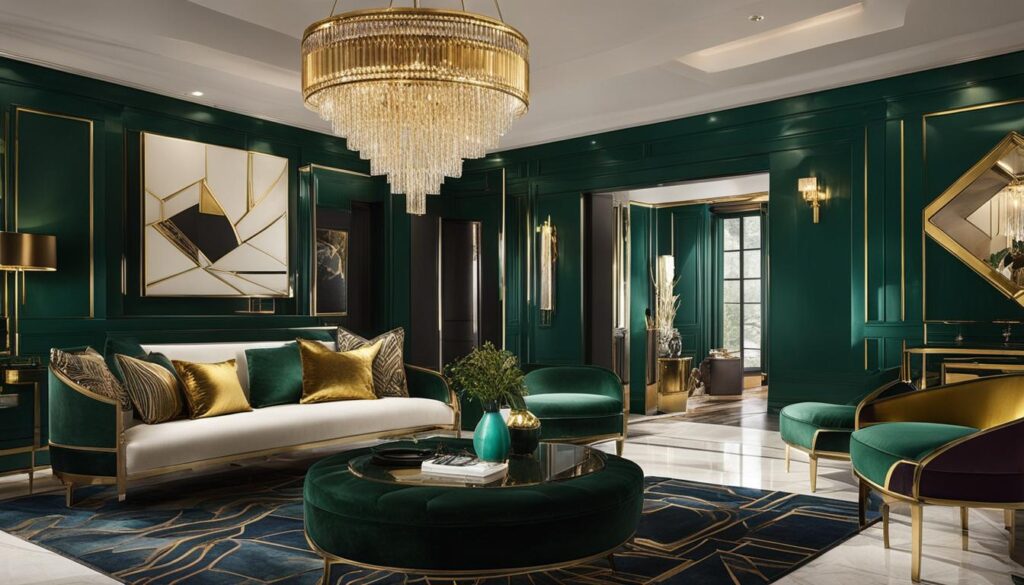
Today, the influence of the art deco era remains palpable in the skylines of these American metropolises, as well as in the continued appeal of art deco interior design that I see gracing stylish modern homes. This stylistic voyage from the past into the present reminds me that true beauty and craftsmanship are indeed timeless.
Art Deco Decorating Fundamentals
When I immerse myself in crafting an art deco decor style, I am essentially tapping into a historical reservoir of design, combining it with modern-day aesthetics to achieve a blend that’s both timeless and current. The charm of art deco interior design ideas lies in their ability to infuse spaces with a sense of luxurious aspiration and an undeniable visual drama.
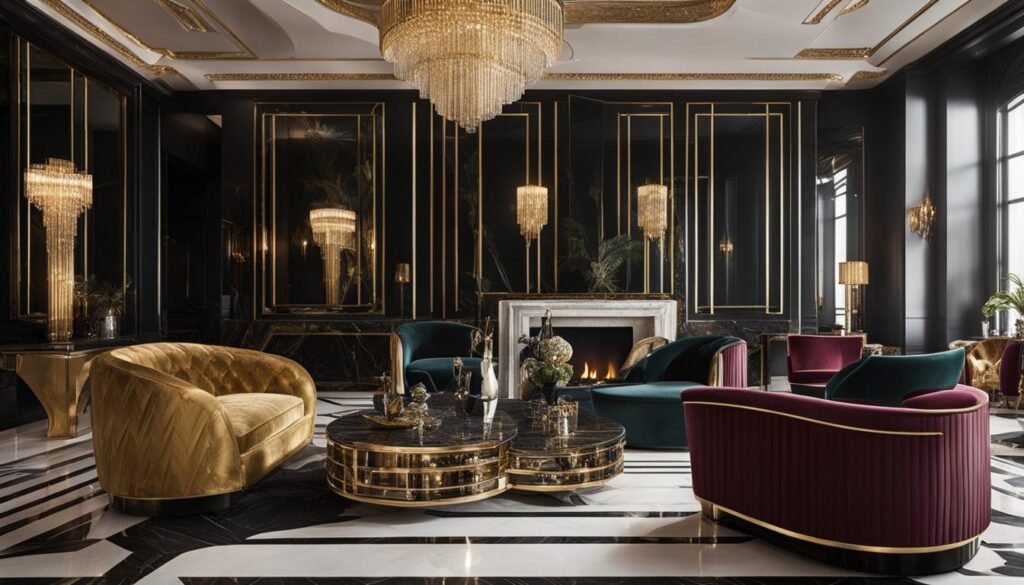
Balancing the opulent with the geometric, art deco design ideas revolve around the synergy of several standout features:
- Metallic Surfaces: I’ve found that incorporating polished chrome, brass, and even gold accents can instantly elevate an interior to new heights of glamour. Reflective surfaces are not mere embellishments; they form the very essence of the art deco aesthetic.
- Rich Hues: I craft a palette that speaks the language of opulence – deep blues, radiant golds, and bold blacks. Such a spectrum of shades instills within the space an atmosphere of both warmth and grandeur.
- Bold Statement Pieces: Whether it’s a large, ornate mirror or an intricately designed light fixture, I always include pieces that command attention and spark conversation.
Ornate decorations and striking patterns are inherent traits of this illustrious style, often denoted by symmetrical arrangements and decadent motifs. The incorporation of precious metals is far from subtle, with every shimmer and shine intended to captivate and reflect the sophistication of the roaring twenties.
I pride myself on creating art deco-inspired spaces that are not only steeped in the vintage charm of a bygone era but also perfectly poised for contemporary life. It’s a style that continues to allure and inspire, transcending time with its boldness and luxurious flair.
Creating a Color Palette with Decadent Hues
My exploration of the Art Deco color palette reveals a seductive world where colors are not simply visual elements, but the lifeblood that defines the very essence of the style. Let me guide you through the opulent hues and how they can shape your space into an Art Deco sanctuary.
Jewel Tones: Sapphires, Rubies, and Emeralds
These rich and vibrant shades are the hallmark of an art deco color palette, bringing a sense of grandeur and luxury to any space. I often find that these colors work best when they’re paired with gleaming metallic accents, where the boldness of ruby or the depth of sapphire is heightened against the shimmer of silver and gold. Whether you’re upholstering a statement piece of furniture or selecting throw pillows, these jewel tones are sure to infuse your room with the characteristic opulence of Art Deco.
The Bold use of Black in Art Deco Style
Black is an art deco stalwart, unabashedly used to add sophistication and depth. It’s a color that commands attention, delivering a dramatic impact that can define an entire room or accent it with purposeful strokes. Picture a high-gloss black lacquer table or a sleek onyx lamp base – these elements can anchor your space, contributing a grounding effect amidst the splendor.
Pastel Contrasts: Softening the Art Deco Look
While boldness is a signature of art deco colors, I’m continually charmed by the use of pastels in the palette. These softer hues provide a striking contrast, elevating the design by offering a moment of visual respite. A touch of pastel can highlight the architectural details of a room or serve as a backdrop for more dominant motifs, ensuring a balanced and inviting ambiance.
Geometric Patterns and Bold Shapes in Art Deco
As I delve into the enchanting world of Art Deco, I’m constantly mesmerized by the presence of art deco patterns that define so much of what makes this design aesthetic stand out. Geometric patterns imbue art deco style rooms with a sense of order and luxury that is undeniably magnetic. I’ve observed that the use of bold geometry isn’t just for show; it’s a crucial component that creates the dynamic character central to Art Deco.
My fascination with this style deepens as I explore the varied geometric shapes and patterns, from the sharp angles of triangles to the sweeping curves of sunbursts. The implementation of these figures is meticulous, often scaled accordingly to maintain visual harmony within a space. It’s intriguing how chevrons can lead the eye down a hallway, or how a Greek key pattern bordering a rug can frame a room with ancient sophistication.
- Triangles and chevrons creating sharp, eye-catching contrasts
- Sunbursts and spheres reflecting the energy and opulence of the Roaring Twenties
- The Greek key motif bringing a touch of classical elegance
The symmetry and repetition typical of art deco patterns play a pivotal role, both in large-scale elements like flooring and wall art, and in the intricate details of furniture inlay and fabric prints. These patterns are an exercise in precision—they’re designed to captivate and hold attention, making an Art Deco-inspired room instantly recognizable.
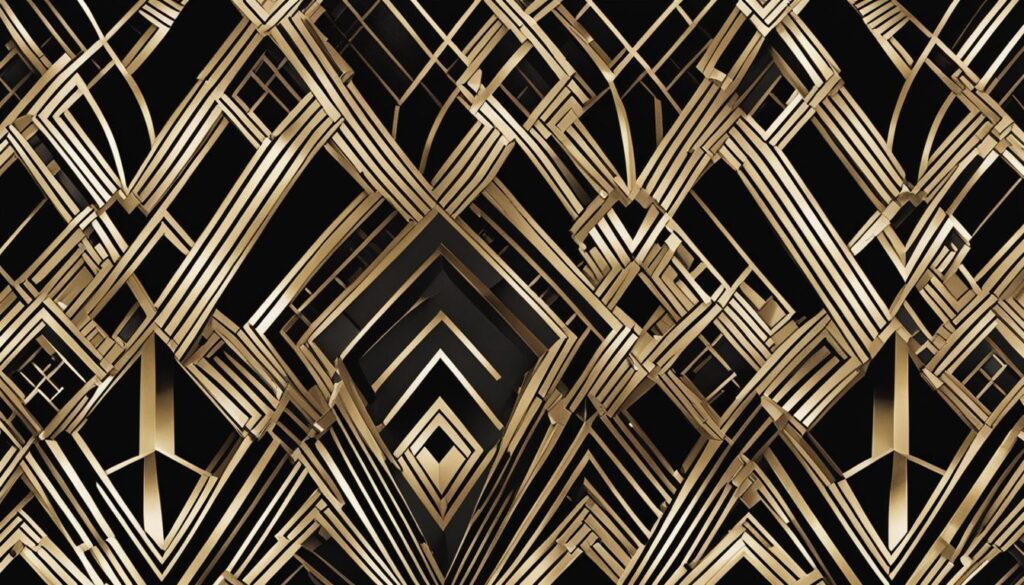
When stepping into an art deco style room, the cohesive narrative between different elements is profound. It speaks to me of a time when every detail was considered an integral part of the larger design story. From decorative accessories to furniture silhouettes, the geometric influences are consistent, showing a celebration of form that is uniquely expressive of the Art Deco period.
Understanding and appreciating the essential role of geometry in Art Deco has profoundly influenced how I perceive and create designs within this historical yet timeless style. It’s an art form where motif matters as much as function, and boldness is never shied away from—it’s celebrated.
Art Deco Wallpapers and Tile Work
As a passionate advocate for the revival of historic aesthetics in modern homes, I’ve observed how art deco wallpapers have become instrumental in this resurgence. Their unmistakable patterns provide more than just a backdrop; they create a focal point in any room, ushering in the opulence that is characteristic of the Art Deco era.

Embracing Geometric and Floral Patterns
The allure of Art Deco design lies in its striking visual narrative, and wallpapers play a crucial role in telling this story. Geometric patterns with symmetrical lines and angular forms offer a modern interpretation of the period’s design motifs. Simultaneously, floral designs, rich with velvet-like textures, add an extra layer of sophistication to living spaces, allowing them to resonate with an air of old-world luxury that’s still relevant in today’s design landscape.
The Drama of Moody Art Deco Atmospheres
It’s not simply about aesthetic appeal; the bold contrasts and rich palettes of Art Deco wallpapers contribute to an ambiance laden with drama and moodiness. This can transform standard spaces into lavish settings reminiscent of the style’s heyday. My personal experiences have shown that adding such elements enhances not just the room’s style but its overall emotion, evoking the spirited essence of the Roaring Twenties.
- The bold use of dark hues, paired with metallic accents, can create a striking effect, especially in lighting that accentuates the tactile textures of Art Deco designs.
- Whether it’s a powder room or an extended living area, the impact of carefully chosen tiled patterns cannot be overstated in curating an authentic, high-style interior space.
For those looking to infuse their homes with the timeless appeal of Art Deco, incorporating distinctive wallpapers and tile work is a transformative step. As I bear witness to their resurgence, it is clear that the grandeur and elegance they offer are unmatched in the realm of interior design.
Metallic Surfaces and Shimmering Accents
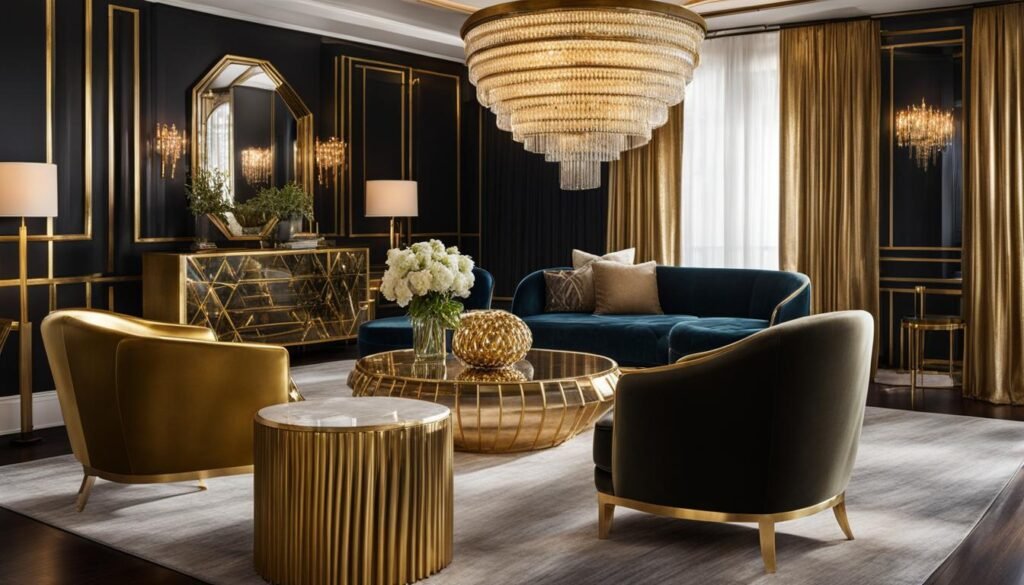
As an aficionado of the Art Deco period, I’ve always appreciated the style’s use of metallic finishes to bring a sense of sophistication and splendor to interior spaces. The reflective qualities of materials such as gold, brass, and chrome serve as a testament to Art Deco’s age of luxury. It’s these shimmering accents that capture the eye and create focal points within a room. Art Deco lighting, with its sleek lines and metallic sheen, acts as more than a functional detail; it’s an artful statement that embodies the era’s enchanting essence. Rich in golden hues and chrome’s crisp sparkle, these lighting pieces are pivotal in setting the ambiance of a space designed with the drama of the Roaring Twenties in mind.
Save this article
Enter your email and we'll send it straight to your inbox.
Consider the role of art deco furniture in this aesthetic – with pieces often adorned with mirrored surfaces and boasting a lacquered finish, they reflect these glittering lights, further accentuating the room’s luxe appeal. The craftsmanship of the furniture during the Art Deco era was unparalleled, with each piece strategically built to not only serve a functional purpose but to act as a standalone piece of decorative art. When I look at an Art Deco armoire or a sleek side table, I see the meticulous attention to detail – the inlaid patterns and the curved geometries that define its unique character.
- Gold-finished table legs that demand attention
- Brass fixtures that exude warmth with every gleam
- Streamlined chrome accents on lighting and accessories
The resplendence of Art Deco design is not limited to grand halls and entryways; it extends into even the most intimate corners of a home. In my experience, the allure lies in how these metallic elements work in harmony with other period features, creating a cohesive, yet striking visual narrative. It’s a style that encourages bold expression and an ode to the glamour that once defined an era. Even today, Art Deco’s influence persists, continuing to inspire decor enthusiasts and designers like myself to revisit and re-imagine the brilliance of the past.
Luxurious Art Deco Lighting Designs
As I delve into the world of art deco home decor, it’s impossible to overlook the importance of lighting in crafting an ambiance that exudes glamorous art deco elegance. These are not mere functional fixtures; they are statement pieces that embody the splendor of a bygone era. From the majestic glow of a chandelier to the accentuating beam of a sconce, the interplay of light and shadow is crucial in showcasing the characteristic luxury of Art Deco design.
Chandeliers and Sconces: Jazz Age Elegance
The chandelier, that centerpiece of splendor, dangles with a grace reminiscent of the Jazz Age’s opulence. Each crystal and metal work in sconces and chandeliers not only reflects light but also style and sophistication. Meanwhile, sconces, often employed in pairs, flank mirrors and artwork, serving as beacons guiding us through the lavish lifestyle of the era that Art Deco encapsulates.
The Role of Table Lamps in Art Deco Decor
Table lamps in the Art Deco realm present a stunning array of designs, from geometrically daring to understated elegance. Sculpted from metals and topped with oversized, stained glass, or fabric shades, these lamps do more than illuminate; they contribute to the narrative of the space, each a mini-monument to the period’s design ethos.
Art Deco Furniture: A Fusion of Form and Materials
As I explore the enchanting world of modern art deco, I’m continually captivated by the luxurious essence of its furniture design — a true celebration of intricacy and material sophistication. In essence, art deco home decor ideas draw upon a rich array of materials and silhouettes to create an ambience that’s both vintage and remarkably au courant.
I’m particularly drawn to the fascinating contours that characterize Art Deco furniture: the curved lines, fluted details, and the occasional scalloped edge. These forms are more than just aesthetically pleasing; they exemplify a merger of form and function, making everyday furnishings into striking statement pieces.
Let’s talk materials. The use of sumptuous fabrics like velvet and leather in upholstery feels almost sinfully luxurious under the fingertips, while the surfaces gleam with embellishments such as fringe trim and high-gloss lacquered woods. These tactile elements bring depth and indulgence into any living space.
The legs and frameworks of these iconic pieces often boast metals like gold and brass. It’s these intricate gold-legged structures that truly reveal the opulence of the time — and which continue to captivate those of us seeking a touch of grandeur in our own spaces.
- Lavish Textiles: Velvet and leather upholstery inject a sense of indulgence.
- Exquisite Edges: From curved to fluted, the definition of elegance in form.
- Metallic Accents: Gold-legged details encapsulate Art Deco opulence.
- Glossy Finishes: The gleam of lacquered wood reflects the era’s grandeur.
These design elements do more than just serve a functional purpose — they evoke a specific mood. Whether it’s the sophistication of a streamlined console table or the bold defiance of a geometric bookshelf, the furniture pieces selected for their modern art deco meritoriousness convey an avant-garde spirit, encapsulating the essence of innovation that defined the roaring twenties.
Incorporating modern art deco furnishings into a space doesn’t just create a room; it sets a stage. It reflects a narrative of luxury, innovation, and artistic fervor, turning homes into galleries that celebrate the age-old allure of Art Deco design with a contemporary twist. For me, crafting art deco home decor ideas is an artistic endeavor that transcends time, speaking to the ageless desire for beauty in our daily lives.
Incorporating Vintage Glam into Modern Homes
The allure of art deco room ideas is timeless, marrying the splendor of the past with today’s design principles. I find that there’s a certain magic in fusing art deco ideas with modern functionality. These spaces resonate with those of us who appreciate the nostalgia of bygone eras without forsaking the comforts of the 21st century. Below, let’s delve into how historical elegance and vintage elements can form a captivating statement in contemporary environments.
Combining Historical Elegance with Contemporary Design
In my pursuit to blend vintage aesthetics with a modern lifestyle, I ensure that each art deco influence serves a purpose beyond mere adornment. A classic geometric mirror not only alludes to historical elegance but also brings a sense of spaciousness to a room. Streamlined furnishings, in rich woods and luxurious fabrics, advance the art deco narrative while offering contemporary comfort and style.
Vintage Elements: Making a Nostalgic Statement
Vintage accents are the soul of art deco ideas, providing a sublime throwback to the Jazz Age. Delicate light fixtures, from sconces to ceiling pendants, cast a warm and inviting glow reminiscent of the 1920s, creating focal points in the room. By strategically placing pieces like a vintage bar cart or a cherished collection of art deco figurines, these evocative elements become conversational centerpieces that bridge past and present.
- Embrace art deco’s rich color palettes by integrating jewel-toned accessories.
- Choose art deco-inspired textiles and patterns to add depth to modern furnishings.
- Incorporate streamlined art deco silhouettes to contrast with contemporary minimalist lines.
By meticulously integrating these aspects, my approach to design honors the vintage charm of art deco ideas while catering to modern preferences for utility and minimalism. It’s a dance between eras that results in a space that’s both sophisticated and personal.
Accessorizing with Art Deco: The Devil’s in the Details
As I delve into the intricacies of Art Deco home decor, it becomes evident that the allure of this style lies in its attention to detail. The addition of art deco decor accessories is akin to the punctuation in a literary masterpiece – essential not just for structure, but for flavor and emphasis. Crystal chandeliers that cascade light like waterfalls, mirrored furniture reflecting the room’s opulence, and velvet upholstery inviting a touch with its luxurious pile: each piece is a deliberate choice that significantly ups the ante of a home’s sophistication.
In my exploration of accessorizing spaces, I’ve observed that implementing elegant tableware, the patina of vintage artwork, and the rich spines of classic books have a transformative effect. They are more than mere objects; they are a narrative in physical form, each one contributing a chapter to the story of the space. These touches of refinement distinguish a mundane room from a stylish sanctuary, exemplifying the storied elegance that art deco home decor is famed for. It’s this curation of accessories that turns a house into a treasury of timeless charm and character.
The ethos of Art Deco is grand, yet its true essence can be captured in the smallest of details. As I integrate this style into my living space, I find that these treasures—the gilded frames, the ornate lamps, and the geometrically patterned screen dividers—are not just decorative elements. They serve as ambassadors of history, echoing a bygone era of glamor, and remain integral to conveying the opulence and prestigious narrative that is unmistakably Art Deco.
FAQ
What defines the Art Deco decorating style?
Art Deco decorating style is characterized by its luxury, bold geometry, and elaborate ornamentation. It features metallic accents, rich colors, bold patterns, and sophisticated furniture designs that evoke the opulence and glamour of the 1920s and 1930s. The style prioritizes symmetry, angular forms, and exotic materials to create a distinctively modern and elegant aesthetic.
How can I incorporate Art Deco style in my modern home?
Incorporating Art Deco style into a modern home involves blending the vintage aspects of Art Deco with functional contemporary design. This can be achieved by using elegant Art Deco furniture, color palettes of bold black and jewel tones accented with pastels, adding geometric-patterned wallpapers or tiles, and selecting metallic finishes and luxurious lighting fixtures. Accessorize with Art Deco elements like mirrors, velvet upholstery, and period artwork to complete the look.
What are common materials used in Art Deco furniture and decor?
Common materials used in Art Deco furniture and decor include chrome, brass, glass, mirrored surfaces, lacquered wood, velvet, and other sumptuous fabrics. Furniture often features inlaid wood and exotic finishes, with upholstery in rich textures to convey comfort and opulence. Metallic accents in gold and silver are frequent in decorative items for added glamour.
Can you describe the Art Deco color palette?
The Art Deco color palette is known for its use of luxurious jewel tones like sapphire blue, emerald green, and ruby red. Black is used boldly to add depth and drama, while metallic colors such as gold and silver provide a shimmering contrast. Pastels are sometimes included to soften and balance the stronger colors, adding depth and interest to the overall design.
What are some iconic Art Deco architectural landmarks?
Iconic Art Deco architectural landmarks include the Empire State Building in New York, the Chrysler Building, the Board of Trade in Chicago, the Hoover Building in London, and the Eastern Columbia Building in Los Angeles. These structures are celebrated for their distinctive geometric forms, lavishly detailed facades, and the impression of grandeur and luxury that is emblematic of the Art Deco era.
What patterns are emblematic of Art Deco wallpapers and tiles?
Patterns emblematic of Art Deco wallpapers and tiles include bold geometric shapes like chevrons, zigzags, sunbursts, and stylized floral designs. These patterns often showcase a contrast of bold and neutral colors, with metallic highlights. They create an energetic visual impact, consistent with the Art Deco aesthetic of glamour, luxury, and modernity.
How did Art Deco emerge, and when did it reach its peak?
Art Deco emerged in France in the 1910s and reached its peak in the 1920s and 1930s. It gained international acclaim after the 1925 Paris Exposition Internationale des Arts Décoratifs et Industriels Modernes. The style’s popularity burgeoned as it symbolized modernity and elegance, transforming design across various mediums, including fashion, architecture, and home decor.
How do lighting fixtures contribute to the Art Deco decor style?
Lighting fixtures play a critical role in the Art Deco decor style, both as functional objects and as sculptural pieces that accentuate the drama and luxury of the space. Chandeliers and sconces typically feature geometric forms, polished metals, and glass detailing. Table lamps with ornate bases, oversized shades, and unique silhouettes contribute to the opulent and vintage ambiance of Art Deco interiors.
What role do metallic surfaces play in Art Deco decorating?
Metallic surfaces are central to the Art Deco decorating ethos, exuding sophistication and bringing cohesiveness to the decor through their reflective qualities. Metals like gold, chrome, and brass are used in furniture, fixtures, and accents, adding a sense of elegance and richness to the space. These surfaces often feature in combination with other luxurious materials, amplifying the grandeur of the Art Deco style.
How can I accessorize a room to achieve an Art Deco look?
To accessorize a room with an Art Deco look, focus on selecting items that contribute to the style’s lavish and orchestrated aesthetic. Incorporate elegant mirrors, crystal chandeliers, sleek metallic trims, bold geometric shapes, and luxurious fabrics like velvet and silk. Vintage artwork, period-specific sculptures, and decorative books can also serve as conversations pieces that enhance the room’s overall glamour.
Save this article
We'll email you the link so you can find it again later.


