

As a passionate advocate for transformative interiors, I am always on the lookout for design trends that marry elegance and historical charm. Art deco interior design, with its luxurious silhouettes and timeless allure, stands out as a quintessential example. The resurgence of art deco modern interior design is a testament to the enduring legacy of an era that celebrated opulence and sophistication. My exploration of this iconic style is more than a retro revival; it’s a curated integration of the glamour of the 1920s into the modernity of our living spaces, creating elegant interiors rich with cultural narrative and aesthetic significance.
Adopting elements of Art Deco in today’s homes isn’t merely replicating a historic trend; it’s about redefining spaces with audacious geometry and vibrant character. As we delve into the intricacies of Art Deco, we uncover an intricate dance of shapes and textures that both enliven and harmonize a room. Indeed, interior design trends are cyclical, yet the opulence and drama of Art Deco promise a unique timelessness that I find perpetually captivating in modern homes.
Key Takeaways
- Art Deco’s revival reflects a blend of 1920’s luxury with contemporary tastes.
- Geometric patterns and metallic accents define the Art Deco aesthetic.
- Incorporating Art Deco is about creating balance between bold and understated elements.
- Rich textures and materials are essential for achieving elegant interiors in the Art Deco style.
- As a modern homage, Art Deco interior design holds a revered place in current interior design trends.
- The movement’s influence extends beyond visuals to represent a lifestyle of sophistication and glamour.
Understanding Art Deco Interior Design
As I delve into the essence of Art Deco interior design, it’s impossible not to be captivated by its compelling history and bold esthetic. The Art Deco style is more than just a visual statement—it’s a lasting symbol of the union between form and function, an alliance forged in the roaring dynamism of the early 20th century. But what is Art Deco interior design exactly, and how does it continue to influence our spaces today? Let’s unravel the luxurious allure and architectural finesse that make this design era so unforgettable.
Defining the Art Deco Style
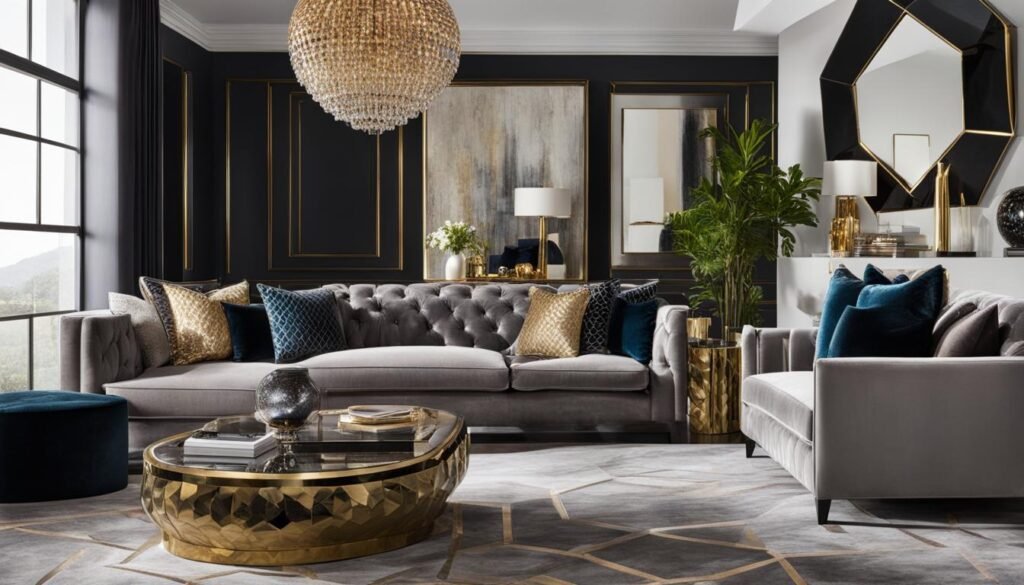
At the heart of Art Deco interior lies a meticulous harmony of geometric patterning and opulent detail. It’s a testament to human ingenuity, where every curve and corner serves a purpose, and lush materials whisper stories of grandeur. From the unmistakable symmetry to the intricate motifs, the definition of Art Deco is inseparable from its dedication to craftsmanship and a zest for the extravagant.
Historical Influence on Modern Living
The evolution of Art Deco architecture and interiors speaks volumes about our perennial chase for beauty that endures. Its historical influence seeps into my modern living space, whispering echoes of the past where technological progress and artistic expression danced hand in hand. And as I look around, it’s clear that the charm of Art Deco’s past beautifully complements the minimalist tendencies of the present.
Key Characteristics of Art Deco
- Usage of high-contrast, rich colors and materials like ebony, marble, and mirror
- Bold geometric forms and patterns
- Metallic accents, especially chrome and brass, to evoke a sense of indulgence
These trademark features are the bedrock of the Art Deco style, each contributing to an overall effect that’s as visually magnetic as it is historically emblematic. By interlacing sleek metals with sumptuous textures, I can’t help but feel transported to an era where glamour was not just desired, it was celebrated in every facet of design.
Art Deco Interior Design Elements
The resurgence of Art Deco interior design elements allows us to dive deep into a world where geometric patterns and the lavish use of luxurious materials create a visually stunning tableau reminiscent of 1920s design. Embarking on this stylistic journey, one discovers how the intricate details and art deco elements work in harmony to produce a sophisticated and timeless space.
Geometric Patterns and Bold Symmetry
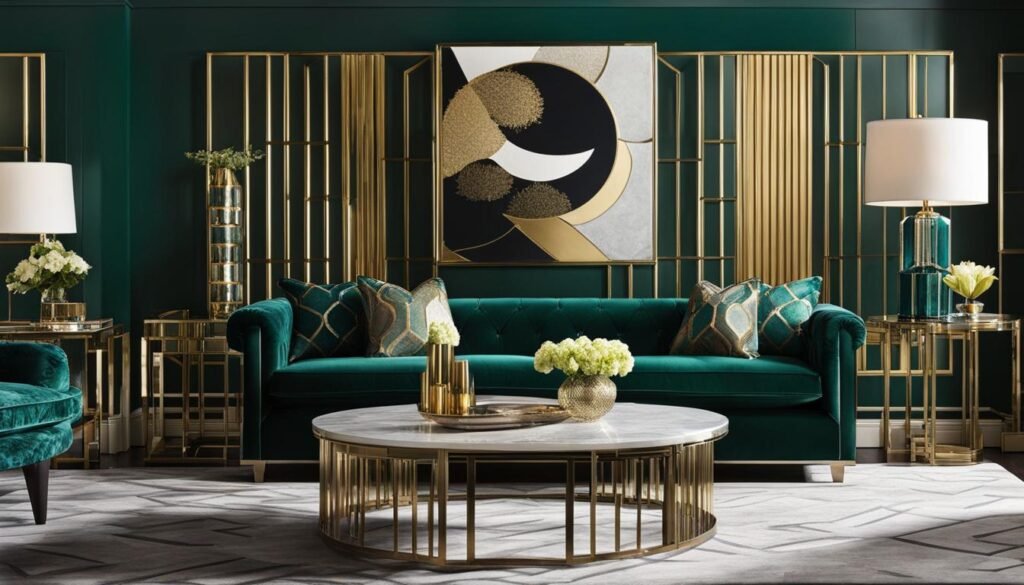
At the heart of Art Deco’s magnificence lies an unwavering commitment to geometric patterns and bold symmetry. The design’s essence is captured through meticulously crafted chevrons, the rhythmic flow of zigzags, and the radiance of sunburst motifs. These interlocking shapes not only define spaces but also accentuate the grandeur innate to the opulent Art Deco era.
Luxurious Materials and Rich Textures
One cannot speak of Art Deco without reflecting on the sumptuous array of luxurious materials that drape every surface. Velvet whispers elegance; silk exudes sophistication; satin gleams with a subtle shine. The layering of these rich textures enhances the depth and comfort, allowing each room to narrate its own story of luxury and finesse.
The Role of Metallic Accents and High-Shine Finishes
Beyond the lavish fabrics and bold designs, Art Deco’s allure is heightened by the strategic use of metallic accents and high-shine finishes. The glimmer of chrome, the warmth of brass, and the prestige of gold come together to create an interplay of light that dances across the room, bestowing upon it an ambience of crafted sophistication that is undeniably captivating.
Art Deco Color Palette: Creating a Visual Impact
When I think of Art Deco colors, it’s the vibrant hues and jewel tones that immediately come to mind. These are the shades that captivate the eye and define the bold aesthetics of the era. The iconic art deco wallpaper we’ve come to know, adorned with punchy colors and geometric motifs, is a perfect example of how this design language uses color to create depth and drama.
Among this vibrant palette, we find deep reds representing the warmth and passion of the 1920s, while greens and blues add a touch of cool elegance. Vibrant yellows bring energy to these spaces, harking back to a time of opulence and festivity. To embody the grandeur of the Art Deco era, these colors are then paired with luxurious metallic accents such as silver, gold, and chrome, providing exquisite contrast and a signature shine.
- The boldness of black and white
- The warmth of deep reds
- The serenity of emerald greens
- The depth of sapphire blues
- The cheerfulness of sunny yellows
In my experiences with interior design, incorporating these colors through accessories and accents can completely alter the energy of a space. As someone who respects the legacy and stylistic achievements of the Art Deco movement, I find that the strategic use of these colors does more than just beautify—they uniquely characterize and enliven a room.
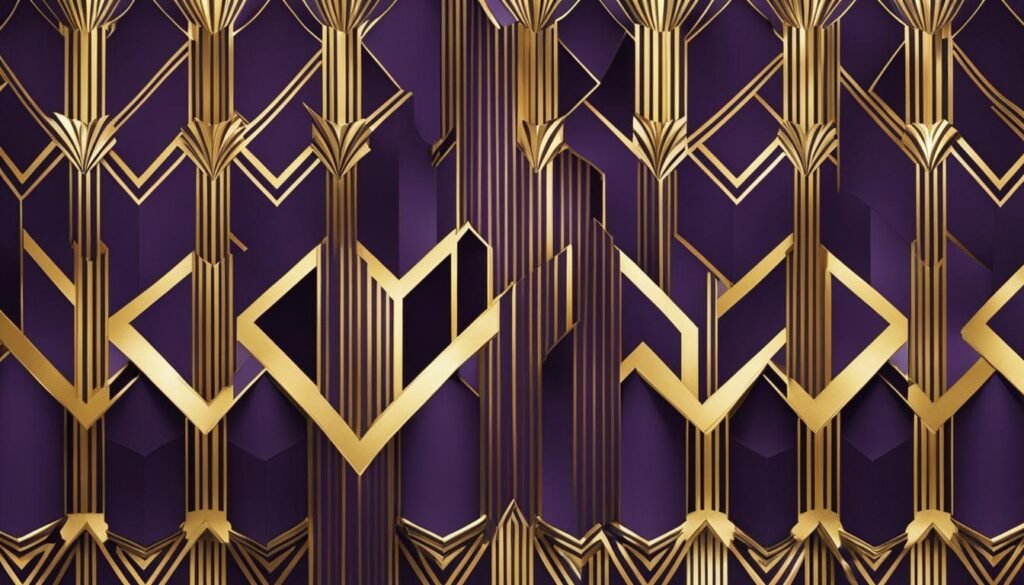
To really grasp the transformative power of these art deco colors, imagine walking into a room where the walls are enveloped in patterned wallpaper that shines with gold and silver geometrics against a backdrop of midnight blue. It’s a room that doesn’t just display color—it sings with an undeniably golden-age charm that resonates with modern tastes.
Iconic Art Deco Furniture Pieces
When I envision the quintessential art deco home design, my mind immediately travels to the opulence and stylized forms of the Jazz Age, a period where art deco furniture reigned supreme with its celebration of modernity and luxury. Every piece of furniture selected for my projects isn’t merely a choice in functionality but an homage to the era that epitomized elegance, with attention-grabbing woods and captivating shapes. Allow me to impart some wisdom on how these enduring pieces can elevate any space.
Selection Strategies for Statement Art Deco Furniture
Selecting the perfect piece of art deco furniture requires a discerning eye, one that’s cognizant of the style’s nuanced attributes. I concentrate on pieces that boast sleek lines and symmetrical designs that converse with the room and its other inhabitants. My strategy often entails seeking out bold, assertive silhouettes that confidently anchor a space while captivatively coaxing the viewer’s gaze.
- Identifying authentic or reproduction pieces with clean, streamlined shapes.
- Choosing furniture with a strong visual presence that harmonizes with surrounding elements.
- Opting for substantial, yet elegantly crafted items that serve as the focal point of a room.
Incorporating Exotic Woods and Streamlined Shapes
The allure of exotic woods in art deco furniture—the likes of zebrawood and ebony—is impossible to understate. Not only do they offer a feast for the senses with their intricate grain patterns, but they also embody the era’s fondness for materials that spoke of far-flung adventures and unexplored territories. My preference always leans toward pieces that marry these exotic woods with the streamlined, geometric shapes that are so iconic of the art deco movement.
- Seek out furniture crafted from fine, exotic woods with distinctive patterns and hues.
- Embrace items that implement geometric forms, be it through inlaid designs or the overall shape of the piece.
- Combine different materials such as glass, metal, and wood to reflect the period’s innovative spirit.
The Allure of Art Deco Lighting
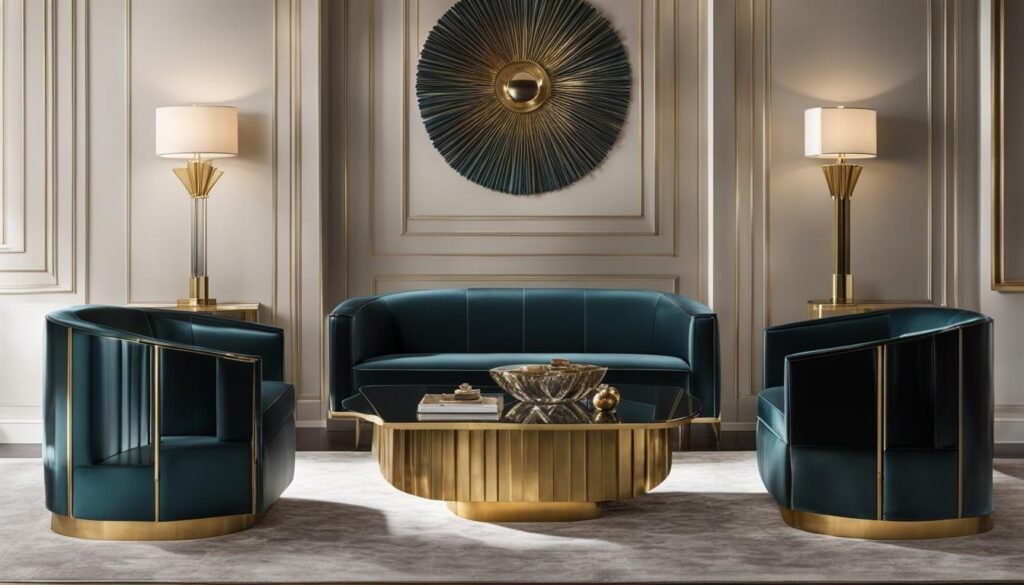
As I delve into the world of art deco lighting, I’m continuously captivated by the elegance and geometric harmony that characterize this distinctive style. The timeless appeal of art deco patterns within these lighting designs elevates them from mere functional objects to captivating pieces of art. The optimal choice for anyone seeking decorative lighting solutions, these fixtures are not just about illumination—they’re an homage to an era renowned for its bold style and cultural sophistication.
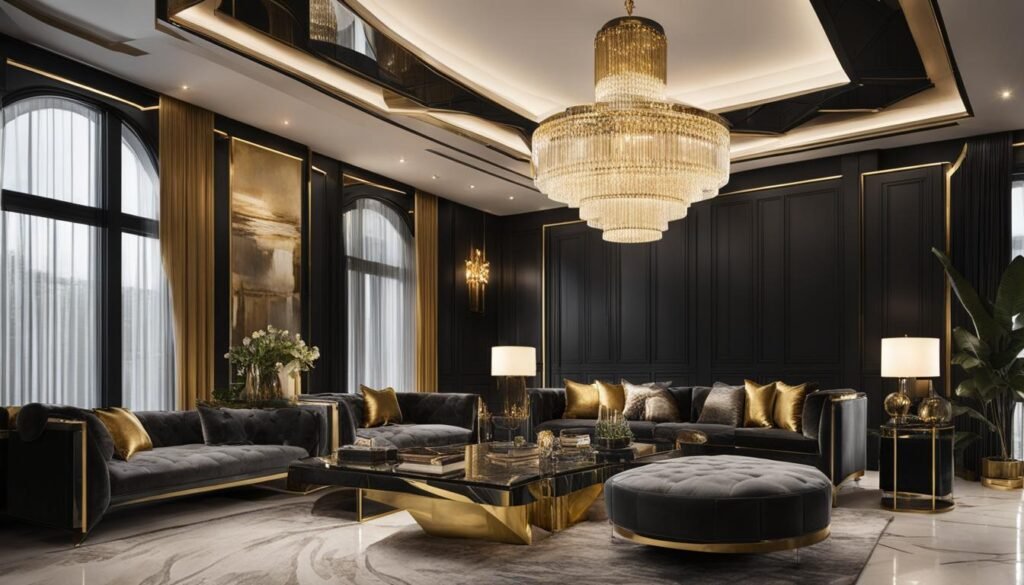
Whether it’s the intricate frosted glass of a chandelier or the sleek lines of a chrome floor lamp, the art deco motifs present in these designs manifest a perfect blend of form and function. An elegant lighting solution is pivotal in any interior design, and with art deco, the impact is undeniably significant, casting a warm and inviting glow that artfully complements the surrounding decor.
- The angular lines and symmetrical forms mirror the architectural elements synonymous with art deco, signaling a return to the opulence of the 1920s and ’30s.
- Chrome and crystal accents are not just embellishments but central to the aesthetic, creating a dazzling interplay with light that enraptures all who bask in its presence.
- From the grandeur of overhead art deco pendants to the subtlety of accent lamps, each piece serves as a testament to the enduring allure of this iconic design period.
My appreciation for art deco lighting deepens when I consider its fusion of artistry and functionality. These lighting elements are pivotal in setting the mood and tone of a space, while also standing as steadfast beacons of an era known for its trailblazing design and cultural renaissance. Seeing a beautifully designed art deco fixture is like stepping back in time, yet its timelessness never ceases to complement contemporary aesthetics flawlessly.
Save this article
Enter your email and we'll send it straight to your inbox.
Accessorizing with Art Deco: A Guide to Curated Additions
As an aficionado of art deco house interiors, I understand the significance of choosing the right art deco accessories to create a harmonious and luxurious environment. The selection process is a delicate art of curation, with a focus on obtaining objects that not only echo the opulence of the era but also complement the existing décor.
- Mirrors with sleek, chrome frames evoke a sense of spaciousness while adhering to the art deco motif.
- Picture frames in brass or gold bring warmth to space and draw the eye to the displayed artwork.
- Tableware, particularly decorative trays and vintage glassware, serves a dual purpose of functionality and ornamentation.
It’s not just about aesthetics; these curated accessories are essential in infusing everyday living spaces with the spirit of the art deco period. I gravitate towards decorative pieces that serve as conversation starters while maintaining a cohesive look.
- Start with a decorative tray on your coffee table, poised to hold vintage glassware or a stack of curated books.
- Add dimension with a sculptural vase or an art deco-inspired artwork, which acts as a stunning focal point.
- Include a mix of metals, such as silver, gold, and bronze, to diversify textures within the space and add visual depth.
Remember, the key to accessorizing your art deco sanctuary is balance; curate with intention and allow each piece to contribute to the grand narrative of your home’s interior. And when in doubt, opt for the timeless elegance of art deco accessories, meticulously chosen to reflect the exquisite and orderly art deco aesthetic.
Art Deco Flooring and Textiles: Foundations of Style
When I step into a space that has been thoughtfully appointed with art deco flooring and textiles, the room’s entire vibe shifts to one of timeless elegance. These elements are more than just decorative—they’re the foundation upon which the opulence of the Art Deco era is built. Let’s delve into the design specifics that make Art Deco floors and fabrics so distinct.
Choosing Patterns and Materials for Art Deco Floors
As I explore the avenues of period-appropriate flooring, it’s clear that nothing says Art Deco quite like boldly geometric patterned rugs and starkly contrasting tiles. Think of the glamorous black and white checkered designs underfoot or the intricate tiling that adds both texture and a visual anchoring to a room. These visual treats are more than an homage to a bygone era; they are a statement of lavish taste and an adherence to the aesthetics that define luxurious flooring.
- Consider materials like marble and terrazzo that reflect the period’s love for high-end, natural elements.
- Explore art deco patterns in inlays and borders to truly capture the era’s essence.
- Coordinate with rugs that feature dynamic, angular motifs to complete the look.
Combining Comfort and Elegance in Art Deco Fabric Selections
In my search for the perfect blend of comfort and elegance, I’ve found that textiles play a pivotal role in Art Deco interiors. The rich, tactile nature of velvet and the smooth sheen of silk provide the perfect counterbalance to the riveting geometric designs. These fabrics act as a soft juxtaposition to the hard lines and lavish materials typical of Art Deco furnishings and embellishments. Incorporating these sumptuous fabrics into a space can transform it, making for a more inviting and plush environment.
- Integrate velvet cushions or draperies for an instant touch of luxe.
- Use silk accent pieces to bring a pop of sheen and sophistication.
- Pair these fabrics with Art Deco furniture to enhance the authentic look.
Incorporating Art Deco Interior Design in Modern Spaces
As a professional with a deep appreciation for interior design art deco style, I understand the importance of seamlessly weaving this classic form into contemporary environments. Achieving a harmonious marriage between the time-honored art deco interior style and the clean lines of modernist design is an invigorating challenge that, when executed properly, produces a living space that resonates with vintage aesthetics yet meets modern demands.
I always recommend starting with the strong visual elements that define Art Deco. Geometric patterns and metallic finishes can serve as unifying threads that link vintage charm with modern simplicity. The key to success lies in the curation; each piece selected must be a nod to the past while speaking to the future. Where Art Deco brings the allure, modernist design adds the function.
- Commence with statement lighting and bold geometric rugs to anchor the room.
- Select furniture that mirrors the sleek lines and high-gloss finishes so emblematic of the era.
- Accentuate space with chrome or brass elements to recall the opulence of the 1920s.
- Incorporate mirrors and metallic trims to capture and reflect light, enhancing the room’s dimensionality.
In the interplay of form and function, I aim to respect the integrity of both modernist design and Art Deco. The juxtaposition of a sleek modern sofa against an Art Deco-inspired mural, or the placement of contemporary art over a streamlined sideboard, reflects a thoughtfulness in design. It’s about creating a dialogue between the eras, allowing them to complement one another rather than compete.
- Begin by identifying the focal points of the room, ensuring they are unmistakable nods to Art Deco’s splendor.
- Intertwine modern pieces that echo the vintage aesthetics without overshadowing the design’s heritage.
- Utilize color palettes that can unify the pieces, drawing from a blend of both Art Deco richness and modern neutrality.
- Finish with texture — velvets, silks, and metals add the tactile depth reminiscent of Art Deco’s layered interior approach.
My approach centers on the conviction that by embracing the storied heritage of Art Deco, we can enhance modern spaces with an undeniable gravitas. It’s a respectful nod to the past, rendered in the comfort and functionality of modern design, ensuring that these spaces truly stand the test of time.
Conclusion
In my exploration of the Art Deco home interior, I’ve been thoroughly captivated by how this beloved design can elevate and transform living spaces into showcases of the Roaring Twenties glamour. It’s abundantly clear that the chic and sophisticated design elements intrinsic to Art Deco have an enduring charm that resonates strongly in contemporary homes. The rich palette of luxurious materials and the arresting visual allure of bold geometries have, time and again, brought a unique and timeless elegance to interiors around the world.
The impact of Art Deco on home design extends beyond temporal or cultural borders; it is a universal signifier of sophistication. From city lofts to suburban dwellings, the incorporation of its iconic motifs and textures is akin to weaving a narrative that speaks of history, luxury, and an unapologetic celebration of aesthetics. Whether through the strategic placement of geometric patterned rugs or the gleam of chromed lighting fixtures, the power of Art Deco to uplift and recreate my living environment has been a transformative experience I deeply cherish.
Ultimately, the decision to integrate this iconic style has been more than just a redecoration effort—it’s been a journey through a storied past. As I reflect on the distinctive decorative accents and the seamless fusion of form and function, I am filled with a sense of satisfaction. Art Deco continues to thrive as a touchpoint of design excellence, ensuring those who embrace it are treated to a living space that is as enchanting as it is impressive. The allure of this chic era endures, granting a slice of the Roaring Twenties’ glamour to anyone who desires it for their home.
FAQ
What defines the Art Deco interior design style?
Art Deco interior design style is defined by its emphasis on geometric patterns, bold symmetry, and the use of luxurious materials and colors that convey opulence and sophistication. Rich textures, metallic accents, and elaborate ornamentation are also hallmarks of the style.
How has historical influence shaped modern Art Deco living spaces?
The Art Deco style was influenced by the technological advancements and cultural changes of the 1920s and 1930s, bringing a sense of luxury and forward-thinking design to modern living spaces while maintaining a nod to the classic elegance of the era.
What are the key characteristics of Art Deco?
The key characteristics of Art Deco include geometric shapes, streamlined forms, and rich, vibrant colors paired with luxurious materials such as ebony, marble, and chrome. Symmetry and bold, decorative elements also play a significant role in defining the style.
Can you describe the Art Deco color palette and its significance?
The Art Deco color palette consists of bold and vibrant hues, including deep reds, blues, greens, and yellows, often paired with black and white for high contrast and dramatic effect. Metallic tones like silver, gold, and chrome add a luxurious feel, which is integral to the style’s visual impact.
How should one select statement Art Deco furniture pieces?
When selecting Art Deco furniture, look for pieces with sleek lines, symmetrical designs, and bold silhouettes. Furniture made from exotic woods or featuring chrome and mirrored finishes can serve as a functional focal point while emphasizing the luxurious essence of Art Deco.
What role does lighting play in Art Deco interior design?
Lighting in Art Deco interior design is not only functional but also serves as a decorative centerpiece. Fixtures typically exhibit angular, symmetrical designs and use materials such as frosted glass and crystal to complement the geometric patterns and metals common in Art Deco decor.
What accessories best complement Art Deco house interiors?
To complement Art Deco house interiors, choose accessories that embrace metallic accents such as mirrors, picture frames, and tableware in brass, chrome, or gold. Adding Art Deco-inspired artwork, sculptures, and decorative items enhances the luxurious and orderly aesthetic.
How do you choose the right patterns and materials for Art Deco flooring and textiles?
For Art Deco flooring, select geometric patterns and materials that offer an opulent feel, such as black and white tiles or vividly designed rugs. Textiles should balance comfort and elegance, using materials like velvet and silk to align with the style’s aesthetic.
Can Art Deco interior design be effectively incorporated into modern spaces?
Yes, Art Deco interior design can be seamlessly incorporated into modern spaces by blending vintage aesthetics with contemporary design elements. Modernist design can be enhanced with Art Deco’s geometric patterns, rich materials, and distinctive color palette.
How does Art Deco design transform living spaces?
Art Deco design transforms living spaces by infusing them with the chic and sophisticated essence of the Roaring Twenties. Its combination of bold geometry, opulent materials, and distinctive accents can elevate a home’s interior to a level of historical glamour and luxury.
Save this article
We'll email you the link so you can find it again later.


