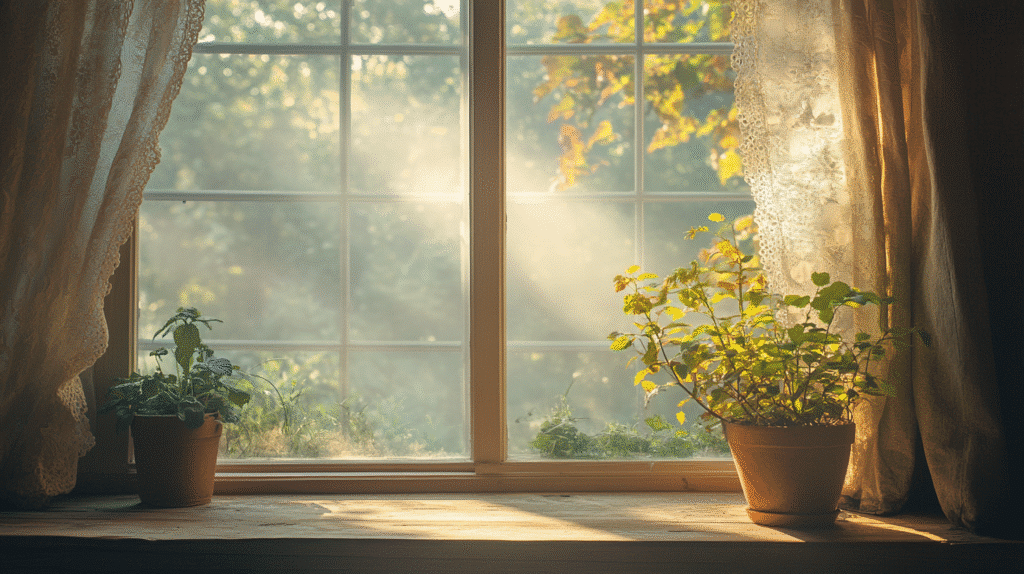
As an aficionado of design, I’ve always been captivated by the effortless grace that defines elegant French design. It’s remarkable how a style so steeped in history can exude a timeless chicness that resonates with contemporary preferences. When you think of a french chic style home, one tends to imagine spaces that effortlessly blend the grandeur of the past with the clean lines of the minimalist aesthetic. It’s this seamless marriage of old and new that has placed french design trends at the forefront of interior styling. French design essentials have an undeniable allure, encouraging even the most modern design enthusiasts to incorporate elements of this exquisite style into their homes, reflecting the hallmark of contemporary french design.
Key Takeaways
- Discover the quintessence of elegant French design and its ability to infuse spaces with a refined sense of comfort.
- Explore the latest french design trends that make for a tastefully eclectic home.
- Understand the french design essentials necessary for creating a space that balances luxury with simplicity.
- Learn how the french chic style home aesthetic can be achieved with thoughtful touches and a discerning eye for detail.
- Embrace the minimalist aesthetic that is often at the heart of French interior design, where less is indeed more.
- Grasp the principles of contemporary french design, blending tradition with modernity for a refreshingly understated elegance.
The Essence of French Interior Design: Embracing Effortless Elegance
The quintessential qualities of french style interior evoke a timeless allure that is both minimalistic and deeply rooted in luxurious living. Its foundation rests on the artful balance of historical grandeur and contemporary finesse, a delicate harmony that defines the spirit of French elegance. As I delve into this realm, I aim to uncover the defining characteristics that render French interior design uniquely radiant and inviting.
The High-Low Mix: Juxtaposing Eras and Styles
My approach to reflecting the coveted french design style in a space involves the orchestration of a sophisticated high-low mix. I find that this technique brings an interior to life with a narrative that bridges the gap between different periods and aesthetics. Here’s how I blend elements to capture the essence of french inspired interior design:
- Pairing an ornate Louis XVI side table with the sleek, minimalist lines of a contemporary sofa.
- Curating a collection of vintage books and modern art to create a visually intriguing bookshelf display.
- Accenting a room with European antiques that are thoughtfully juxtaposed against bold, modern light fixtures.
- Utilizing a consistent color palette to unify the diverse array of styles present within the space.
Celebrating Architectural Details and Character
In my experience, the allure of french interior design styles is magnified by the careful consideration and celebration of each home’s unique architectural elements. Here are a few of the ways I like to highlight these features:
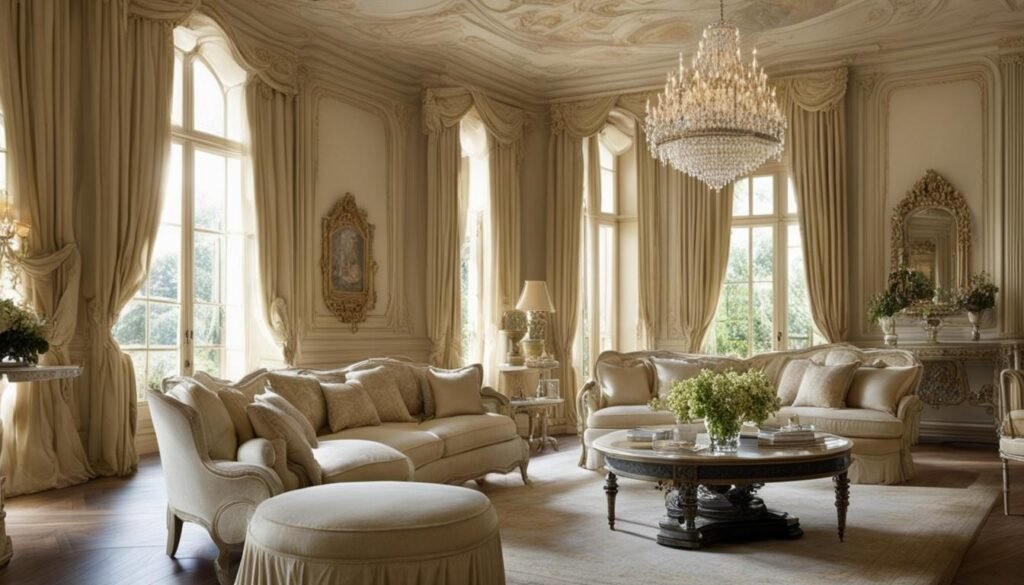
- Enhancing the charisma of a room with well-crafted crown moldings or ornate ceiling medallions to draw the eye upwards.
- Restoring the original wood flooring and pairing it with elegant area rugs, marrying texture with the timeless appeal of natural materials.
- Choosing to adorn a classic mantelpiece with thoughtfully selected decor that both complements and contrasts with its elaborate craft.
- Employing luxurious drapery to frame and honor the height of traditional French windows and doors.
The mastery of what is french style interior design lies not only in the items chosen but in the manner they are woven into the canvas of a home’s architecture, creating a symphony of style that resonates with charm and sophistication.
Crafting a Chic Color Palette in French Design Style
As a connoisseur of french interior design, I can’t help but be fascinated by the allure of french minimalist decor. It’s a testament to the beauty that can be carved out through simplicity and restraint. In the realm of elegant french design, color plays a pivotal role. It can dictate the mood and overall aesthetic. In my experience, nothing quite embodies the essence of a chic French color palette than the subtle sophistication of muted hues complemented by a strong foundation of crisp white.
The foundation of French color theory in interior design begins with white walls. These are not just blank canvases but deliberate choices that reflect light and create an expansive feel within any space. White walls in a french modern interior design play to the strengths of natural light, providing a bright backdrop that makes every other color pop subtly yet significantly.
When it comes to furnishings, it is the neutrals that take center stage. Think of soft beige sofas, ecru curtains, or ivory cabinets that stand as testaments to understated luxury. But, to punctuate these neutral bases, the French often incorporate hues with a hint of grey undertone—colors that evoke the feeling of timeless elegance without overwhelming the senses.
- Sage green, reminiscent of the lush French countryside
- Dusty rose, invoking the softness of a Parisian sunset
- Steely blue, reflecting the sophistication of antique French porcelains
Strategic touches of black are then used to ground the aesthetic, providing a sense of depth and focus. It’s this balance—between the timeless crispness of the walls and the carefully chosen accents—that exemplifies the sophistication and minimalism inherent in French interiors.
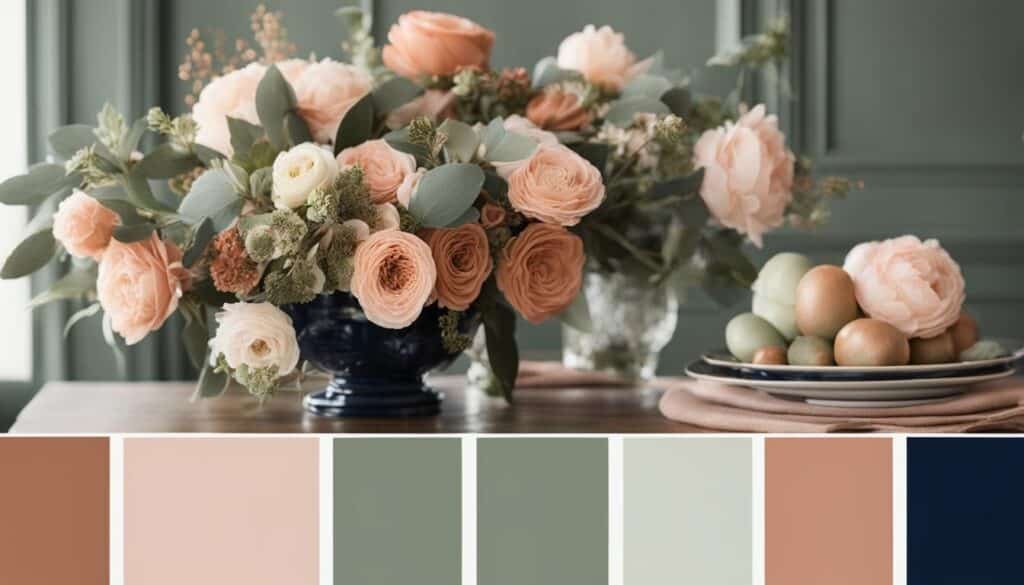
To me, these color choices are more than just a palette; they are a philosophy. They represent an approach that is unmistakably French—a design ethos that is timelessly elegant and serenely confident.
French Eclectic Decor: A Study in Contrasts
The allure of French eclectic decor is undeniable. Taking cues from a rich heritage, my explorations in interior design have revealed a world where every piece has a narrative. I’m particularly drawn to the interplay between aged patina and sleek modern lines—a visual dialogue between past and present. In demonstrating the layers and textures of French home decor, I believe we can find both comfort and avant-garde boldness. Let’s delve into how this fusion of styles creates an interior as unique as one’s personal history.
Artful Arrangement of Vintage Finds
My journey through flea markets and antique shops has taught me the value of items worn with time. These vintage finds, like speckled mirrors and tables cloaked in peeling paint, are not mere objects; they’re storytellers of the bygone era. Placed thoughtfully within a modern context, they elevate the space with an effortless French charm that’s both rustic and refined. These elements of French home decor are not just decorative; they’re the heartbeats of spaces that resonate with authenticity.
Contemporary and Traditional Fusion
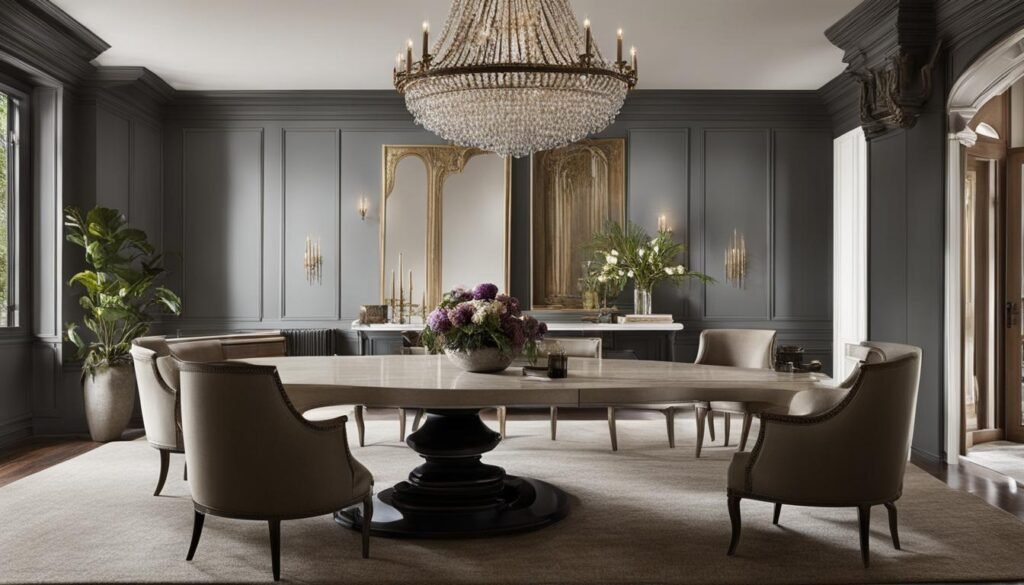
What fascinates me is the seamless integration of contemporary and traditional French design in modern interiors. The juxtaposition of sleek, contemporary fabrics against the raw textures of aged wood brings a sense of warmth that modern french design alone cannot deliver. The key lies in crafting a narrative that balances both ends of the spectrum—a curated harmony that gives a nod to the past while firmly holding its place in the present. This is the essence of creating a home that feels storied and lived-in, a true reflection of French eclectic decor.
Glamour Meets Simplicity: Key Accessories in French Chic Style Home
When I consider the essence of a french chic style home, I am immediately drawn to the subtle interplay of opulence with understated grace. It’s a skilled curation of high-impact accessories that harmoniously coexist with the simplicity that is often associated with French design. My focus lies in selecting pieces that are not just decorative but are imbued with a certain ‘je ne sais quoi’—a quality intrinsically linked to french design inspiration.
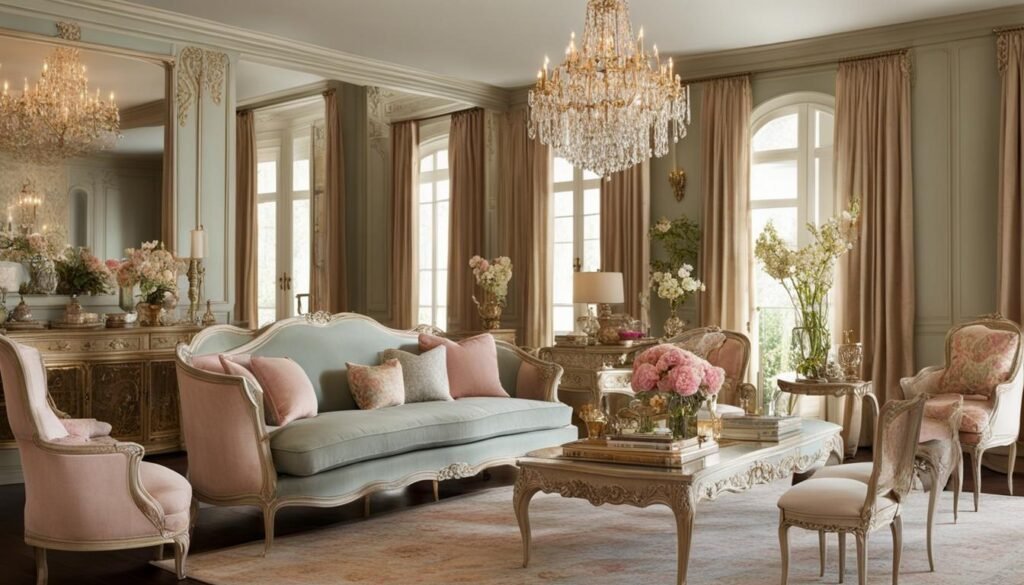
Picture walking into a room where your eyes are captured by the delicate sparkle of a crystal chandelier, a signature element in achieving that coveted glamour. Yet the environment retains its airiness and ease, thanks to the ample negative space and a mindful approach to decor. This balance ensures that each piece, like a gilded mirror reflecting the soft daylight, becomes a statement without dominating the conversation of the room.
My admiration for french-inspired furniture stems from its ability to convey luxury without pretense. An ornate armchair here, an antique side table there—each item is chosen not only for its aesthetic appeal but for the stories these pieces tell. In a french chic style home, the narrative woven through the furnishings is as crucial as the visual harmony they provide.
- Elegant crystal chandeliers
- Gilded mirrors and frames
- Luxurious textiles in throw pillows and drapery
- French-inspired sculptural pieces
- Antique or vintage decorative items
The goal in my own space, as in any french chic style home, is to find that quintessential harmony between glamour and simplicity. It’s in the careful selection and placement of these items, the way the light bounces off reflective surfaces, and the overall cohesiveness of the space that one truly feels the touch of French elegance.
Presentation of Imperfections: French Minimalist Decor
In the realm of french minimalist decor, there exists a profound appreciation for the beauty that imperfections bring to the space. It’s here where flaws are not shunned but rather celebrated as emblems of authenticity and stories untold. As someone deeply invested in the art of interiors, I find the philosophy behind this perspective both enriching and intriguing. It’s a reminder of the traditional french design ethos, which venerates the passage of time as an essential contributor to aesthetic character.
Embracing Aged Wood and Chipped Paint
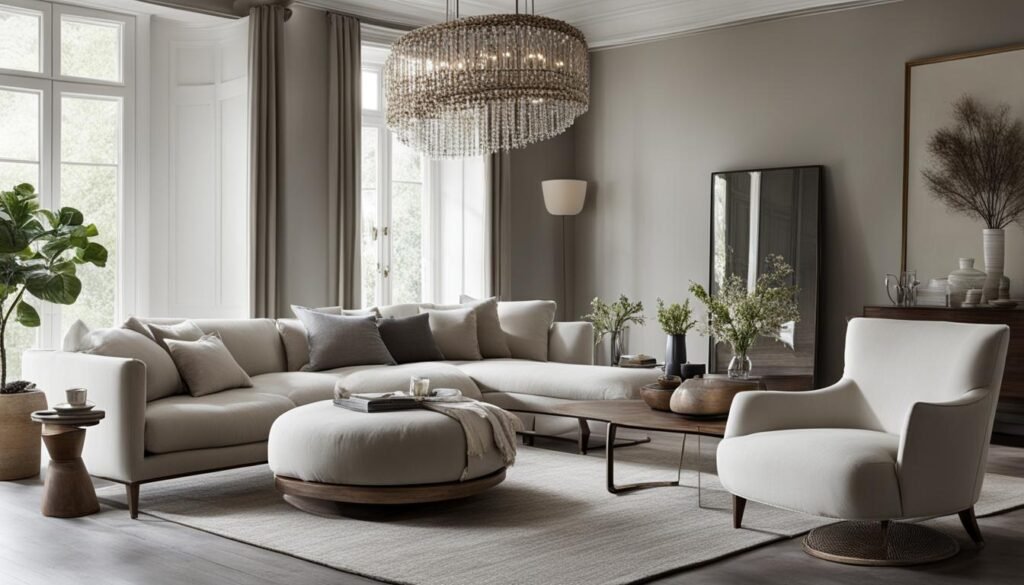
A centerpiece of french design ideas is the venerable presence of aged wood, with its rich patina speaking of bygone years and stories seeped into its grains. Similarly, chipped paint on furniture reveals layers of history, each tier a different epoch, a different taste, a different life. To me, these characteristics evoke a sense of nostalgia and warmth, infusing spaces with a narrative thread that weaves through the minimalist approach of French design.
Heritage Pieces: Carrying History into Modern Settings
In my personal practice, integrating heritage pieces is a way to bring depth to otherwise simplistic spaces. Anchored in traditional french design, the choice to include a storied armoire or a time-worn table is a conscious rebellion against the contemporary obsession with the new. These historical artifacts serve as everyday relics, presenting a layer of complexity within the minimalism that engulfs modern aesthetics.
- Scuffs and wear marks are not imperfections but marks of authenticity and rarity
- Antique pieces are conversational heirlooms juxtaposed against contemporary backdrops
- The patina of age brings warmth and human connection to the decor
This fusion of history with modernity is the embodiment of french minimalist decor— a celebration of lived-in beauty and an heirloom tradition continuing in contemporary settings.
Save this article
Enter your email and we'll send it straight to your inbox.
French Design: The Art of Balanced Eclecticism
As I delve into the realm of french design style, it becomes increasingly evident that it thrives on a sophisticated balance. This balanced eclecticism is not by coincidence; it is the calculated art of combining a variety of design elements that are both meaningful and stylish. To achieve what many consider quintessentially contemporary french design, one must embrace a selection of furnishings and accessories that appear as if they have been collected over time, rather than curated in a single shopping spree.
Much of my inspiration is drawn from the French approach of surrounding oneself with items that have personal significance. This could range from family heirlooms, which carry with them generations of stories, to personal artwork, each piece acting as a visual anchor to a memory or period. The result is a living space that is a true reflection of one’s life and all its eclectic beauty.
- Introducing vintage finds for added character.
- Mixing textures and materials to create depth.
- Allowing personal treasures to set the room’s narrative.
Rooms designed with these french design ideas in mind are not haphazard. Each choice is deliberate, each position intentional, all to channel an aura of effortlessness that is so admired in french decor. It is less about filling a space and more about telling its story—a story that is inherently unique to each individual.
Through my years of experience, I’ve observed that the secret to mastering this design style is knowing when less is more. Clutter is avoided at all costs. It’s about curating a collection that speaks to personal style while maintaining a sense of openness and flow in the space. The French have a phrase, “je ne sais quoi,” which translates to an indefinable elegance. This is the essence of what one strives to capture in contemporary French design—a seemingly effortless grace that is both inviting and aesthetic.
Modern French Design: Connection Between Fashion and Interiors
As I delve into the world of modern french design, I find a fascinating symbiosis between the wardrobes of the fashion-forward and their living spaces. This fluid exchange between apparel and interior ambiances reimagines how we perceive french style furniture and french textiles, creating environments that are as sophisticated as they are comfortable.
From Wide-Leg Trousers to Crisp White Shirts: Translating Wardrobe to Decor
In my explorations, the clean lines and tailored silhouettes of wide-leg trousers and crisp white shirts become a muse for minimalist yet chic decor. This is not about imitation, but rather about capturing the essence of refinement and simplicity that is core to both french clothing styles and modern french design. The approach to interior styling becomes an echo of a well-curated wardrobe, echoing an ambiance that speaks volumes of understated luxury.
Summer Essentials: A Fresh Take on French Style Furniture
Reflecting on summer essentials, I’m inspired by the fabric of the season—linen—synonymous with comfort and breathability. This translates seamlessly into my selection of french textiles that dress the airy forms of french style furniture. From the relaxed loungers to the effortlessly stylish coffee tables, each piece presents itself as relaxed yet undoubtedly refined, mirroring that perfect summer ensemble.
Incorporating French Textiles and Prints: A Delicate Dance of Fabric and Form
My affinity for french textiles has always steered my design ethos towards the timeless allure found in the weave of a Provencal linen or the flourish of an Avignon floral print. It’s in these materials that the soul of French design speaks, offering a tapestry of history and modernity, sewn together with an impeccable sense of style. Allow me to guide you through the graceful interplay of textures and patterns that define french design trends and offer a burst of french design inspiration.
The Subtle Elegance of Linens and Florals
There’s a particular quality to French linens that defies imitation. Their ability to bring out a subtle elegance in any room comes from their whisper-soft touch and effortless charm. Pairing these with floral patterns – a nod to the sprawling countryside of France – invites the outdoors in. As the linens drape and the florals dance across the fabric, they echo the serene beauty of a French country garden, all the while maintaining an urban sophistication.
Bold Statements with Minimal Effort: Striking the Right Balance
In my journey through design, I’ve found that genuine impact lies in restraint. A bold statement in a French motif needn’t be loud or overpowering. In fact, it’s quite the opposite. By selecting a dramatic, yet refined, French print, a designer can make a daring statement through curtains framing a window or a throw pillow on a simple settee. It takes minimal effort to strike the right balance between comfort and aesthetics, yet the result is a living space that sings with an air of nonchalant sophistication – true to the heart of French design.
- Textiles that evoke the French pastoral and chic urbanity alike
- Design choices that provide a nod to cultural history while aligning with modern tastes
- The silent statement in a well-placed French piece, balancing ornate and minimalistic themes
The fabrics we choose are more than mere accents; they are declarations of style, sentiments of nostalgia, and blueprints for beauty. As I weave these elements into my work, I am reminded that what we create is more than a space – it’s an extension of the self, swathed in the timeless beauty and innovative spirit of French design.
Conclusion
In delving into the world of french design, I’ve explored an interior landscape where history breathes through the walls, bringing stories to life within modern dwellings. There’s a profound respect for the past married with an innovative vision for the present, encapsulating both french traditional interior design and its contemporary counterparts. This duality, a signature of french inspired interior design, marries the rustic with the refined, weaving a tale of comfort draped in understated elegance.
The mosaic of different periods and styles, elegantly pieced together, forms a harmonious tableau that speaks to the soul of the French aesthetic. It’s a design philosophy that champions balance, where every thread of textile, whisper of color, and choice of furniture is a deliberate stroke on a canvas that invites relaxation and sophistication in equal measure. Whether through embracing the perfectly imperfect or infusing a space with a quiet opulence, the French approach to design stands as a substantive influence on creating environments that are as meaningful as they are beautiful.
As I consider the many facets of this design tradition, I’m reminded that it is, at its core, about creating a home that is truly lived-in and loved—a haven where the inherent beauty of life’s tapestries can unfurl. French design, therefore, is not solely about visual resonance; it is the manifestation of a lifestyle that pays homage to what has been while wholeheartedly welcoming what will be. It’s an inspirational paradigm that continues to guide the quest for interiors that celebrate timeless elegance and effortless grace.
FAQ
What defines elegant French design in modern interiors?
Elegant French design in modern interiors is characterized by a balance of timeless elegance and contemporary trends. It emphasizes chic, minimalist aesthetics, often employing a neutral color palette, mixed with key opulent accessories that stand out against the simplicity of the design, creating an effortlessly luxurious space.
How can I incorporate French design styles into my home?
You can achieve a French style interior by embracing the high-low mix, juxtaposing different eras and design styles, and integrating architectural details that add character. Choose a soft color palette, include vintage finds with contemporary pieces, and incorporate French-inspired furniture for a curated yet comfortable look.
What is the significance of color in French minimalist decor?
Color plays a vital role in French minimalist decor, providing a sophisticated backdrop for the overall design. Neutral tones dominate, with crisp white walls and furnishings in greys, complemented by restrained pops of muted colors. This creates a calming, elegant atmosphere that is both chic and inviting.
What typifies French eclectic decor?
French eclectic decor is a study in contrasts, where vintage finds are displayed alongside modern elements. It’s a curated mix of different styles and periods that tells a unique story and reflects personal taste, all while maintaining a harmonious and inviting environment.
How do I select key accessories for a French chic style home?
To select key accessories for a French chic style home, opt for items that add a touch of glamour without overpowering the space, such as crystal chandeliers, gilded mirrors, or vintage art pieces. The goal is to create focal points that draw the eye yet remain cohesive within the simple elegance of the French aesthetic.
Can imperfections be a part of French interior design?
Absolutely. French interior design often celebrates imperfections, valuing the beauty and narrative of aged wood, chipped paint, and naturally distressed materials. This approach to French minimalist decor appreciates the history and character of items, integrating them into modern settings for a rich, authentic look.
How does one achieve balanced eclecticism in French design?
Achieving balanced eclecticism in French design involves a thoughtful arrangement of furnishings and accessories. It requires editing to keep the space uncluttered, selecting meaningful items like family heirlooms or personal artwork, and focusing on pieces that reflect the homeowner’s personality and tell a story.
What’s the relationship between fashion and modern French interior design?
Modern French interior design shares a strong connection with fashion, with emphasis on timeless elements and comfortable yet chic style. Just like a French wardrobe might include classic pieces like wide-leg trousers and crisp white shirts, interiors feature streamlined furniture, elegant textiles, and light, airy fabrics inspired by summer essentials.
How are French textiles used in interior decoration?
French textiles are integral to creating the ambiance of an interior space. Linens add a layer of understated luxury, while floral patterns can introduce a countryside charm. The right textiles offer not only tactile comfort but also make design statements that require minimal adornment, yet provide maximum impact.
Save this article
We'll email you the link so you can find it again later.