When I consider the quintessence of a harmonious living space that withstands the tides of time, my thoughts invariably turn toward the classical interior design style. Known for its timeless elegance, this aesthetic taps into the roots of classical home decor to weave a narrative of luxurious aesthetics. Through my work, I’ve found that the transformative power of classical design does not always stem from monumental changes but can often be realized in the delicate rearrangement of furniture to infuse that renowned refined interior design vibe into contemporary homes.
Striking the perfect balance between nostalgia and modernity, the classical approach integrates structure and symmetry with plush textiles and intricate details. It’s a dance of history and comfort, resulting in an environment that is as inviting as it is stately. Join me as I explore the fundamentals of crafting interiors that pay homage to the past while catering to the ease and functionality of modern living.
Key Takeaways
- Classical design prioritizes symmetry and balanced layouts for a stately atmosphere.
- Introducing classical aesthetics can be as simple as repositioning furniture.
- Traditional elements are central to achieving a luxurious and refined look.
- The delicate use of color and texture plays a significant role in classical interiors.
- Attention to detail through carvings and ornate finishes enhances the elegance of a space.
- Investment in timeless furniture pieces promises both durability and classical charm.
Embracing Symmetry in Layout and Furniture Arrangement
As an interior design classic aficionado, I’ve always believed that symmetry is the silent ambassador of classical design interior. In my years of designing opulent interiors, the deliberate use of symmetry has often been the cornerstone of creating spaces that are both harmonious and aesthetically pleasing. When I step into a room, my eyes are immediately drawn to the architectural features that serve as the natural focal points where balance should originate.
Finding the Focal Point for Balance
My approach to interior design involves beginning with a clear understanding of the room’s architecture. Identifying the innate focal points, such as a grand fireplace or expansive windows, allows me to anchor the space symmetrically. This alignment sets the stage for a classic design style that effortlessly exudes elegance. The spatial harmony achieved through this method cannot be overstated, providing a serene and inviting atmosphere in any setting.
Creating Mirror Images with Furniture
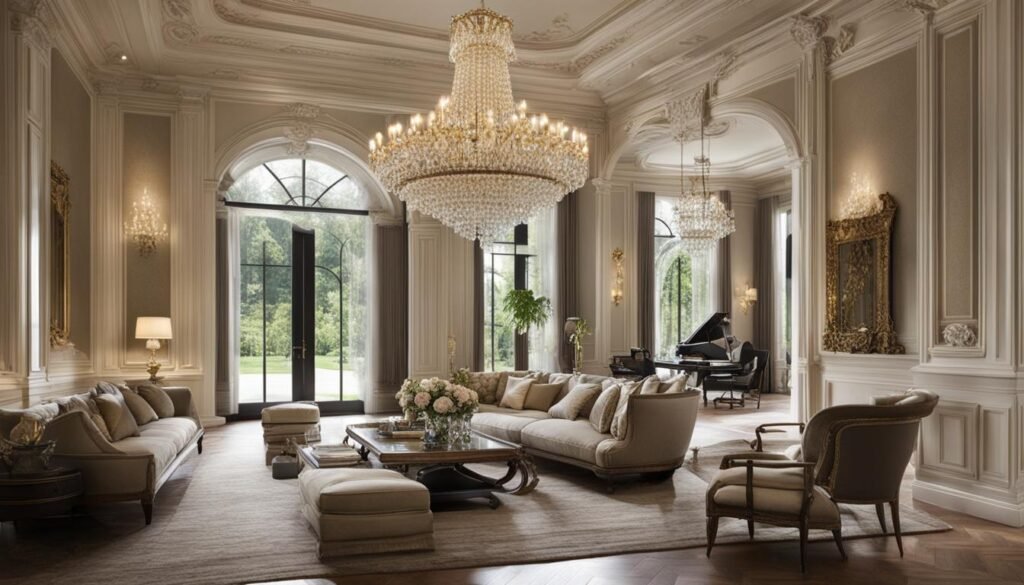
In my experience, the true essence of classical beauty in decor can often be captured through the creation of mirror images in furniture arrangement. This could mean selecting sumptuous sofas to sit directly across from each other, or perhaps juxtaposing a lengthy Chesterfield against a pair of delicate wingback chairs. The intention is to elicit a palpable sense of calm and order as soon as one enters the room. It is not simply a matter of aesthetics; it’s about crafting a space that soothes the soul as much as it pleases the eye.
- Consider placement of sofas to face one another, enhancing conversational spaces.
- Use a pair of identical coffee tables center stage for symmetry and functionality.
- Position dining chairs diagonally in each corner, cultivating an environment of balanced elegance.
- Prioritize the arrangement of larger furniture items before accessorizing with finer details.
Every element, from furniture to decor, plays a pivotal role in embodying the opulent interiors signature to classical design interiors. As I blend these principles into my work, the transformation is unmistakable — a well-composed space that is as timeless as it is graceful.
Classical Interior Design Style: Incorporating Traditional Elements
As I delve into the world of interior design, the allure of classical architecture and its influence on classical interior style cannot be overstated. I’m fascinated by how 18th and 19th-Century European dwellings continue to cast their spell on contemporary spaces, bringing an elegant interior design aesthetic that stands the test of time. In my experience, the transformation lies in melding historical elements with modern sensibilities.
For those captivated by this age-old artistry, let me guide you through incorporating key aspects that reflect the essence of classical refinement. The layering of textures, integration of ornate details, and symphony of patterns all contribute to an atmosphere drenched in sophistication. Embodying the heritage of classical antiquity, these designs find their roots in the iconic Empire and Regency periods of England and France.
- Identifying meaningful historical furniture that resonates with the era portraying classical richness.
- Layering patterns and textures to produce depth and interest within the space.
- Integrating ornate details to add a layer of sophistication and gravity.
Such meticulous attention to detail and harmonious balance of old-world charm with contemporary flair is what defines the true classical interior style. To recreate this ambience, one might consider selecting pieces that echo the grandeur of the past but speak to the practicalities of modern living.
- Adopting classical motifs that harmonize with current design trends
- Curating a mix of antique and modern decor to forge a unique, timeless setting
These elements, when thoughtfully brought together, not only pay homage to the grandeur of classical design but also create a space that is both luxurious and intimately personal. Invoking such a style in one’s home can turn everyday living into an experience of understated elegance.
Pulling from Nature: The Classical Color Palette
In my explorations of classical color schemes, I’ve discovered a natural affinity for the calming effect of nature-inspired tones that resonate through traditional interior design. Imagine a canvas graced with soft whispers of the great outdoors – this is the quintessential backdrop for vintage interior design that exudes ageless allure and understated grandeur.
Using Soft, Nature-Inspired Tones
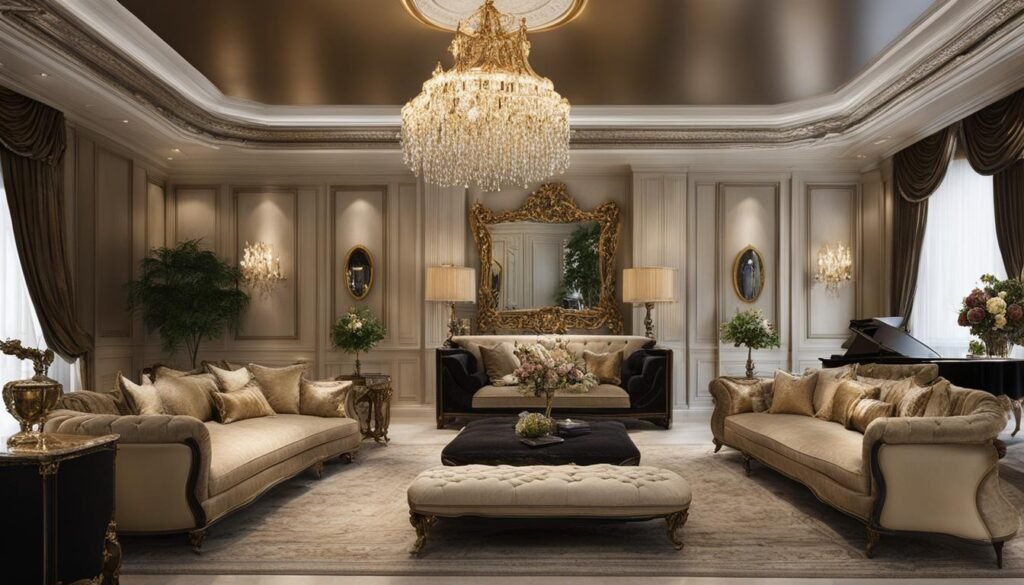
The palette I lean on draws from the earthy yellows of a soft morning sun, the gentle blues of a cloudless sky, tranquil greens of a lush meadow, and the rich browns of fertile soil. These hues coalesce to form a soothing symphony that speaks of nostalgia and refinement. So often, I find that by integrating these subdued shades into the spaces I design, they serve not only as a homage to classic aesthetics but as a testament to the tranquility and balance that traditional interior design can offer.
The Importance of Color Repetition for Harmony
Maintaining visual harmony within a room is akin to conducting an orchestra – every note, every hue, must contribute to the collective beauty of the piece. By repeating elements of my chosen classical color scheme, I ensure the melody of the room flows seamlessly from one space to the next. This repetition creates a rhythm that guides the eye and soothes the mind, encapsulating the very essence of the classical aesthetic I strive to achieve.
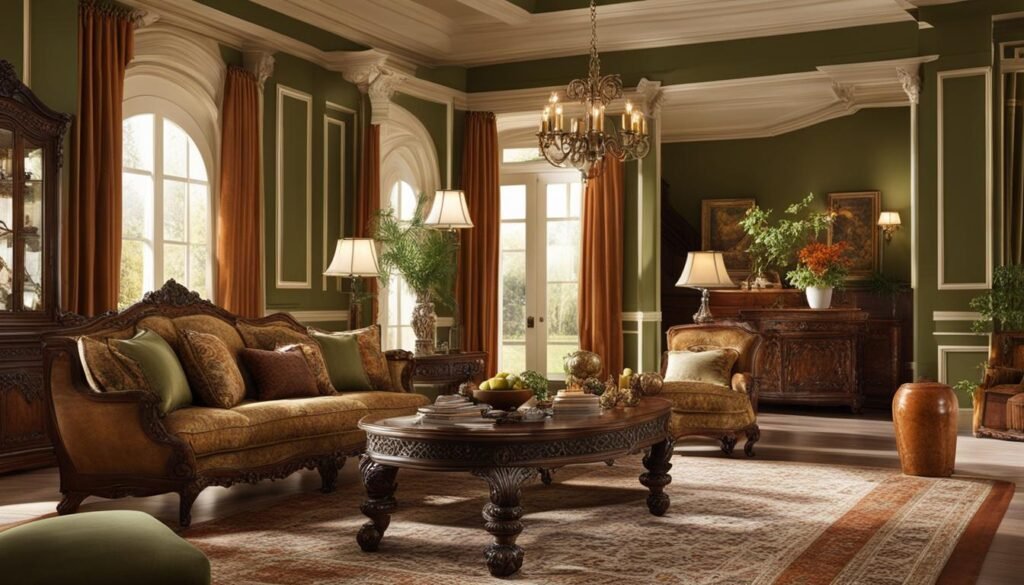
- Muted warm tones enhance the sense of time-honored elegance.
- Crisp whites for trims and moldings punctuate the space with freshness and clarity.
- Repeating colors in accents and textiles fortifies the classical narrative of the space.
The true beauty of this approach lies not in any single shade but in the marriage of colors that together tell a story, one that is rooted in the legacy of traditional design yet continues to whisper new tales in every home I touch.
Enhancing Elegance with Ornate and Carved Details
When I immerse myself in the realm of traditional interior design, I am struck by the unmistakable charm of ornate designs. These intricately carved details are not merely accents; they are the heart and soul of a space that aspires to a luxurious interior design aesthetic. Each curve and crevice of a piece of classical furniture tells a story, one that reverberates with the echoes of a bygone era yet fits perfectly within the modern home.
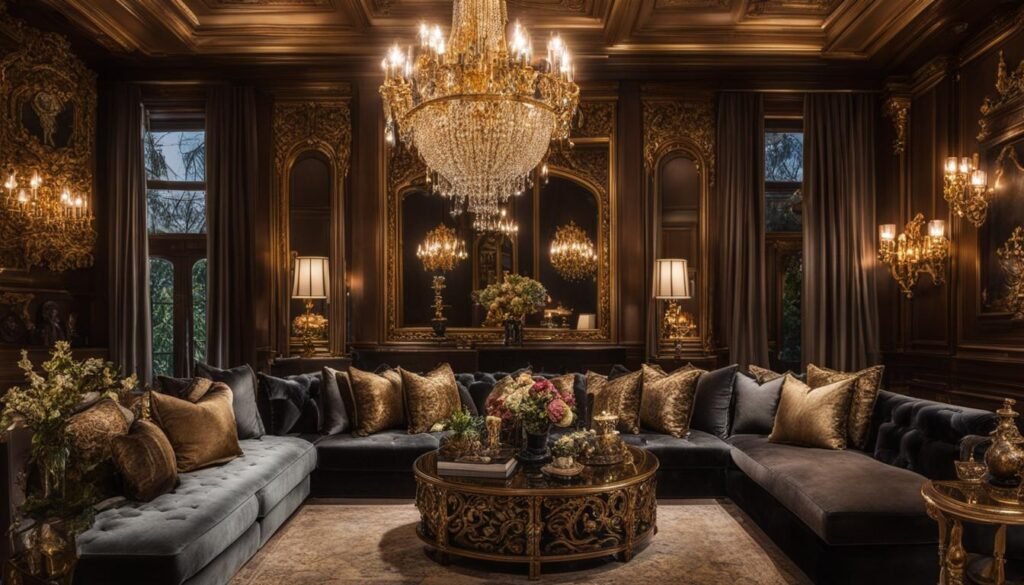
Take, for instance, the majestic presence of a grand sofa, its arms and back exquisitely adorned with flourishes that hearken back to the richness of the Renaissance. Or consider a four-poster bed, its posts capped with finials that are works of art in their own right, transforming a simple bedroom into a noble chamber.
- Ornate Designs: Evidence of expert craftsmanship, showcasing scrolls, acanthus leaves, and floral motifs.
- Classical Furniture: Each piece, from chaise lounges to armoires, is defined by the depth of its carvings and the stories they tell.
- Traditional Interior Design: By incorporating these embellished elements, each room radiates with warmth and historical reference.
- Luxurious Interior Design: The opulence delivered by these ornamental details is undeniable, elevanting the space to a level of sophistication and splendor.
Integrating these sculptural marvels into a home does not merely add visual interest; it infuses every corner with texture and character, creating an environment that is both stately and inviting. In my journey through the world of traditional interior design, I’ve learned that elegance is not just in the larger elements, but also in the minutiae, the delicate touches that comprise the luxury we see and feel. These carvings are the very embodiment of a classical ethos, one where every detail is meaningful and contributes to a grander, more luxurious whole.
Choosing Classical Furniture with Timeless Appeal
When I consider integrating pieces into my home that will stand the test of time, certain elements are non-negotiable. The furniture must not only harmonize with the grandeur of classical interior design, but also encapsulate the essence of timeless interior design and traditional interior design. It’s a journey that leads to an enduring ambience, characterized by heritage and durability.
Investing in Quality with Ornate Finishes
The pursuit of quality is paramount in selecting furniture that befits a classical theme. I look for solid construction, intricate detailing, and the kind of ornate finishes that reflect meticulous craftsmanship. Think along the lines of inlay work, scrolled arms, and finials—these are the touches that separate the ephemeral from the enduring.
- Hand-carved wood that tells of artisanal skill
- Intricate marquetry that weaves a visual narrative
- Gilded edges and acanthus leaf motifs that whisper of a bygone era
Blending Floral and Fauna Influences in Furnishings
In my pursuit to capture the essence of classical design, I find myself drawn to furniture that incorporates the natural world into its form. Floral patterns etched into wood, and upholstery with fauna motifs bring a touch of the natural elegance found in traditional settings. These designs, rich in history, add both context and storytelling to my spaces through their evocative imagery.
- Fauteuils with floral tapestry remind me of French chateaux gardens
- A mahogany table with bird details exudes the charm of English countryside homes
- The botanical engravings on a credenza become the room’s focal point, inviting conversation
Incorporating these time-honored elements into my home helps me to craft an interior that is not only reflective of my personal taste but also pays homage to the timeless allure of classical and traditional design sensibilities. This carefully curated blend ensures that the space will remain stylish and meaningful for years to come.
Textural Richness: Fabrics and Upholstery in Classic Design
As a connoisseur of classical interior design styles, I’ve come to appreciate the role of textural diversity in creating spaces of timeless elegance. Fabrics and upholstery aren’t merely functional; they’re pivotal in crafting a refined interior design that invites touch, sight, and a sense of warmth. The sensory experience of a room can define its ambiance, often weaving a narrative of luxury and comfort—principles at the heart of classic design.
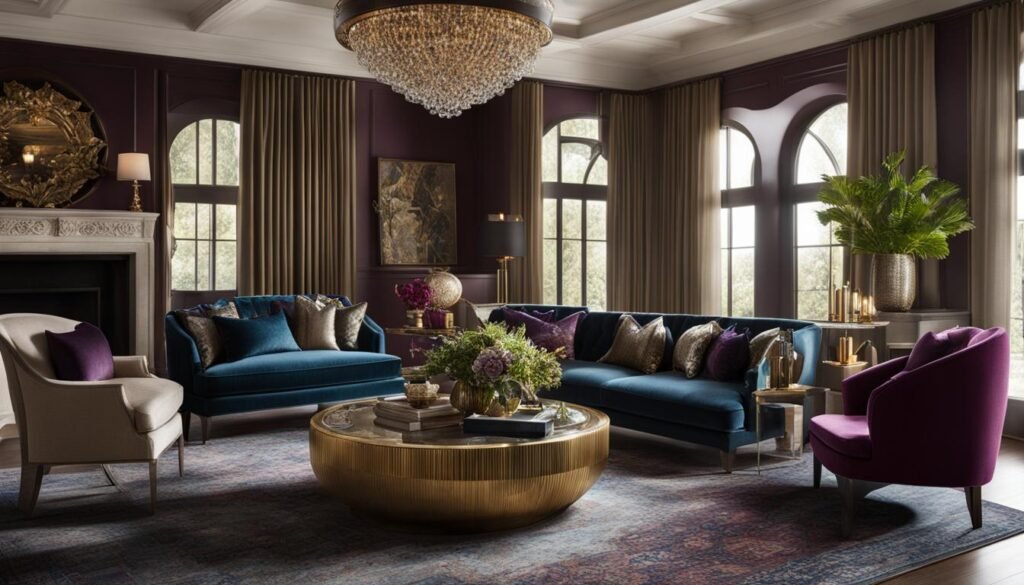
Layering Patterns: Stripes and Solids
The strategic layering of patterns such as stripes alongside solid colors enhances the dimensionality of a space. Stripes particularly bring a visual rhythm which, when balanced with solids, prevents overwhelming the senses, while still upholding an undercurrent of sophistication inherent to classical aesthetics.
- Striped upholstery on a statement armchair can serve as a focal point.
- Solid drapes complement the patterned upholstery, grounding the room’s decor.
- Layered throw pillows on a couch mix stripes and solids for subtle complexity.
Adding Luxurious Textiles for Depth
Indulging in luxurious textiles multiplies the room’s appeal, providing depth and tactile intrigue. Velvets, silks, and brocades are quintessential fabric choices that resonate with the sumptuousness of classical interiors. Incorporating these into my upholstery and accent pieces has been key to achieving an environment of elegant comfort.
- Velvet curtains contribute a rich texture that interacts with the light.
- A silk-tufted ottoman introduces a smooth, reflective surface amid other textiles.
- Brocade cushions pepper the space with their intricate patterns and sheen.
Accessorizing with Classical Art and Time-Honored Decor
When I curate accessories for a classical interior, I focus on selecting pieces that complement the opulent interiors of a classical home decor. My approach is detail-oriented, understanding that each element in the space contributes to a narrative steeped in tradition and elegance. Allow me to guide you through the art of accessorizing within the framework of a classical aesthetic.
Save this article
Enter your email and we'll send it straight to your inbox.
- Art Selection: I lean towards choosing substantial artworks that resonate with classical themes. Whether it’s a grand oil painting or a statuesque marble bust, each art piece should serve as a focal point, imbuing rooms with a historical reverence.
- Decorative Mirroring: In classical interior design, symmetry reigns. So, I apply this principle creatively with decor, such as pairing matching table lamps on identical end tables or placing candlesticks in balanced harmony on a mantelpiece.
- Thoughtful Arrangements: I ensure that every accessory, from vases to books, is placed with intention. Pairs of ornate objects are meticulously arranged to emanate a sense of order and sophistication.
- Cultural Artifacts: To honour the roots of classical design, I incorporate pieces with cultural significance, like ancient Greek vases or Roman-esque sculptures, which act as conversation starters and educational pieces.
Incorporating these elements is not merely about filling spaces but about creating moments of beauty that complement the architectural nuances of a home. It’s about crafting an ambiance where each accessory carries its weight, cementing the classical story the interiors narrate.
Pursuing a classical home decor theme means being selective with accessories, ensuring they’re in harmony with the lavish and regal atmosphere of the space. By adhering to these guidelines, I am able to recommend and integrate decor that reflects the grandeur and craft of a bygone era into modern-day living.
Architectural Details: Molding, Trims, and Railings
When I step into a space that echoes the refinement of classical architecture, my senses are immediately drawn to the meticulous details brimming from every corner. In traditional interior design, it’s not just the grandiose pieces that command attention, but also the subtle yet intricate nuances that give a nod to historical splendor. Luxurious interior design incorporates these elements, not as an afterthought, but as essential features that define the space’s character.
Mimicking Period-Style Structural Elements
Emulating the grandeur of period-style homes isn’t just for those with heritage properties. My approach involves integrating molding, trims, and railings that are reflective of bygone eras into modern structures. Delicate ceiling roses, imposing cornices, and sculpted skirting boards can transfigure a contemporary room into one that speaks the languid luxury of classical times. These details are not mere decorations; they create a narrative that ties the present to a storied past.
Utilizing Trompe l’Oeil for Visual Impact
In cases where the architecture doesn’t allow for actual moldings or panels, I recommend the art of trompe l’oeil. This technique, which cleverly means ‘deceive the eye’, relies on realistic imagery to create an optical illusion of dimensionality and texture. This can transform flat surfaces into seemingly elaborate textured walls with depth and aged finishes, pulling the essence of luxurious interior design into even the most minimalist of spaces without the need for structural intervention.
Introducing Curvature: The Allure of Rounded Furniture Profiles
In my explorations and implementations of the classical interior style, I’ve frequently noted how traditional interior design often embraces a softness of form that modern, edgier styles tend to overlook. This gentle elegance is markedly evident in the frequent use of rounded furniture profiles, integral to the repertoire of any designer who aims to infuse a space with the grace and comfort characteristic of elegant interior design.
Curved furniture pieces encompass a wide range of aesthetics, from the subtle to the dramatic. A piece as simple as an armchair with a rounded back can shift the tone of a room, ushering in an air of sophistication. Similarly, the sinuous lines of a sofa with cabriole legs can transform an otherwise stark setting into an inviting area deserving of leisure and repose.
What particularly captivates me is not just the inherent beauty of these rounded forms but the voluminous legacy of craftsmanship they carry with them. The traditional interior design is often about more than just aesthetics; it’s a dialogue with history, a celebration of forms that have graced homes for ages, lending them an undying appeal.
- Curvaceous details in furniture not only break the monotony of straight lines but also serve as visual softeners in a room.
- Classically inspired pieces, such as those with cabriole legs or rolled arms, bring an organic flow to living spaces, making them appear more natural and less contrived.
- Utilizing furnishings with rounded profiles also caters to comfort, encouraging relaxation in an environment that is both regal and accessible.
The incorporation of such elegant interior design elements is not merely a nod to the old-world charm. It is also an acknowledgment of the timeless desire for environments that resonate with sophistication and warmth. In my work, I have found that an ensemble of rounded profiles can anchor a room with a sense of history and enduring appeal, hallmarks of the traditional interior design that continue to captivate.
Pattern Play: Infusing Elegance through Fabrics
The art of incorporating patterns into my classical interior design style is akin to a composer arranging a symphony. Each pattern serves as a note, contributing to harmony within the space, and evokes the timeless allure synonymous with traditional interior design. My discernment for selecting patterns is guided by a desire for sophistication and elegance, a pursuit well embodied by vintage interior design.
Selecting Patterns for a Traditional Aesthetic
In the realm of traditional aesthetics, each pattern I choose carries a weight of history and artistry. The pursuit for the perfect pattern is not merely about aesthetics but also about adding to the storytelling of space. Stripes, for example, introduce order and rhythm, while paisleys can convey an exotic or bohemian charm that bonds with more classical elements.
Using Damask and Florals to Add Sophistication
Damask and floral patterns particularly shine in their ability to infuse any room with a dose of regality and sophistication. The intricate designs of damask, often realized in silk, weave a narrative of luxury and opulence, whispering tales of historic European estates. Florals, on the other hand, bring vibrancy and a connection to nature, serving as a visual bridge between the indoors and the outside world.
- Elegance of Damask: Utilizing it as a focal point in textiles can transform a simple room into one of elevated taste.
- Timelessness of Florals: Integrating these patterns in drapes or upholstery ties the entire room’s palette together, breathing life into the classical styling.
By meticulously blending these patterns into the fabric of my designs, I create a space that not only respects the principles of vintage interior design but also lives and breathes the stately presence of the classical era.
Symmetry and Pairs: A Hallmark of Traditional Styling
As a proponent of the classical design interior, I find that the allure of symmetry and the elegance of pairs form the fundamental backbone of what makes this style truly stand out in a sea of design options. When I advise on implementing a classic design style in homes, I emphasize the importance of balance and the thoughtful replication of furniture and decor to achieve a space that exudes timeless elegance and luxurious aesthetics. The serenity one feels upon entering a room where each element intentionally echoes another is no accident; it is the result of precise planning and a deep understanding of traditional finesse.
The subtlety of placing twin armchairs to frame a stately fireplace, or choosing identical wall sconces to provide not just light but also to serve as sculptural statements, acts as visual anchors within a space. When these elements come in pairs, they create harmonious echoes throughout the room, enhancing the tranquility and graceful rhythm that define a classical design interior. Realizing this vision means seeking out those perfect pairings, whether in the form of artwork, lamps, or even cushioned window seats that invite intimate conversations.
Cultivating a room adorned in a classic design style is akin to composing a symphony—the elements must work in concert to perform a masterpiece of design. The luxurious aesthetics crafted through exquisite furnishings, and the timeless elegance presented by refined accents, reiterate why this design philosophy continues to captivate and inspire. As I curate and compose these classical spaces, I am reminded that beauty often lies in the details that, while may be mirror images of each other, are truly unique in how they complete the story of a home.
FAQ
What defines a classical interior design style?
A classical interior design style is characterized by timeless elegance, luxurious aesthetics, and a refined approach. It is heavily influenced by the architectural and design principles of the 18th and 19th century European homes, incorporating symmetry, balance, and a rich blend of textures and accessories. This style creates opulent interiors that exude warmth and sophistication.
How do I incorporate symmetry into my interior layout and furniture arrangement?
Embracing symmetry in your interior design begins by establishing a focal point—such as a fireplace or a large window—and organizing your furniture around it to create mirror images or balanced layouts. This can mean placing sofas directly opposite each other, having two identical coffee tables side by side, or ensuring dining chairs balance out each other across a table.
Can modern spaces incorporate classical interior design elements?
Absolutely. Modern spaces can easily incorporate elements of classical design by harmonizing ornate, traditional elements with contemporary aesthetics. This can include using historical furniture pieces, layering patterns and textures, and including ornate details that add sophistication without overpowering the modern feel of a space.
What color schemes are typical in a classical interior design style?
Classical interior design favors a color palette inspired by nature, utilizing soft, subdued hues like yellows, blues, greens, and browns, complemented by crisp whites for moldings and trims. This ensures the space feels traditional yet fresh. Repeating these color schemes creates a cohesive look that maintains the classical aesthetic’s visual harmony.
What role do ornate and carved details play in traditional interior design?
Ornate and carved details are essential in traditional interior design as they add texture, character, and a level of detail indicative of luxury. These can be found in furniture, moldings, and accessory pieces, elevating the room’s elegance and reflecting a historically rich aesthetic.
When choosing classical furniture, what should I look for to achieve a timeless appeal?
To achieve timeless appeal with classical furniture, look for pieces that demonstrate fine craftsmanship with details like inlay, carved legs, and ornamental flourishes inspired by nature. Investing in high-quality, well-made pieces ensures durability and maintains the refined essence integral to classical design.
How do I incorporate textiles to enhance the classical design of my home?
In classical design, textiles provide texture and depth. You can layer patterns and solids, incorporating fabrics with subtle motifs such as stripes and incorporating luxurious textiles, like velvet and silk, through cushions, blankets, and drapery, to add to the textural richness of your interiors.
How should I approach accessorizing in a classical interior?
When accessorizing a classical interior, aim for pieces that complement the overall design and enhance the traditional feel. This includes selecting substantial artworks, matching table lamps, and thoughtfully arranging accessories like sets of paintings or decor to support elegance, tradition, and symmetry.
What architectural details are important in classical interiors?
Architectural details like moldings, trims, and railings play a significant role in classical interiors, evoking the charm of period homes. For modern homes without these features, one can mimic the look with wood panels or use trompe l’oeil wallpapers to create the illusion of classic architectural elements.
How can I introduce curvature into my classical interior design?
Introducing curvature can be achieved by choosing furniture with rounded profiles, such as cabriole legs, rounded upholsteries, and ornate swirl details. These softer lines add a sense of regality and an inviting atmosphere that is a staple of traditional design.
What types of patterns should I integrate into my traditional interior?
To enhance the classical feel of an interior, select patterns like stripes, florals, damask, or other motifs that exhibit elegance and order. These patterns not only contribute to the color strength of the space but also add visual texture and should complement the overall design scheme.
How important is symmetry in traditional classical styling?
Symmetry is a hallmark of traditional classical styling, creating balance and serenity within a space. Incorporating pairs of furniture and decorative items helps to achieve a natural sense of equilibrium, making the room feel harmonious and peaceful, which is central to the classical design approach.
Save this article
We'll email you the link so you can find it again later.