

As a fervent observer of design metamorphosis, I’ve been captivated by the transformative wave set to redefine industrial modern interior design trends in 2024. The perennial charm of industrial modernism, known for its celebration of raw textures and minimalist aesthetics, is taking an intriguing turn. Moving past the age of concrete floors and overtly exposed beams, the new phase of modern industrial home design is about forging a finer balance that speaks to comfort as much as it does to chic urbanity.
With a discerning eye, I’m tracking the subtle yet significant shift as industrial modern homes transition from stark grayscale domains into havens of warmth, incorporating a palette rich with inviting colors and natural elements. This evolution is a testament to the idea that homes must be both visually arresting and emotionally resonant environments. Indeed, the foundations of urban industrial design are poised to be both preserved and perpetuated in fresh, innovative ways that resonate with contemporary sensibilities.
Key Takeaways
- 2024’s industrial modern interior design trends accentuate warmth and personal connection.
- Natural materials and softer color palettes mark a departure from the traditional colder industrial aesthetic.
- The integration of biophilic elements is key in creating a cohesive modern industrial home design.
- A shift towards eco-friendly materials reflects an increased environmental awareness in design.
- Embracing curves and organic forms offers a fresh take on the clean lines of industrial modern decor.
- Forest green and other moody hues are becoming emblematic of the evolving urban industrial design palette.
Embracing Biophilic Elements in Modern Industrial Interiors
As a firm advocate for the integration of biophilic design into modern industrial decor, I foresee 2024 bringing a profound synergy between natural elements in interior design and the signature rawness of industrial contemporary interior design. This balance promises a rejuvenating ambiance that resonates with the tranquility of nature while maintaining an urban sophistication.
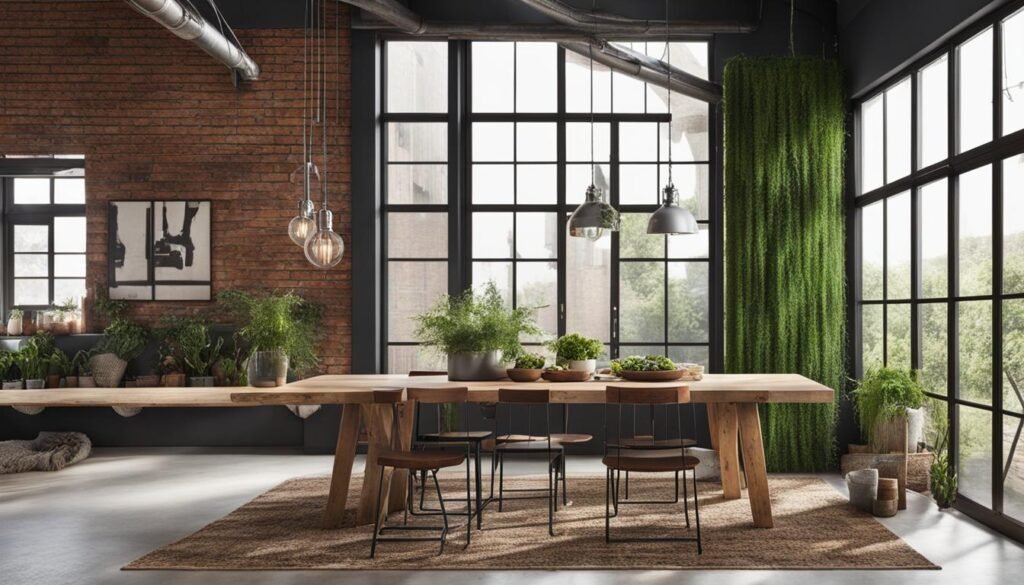
Natural Material Integration
My passion for modern industrial styling takes an organic leap forward as I consider the potential of integrating natural materials into our living and working spaces. Incorporating organic textures like reclaimed wood and natural stone not only enhances the visual appeal but also nurtures the human-nature connection vital to our well-being.
Maximizing Sunlight Exposure
I deeply understand the importance of sunlight in creating energetic and vibrant spaces. Through strategic placement of windows and skylights, my designs invite a stream of natural light that beautifully complements the bold, industrial elements whilst boosting mood and productivity.
Indoor Plant Accents
To complete the biophilic experience, I integrate verdant flora into my designs, which serve as refreshing visual accents within the modern industrial palette. Lush greenery transforms spaces into vibrant habitats, demonstrating my commitment to bringing the essence of nature indoors.
The Resurgence of Earthy Palettes: Warm Tones in Industrial Modern Design
As I delve into the realm of modern industrial interiors, I am immediately struck by the transformative power of color. This year, the design scene is ablaze with the resurgence of earthy palettes that speak to a collective yearning for warmth and authenticity. In my observation, spaces once dominated by austere grays are now being revived with an array of warm tones, invoking an atmosphere reminiscent of nature’s own sanctuary.
Industrial style home decor is undergoing a radical shift, with interior designers reaching for the comforting embrace of soil-like browns, fiery terracottas, and the soulful depth of burnt oranges. These robust hues resonate with me, as they not only densify the aesthetic palette but also form a bridge between modernity and timeless comfort.
In the sanctuaries we call home, the infusion of warm tones interior designs directly counters the often cold industrial elements. Existing harmoniously with exposed beams and steel fixtures, these warm shades insulate the space with an air of conviviality. Reflecting on the trend, I sense a shift in preferences towards interiors that enkindle a sense of solace and personal retreat.
- Rustic Verve: Integrating raw textures that complement the earthy color palette.
- Refined Accents: Elevating spaces with industrial chic decor that marries metal and warmth.
- Inviting Atmosphere: Curating environments with layers of textiles and lighting to enhance the feeling of warmth.
My exploration of modern industrial interiors affirms the belief that our environments dictate our emotional well-being. This resurgence of earthy palettes is more than a trend; it’s a testament to design’s perpetual evolution, always adapting to fulfill our intrinsic needs for nurturing spaces.
Industrial Modern’s New Love: The Allure of Forest Green
As someone deeply engrossed in the ever-evolving world of interior design, I’ve observed a captivating trend on the rise: the forest green interior trend is gaining traction, breathing life into the modern industrial home interior design landscape. It’s not just a color; forest green represents a movement, embodying the richness of nature and bringing an organic depth to contemporary industrial home decor.
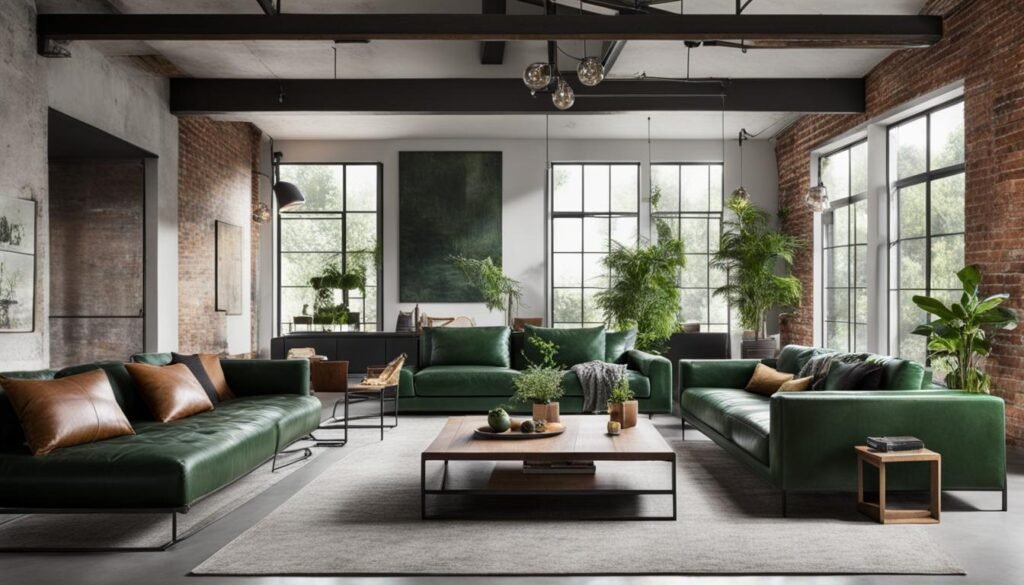
Inspired by ‘Fixer Upper: Welcome Home’
It’s fascinating how a single show can ignite a design revolution, and that’s precisely what ‘Fixer Upper: Welcome Home’ has done. It has showcased how forest green can harmonize with the rustic and metallic elements of industrial chic decor, creating an ambiance that’s both nostalgic and bold.
Moody Colors in the Industrial Space
The introduction of moody colors into spaces known for their starkness is nothing short of transformative. I’ve seen how forest green, when applied with intention, can elevate a room, giving it an aura of sophistication and mystery. This color, when paired with modern industrial interior design ideas, results in an aesthetic that is at once modern and timeless.
- The depth of forest green anchors the airy loftiness typical of industrial spaces, creating a cozy yet expansive feel.
- When used in contrast with raw materials like exposed brick and steel beams, forest green adds an unexpected twist to the industrial narrative.
- In textiles and accessories, this color works wonders, infusing a lush, natural vibe that offsets the colder metals and woods.
Indeed, as we head towards 2024, I’m convinced that forest green will be the defining hue for those looking to infuse a touch of enigmatic charm into their industrial modern abodes.
Curves and Arches: Softening the Industrial Aesthetic
As an advocate for contemporary industrial design, I’ve remarked a compelling shift towards incorporating rounded accents in design. The stark, unyielding lines that once defined modern industrial decor are being beautifully breached by curved industrial modern elements. It’s a trend that speaks to a desire for gentility within the robust urbanity of industrial aesthetics.
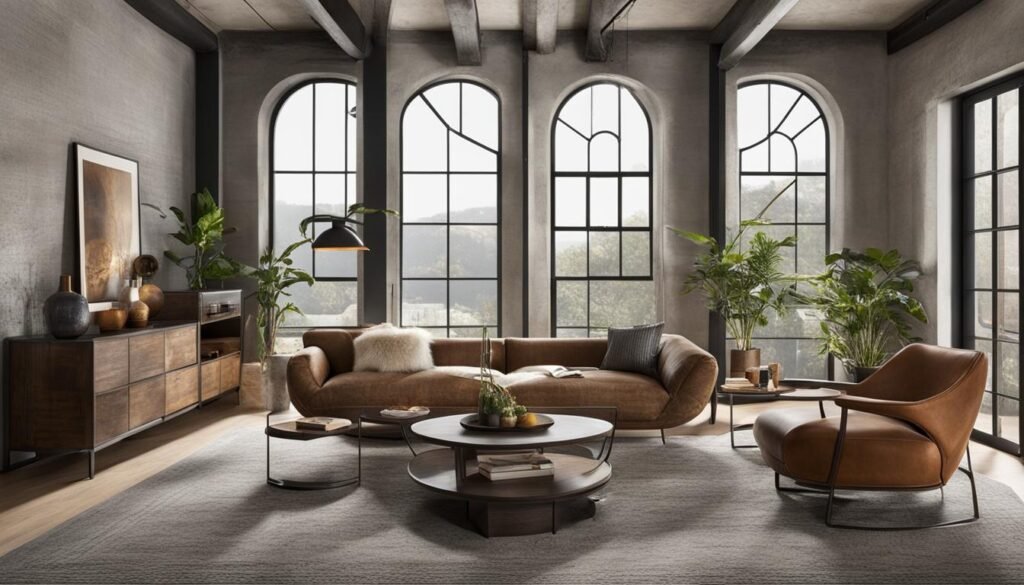
This year, I’ve noticed that arches and curvilinear forms have become fundamental in softening the perceived harshness of industrial spaces. The juxtaposition of hard and soft, the metallic against the plush, serves to create a more nuanced interior narrative. These elements beckon a sense of calm and warmth, transforming cold spaces into inviting havens.
- Arched doorways replacing traditional rectangular forms
- Curvilinear furniture disrupting the routine straight lines of industrial furnishings
- Rounded lighting fixtures adding a soft glow and elegance to stark interiors
Considering the trajectory of modern industrial decor, it’s apparent that these rounded forms are not merely transient trends. They are, instead, the emergence of a new ethos within contemporary industrial design, celebrating the fusion between the timeless appeal of gentle curves and the enduring strength of industrial elements.
Industrial Modern Interior Design Welcomes Scalloped and Stacked Tiles
The resurgence of scalloped design trends paired with the structured aesthetics of stacked tile in design are emerging as cornerstones in redefining industrial modern styling. As a proponent of this design narrative, I find that these elements marry the best aspects of old-world charm with cutting-edge modernity, creating spaces that resonate with authenticity and character.
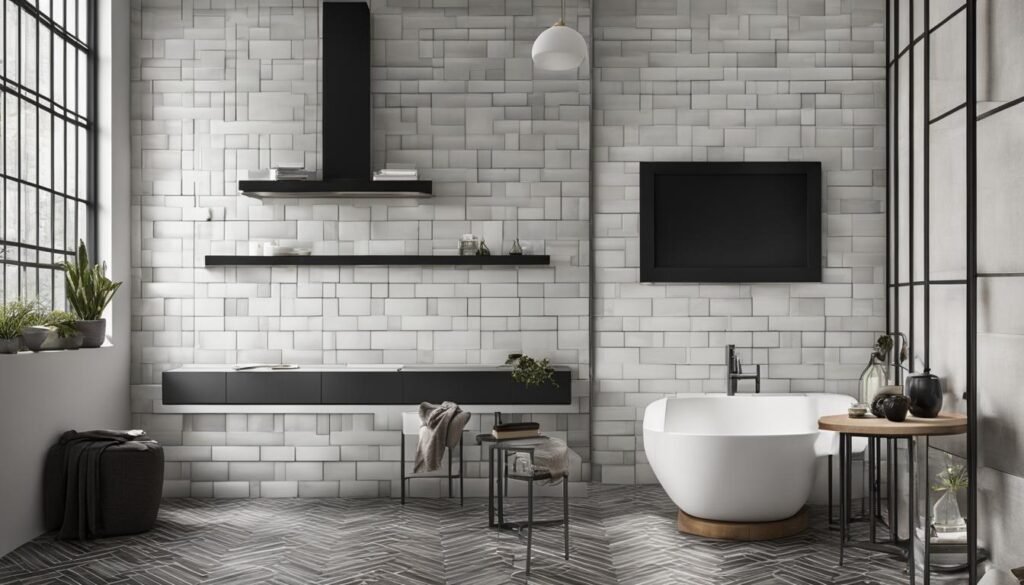
Observing this evolution in the texture and surface details inside homes and workspaces, especially within industrial modern kitchen design and rustic industrial interior design, has been fascinating. Let me guide you through the nuanced application of these trends.
Furniture Accents with Scalloped Details
In my experience, the incorporation of scalloped patterns brings a delightful contrast to the raw, unembellished lines typical in industrial design. The undulating edges of scalloped details add an element of visual intrigue to furniture, elevating standard pieces to focal points of artistic expression. It is an ingenious way to introduce a tactile dimension that insists on being both seen and felt.
Timeless Appeal of Stacked Tile
Similarly, stacked tiles bring a refreshing order and simplicity to design elements, speaking to the minimalist aspect that is often revered in modern aesthetics. The trend’s adaptability is showcased through a variety of applications from kitchen backsplashes to bathroom walls. Whether they’re aligned in a classic grid or offset for a more dynamic arrangement, stacked tiles lay the foundation for a design that is both timeless and modern.
- Bold simplicity of vertically stacked tiles creates elongated lines, imbuing spaces with a sense of height and openness.
- Horizontal stacking makes for a broad and expansive feel, granting a tranquil uniformity to interiors.
The engagement with these design trends not only speaks to the versatility of industrial modern interiors but also ensures that each space remains distinctive and personal. Innovating within the bounds of industrial aesthetics helps keep the design conversation fresh and exciting.
Making a Bold Statement: Fractals in Modern Industrial Design
As I delve deeper into the cutting-edge trends, fractal design elements emerge as a game-changer in the realm of modern industrial design. Fractals are not just another fleeting stylistic choice; they represent the mesmerizing intersection where art meets mathematics, bringing forth patterns that captivate and intrigue the human mind. It’s fascinating to see how these complex patterns have started to proliferate in the sector, specifically within industrial home accessories and décor.
Contemporary industrial design, with its foundation rooted in functionality and simplicity, is now experiencing a vibrant shift; by embracing geometric furniture trends, it is transcending the mundane and venturing into a domain that is as methodical as it is spontaneous. This interplay of order and unpredictability inherent to fractals breathes new life into everyday spaces. Let me elucidate further on how fractals find their way into our homes.
Geometric Tables and Cabinetry
Imagine walking into a room where the furniture itself is a focal point, not just for its utility but for its aesthetic allure. Geometric tables that feature fractal design elements are commanding attention for their bold, yet harmonious presence. The trend is similarly gaining momentum in cabinetry, where doors and drawers display recursive patterns that are as pleasing to the eye as they are thought-provoking.
Save this article
Enter your email and we'll send it straight to your inbox.
Lighting Fixtures with Fractal Patterns
Modern industrial lighting is also part of this fractal revolution. Lighting fixtures, once purely functional, are now being reimagined as luminary sculptures that add a dynamic visual element to any room. When illuminated, these fixtures cast an array of shadows and shapes that play off the fractal designs, setting a mood that is both avant-garde and familiar.
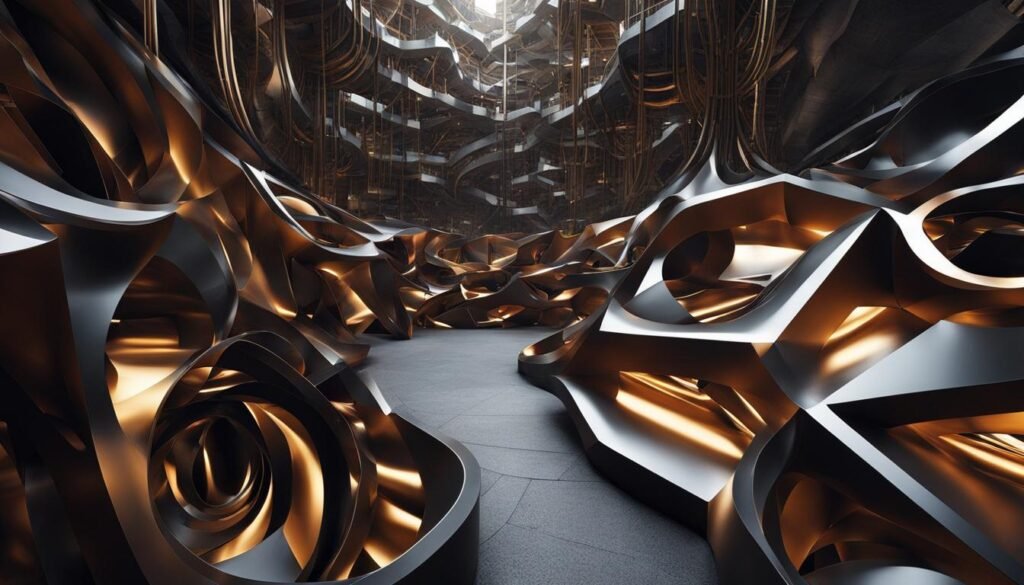
As a proponent of contemporary design, I am captivated by how fractals can transform environments. The captivating symmetry and seemingly infinite iterations present in fractal design elements are a testament to creativity’s boundless potential when reconciling with the order of the natural world.
This burgeoning trend is yet another exemplary illustration of how ingenuity can reimagine and redefine industrial home accessories, ensuring that the space we inhabit remains a testament to the inventive and resourceful spirit of contemporary industrial design.
Transitioning from Industrial to Inviting: Design Shifts Expected in 2024
As I delve into the dynamic world of industrial interior design trends, I’ve observed a compelling transition towards more inviting spaces anticipated for 2024. Designers like myself are steering away from the overtly mechanical look that once defined industrial style interior design, embracing an enriched palette of sensory experiences.
In the upcoming year, we expect modern industrial living rooms to break free from stark surfaces, flowing instead towards softer, more tactile materials. Textures that whisper comfort are set to be layered upon one another, creating spaces that are not only visually appealing but also emotionally resonant.
The transformation introduces urban industrial decor accented with industrial chic furniture that now speaks to warmth and conviviality. Gone are the days when industrial equaled cold and austere; the new industrial aesthetic is akin to a close friend extending an invitation to unwind and feel at home.
- Rich velvets and warm, distressed woods replacing cold metals and stone
- Lush fabrics and handcrafted pieces signifying a new era of personalized comfort
- Blending of rugged industrial elements with plush, overstuffed furnishings
- Biophilic touches that bring a breath of the outside world into our living spaces
Moreover, this homey pivot reflects a deeper understanding of what my audience truly seeks in their habitats—a nurturing and hospitable environment infused with their unique character. It’s clear that the essence of industrial styling is undergoing a profound redefinition.
In light of these insights, it is my endeavor to guide readers through this fascinating evolution. Together, we’ll explore these nascent spaces that promise a harmonious blend of robust industrial foundations and the inviting allure of contemporary design.
The Decline of Ultra-Minimalism in Modern Industrial Decor
As I delve into the world of modern industrial decor in 2024, it’s clear that the once-celebrated ultra-minimalism is taking a backseat. The stark, almost sterile quality that defined the minimalist trend is being replaced by a more personalized industrial decor approach. This shift reflects a desire for interiors that resonate with individuality and convey a story, colors that kindle emotions, and industrial chic furniture that embraces character and craftsmanship.
Seeking More Personality and Warmth
Today, the movement towards an atmosphere imbued with warmth and personality in industrial home design ideas is unmistakable. I’m noticing a burgeoning demand for pieces that can merge industrial materials with the uniqueness of artisanal touches. These additions to a space provide not just a visual anchor but also a tactile experience that engages and comforts.
Moving Beyond the Cold Impersonality of Minimalist Spaces
In my exploration of recent design tendencies, it’s clear that the cold impersonality that once dominated ultra-minimalism in decor is no longer fulfilling the needs of homeowners. There’s an emerging preference for rooms that are not just aesthetically pleasing but also feel like a warm embrace. This year, personalized sprouts of nostalgia, one-of-a-kind industrial home design ideas, and the use of textures are paramount in redefining a space as one’s sanctuary.
- Shift towards industrial chic furniture that tells a tale
- Incorporating elements of warmth through textiles and hues
- Designing spaces that reflect the occupant’s personality
- Attention to sensory details providing comfort and solace
Sustainable Attitudes: Quality Over Fast Furniture in Industrial Home Design
As we enter 2024, I’ve witnessed a definitive trend where sustainable furniture trends are increasingly favored in industrial home design. This significant shift gears towards a conscious selection of furnishings that are designed to last, foregrounding quality over fast furniture. It’s an approach that not only reflects environmental mindfulness but also an appreciation for lasting industrial modern design. The throw-away culture is becoming passé as more of us opt for pieces that promise longevity and a reduced carbon footprint, essentially blending eco-friendly industrial design with style.
Environmental Considerations in Furniture Selection
My own journey through the realm of home décor underscores the importance of environmental considerations in furniture selection. Industrial home accessories are no exception to this rule. It’s not just about aesthetic appeal; it’s about materials that are sustainably sourced, production processes that reduce waste, and furniture that avoids contributing to a cycle of disposability.
Investing in Long-lasting Design Pieces
When it comes to investing in furnishings, I’ve developed an eye for pieces that offer more than just a momentary trend. The commitment to lasting industrial modern design is an investment in the future of our homes and our planet. Durability, timeless aesthetics, and functionality are key aspects of the furniture that find their way into my living spaces, echoing the values of those who prioritize sustainability.
- Invest in durable materials that can withstand the test of time.
- Choose designs that are timeless rather than trend-focused.
- Support brands and artisans who prioritize eco-friendly practices.
Conclusion
As I reflect on the trajectory of interior design styles, industrial modern decor has come to the fore as a compelling influence for 2024. It’s clear that industrial modern interior design is transcending its traditional boundaries, infusing warmth and life into the crisp lines and cool ambience that were once the hallmarks of this style. The deliberate shift towards a warmer color palette, evident in the choice of earthy hues and notably, the rich depth of forest green, is a celebration of color that I find both refreshing and modern.
My appreciation deepens as I consider the holistic embrace of biophilic influences within the industrial decor space. Bringing in elements of nature, fostering connections through fractal patterns, and championing overall wellness through design are trends that do not merely follow a fad but rather speak to a renewed sense of environmental responsibility and personal comfort. It’s my assessment that these trends have substantially enriched the realm of industrial interior design ideas, crafting spaces that are not just visually stunning but also spiritually and environmentally fulfilling.
Modern industrial interior design ideas are rapidly evolving, but the emphasis on sustainability is what truly captivates my attention. It’s heartening to witness how conscientious design choices are shaping environments that stand the test of time, both in durability and aesthetic value. As I look ahead to the continued evolution of this design paradigm, I remain excited by the promise it holds for the future of our living spaces. What remains a certainty is that the industrial modern aesthetic, with its new-found warmth and sustainable focus, will continue to enchant and inspire in the years to come.
FAQ
What are the key trends in industrial modern interior design for 2024?
The key trends for industrial modern interior design in 2024 include a move towards cozier, more inviting spaces with the integration of biophilic elements, earthy palettes featuring warm tones, the prominent use of forest green, the softening effect of curves and arches, the textual intricacy of scalloped and stacked tiles, bold fractal patterns, and a focus on sustainable, high-quality furnishings over fast furniture.
How is biophilic design influencing modern industrial interiors?
Biophilic design is significantly influencing modern industrial interiors by integrating natural materials, maximizing sunlight exposure, and adding indoor plant accents to create a connection with nature, thus offering a refreshing balance between urban and organic elements.
What color palette is expected to be popular in modern industrial spaces?
In 2024, earthy palettes with warm tones such as earthy browns, rich terracottas, and deep oranges are expected to become popular in modern industrial spaces. Additionally, forest green is predicted to be a pivotal color in the industrial modern interior design palette.
What new elements are being incorporated to soften the industrial aesthetic?
To soften the industrial aesthetic, elements such as curves and arches are being incorporated into design elements, ranging from architectural features to furniture and decor. These rounded forms add a touch of homeliness and visual appeal to industrial spaces.
How are tiles being used to update the look of modern industrial design?
Scalloped and stacked tiles are being used to update the look of modern industrial design. Scalloped details add a fresh dimension to furnishings and upholstery, while stacked tiles provide a contemporary twist on classic tile layouts, adding unique patterns and textures to spaces.
What role do fractal designs play in modern industrial interiors?
Fractal designs are being used in modern industrial interiors to make bold statements. Furniture, cabinetry, and lighting fixtures with fractal patterns are adding striking visual dimensions that combine aesthetic appeal with conceptual depth.
In what way is industrial interior design becoming more inviting in 2024?
Industrial interior design is moving away from its raw, unfinished origins and becoming more inviting through softer textures, comfortable furnishings, and an overall warmer look that exudes hospitality and a nurturing ambiance.
Why is ultra-minimalism declining in modern industrial decor?
Ultra-minimalism is declining in modern industrial decor as individuals seek to create spaces with more personality, warmth, and individual expression. There’s a shift towards designs that tell a story and reflect personal identities, moving beyond the cold, impersonal feel of minimalist spaces.
What sustainable practices are emerging in industrial home design?
Sustainable practices in industrial home design include choosing furniture and decor based on environmental considerations and longevity. Consumers are opting for durable pieces with timeless aesthetics that minimize ecological impact, reflecting a commitment to both style and sustainable living.
Save this article
We'll email you the link so you can find it again later.


