

As a fervent advocate for spaces that resonate with tranquility and poise, I’ve always been drawn to the Japanese interior design style. This approach is much more than an aesthetic choice; it’s a philosophy where traditional Japanese architecture meets the streamlined aspects of minimalist design. It’s where every detail is both intentional and reflective of Japanese aesthetics. Exploring zen-inspired interiors doesn’t merely satisfy a visual preference—it reconnects us with the serenity that our modern-day hustle often shuffles into the background.
Key Takeaways
- Understanding the influence of traditional Japanese architecture on modern minimalist design.
- Appreciating the serene beauty of Japanese aesthetics through the lens of interior styling.
- Embracing minimalism as an underlying principle in crafting zen-inspired interiors.
- Learning how simplicity becomes an art form within Japanese interior design.
- Discovering the subtle yet substantial ways that Japanese decor influences a space’s energy and ambiance.
The Essence of Japan Interior Design
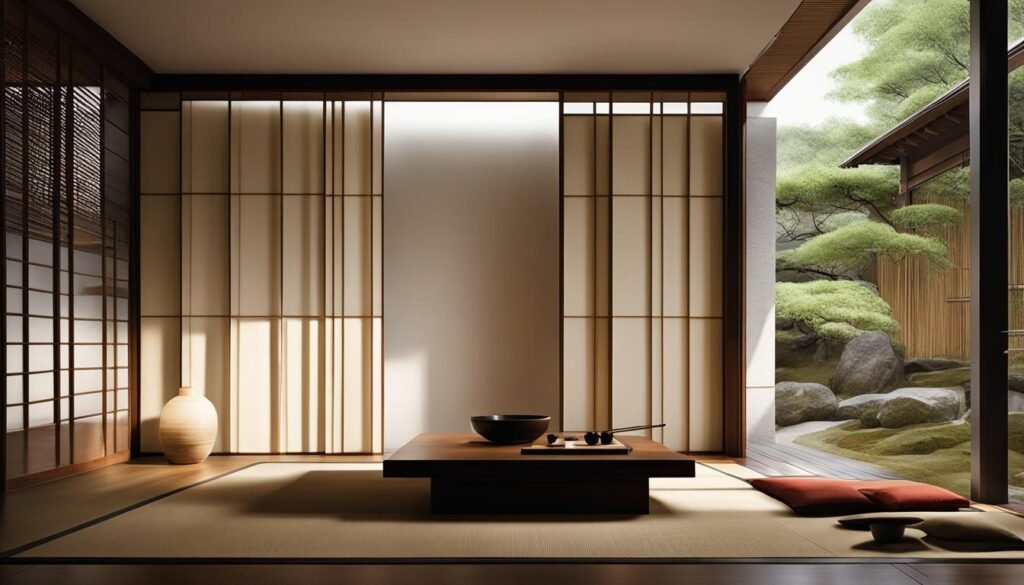
When I ponder the Japanese design style, I am instantly transported into a world where every detail is a testament to the enduring fusion of modern and traditional Japanese design. This convergence is not a happenstance, but rather a deliberate dance between time-honored practices and contemporary innovation, crafting living spaces that resonate with the past while serving the present.
Fusing Tradition with Modernity
In my journey through immaculate spaces, I’ve observed how zen interior design provides more than mere visual appeal. It merges the wisdom of our ancestors with the ambitions of today’s dynamic lifestyles. The construction of each area represents a homage to what was, reimagined for what is and what will be. It’s this very fusion that creates a sense of harmony, enabling us to thrive within our environments.
Simplicity in Form and Function
The hallmark of minimalist Japanese design lies in its unparalleled simplicity. It’s a design ethos that strips away the superfluous, focusing instead on the elemental beauty of form coupled with functionality. By paring down to the essentials, Japanese interior design teaches us to value the spaces in between — the open expanses that elevate our state of being.
The Philosophy of Minimalism
The essence of this design philosophy rests on a profound respect for space—both physical and spiritual. The balance of light and material, the deliberate placement of every object, and the thoughtful consideration of the voids all resonate with a deep-rooted minimalism. This is more than a mere aesthetic choice; it’s a lifelong commitment to an existence where less is exponentially more, and where every day is a step closer to inner peace and environmental consciousness.
Color Palettes Reflecting Nature’s Serenity
As someone who deeply appreciates the subtleties of interior design, I find myself constantly drawn to the soft and inviting hues that define Japanese color palettes. The gentle touch of nature is masterfully woven into interiors Japan, creating an ambiance of serenity that speaks volumes without uttering a single word.
Neutral Tones and Accents
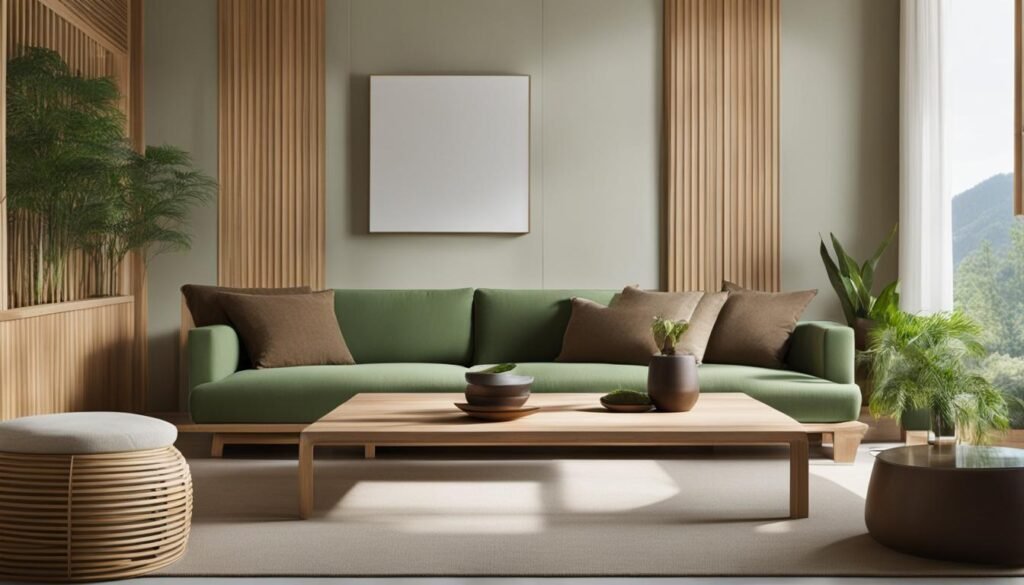
The minimalistic approach in Japanese decoration style brings forward an array of neutral tones that evoke a calming presence in any space. White, being a predominant choice, represents purity and cleanliness, while beige and light grays offer a warm embrace, reminiscent of sun-bleached stones and morning mists. These foundations are subtly enhanced with accents of muted blues and greens, capturing the essence of a tranquil sea or a whispering bamboo forest.
Harmony with Japanese Color Principles
Harmony is the heartbeat of traditional Japanese aesthetics, and this principle extends to the color schemes used in their living spaces. By incorporating shades that one might encounter when strolling through an ancient forest or sitting by a mountain stream, Japanese designers are able to create an atmosphere that nurtures tranquility and mindfulness.
- White symbolizes simplicity and new beginnings.
- Beige offers a touch of the earthen world, grounding and stabilizing.
- Soft grays serve as a neutral canvas, allowing other elements to stand out.
- Muted greens and blues introduce a breath of nature, promoting peaceful reflection.
Each color is chosen not only for its beauty but for its ability to cultivate a sense of harmony and balance—an inherent desire for connection with the natural world that is evident in every aspect of Japanese interior design.
The Use of Natural Materials in Japanese Decor
In my journey through the graceful world of Japanese interior design, I have come to appreciate the profound respect for nature that is fundamental to its character. The keen incorporation of natural materials in Japanese design not only establishes an unbreakable bond with the environment but also serves as a testament to the country’s rich cultural artisanship. Let me take you through some of the pivotal elements that embody this aesthetic.
Wood, Bamboo, and Stone
The serene simplicity of Japanese-inspired spaces often originates from the thoughtful use of wood, bamboo, and stone. These elements, cherished for their natural beauty and enduring strength, lend a sense of warmth and organic texture to the spaces they occupy. Light-colored woods, like cedar and cypress, are frequently chosen for furniture, evoking a minimalist yet functional charm that is quintessential in pieces like Japanese-inspired furniture.
As I gaze upon the woven patterns of bamboo in chairs or the solid grace of stone in countertops, I’m reminded of nature’s diversity and enduring touch within these interiors. These materials are not just for their aesthetic value; they are also chosen for their sustainable qualities and their ability to bring a piece of nature’s tranquility into our living spaces.
Textiles: From Tatami to Silk
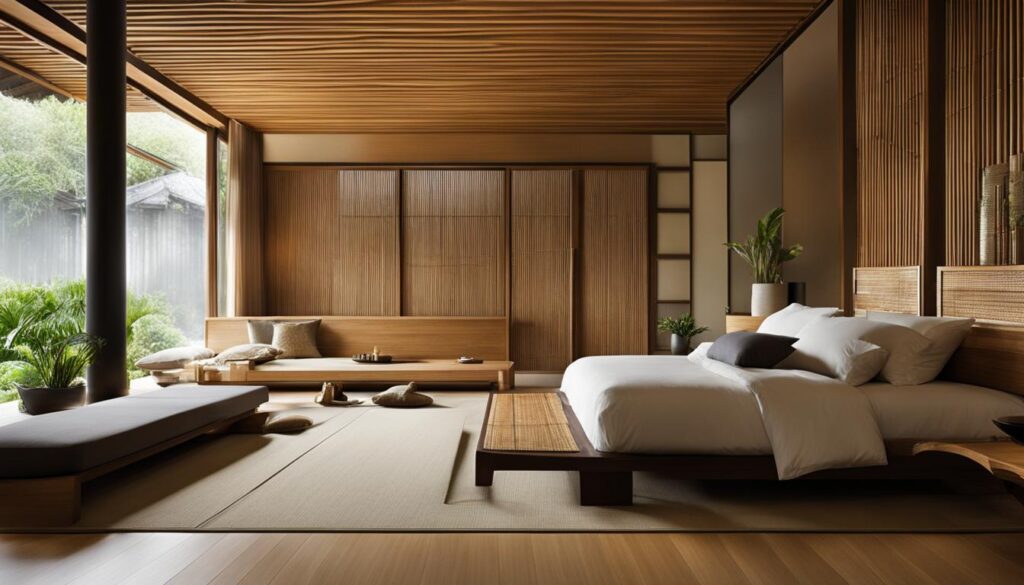
What truly completes the narrative of natural materials in Japanese design is the exquisite use of textiles. A case in point is the beloved tatami flooring, an element that I personally find both visually and texturally captivating. Crafted from rice straw, each mat represents the delicate balance between tradition and the pursuit of comfort.
On the other hand, textiles like silk and linen grace the interiors with their presence in the form of shoji screens and sliding doors. These materials play with light and shadow in subtle ways, creating a soft, diffused atmosphere that appeals to a calm mindset. They provide not only privacy but also a delicate pattern and texture that echo the finesse of traditional craftsmanship and the inherent connection of the indoors to the natural world outside.
In conclusion, each time I step into a space adorned with these materials, I find myself transported to a world where design transcends mere aesthetic expression – it becomes an homage to the natural beauty that surrounds us, and an enduring legacy of the Japanese reverence for nature in their everyday lives.
Japanese Furniture: A Blend of Aesthetics and Practicality
When I delve into the world of Japanese furniture, I find myself enamored by the minimalist design and functional aesthetics that are characteristic of the Japanese decor style. These pieces are not just objects to fill a room; they are the epitome of practical art. The low-to-the-ground silhouettes of tables and chairs invite a sense of calm and groundedness, a nod to the Japanese cultural reverence for humility and connection to the earth.
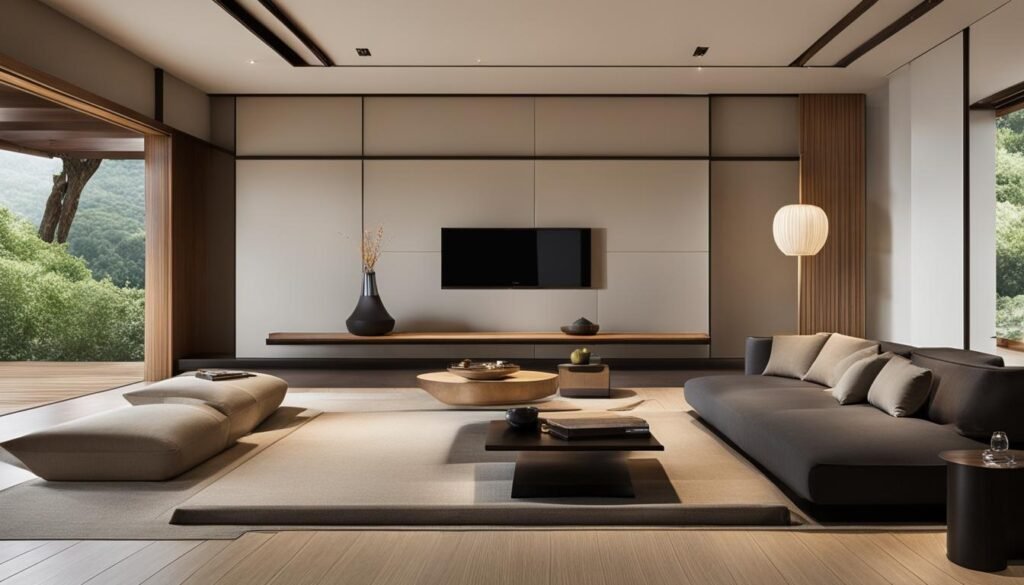
The materials used in Japanese furniture are often light-colored woods such as hinoki or maple, which bring a warmth and natural feel to the interior space. But it’s the attention to craftsmanship and detail that truly sets this furniture apart. Whether it’s the precision joinery that forgoes the use of nails and screws, or the understated elegance of a smoothly sanded surface, each piece feels like a testament to the dedication and skill of its maker.
Incorporating Japanese furniture into my decor has been a lesson in the art of subtlety. Pieces are often multifunctional – a low table by day becomes a dining area by evening, while a futon sofa effortlessly transitions into a bed, exemplifying a practical yet stylish use of space. As someone who appreciates both form and function, I’m continually impressed by the way Japanese design merges these aspects seamlessly.
- Space-saving designs that maximize small living areas without sacrificing beauty.
- Ergonomically minded layouts that promote comfort and well-being.
- Integration of natural elements that foster a connection with the environment.
Through my exploration of Japanese furniture, I’ve realized that to embrace this style means to embrace a philosophy; one that regards simplicity and functionality as the path to aesthetic enrichment. As I sit back in my elegantly crafted armchair, I feel enveloped by the peaceful, harmonious spirit that Japanese design embodies, and I am reminded that in furniture, as in life, the most profound elegance is found in the purity of purposeful simplicity.
Lighting Design: Art of Illumination in Japanese Interiors
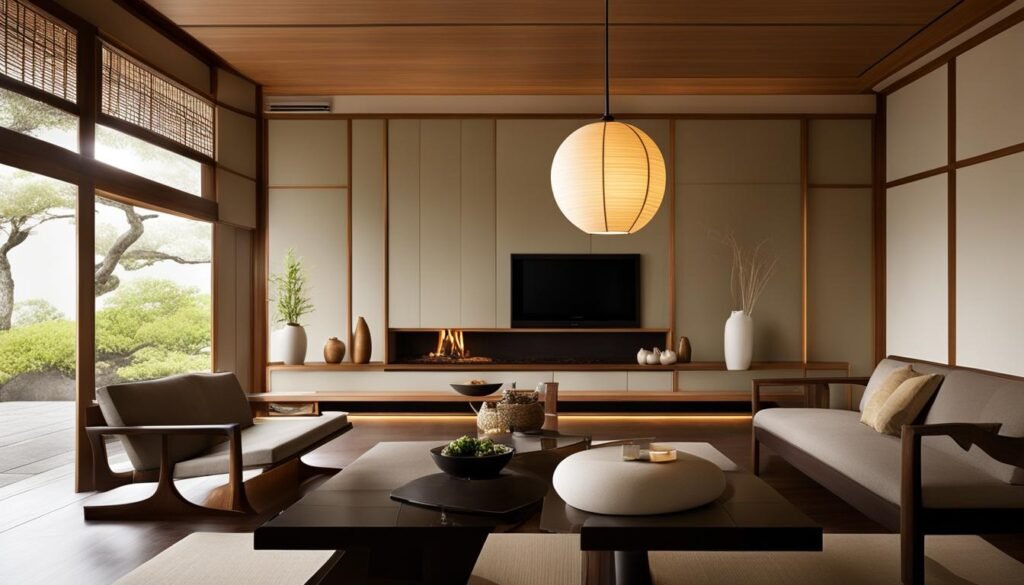
Imbuing my space with the tranquil luminosity that characterizes Japanese design, I’ve come to understand the vital role light plays in shaping the atmosphere of an interior. Natural light’s gentle caress reveals the meticulous details of a room, honoring the Japanese aesthetic in interior design, which holds light in high regard, not just for function but as a principal design element. To complement this, I select minimalist light fixtures that embody the same serene philosophy, enhancing the ambiance without overwhelming the senses.
Natural Light and Its Symbolism
In my quest to capture the essence of natural illumination, I’ve embraced large windows and sheer shoji screens that filter sunlight, bridging the exterior and interior worlds. The symbolism of natural light in Japanese interior design evokes a sense of purity and clarity, mirroring the country’s appreciation for nature’s unadulterated beauty. It’s more than just visibility; it’s about harmony with the external environment, crafting a narrative between the home and the changing seasons outside.
Minimalist Light Fixtures Enhancing Atmosphere
As dusk paints the sky in shades of indigo and grey, the role of physical light fixtures becomes paramount. My selection? Delicate Japanese paper lanterns that exude a soft, diffused glow, paired with the sleek lines of Scandinavian pendant lights. These minimalist light fixtures offer more than utility—they contribute to the visual poetry of the space. While aligned with the principles of Japanese design, they also ensure a touch of warmth and intimacy, inviting a contemplative atmosphere that is perfectly in tune with the overall Japanese aesthetic in interior design.
Creating a Zen-Inspired Interior
As a connoisseur of zen-inspired interiors, my approach to creating a space that exudes tranquility starts with understanding the profound role nature plays in Japanese home decor. The elegance of greenery in Japanese design is not merely about aesthetics; it represents life, regeneration, and the seamless flow of the interior with the natural world outside.
The Role of Greenery in Japanese Design
Incorporating plant life into my designs is a carefully cultivated process. Be it the sculptural lines of a bonsai tree or the lush fullness of a fern, each element of greenery is selectively placed to harmonize with the surrounding space. This practice is more than adding a splash of color; it’s about creating a living component that complements the minimalist approach synonymous with Japanese decor.
Integrating Tranquility into Living Spaces
To achieve a genuinely meditative and peaceful environment, I ensure that each component, from a softly trickling bamboo water feature to smooth, rounded stones, contributes to an overall sense of calm. By thoughtfully situating these elements in a room, I help to foster an ambiance where one can retreat and rejuvenate, fully embracing the serenity that Japanese home decor promises.
- Potted plants that purify the air
- Delicate bonsai that demands focus and care
- Natural stone arrangements that ground the space
In my designs, the quiet presence of greenery serves as a reminder of the balance and simplicity at the heart of the Zen philosophy. Whether it’s through the subtle influence of a solitary orchid or the structured elegance of an Ikebana arrangement, these natural elements are integral in crafting zen-inspired interiors that resonate with harmony and poise.
Save this article
Enter your email and we'll send it straight to your inbox.
Japanese Interior Design
As I explore the rich tapestry of Japanese interior design, I am consistently amazed by how the fusion of east and west design influences has shaped contemporary spaces. The seamless blending of traditional Japanese architecture with fresh, modern elements is not merely a stylistic choice; it’s a testament to an evolving cultural narrative that bridges epochs and aesthetics. With every piece of minimalist furniture and every Zen-inspired layout, the storied past converges with the present, inviting both reflection and innovation.
Historical Influences on Contemporary Japanese Design
The delicate balance of preserving history while embracing the new is nowhere as clear as in the realm of contemporary Japanese design. Stroll through a modern Japanese home, and you may find the same wood joinery techniques that were used in ancient shrines, now applied to sleek, modern furnishings – a dialogue between ages that enriches our appreciation for both form and function.
Artistic Expressions through Japanese Aesthetics
My admiration deepens when considering how Japanese aesthetics express themselves artistically within a space. Whether it’s through a meticulously raked Zen garden that coexists with minimalist surroundings or the use of fusuma screens to divide a room lightly; there’s an evident reverence for materials and a dedication to craft that narrates a story of time-honored traditions infusing the modern world with beauty and intent.
- Integration of natural light to enliven spaces and create harmony
- Homage to privacy without sacrificing communal elements
- Appreciation for the textures and forms of natural materials
Integrating Japandi: Where East Meets West
As an aficionado of interior design, I can’t help but admire the seamless blend that Japandi brings to modern homes. This hybrid style, a rich fusione of Scandinavian functionality and Japanese elegance, strikes a chord with my appreciation for both minimalism and utmost efficiency. It’s a design trend that respects the fusion of modern and traditional Japanese design, bringing together the best of both worlds in a symbiotic cultural dialogue.
Combining Scandinavian Functionality with Japanese Elegance
The Japandi style commands attention for its ingenious combination of sleek Scandinavian design elements with the subtlety of Japanese decor. Here, function does not buckle under flair, nor does elegance overpower practicality. Instead, the resulting living spaces boast a tranquil aesthetic, grounded in a minimalist approach that champions clutter-free environments and purposeful furnishings.
The Cultural Dialogue in Design Elements
It is the dialog between cultures that truly sets Japandi apart. Each piece of furniture, every chosen texture, speaks to a lineage of design that dates back centuries, yet feels perfectly at home in a contemporary setting. This cross-cultural exchange yields a timeless aesthetic, manifesting in the organic textures of raw materials, the calming hues of neutral palettes, and the overarching principle that design should serve as the background to life, not its focal point.
- Neutral color schemes inspired by both nature and Nordic simplicity
- Textiles that tell a story of Scandi craftsmanship interwoven with Japanese attention to detail
- Furniture pieces that embody the functionality of IKEA combined with the low-profile silhouettes reminiscent of a Tokyo loft
In Japandi, every element has its place, and there’s a place for every element. It’s less about the quantity of decor and more about the quality of the space it defines. As I fuse these principles into my own home, I find the Japandi style to be not just a trend, but a testament to how design can bridge continents and create universal harmony in interior spaces.
Japanese Design Principles: A Guide to the Aesthetics
In my continuous exploration of interior design, I find myself repeatedly drawn to the effortless elegance that Japanese design principles offer. There’s a profound sense of clarity and purpose within the Japanese aesthetic in interior design that speaks directly to the soul. It’s a design ethos rooted not only in visuals but also in philosophy, promoting a lifestyle where both the efficient use of space and an innate sense of intimacy are revered.
My fascination lies in the delicate balance between form and function that these principles celebrate. By adopting an approach that values intimate architecture, every corner of a room is transformed into a potential nest of comfort — a private nook, a serene retreat, a space where thoughts can furl and unfurl in quietude.
Efficiency and Organization
At the heart of the Japanese home lies a beautiful truth: every item has its place, every design choice serves a purpose. I appreciate how the tenets of efficiency are not simply about reducing clutter, but rather they are about creating a space that is synchronized with the rhythm of daily life. The way shelves slide open, the elegance with which furniture folds away, and the strategic use of dividers articulate a profound understanding of the living space as an evolving entity.
Privacy and Intimacy Through Architecture
A key aspect of Japanese interior architecture that I admire is its innate ability to curate privacy without severing the spatial flow. The delicate dance between open-plan designs and private areas achieved through sliding doors (fusuma) and paper walls (shoji) exemplifies intimate architecture. This interplay of transparency and concealment fosters both communal engagement and solitary seclusion as desired. It’s a testament to unseen boundaries, drawn not with walls but with tradition and tactility.
Traditional Japanese Architecture Elements in Modern Design
When I immerse myself in the world of modern Japanese-inspired interiors, I’m invariably struck by the harmonious blend of traditional architectural elements with contemporary design aesthetics. This interplay is not merely an artistic statement but a thoughtful approach to practical living. Fusuma partitions and sliding shoji screens offer a nuanced way to separate spaces flexibly. They maintain privacy without sacrificing the flow of natural light, key to creating an inviting atmosphere.
My appreciation deepens as I consider the textural and visual comfort that tatami mats bring to a space. These mats are not just flooring; they are a canvas of culture, subtly enriching a room with their natural texture and hue. Moreover, the tokonoma alcove, a revered feature in traditional Japanese architecture, beckons the modern homeowner to display art and seasonal ikebana arrangements – a testament to the timeless elegance of Japanese design. Let’s explore how these elements can transform an interior:
- Fusuma partitions: Their customizability and variety in design allow fusuma partitions to seamlessly integrate into the modern aesthetic while attributing a distinct, traditional Japanese flair.
- Sliding shoji screens: These screens serve as a refined solution for dividing living spaces and introducing soft, diffused light, enhancing the serene quality of a minimalist design.
- Tatami mats: Employing tatami mats contributes a layer of comfort, warmth, and organic texture fundamental to Japanese-inspired living environments.
- Tokonoma alcove: Ideal for showcasing treasured items, the tokonoma alcove invites reflection and reverence, infusing a sense of calm and cultural richness.
Integrating these traditional Japanese elements into modern interiors results in a living space that exudes functional elegance and cultural depth, ensuring each aspect of the design is both beautiful and meaningful.
Conclusion
As I reflect on modern interior design trends, I recognize the profound resonance and timelessness of the Japanese aesthetic. It is a design philosophy that transcends geographical boundaries, inviting a global audience to embrace minimalism and intentionality within their living spaces. With an appreciation for natural elements and a fine-tuned sense of balance, I find that integrating Japanese decor style into my home has not only rejuvenated my living environment but has also infused it with tranquility and a deep-seated harmony.
Embracing Japanese Aesthetic in Interior Design Trends
In a world where the pace of life is ever-accelerating, there is a growing predilection to seek solace in the home. Embracing Japanese decor style is less of a passing trend and more of an adoption of a philosophy that underscores the importance of simplicity and functionality. By paring down to the essentials and respecting the integrity of materials and form, interior design becomes an ode to minimalism that aligns with the current propensity for mindful living.
Creating Balance and Harmony in Your Home
Fusing the Japanese principles of design with the dynamic of contemporary lifestyles allows me to establish a holistic balance. This delicate equilibrium encourages harmony in living spaces, echoing the Japanese belief in the connectedness of the internal environment to the natural world outside. By adopting such principles, I take part in nurturing an abode that serves not just as a shelter but as a personal sanctuary, where every element coexists in a well-composed serenity.
FAQ
What defines the Japanese interior design style?
The Japanese interior design style is defined by its simplicity, minimalism, and connection to nature. Traditional architecture integrates with modern aesthetics to create serene and functional spaces. This aesthetic often incorporates natural materials, embraces the beauty of imperfection, and strives for a Zen-inspired atmosphere that fosters tranquility in living environments.
How does Japanese design integrate modernity with tradition?
Japanese design seamlessly combines modern requirements with traditional elements. Contemporary spaces may include traditional features like tatami flooring, fusuma partitions, and shoji screens, incorporating these elements into a modern context to align with contemporary needs while preserving cultural heritage.
What is the philosophy behind the minimalist design in Japanese aesthetics?
The minimalist design in Japanese aesthetics is centered on the philosophy of ‘less is more’, focusing on functionality and simplicity. It encourages an uncluttered environment where each piece serves a purpose, reflecting the value placed on peace, calmness, and the efficient use of space and materials in interior design.
Can you explain the typical color palettes used in Japanese decor?
Japanese decor uses color palettes inspired by the natural landscape, often incorporating neutral tones like whites, beiges, and light grays, with muted greens, blues, or wood accents. These colors aim to create a tranquil and soothing atmosphere that aligns with Japanese color principles emphasizing natural beauty and simplicity.
What types of materials are prevalent in Japanese-inspired furniture?
Japanese-inspired furniture predominantly uses natural materials such as light-colored woods, bamboo, and stone. These materials are selected for their simplicity, natural aesthetic, and their functionality within minimalist design principles.
How is lighting designed in Japanese interiors?
In Japanese interiors, lighting is designed to take advantage of natural light whenever possible, utilizing large windows, shoji screens, and reflecting surfaces. When artificial lighting is needed, minimalist light fixtures like paper lanterns or simple downlights are chosen to maintain the simplicity of the design while providing a warm, diffused illumination that enhances the atmosphere.
How do Zen principles influence Japanese interior decorating?
Zen principles in Japanese decorating play a crucial role in creating a sense of tranquility and mindfulness. Interiors are designed to encourage a calm, introspective atmosphere, often utilizing natural greenery, uncluttered spaces, and a well-balanced layout that reflects the Zen values of simplicity, harmony, and connection with nature.
What historical elements are typical in contemporary Japanese design?
Contemporary Japanese design often incorporates historical elements such as tatami mats, shoji screens, and sliding fusuma doors. Traditional art and textiles may also be featured, blending historical influence with modern design to create depth and cultural authenticity within the space.
How do Japandi interiors combine Scandinavian and Japanese design?
Japandi is a hybrid design trend that merges the functionality of Scandinavian design with the minimalism of Japanese decor. It emphasizes clean lines, natural materials, and a muted color palette, creating spaces that are both practical and aesthetically peaceful, embodying a cultural dialogue between east and west.
What makes Japanese design principles relevant to modern living spaces?
Japanese design principles are relevant to modern spaces due to their focus on cleanliness, organization, and the thoughtful use of space. These principles lead to efficient and comfortable environments that also promote psychological well-being through their serene and uncluttered nature.
How are traditional Japanese architecture elements like tatami, shoji, and tokonoma implemented in modern design?
In modern design, tatami mats serve as both flooring and seating, shoji screens function as movable partitions that diffuse light, and tokonoma alcoves are used for artistic display, creating a subtle blend of functionality and traditional elegance. This incorporation of classical elements into modern settings emphasizes continuity and respect for cultural traditions, while adapting to modern lifestyle needs.
What are the benefits of embracing a Japanese decor style in my home?
Embracing a Japanese decor style in your home can bring numerous benefits, including a more peaceful and organized living space that promotes relaxation. It fosters an appreciation for natural beauty, encourages living within means through minimalism, and enhances one’s ability to find beauty in imperfection, contributing to a balanced and harmonious environment. Additionally, it can improve the functionality of your space with versatile design solutions like multi-purpose furniture and transformable areas.
Save this article
We'll email you the link so you can find it again later.


