

As I delve into the dynamic world of modern kitchen styles, I’m witnessing a renaissance of design that’s both practical and aesthetically compelling. The types of kitchen styles on the horizon for 2024 are a curated blend of tradition and innovation, where different styles of kitchen design foster a connection and enhance daily life. It’s exciting to see how styles of kitchen design are evolving to embrace communal spaces, a mix of natural and high-tech materials, and splashes of bold color. Kitchen design types are not just about looks; they’re about creating a space that fits seamlessly into the fabric of our lives.
In this exploration, I focus on the various kitchen design types that push the boundaries of conventional ideas, bringing to life an array of inspirational spaces. Whether looking at the sleek lines of contemporary layouts or the homely touch of farmhouse vibes, this year promises to bring forward an array of expressive and functional kitchen styles to cater to the eclectic tastes of homeowners.
Key Takeaways
- The fusion of wood with painted cabinetry showcases the desire for texture and warmth in kitchen styles.
- Gold hardware in kitchen fixtures and fittings is emerging as a favorite for creating a welcoming atmosphere.
- Greens from calming sage to vibrant emerald are becoming the go-to palette to breathe life into kitchen spaces.
- Beverage stations and undercounter refrigeration indicate a move towards kitchens designed for entertaining.
- The integration of oversized ornate lighting fixtures is set to make a bold statement in kitchen design types.
- Natural wood’s resurgence aligns with the growing preference for organic and biophilic elements in design.
- Minimalism remains a strong influence, with technologies enhancing the clean lines and functionality of modern kitchens.
Conversational Kitchen Islands: Bringing People Together
In my consistent exploration of modern kitchen styles, I’ve seen the trend for communal seating in kitchens escalate, fostering a more inclusive and engaging atmosphere. The heart of this movement is the evolution of kitchen island trends—specifically, conversational kitchen islands. Not merely a place for meal prep, these islands are becoming a hub for social interaction.
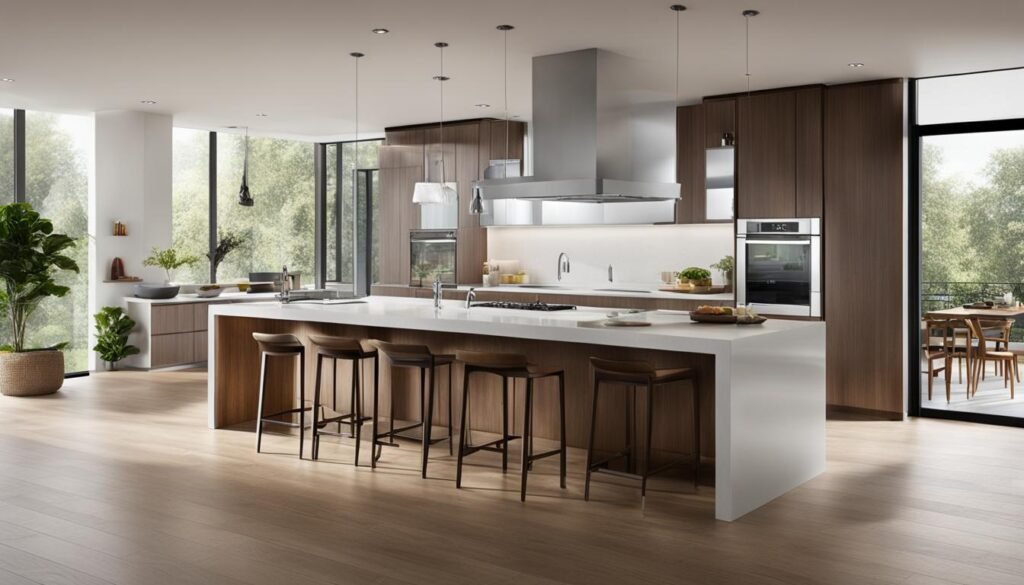
Design Elements of Communal Seating Arrangements
The design of today’s kitchen islands is committed to tearing down the walls of isolation that once surrounded the cook. With an eye for both style and social dynamics, these islands introduce various seating options intended for gathering friends and family. This focus on communal seating spotlights the shift towards kitchens that are not just functional spaces but also warm, welcoming centers of the home.
- Increased countertop space to accommodate multiple people
- Furniture-style seating that encourages linger and interaction
- Strategic placement ensuring the cook’s inclusion in conversations
Combining Functionality and Style in Kitchen Islands
My observation of recent designs has revealed kitchen islands that are no longer one-dimensional. Merging practicality with elegance, they cater to a multitude of kitchen tasks while serving as aesthetically appealing pieces of furniture. This hybrid approach ensures that every kitchen island is both a visual delight and an embodiment of efficient design.
- Storage solutions seamlessly integrated with seating areas
- Adaptable to various kitchen activities, from dining to socializing
- Customizable to complement the individual style of each home
As we continue to witness these exciting developments in kitchen design, I find myself drawn to the ways in which these spaces are being transformed into areas of warmth, hospitality, and human connection. The modern kitchen with its conversational islands is not just a trend; it is a testament to the value we place on togetherness and community in every corner of our lives.
Innovative Use of Materials: A Blend of Function and Aesthetics
As a passionate advocate for popular kitchen styles, I am constantly exploring the latest trends that seamlessly integrate innovative kitchen materials into the heart of our homes. The year 2024 is gearing up to be a landmark year for kitchen designs—a year that celebrates not just form, but also function, through the thoughtful use of diverse materials.
One of the most exciting trends I’ve observed is the pairing of natural wood with painted finishes. For example, picture cabinet towers in a robust stained cherry wood married with lower cabinets in an array of subdued or vibrant painted finishes. This sophisticated dichotomy does not just offer visual pleasure but also introduces a sense of groundedness to the space.
- Stained wood cabinet towers—adding depth and character to the kitchen
- Lower cabinets in varying painted finishes—infusing personality and modernity
Moreover, countertops are now being crafted from innovative kitchen materials tailored for specific culinary tasks. A slab of immaculate marble makes for the perfect surface for those who love to bake, providing a cool touch essential for handling pastry. In contrast, a butcher block stands ready for the bustle of everyday food preparation and doubles as a rustic serving area.
- Marble countertops for baking zones—melding elegance with practicality
- Butcher block sections for prep and serving—emphasizing durability and warmth
The culmination of these materials does more than heighten utility; it crystallizes a vision for aesthetic kitchen designs that resonate with both the home cook and the design aficionado. This approach to materiality in kitchen design plays a pivotal role in defining the spaces where we gather with loved ones and share our culinary passions.
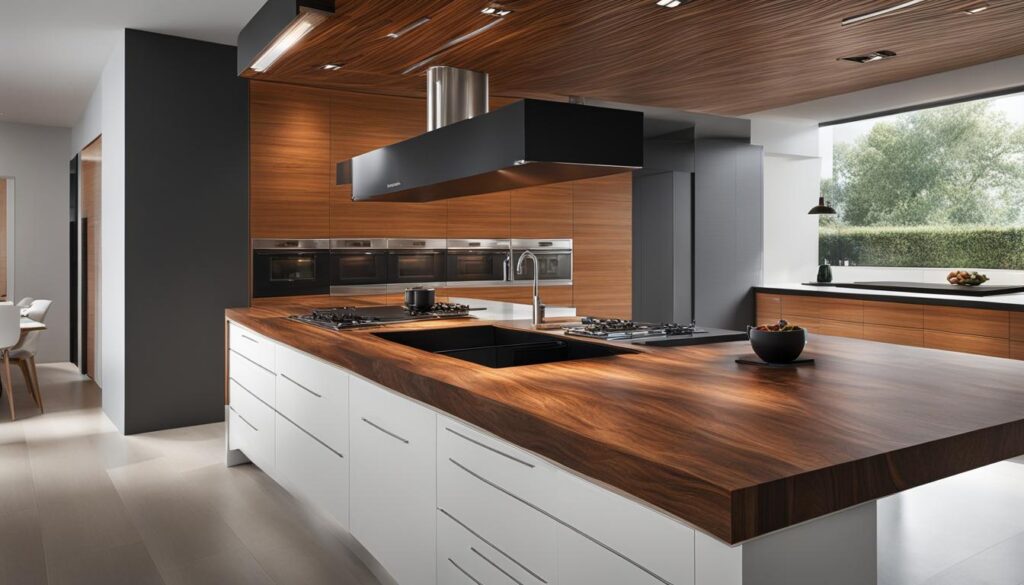
It’s an exciting time to reinvent the hub of our homes with materials that do more than fill a space—they tell a story of taste, function, and beauty. I look forward to seeing these innovative design choices become staples in kitchen styles everywhere, ushering in an era where the materials we choose are as much a testament to our style as they are to our culinary endeavors.
The Resurgence of Gold: A Warm Atmosphere Through Accent Details
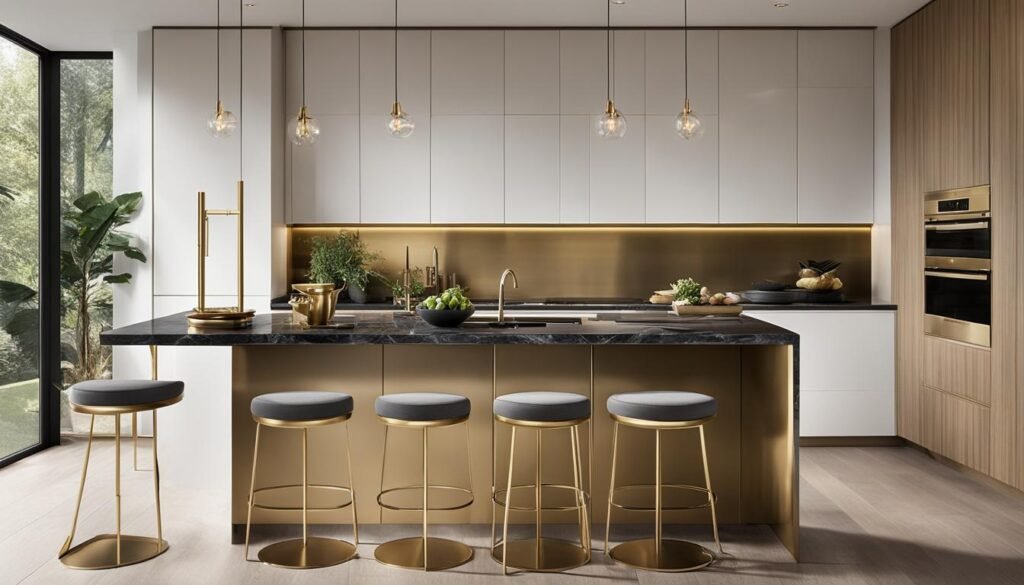
As I explore contemporary kitchen styles, I’m struck by the resurgence of gold kitchen hardware. It’s not just that these pieces are beautiful; they exude a sophistication that complements the modern aesthetic. Gold hardware, with its reflective surface and historic connotation of luxury, brings a warm kitchen atmosphere to the heart of the home.
- Gold faucets that gleam under the kitchen lights
- Cabinet handles in matte or satin gold that feel cool to the touch yet look warm and inviting
- Brushed gold accessories that catch the eye without overwhelming the senses
The choice of gold kitchen hardware is pivotal in transforming a functional space into something akin to a living artwork. Witnessing this trend, I believe it solidifies its place as more than a passing fad—it is an enduring testament to elegance in kitchen design.
Color Trends in 2024 Kitchens: Going Green
As a professional deeply invested in interior design trends, I’ve seen a variety of colors come and go, but something about the color green has continually captured the hearts of homeowners and designers alike. In 2024, the refreshing shades of green are not just limited to decorative plants; they have found their profound expression in green kitchen cabinets and accents that bring a revitalizing energy and connect with the natural world. It’s an exciting time for anyone looking to infuse their cooking spaces with a biophilic essence that reflects both farmhouse kitchen styles and rustic kitchen styles.
Integrating Green in Cabinetry and Accents
Green cabinetry is certainly having its moment. It effortlessly pairs with a multitude of textures and finishes, allowing me to create bespoke spaces that resonate with a client’s personal aesthetics. Whether it’s a soft, muted olive or a rich hunter green, these hues introduce a serene ambiance into the farmhouse kitchens that my clients so often covet.
From Sage to Emerald: Varieties of Green in Kitchen Design
- Sage Green: For those who desire a gentle touch of color, sage brings a subtle, calming presence.
- Peppermint Green: A hint of coolness that revitalizes the kitchen space.
- Emerald Green: Bold and luxurious, emerald makes a statement and works beautifully with brushed gold fittings.
The versatility of green allows it to adapt flawlessly to both modern appliances and traditional wooden fixtures, resulting in a balance that exhibits sophistication and warmth. The shadows and highlights that play upon green kitchen cabinets have the power to transform the aesthetic of an entire room, offering an enchanting backdrop that both soothes and inspires.
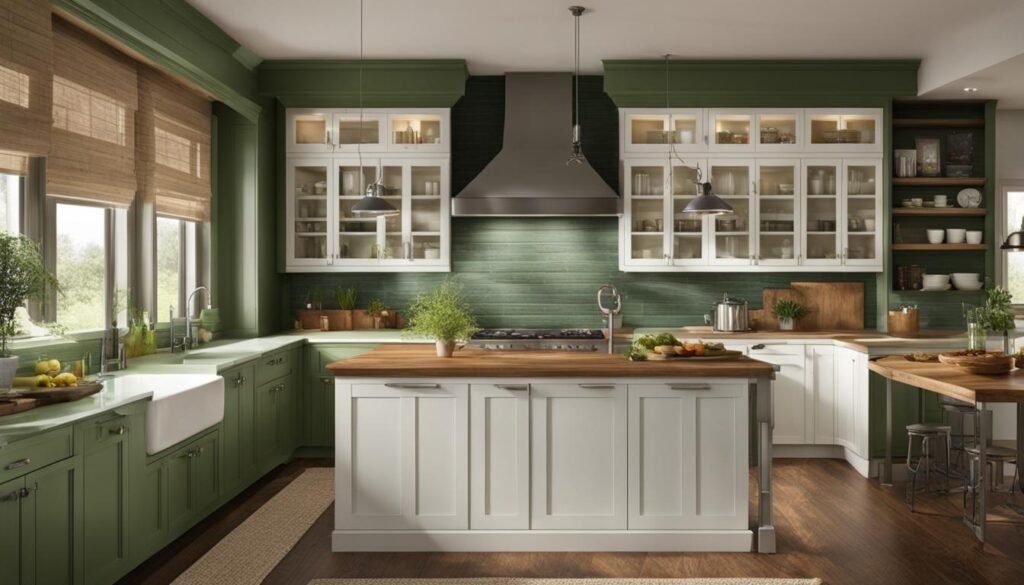
Ultimately, integrating green into kitchen designs is much more than a trend; it’s a nod to our continuous aspiration for a harmonious living space that embraces nature, health, and wellbeing. The 2024 kitchen is a canvas, and green is the color that can paint the perfect pastoral or rustic escape within our homes.
Elegant Functionality: Decorative Range Hoods as Focal Points
As I delve into the world of industrial kitchen styles, my attention is immediately drawn to the statement pieces of the space: custom range hoods. The year 2024 marks an era where these pieces are not just mere afterthoughts but central to functional kitchen design. Design aficionados and homeowners alike are embracing the idea that range hoods can be both utilitarian and beautifully crafted centerpieces of modern kitchens.
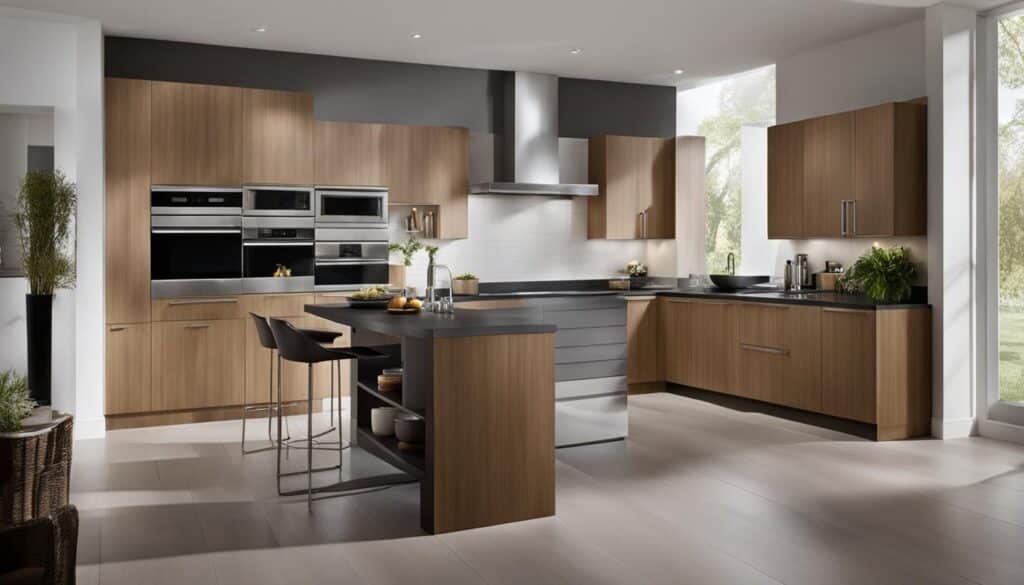
The industrial aesthetic, revered for its bold and structural elements, now marries bespoke craftsmanship in the form of custom range hoods. These range hoods go far beyond their fundamental function of ventilating the kitchen; they serve as bespoke pieces of art. Many homeowners now opt for custom-fabricated models that reflect their personal style and kitchen’s theme.
Save this article
Enter your email and we'll send it straight to your inbox.
- Incorporation of mixed materials for a unique look
- Consideration of shapes and sizes that complement the space
- Integration of lighting to highlight the hood and work area
- Use of advanced filtration systems for better air quality
My exploration into this trend reveals that choice materials such as stainless steel, brushed copper, and natural wood are styled into exquisite forms—each tailored to the individual’s taste and kitchen’s layout. It’s no surprise that homeowners who cherish functional kitchen design are investing in these high-quality range hoods; they prioritize efficiency and style in equal measure.
Ultimately, the transformation of range hoods into principal elements of kitchen decor reflects a broader theme in interior design: the fusion of elegance and purpose. In my professional view, this trend is set to redefine the standard for industrial kitchen styles, elevating them to new heights of sophistication and innovation.
Undercounter Refrigeration: A Trend Beyond the Kitchen
As I delve into the realm of minimalist kitchen styles, I’ve noticed a significant uptick in the popularity of undercounter refrigeration, a true testament to kitchen design innovation. This trend has seamlessly transitioned from a simple luxury to a necessary component in the modern home. The aesthetic appeal of undercounter units complements the minimalist approach, maintaining clean lines and uncluttered spaces.
The versatility of undercounter refrigeration extends beyond the conventional kitchen setting. I’ve seen these compact units making a splash in spaces like home bars, entertainment rooms, and even in outdoor kitchens—each tailored to cater to the evolving needs of convenience and accessibility. This innovative approach to home design supports a lifestyle that cherishes efficiency and simplicity.
- Undercounter refrigerator drawers in home bars for easy access to beverages.
- Dual-zone temperature models accommodating wine and perishables separately.
- Integration in living spaces for entertainment purposes and movie nights.
As I explore various homes incorporating this trend, I am struck by the ingenuity it brings to overall space utilization; a discreet fridge drawer tucked under a living room console or a well-placed unit in the butler’s pantry demonstrating clever kitchen design innovation. Treading forward, the expansion of undercounter refrigeration is a clear indicator of how minimalist design principles are reshaping not just kitchens, but our entire way of living.
The Allure of Warm Woods in Modern Kitchen Styles
As a connoisseur of timeless aesthetics, I’ve observed a captivating transition in kitchen design—a nostalgic nod to vintage kitchen styles that favor the authenticity and warmth of natural elements. Notably, a significant return to warm natural wood tones emanates a refreshing paradigm shift within contemporary interiors, presenting an ambiance that both invigorates and soothes the senses. The move away from the ubiquity of painted cabinets is not just a fleeting trend but a profound embrace of nature’s own palette, where the grains and textures tell a story of organic beauty.
Natural Wood Tones: A Shift Away from Painted Cabinets
Exemplary species like white oak and walnut are resurfacing, injecting kitchens with an undeniable charm that only warm wood can offer. This renaissance of wood is notable in the heart of the home, where it pairs seamlessly with a multitude of design elements to evoke a sense of familiarity and comfort. The charm of these materials extends beyond their aesthetic appeal, merging durability with a timeless elegance that transcends passing fads.
The Biophilic Appeal: Incorporating Organic Textures
In line with the affection for the natural world, the concept of biophilic design champions an innate connection with organic textures, manifesting through unadulterated wood surfaces that capture the enthralling intricacies of nature. Aligning closely with Scandinavian kitchen designs, the application of naked wood celebrates simplicity, functionality, and an intrinsic bond with the environment. The allure of these spaces lies not just in their visual delight but also in their ability to conjure a serene atmosphere that invites calm and reflection in our often hectic daily lives.
- Revival of warm natural wood tones in kitchen cabinetry and surfaces.
- Incorporation of unvarnished wood to craft an organic, biophilic environment.
- Harmonization of natural wood with Scandinavian principles of design: minimalism, functionality, and beauty.
The interlacing of form and function encapsulated within wood’s warm embrace represents more than just a stylistic choice—it symbolizes a conscious return to the roots and an appreciation for the slow, steadied pulse of life that wood brings to our living spaces. In this current chapter of my design journey, I am reminded that in the heart of every home, the kitchen serves not only as a place of culinary creation but also as a sanctuary where the spirit of vintage authenticity thrives amidst modern aspirations.
Entertaining Made Easy: Elevating Outdoor and Indoor Beverage Stations
As we look ahead to the burgeoning trends within modern kitchen styles, one cannot overlook the surge in popularity of beverage stations—both outdoor and indoor—as quintessential elements of entertainment and convenience in home design. In my experience, outdoor kitchen bars have transformed into more than just places to mix a cocktail or pour a drink. They’ve evolved into sophisticated hubs where design meets function, offering an extension of hospitality that merges seamlessly with the tranquility of open-air living spaces. These outdoor bars are crafted with meticulous attention to detail, ensuring that social gatherings are accommodated with as much elegance as practicality.
Complementing the outdoor allure are the indoor beverage stations that set a new standard for hosting inside the home. Here, vintage kitchen styles are imbued with modern sophistication as built-in coffee makers, wet bars, and wine fridges become synonymous with a well-appointed kitchen. I recognize this integration as a reflection not only of a homeowner’s unique lifestyle but as a mark of foresight in kitchen planning, understanding the significance of having specialized areas dedicated to beverage preparation and access. The incorporation of these stations within the kitchen space allows for effortless entertaining, lending a hand to the host without compromising on style or functionality.
It’s clear that our domestic environments are echoing a collective desire for spaces that cater to social interactions and personal enjoyment. This shift towards incorporating dedicated beverage stations—whether taking center stage in a vintage-inspired indoor setting or nestled in a cozy nook of the outdoor kitchen bar—acknowledges the dual importance of aesthetics and accessibility. As I explore the dynamic changes modern kitchen styles continue to undergo, embracing these dedicated drink amenities presents an undeniable blend of hospitality and sophistication that any homeowner would be proud to showcase.
FAQ
What are the key trends in modern kitchen styles for 2024?
The key trends include communal seating arrangements, a blend of different materials such as wood and painted cabinetry, the resurgence of gold hardware, green color schemes, the increased use of natural wood, and the rise of beverages stations. Additionally, kitchens are becoming multifunctional spaces with an emphasis on personalized design and indoor-outdoor connectivity.
How is the kitchen island evolving in modern kitchen styles?
Kitchen islands in 2024 are becoming conversational spaces that facilitate interaction, featuring combination designs that offer both closed storage and open areas with seating. The focus is on blending functionality with style, creating a space that supports socializing and meal preparation seamlessly.
What materials are becoming popular in kitchen design?
Popular materials in kitchen design include a mix of wood tones and painted finishes, with practical countertop choices such as marble and butcher block. The innovative use of materials is aimed at enhancing both function and aesthetics in the kitchen.
Why is gold hardware becoming popular in contemporary kitchen styles?
Gold hardware is gaining popularity due to its warm and inviting appearance. Finishes like matte, satin, and brushed gold serve as striking accent details, creating a more welcoming and sophisticated kitchen atmosphere.
What role does the color green play in farmhouse and rustic kitchen styles?
Green is a prominent color in 2024, offering a natural vibe that ranges from calming sage to vibrant emerald. Integrating green into cabinetry and accents aligns with biophilic design and complements the use of natural wood in farmhouse and rustic kitchen styles.
What makes range hoods an important element in industrial kitchen styles?
In industrial kitchen styles, range hoods are fashioned into artistic and functional focal points, often made from materials like wood and stainless steel. Their designs are customizable, contributing to the kitchen’s overall aesthetic while effectively purifying the air.
How is undercounter refrigeration shaping minimalist kitchen styles?
Undercounter refrigeration is shaping minimalist kitchen styles by offering sleek and space-saving refrigeration solutions. These models facilitate convenience and clean design lines, often expanding into other areas of the home like home bars and entertainment rooms.
How are warm natural wood tones influencing vintage and Scandinavian kitchen designs?
Warm natural wood tones, such as those from white oak and walnut, are welcoming an organic element into these kitchen styles. Moving away from painted cabinets to natural wood highlights a biophilic appeal and introduces comforting textures that resonate with both vintage aesthetics and Scandinavian simplicity.
What features are defining outdoor and indoor beverage stations in modern kitchens?
Beverage stations are being equipped with built-in coffee makers, wet bars, and wine fridges to facilitate hosting and socializing. Outdoor kitchen bars and beverage stations enhance entertaining by offering convenience and style, becoming integral parts of both indoor and outdoor kitchen designs.
Save this article
We'll email you the link so you can find it again later.


