
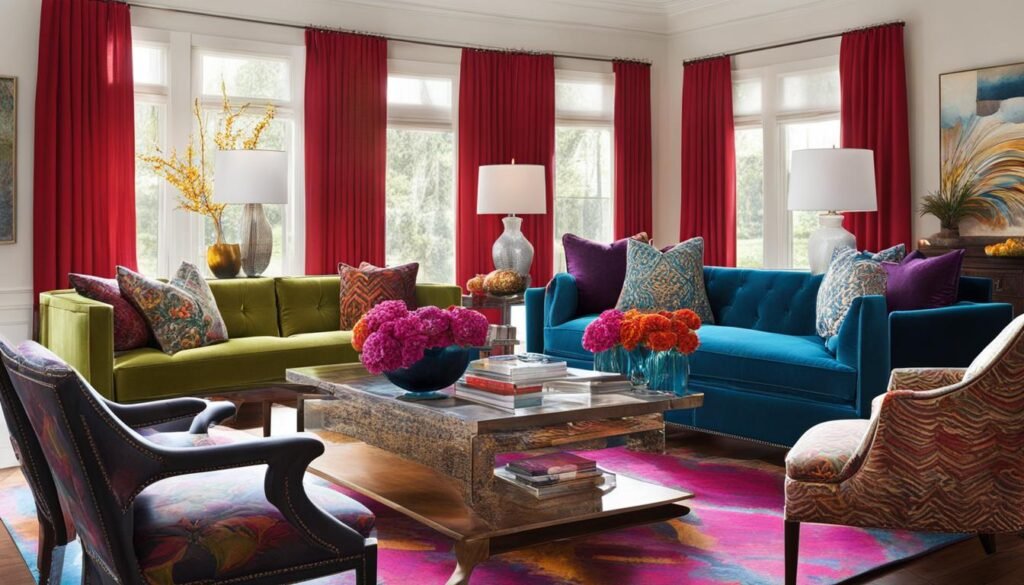
My journey into the vibrant world of maximalism began as a personal exploration into expressing my unique identity through interior design. This audacious approach to decor celebrates an eclectic blend of vibrant colors, bold patterns, and diverse textures—a visual feast that encapsulates one’s life experiences and heritage. I discovered that maximalism isn’t simply about filling spaces with items; it’s about curating collections that resonate with personal narratives and achieving a harmonious balance amidst the abundance.
Maximalist decor, with its fearless use of colors and patterns, invites diversity and creates an array of organized, thoughtfully composed spaces. As I delved deeper, I learned that this style could transform any room into a reflection of one’s innermost journeys and desires, opposing the restraint commonly found in minimalism. Maximalism champions the bold, the vibrant, and the eclectic, catering to those who dare to make their interiors a tangible extension of their personality.
Key Takeaways
- Maximalism allows for the full expression of individualism through an eclectic mix of decor elements.
- Emphasizing vibrant colors and bold patterns, maximalist design transforms spaces into personal narratives.
- The principle of harmony in maximalism is key to achieving a balanced yet abundant aesthetic.
- Diversity in textures and patterns characterizes maximalist interiors, setting them apart from minimalist spaces.
- Being bold with maximalist decor means creating a home environment that truly signifies all facets of one’s personality.
Understanding Maximalism in Modern Interiors
When I delve into the realm of maximalism design, I find myself exploring a design philosophy that eschews the ‘less is more’ mantra of minimalism. To fully grasp what is maximalism, one must envision a space where a mix of patterns, a kaleidoscope of vibrant colors, and an array of assorted designs come together to create a visually rich and personality-driven environment. As an interior design maximalist, I embrace not just the idea of more is more, but more importantly, the concept of ‘more of you’ is more.
The essence of maximalism lies in its ability to narrate a story—the story of the dweller’s travels, passions, and tastes. It’s about curating a space that feels deeply personal and joyously abundant. An amalgamation of textures, eras, and hues, this maximalist design style is an ode to self-expression, unleashing a canvas that’s as dynamic and as nuanced as life itself.
Yet it would be a misconception to mistake maximalism’s layered aesthetics for mere chaos. For within its broad-spectrum appeal, there lies a disciplined approach to organization. It’s about strategically placing each piece so that although the room is filled, it never feels cluttered or haphazard. Every item has a rightful place, working in harmony to create an environment that is as functional as it is aesthetically enticing.
- Anchoring spaces with statement pieces
- Creating focal points with bold art
- Balancing the scales of varied patterns and textures
- Employing a vibrant palette that tells my own color story
- Curating a collection of possessions that reflect personal journeys
Whether navigating through antique markets or contemporary design studios, my pursuit of maximalist elements is undeterred by the size of the space or the constraints of a budget. Maximalism design isn’t just a style; it’s a resolute stance against the sterile and the impersonal, promoting spaces that burst with vibrancy and warmth.
What drives this maximalist design style, ultimately, is its invitation to personalization and creativity. It’s a celebration of individuality, of breaking free from the confines of the expected. In a world where so much is pedestrian and mass-manufactured, maximalism emerges not just as an alternative to minimalism but as a statement of conviction—a conviction that my space is mine to mold, to shape, to imbue with meaning.
Maximalism vs. Minimalism: Making the Shift
As someone who has indulged in the minimalist palette for years, I find the transition to a more maximalist home design not merely a shift in decor but a liberating journey towards self-expression. Maximalism style, with its signature rejection of bare spaces and muted tones, offers a canvas upon which our individual stories can be illustrated in vibrant hues and bold patterns.
Defining the Core Aspects of Maximalist Design
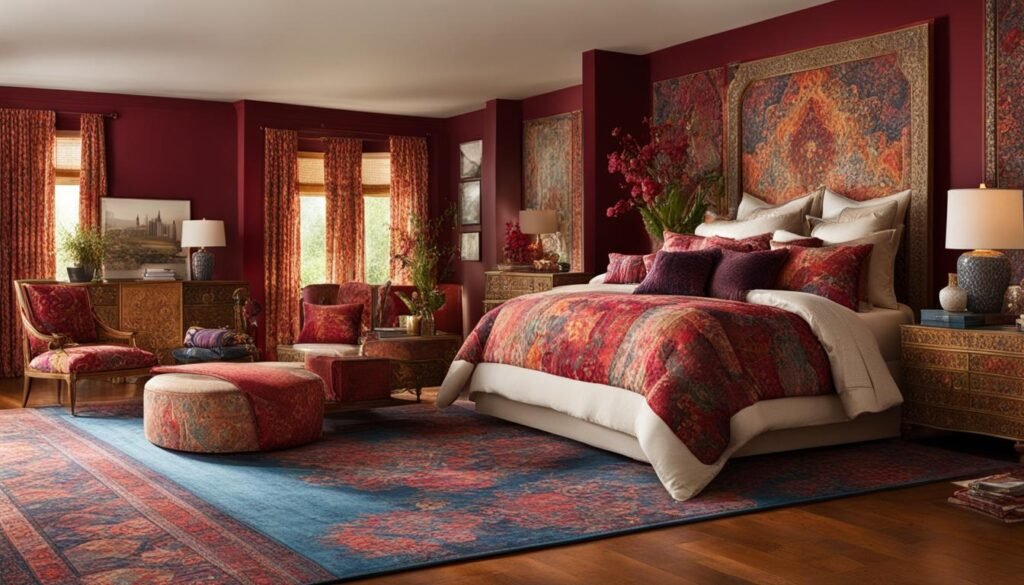
Embarking on the maximalist decor path, one quickly discovers that the core of maximalism style is its eclectic approach. Here are the key elements I incorporate while curating my maximalist space:
- Layering patterns and textures to create depth and interest
- Mixing colors with audacity, opting for bold rather than safe
- Incorporating personal artifacts that tell my unique story
- Fostering a sense of whimsy and the unexpected through diverse art and decor
Advantages of Switching to a Maximalist Aesthetic
The literal and figurative richness of how to decorate maximalist brings numerous advantages to one’s living space and mental wellbeing. For me, the benefits are clear:
- It grants me the freedom to experiment with an array of decor items without the fear of clutter or discordance.
- I find a strong sense of resonance in being able to tell my story through the possessions I choose to display.
- My space becomes a living, breathing entity, promoting a better mood and improved mental health as I am surrounded by items that I love and that mean something to me.
Plant life plays a not-so-subtle role in injecting vitality into the overall aesthetic, further enhancing the maximalist appeal with organic shapes and textures.
The Art of Mixing Patterns and Textures in Maximalist Decor
My journey into mixing patterns and textures within maximalist style began as I sought to infuse my living space with energy and personality. This design style, known for its generous use of bold patterns, allowed me to create a setup that served as a visual feast of colors, shapes, and materials. I discovered that the trick to mastering the maximalist approach lay in finding a balance—a way to make diverse elements coexist without creating chaotic clashes.
The key to a successful pattern play is diversity in scale. Large-scale floral wallpapers could work harmoniously alongside small geometric prints on throw pillows, provided they shared a color or a theme that acts as a common thread. This strategic approach ensures that the area is visually rich but not overpowering. Here’s how I weaved that balance into my own space:
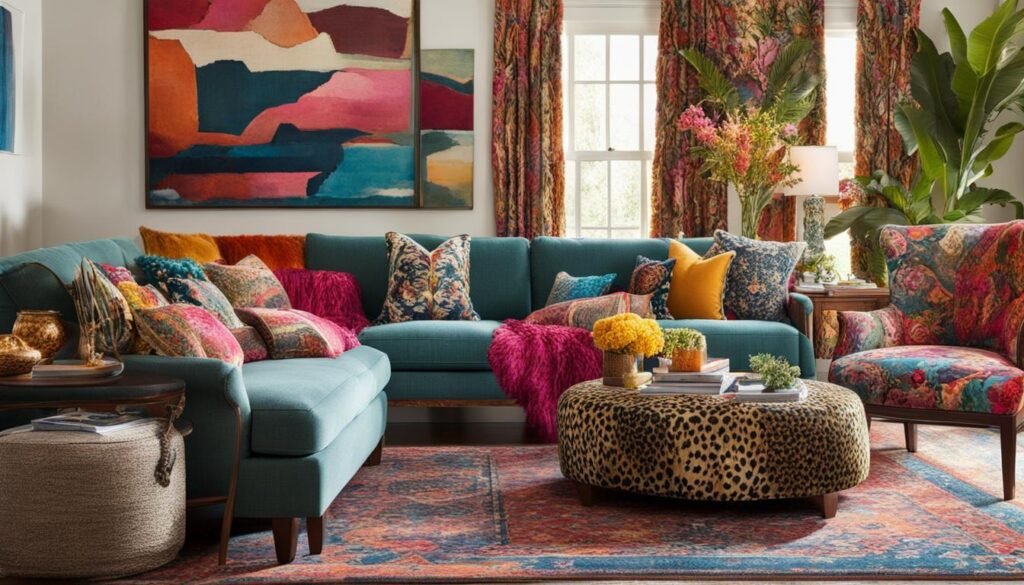
- Starting with a statement wall covered in eye-catching wallpaper, I embraced intricate designs that acted as the room’s focal point.
- To contrast, I paired this with upholstery featuring smaller, subtler patterns to create depth and interest.
Materials played just as crucial a role as patterns. In my maximalist haven, I married the softness of velvet cushions with the ruggedness of a sisal rug, creating a tactile dialogue between the two. The juxtaposition of textures is not merely a visual treat, but a way to keep the space inviting and engaging.
- Vary textures by layering different fabrics across your furniture and decor.
- Pair smooth and shiny finishes with matte and coarse ones for a dynamic sensory experience.
All in all, combining patterns and textures in maximalist decor is about celebrating diversity and complementing contrasts without allowing any single element to outshine the rest. It’s an artful balance that, when done correctly, leads to a living space that’s as vibrant and unique as the personality it reflects.
Color Psychology and Its Influence on Maximalism
As I delve into the role color psychology plays in maximalism interior design, it’s clear that our emotional responses to color are much more than a mere background detail; they are at the forefront of crafting an impactful maximalist space. Whether it’s a heated crimson prompting passion or a soothing sage inviting serenity, every hue holds the potential to elicit a unique response, transforming a room into a complex tapestry of feeling and spectacle.
Using Color to Set the Mood in Maximalist Spaces
Saturated with intention, my use of vibrant colors becomes a narrative in itself, telling stories within the confines of four walls. A rich azure not only brings a slice of the infinite sky indoors but also anchors the spirit, allowing for flights of fancy among eclectic decor pieces. An audacious splash of tangerine can infuse energy, sparking creativity and conversation in a room that refuses to be ignored.
Balancing Vibrant Hues and Neutrals
Balance in color is as crucial as contrast in a sonnet. In the maximalist’s palette, the interplay of balancing hues and neutrals sets the stage for a dance of complexity and restraint. My gaze lingers fondly on a muted backdrop that carries the weight of extravagance, highlighting the theatrical with subtlety. It’s a carefully choreographed visual symphony where every note is an integral part of the grand composition.
- Infusing neutral backdrops to temper high-energy reds and oranges
- Employing cool blues and greens to offer a tranquil counterpoint to warm yellows and pinks
- Weaving in pockets of beige or gray to give the eye a place to rest amidst a riot of color
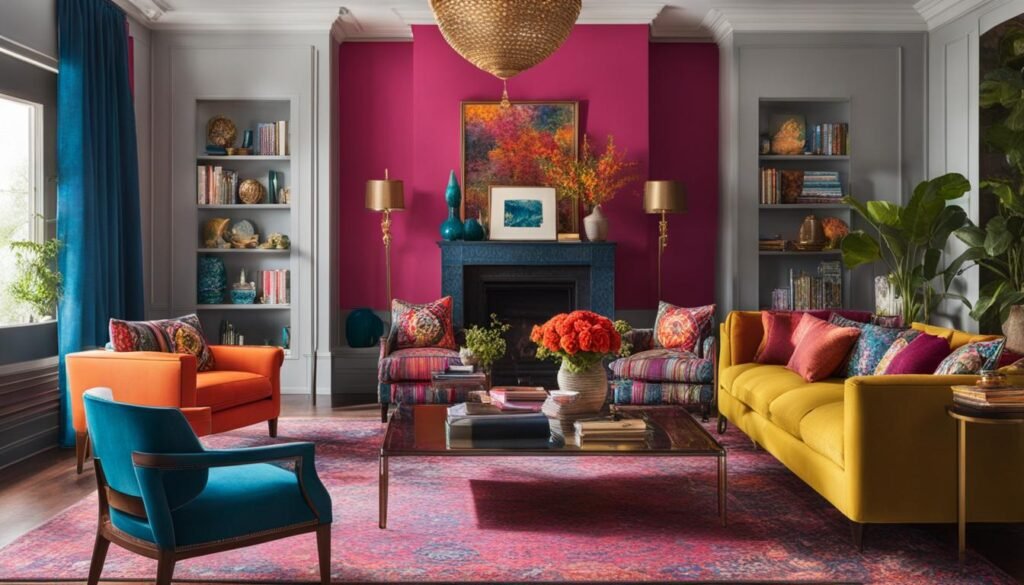
In creating my maximalist sanctuaries, I recognize that color is not merely a design choice, but a full sensorial experience, capable of influencing mood, dictating flow, and setting the scene for a life lived out loud amidst a spectrum of awe-inspiring hues.
Curating Eccentric Artwork for a Maximalist Home
As I walk through my living space, I’m constantly reminded that maximalist art isn’t just decor, it’s a narrative. With each bold art piece, I find myself orchestrating a symphony of curated chaos, where every color tells a story, every texture sings a tune, and the harmonious mixing of old and new resonates with my spirit of eclecticism.
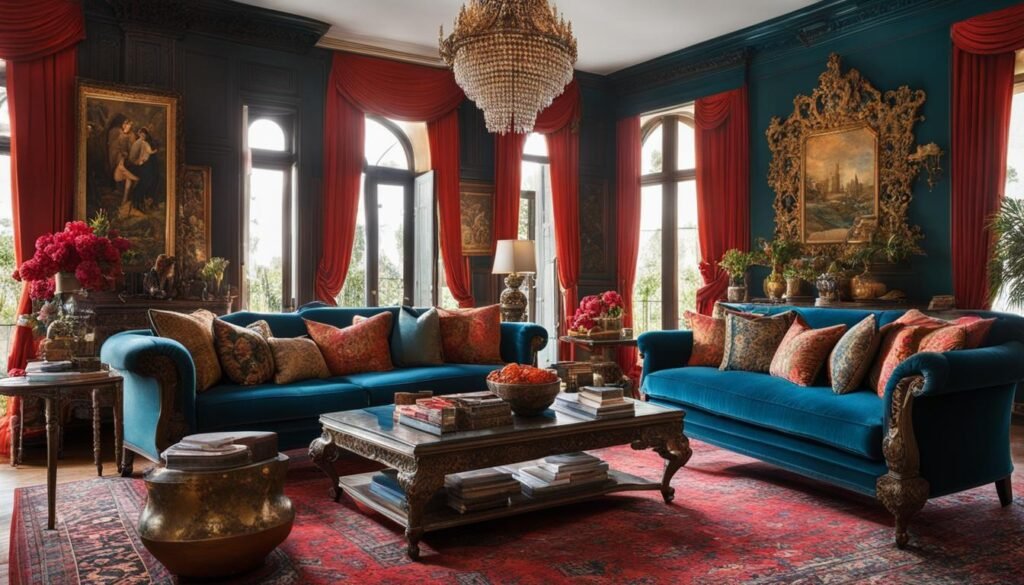
The journey of curating such a collection involves intentionally seeking out artworks that speak to me—pieces that are unafraid to be vibrant, expressive, and sometimes, bewilderingly beautiful. The fusion of different time periods and cultural elements results in an aesthetic richness, transforming my home into a visual feast that celebrates diversity and abundance.
- Scouring vintage stores for timeless treasures
- Collaborating with contemporary artists to commission unique works
- Pairing classical paintings with modern abstracts for a dialogue between eras
- Introducing sculptures that add dimension and provoke thought
- Displaying a kaleidoscope of global artifacts that illustrate a worldly perspective
In a world where the lines between art and personal space blur, my maximalist haven echoes a sentiment that design should not only be seen but felt. For me, each piece represents a chapter of my life, an emotion, or a dream, forming a sanctuary of bold art pieces that truly reflects who I am.
Maximalism in Small Spaces: Tips for Impactful Design
Contrary to popular belief, small space maximalism showcases that a limited floor plan does not limit one’s creative prowess. The key lies in impactful design tips, tailored for maximizing minimal spaces with boldness and panache. By adopting a strategic approach, every corner of a small room can translate into an opportunity for self-expression and aesthetic delight.
Strategic Design Choices in Compact Rooms
When it comes to weaving the threads of maximalism into the fabric of compact rooms, every choice counts. As a proponent of this eclectic style, I opt for multifunctional furniture that doesn’t merely fill space but also adds narrative and texture. Through the selection of vibrant upholstery and statement decor pieces, one can imbue a sense of grandeur within a modest footprint. The integration of reflective surfaces can also play a pivotal role in magnifying visual impact.
Save this article
Enter your email and we'll send it straight to your inbox.
Visual Tricks for Expanding the Perception of Space
The art of illusion becomes a faithful ally in small space maximalism. By painting walls and ceilings in continuous bold patterns, I evoke a sense of infinite space. Strategic placement of mirrors doubles the room’s vibrancy, bouncing light and pattern throughout. Furthermore, the use of vertical lines draws the eye upward, creating the illusion of taller ceilings.
- Layering patterns: Juxtaposing large and small prints can add depth without overpowering.
- Bold color choices: Utilizing a dramatic color scheme can differentiate spaces while retaining a visual thread.
- Selective statement-making: One prominently placed piece of art or furniture can anchor the room with a focal point.
With thoughtful consideration, even the most compact spaces can capture the essence of maximalism, encapsulating a story in every inch without feeling confined.
Incorporating Botanical Elements into Maximalist Style
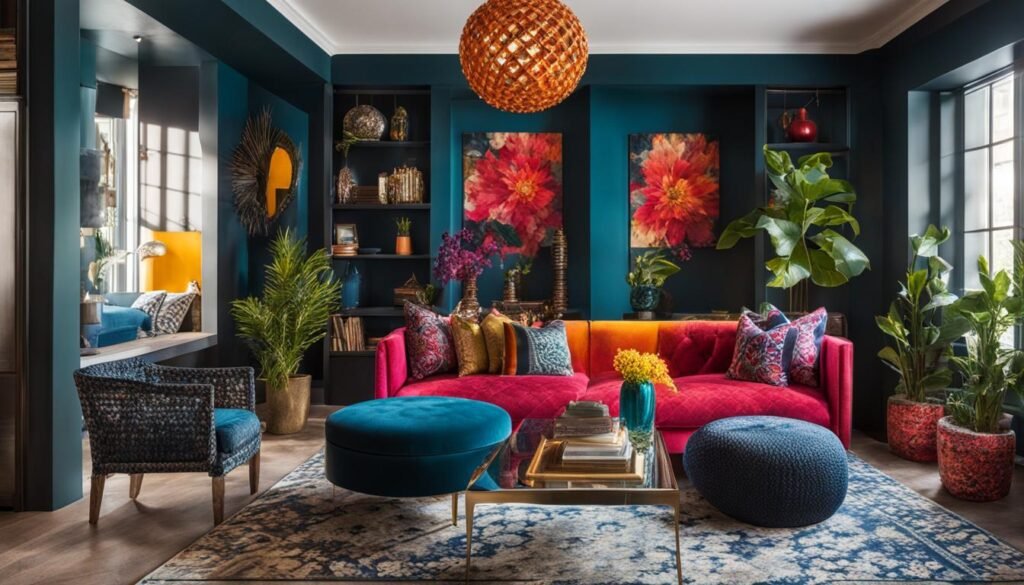
As a maximalist green thumb, I find that infusing botanical decor into my living spaces is more than a trend—it’s a transformative experience. Indoor gardens are not just aesthetically pleasing, but they breathe vitality into my home’s décor scheme. Imagine a lush canopy of greenery against a backdrop of eclectic patterns and vibrant colors, these organic elements add an undeniable zest and texture to any maximalist interior.
My approach to integrating plant life into my maximalist style is both deliberate and whimsical. By layering different species and varieties, I create a visual symphony that resonates with the maximalist doctrine of embracing abundance. Below, I’ve shared some tips on how I create these verdant vignettes:
- Consider plant placement as an extension of your color palette – Using foliage to complement or boldly contrast the tones in your space can heighten the overall sensory experience.
- Layer varying textures and shapes for maximum impact – I love juxtaposing the delicate fronds of a fern against the robust leaves of a monstera for a dynamic interplay of textures.
- Create focal points with indoor trees or large planters – Anchoring your space with a statement tree brings a piece of the natural world into your home, providing both dimension and fresh air.
- Use window boxes to draw the outside in – Not only do they inject color and life, but they also filter light and offer a changing seasonal tableau for all to enjoy.
Implementing these botanical touches calls for a sensitive balance between overgrowth and intentional design. Plants are chosen not just for their beauty but for their ability to coexist with my home’s design elements, thus creating a harmonious fusion of nature with the artistic flair of maximalism.
Historical Influences and Global Aesthetics in Maximalist Decor
As I delve into the realm of maximalist decor, I’m consistently drawn to the rich tapestry of historical influences in decor that are interwoven with global aesthetics. This design perspective is not about mere accumulation; it is the meticulous curation of elements that celebrate the diversity and complexity of human creativity across time and place.
Embracing Diverse Cultural Designs
In my exploration, I embrace a variety of cultural designs, recognizing that each piece holds a narrative shaped by the hands and minds of its creators. From the ornate scrollwork of Rococo to the geometric precision of Islamic art, these designs don’t just decorate a space—they imbue it with a worldliness that is both educational and enriching.
- Moroccan tiles interspersed with Scandinavian minimalism create a duality that is unexpected, yet harmonious.
- Japanese Kintsugi pottery, with its golden repair lines, adds a touch of wabi-sabi—an appreciation of the imperfect and transient nature of life.
- Traditional African textiles add vibrancy and motion, celebrating a heritage that is often underrepresented in conventional decor.
Nostalgic Decor: Blending Past and Present
The allure of nostalgic decor lies in its power to evoke memories and provoke wonder. By blending the patina of antiques with the sheen of modern craftsmanship, I create spaces that transcend time. A Victorian chandelier can illuminate a room of mid-century furniture, each element speaking to the continuity and change of design sensibilities.
- An Art Deco mirror reflects the present while whispering tales of the roaring twenties.
- A 1960s Eero Saarinen tulip table pairs well with a Renaissance-style tapestry, creating a dialogue between eras diverse in ideology and form.
- Reclaimed wood from a historic barn becomes the backdrop for a sleek, contemporary sofa, merging rustic charm with urban chic.
In conclusion, by interlacing historical influences in decor with global aesthetics, I craft a narrative that resonates with tales of explorers, artisans, and visionaries. This is maximalism at its core—diverse, inclusive and unapologetically grand. It’s a celebration of the storied tapestry of life and art, culminating in interiors that are not just seen but felt—and deeply.
Local Finds and Artisan Accents in Maximalist Design
My penchant for maximalist decoration extends beyond a mere assembly of objects; it encapsulates a narrative woven from community threads. By integrating local artisan decor within my interior spaces, I render a tale of traditional craftsmanship and contemporary innovation. These handpicked accents offer more than unique interior updates; they signify my alliance with the tapestry of local creativity and the preservation of inimitable skills steeped in heritage.
Embracing local artisan work is not merely about aesthetic merit; it’s a generous gesture of supporting the local economy. Each carefully curated object reflects a commitment to the community, ensuring that my home’s opulence is matched by its ethos of sustainability. Whether it is a handmade vase or a custom-crafted wall tapestry, the addition of such unique elements elevates my home’s decor narrative while fostering economic empowerment where it truly matters.
- Finding artistic treasures at local markets and small galleries
- Commissioning bespoke pieces that embody personal stories and styles
- Building relationships with artisans and witnessing their process
- Choosing pieces that celebrate the region’s cultural motifs
The myriad of goods I’ve collected stands as testament to a diverse design philosophy that looks beyond mass-produced items. These pieces, often born from the hands of local artisans, envelop my environment in authenticity and afford my home an aesthetic sovereignty no generic item could offer. And thus, through my choices, I do not simply decorate a space; I champion an economic ideology that venerates the artisan and their invaluable craftsmanship.
Conclusion
In my exploration of the eclectic home style, I’ve discovered that maximalism is far more than a mere counterpoint to its minimalist counterpart; it is a bold style embrace that fervently celebrates the multiplicity of our personal narratives. The maximalist trends are not only visually captivating but also emblematic of a return to sophisticated individuality and artistic expression within our living spaces. A home becomes more than just an abode; it evolves into a living gallery that echoes our life’s journeys, passions, and achievements through every vibrant color, audacious pattern, and assorted texture.
Adeptly incorporating maximalist decor tips into our homes requires an intentional and strategic approach that honors the aesthetic without succumbing to chaos. Whether it’s through integrating botanic vibrancy, showcasing an eclectic array of artwork, or fostering community by harnessing the unique flair of local artisans, each element contributes to constructing an environment steeped in personality and creativity. This deliberate curation results in living spaces that speak to our innate desire for expression and place-making.
The call to embrace maximalist design is an invitation to liberate our interiors from the monochrome and the mundane, urging us to venture into territory rich with color and life. By championing an eclectic home style, we not only make a statement about our distinct tastes but also create havens that empower us to live fully and fancifully within walls that resonate with our essence. Through my eyes, maximalism presents an enticing narrative, a design philosophy where more is not just more—it is a celebration of all that we are and aspire to be.
FAQ
What is maximalism in interior design?
Maximalism in interior design is a philosophy that embraces an abundance of vibrant colors, bold patterns, assorted textures, and a mix of décor styles. It’s about creating rich, layered interiors that express the personality and experiences of the individuals who inhabit the space. Unlike minimalism, which focuses on simplicity and restraint, maximalism celebrates diversity and the thoughtful organization of a variety of elements to create a cohesive yet dynamic environment.
How does maximalist decor differ from minimalist decor?
Maximalist decor differs from minimalist decor in its approach to space, color, and decoration. While minimalism adheres to the mantra of ‘less is more,’ with lots of clean lines, neutral palettes, and open spaces, maximalism operates on ‘more is more.’ Maximalism encourages the use of multiple patterns, a riot of colors, eclectic collections, and personal artifacts, resulting in interiors full of life, energy, and personal significance. It allows for more creative expression, making each space feel unique and full of personality.
Can maximalism work in small spaces?
Absolutely, maximalism can be an excellent fit for small spaces. The key is to make strategic design choices that create visual interest and a perception of increased depth. Implementing certain visual tricks, such as extending the same vibrant paint color across multiple elements or carefully curating patterned decor can not only inject personality but also give the illusion of a larger, more cohesive space.
How can I balance vibrant hues and neutrals in maximalist design?
Balancing vibrant hues with neutrals in maximalist design is about finding the right contrast to ensure the space feels lively without becoming overwhelming. Neutrals can act as a grounding force in a room filled with bright and bold colors, providing areas for the eye to rest. By incorporating different textures and shades within these neutrals, you can maintain interest and depth without detracting from the room’s overall exuberance.
How do I mix patterns and textures in a maximalist space effectively?
To effectively mix patterns and textures in a maximalist space, consider varying the scale of the patterns and confining certain designs to specific areas or accent pieces. Balance is key; choosing one or two patterns as focal points while using others as accents can create a cohesive look. Incorporating a variety of textures through fabrics, furnishings, and decorative items can add depth and make the space more visually compelling. The art lies in creating a sense of organized chaos that feels both intentional and harmonious.
What role does art play in maximalist interior design?
Art plays a significant role in maximalist interior design; it’s a fundamental tool for adding personality and depth to a room. In maximalism, art is not limited to singular statement pieces but includes a curated mix of different styles, periods, and cultural influences. This approach to displaying art creates a narrative within the space, telling the story of the homeowner’s tastes, travels, and experiences. Maximalist art can cover entire walls, be layered, or even incorporate sculptural and three-dimensional pieces to create a multi-faceted visual experience.
How do botanical elements contribute to the maximalist style?
Botanical elements bring energy, freshness, and a sense of life to maximalist interiors. They can complement and enhance the chosen color palette and add organic shapes that contrast with more structured decor elements. Layering plants of varying heights and sizes, along with flowery patterns and prints, can further embody maximalism’s principle of abundance and intricacy, while also offering psychological benefits associated with connecting to nature.
Can I blend different historical periods and cultural designs in maximalist decor?
Yes, blending different historical periods and cultural designs is a hallmark of maximalist decor. This method allows for a rich tapestry of diverse, opulent designs that tell a story and add depth to the interior. It celebrates the beauty of diversity and imbues spaces with an eclectic and sophisticated ambiance. The interplay of various design elements, from different eras and cultures, forms an intriguing and distinct aesthetic that is central to maximalist ethos.
Why should I consider adding local crafts and artisan accents to my maximalist interior?
Adding local crafts and artisan accents to your maximalist interior not only enhances the visual appeal of your space but also promotes the value of uniqueness and sustainability. These handcrafted elements introduce originality and connect your home to the local culture and community. Incorporating such personalized touches further cements the maximalist approach to decorating, which emphasizes individual expression and appreciation for skillful craftsmanship.
Save this article
We'll email you the link so you can find it again later.


