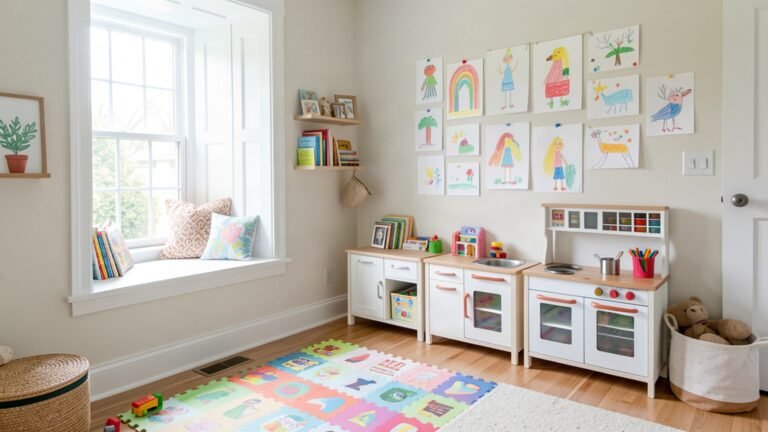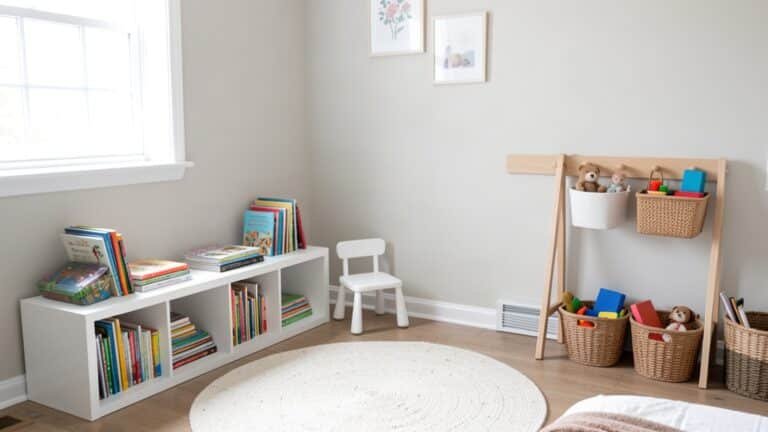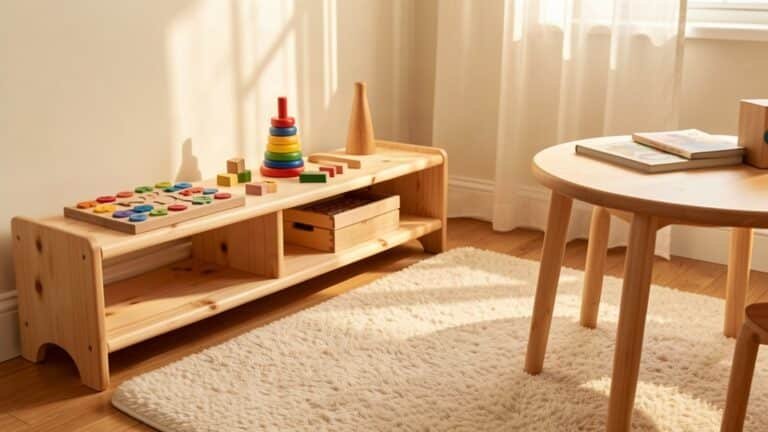


By 4pm my living room floor usually looks like a Lego minefield — step wrong and you feel it for hours. I used to think the fix was buying more bins, but honestly? The real win is making your walls, corners, and furniture do the heavy lifting. These 29 playroom storage ideas run the gamut from built-in cabinetry to rolling carts, so every toy finally gets a home instead of the floor. 🙂
1. Toy Walls Work Smarter
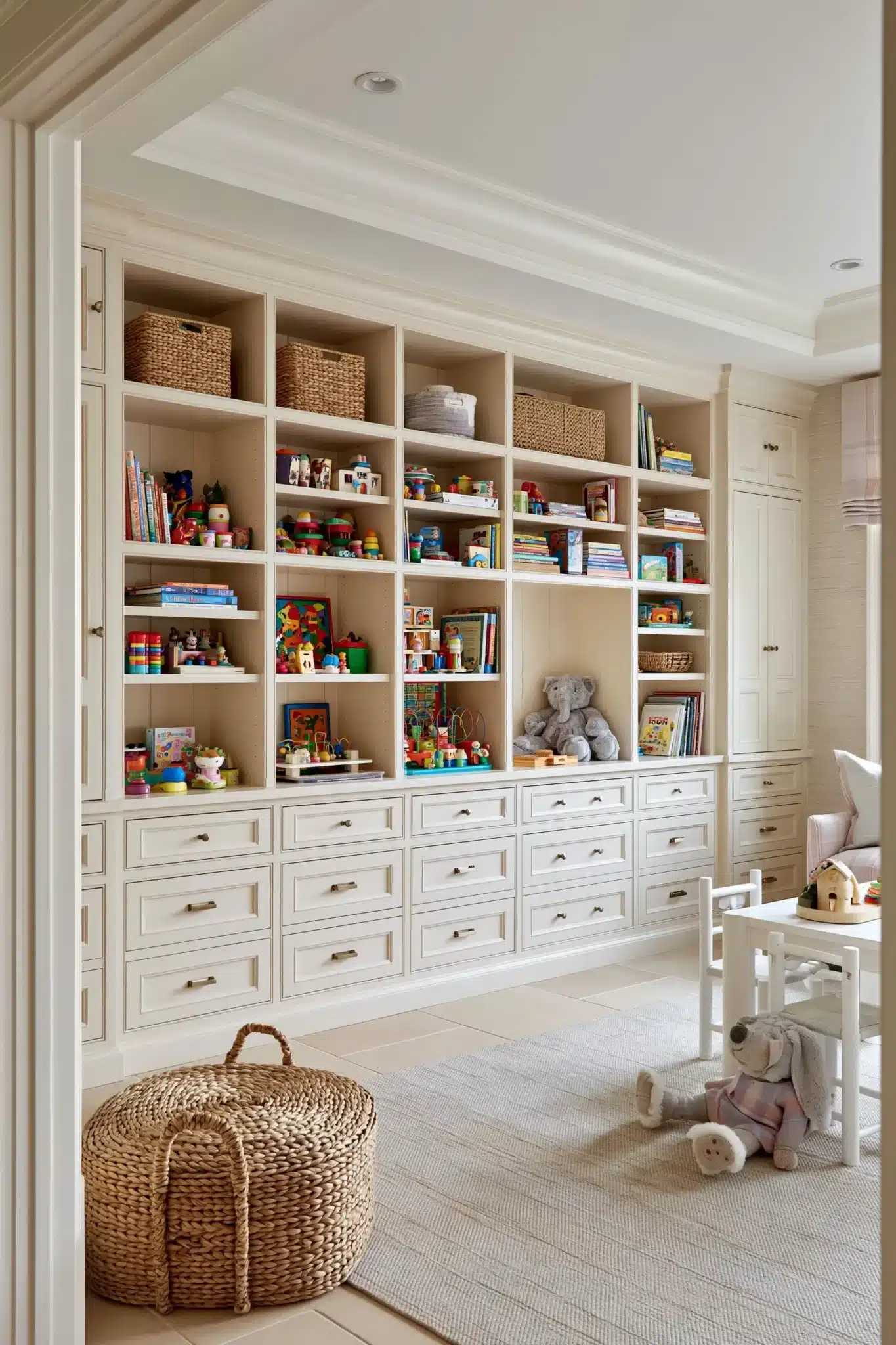
I love this one because it stops treating the wall like dead space. Build an entire wall of custom cabinetry, open cubbies, and roomy lower drawers so board games, blocks, and toys live up off the floor.
Keep the stuff kids grab daily at their height and shove the once-a-year supplies up high. Mix closed cabinets with open compartments so the room looks tidy but your kids can still see their favorites. For more room-by-room ideas, browse our home decor category.
2. Cube Storage Adds Color
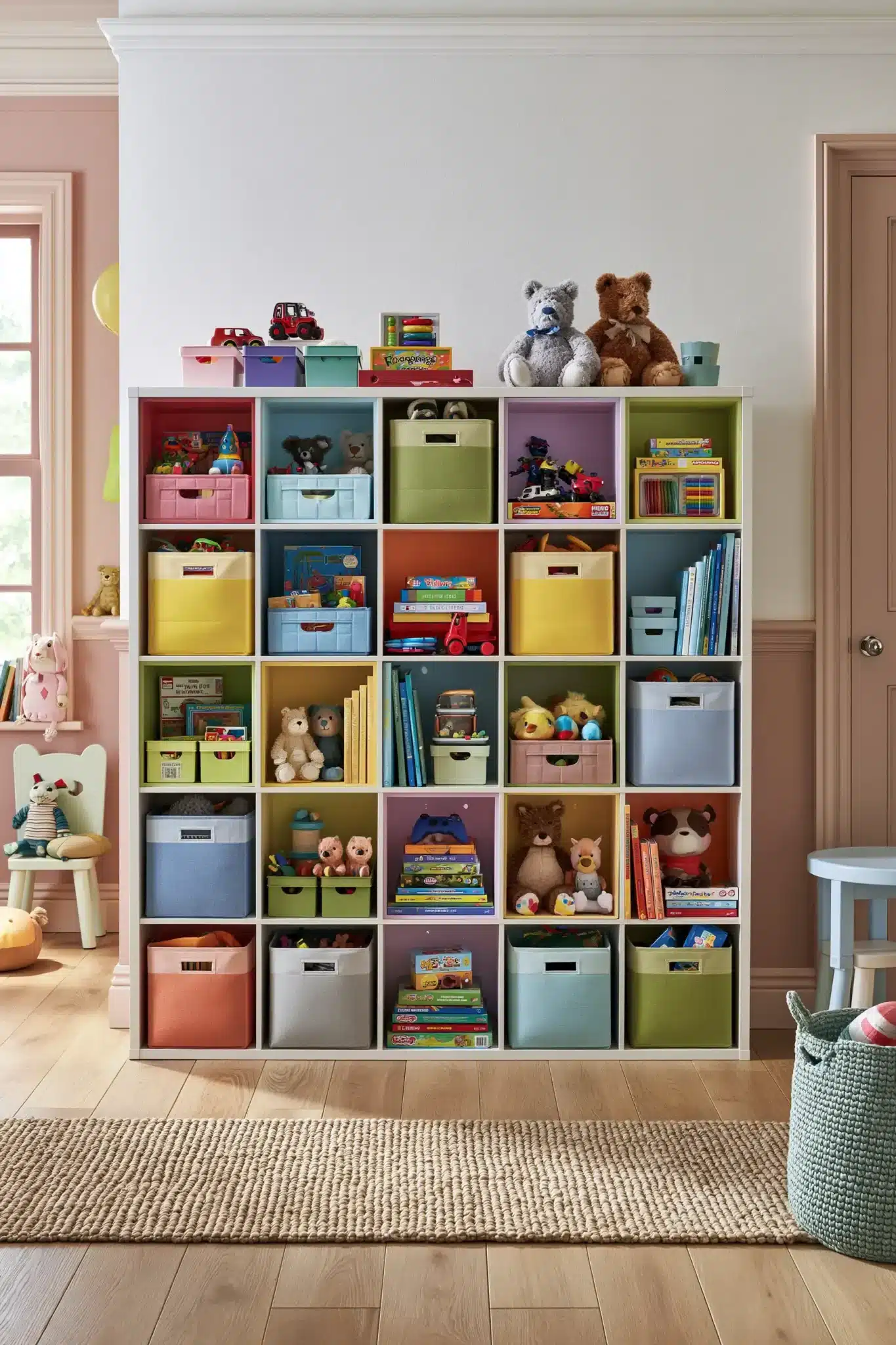
Cube storage is the chameleon of toy organization — it grows up right alongside your kids. Dedicate each cube to a category: fabric bins, books, puzzles, dolls, everyday toys.
Alternate open cubes with bright baskets so favorites stay visible while the small junk disappears. Keep the unit low enough that your child can pull a toy and put it back without asking you for help.
3. Storage Benches Hide Everything
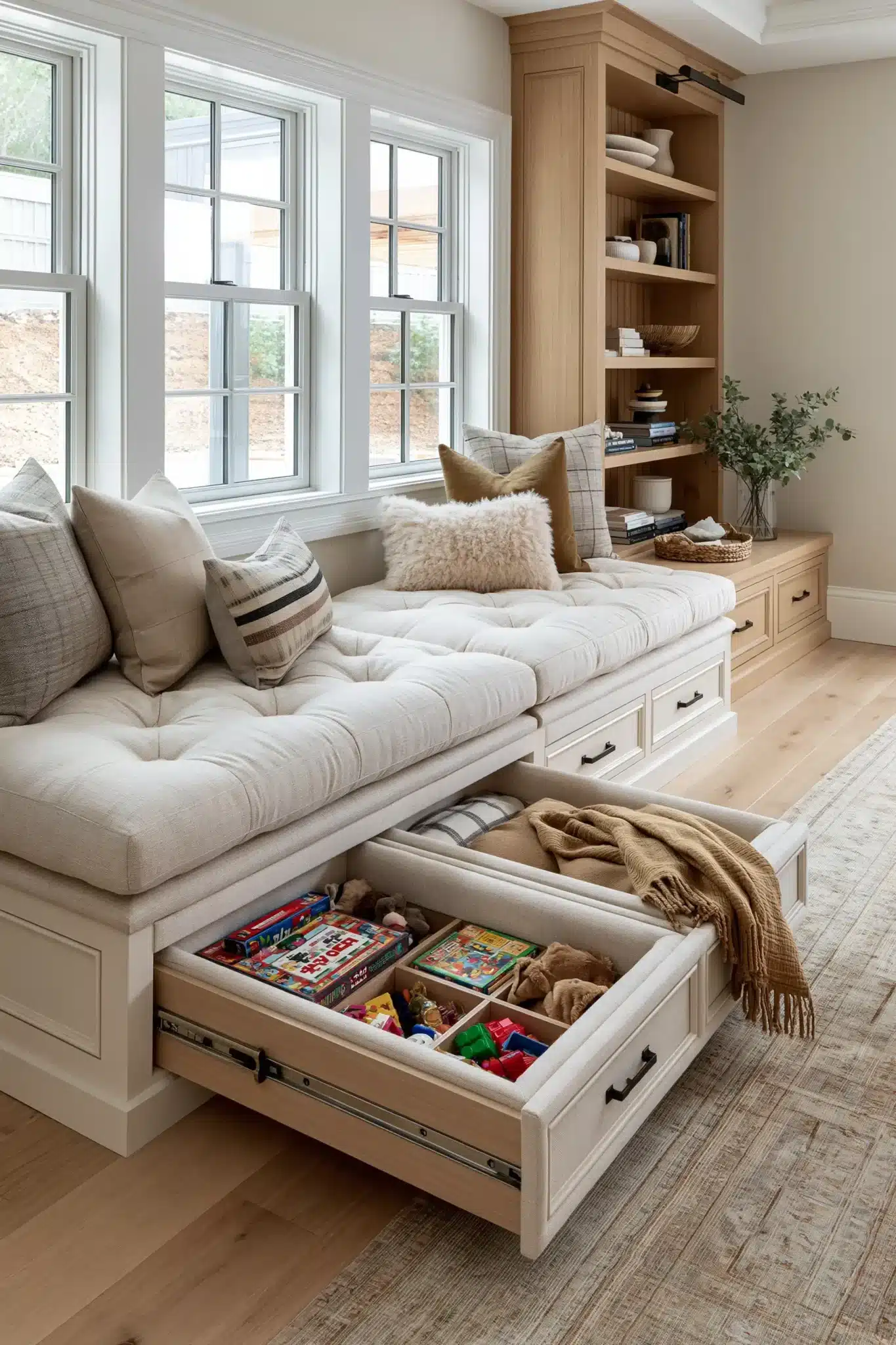
A storage bench pulls double duty: comfy seat by day, clutter vault by night. Stash blankets, games, and oversized toys underneath and nobody has to look at them.
Tuck it under a window, against a bare wall, or beside the reading corner. Pick hinged lids, deep drawers, or pull-out baskets depending on what you actually need to hide.
4. Montessori Shelves Inspire Independence
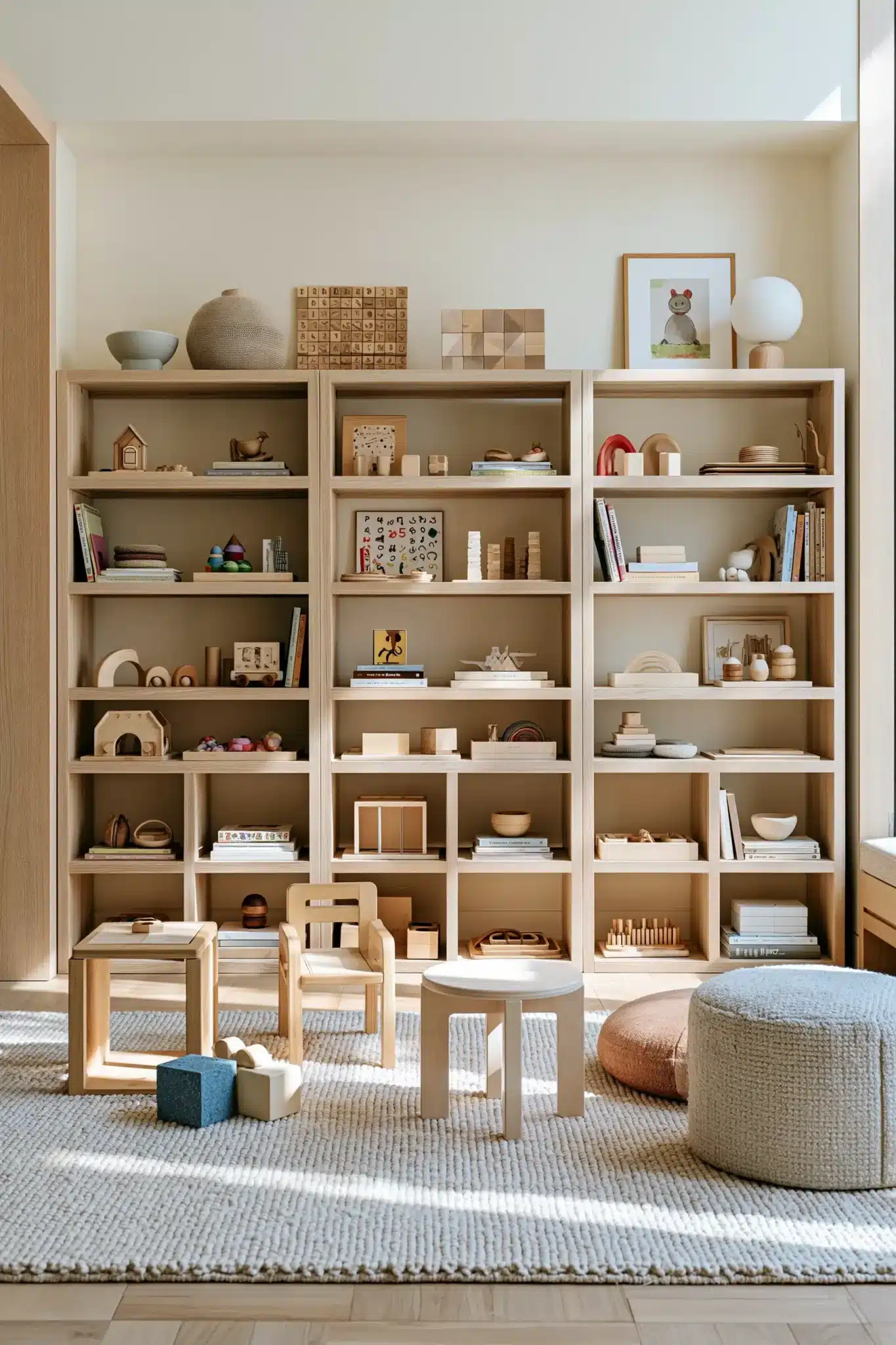
Low, open shelving teaches kids to grab, play, and clean up without you hovering. I tried this and my kids actually put things back — miracle of the century.
Rotate the toys every few weeks so old favorites feel new again and the shelf never overwhelms the eye. Natural wood with simple baskets keeps the whole space calm and warm.
5. Rolling Carts Adapt Easily
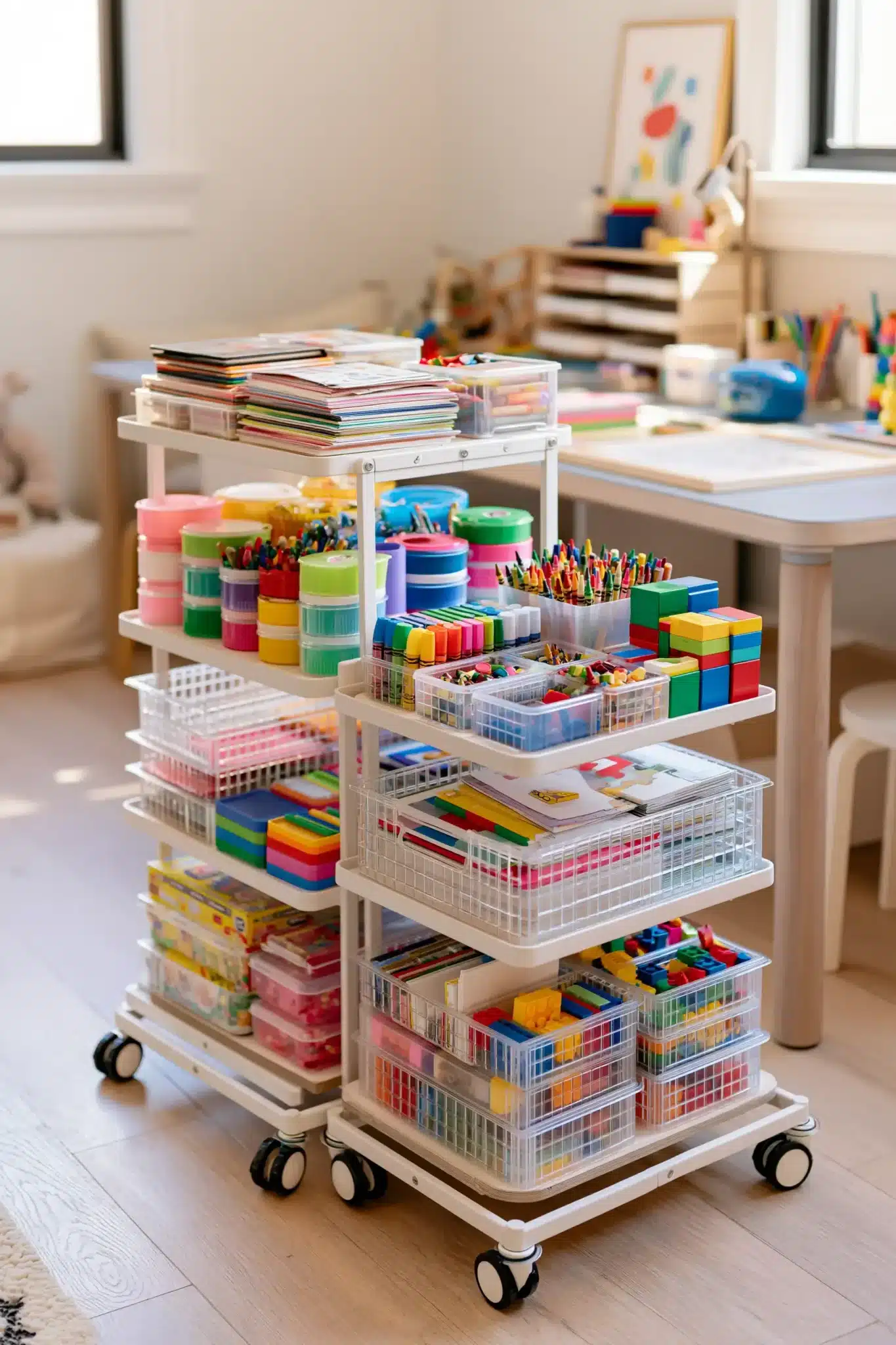
A rolling cart is the Swiss Army knife of playrooms. Assign each tier to art stuff, building supplies, puzzles, or sensory play, then roll the whole thing wherever the action is.
When playtime ends, wheel it against a wall or into a closet and boom — floor reclaimed. Drop smaller bins inside each level so crayons and tiny bricks stop playing hide-and-seek.
6. Window Nooks Gain Storage
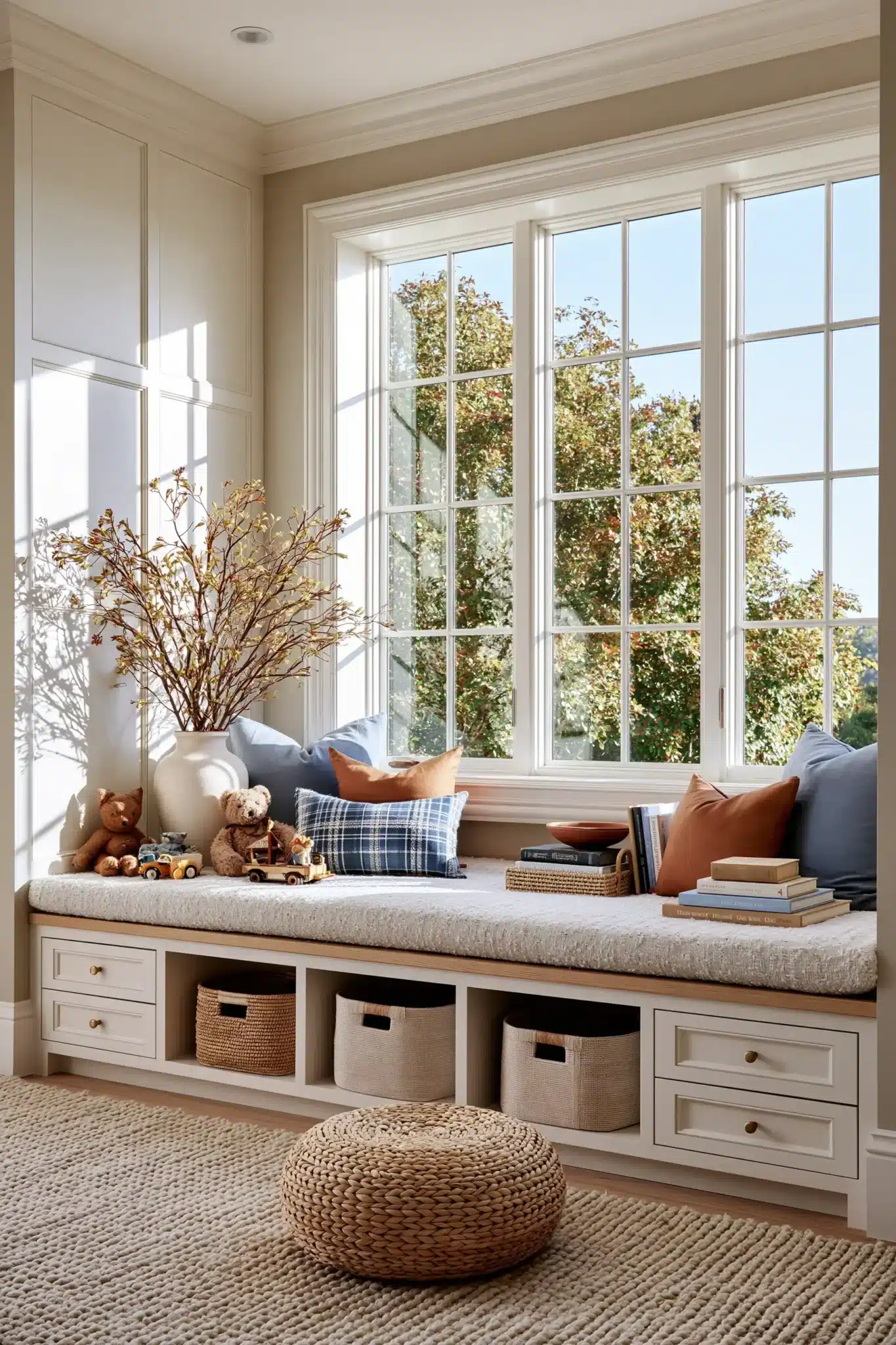
That dead strip under the window? Put it to work. Low drawers, cabinets, or cubbies give you real storage without stealing floor space or blocking the light.
Top it with a cushion and you’ve got a reading spot; fill the baskets with easy-reach toys and the deep drawers with bulky games. Cozy and useful, my favorite combo.
7. Woven Baskets Tame Toys
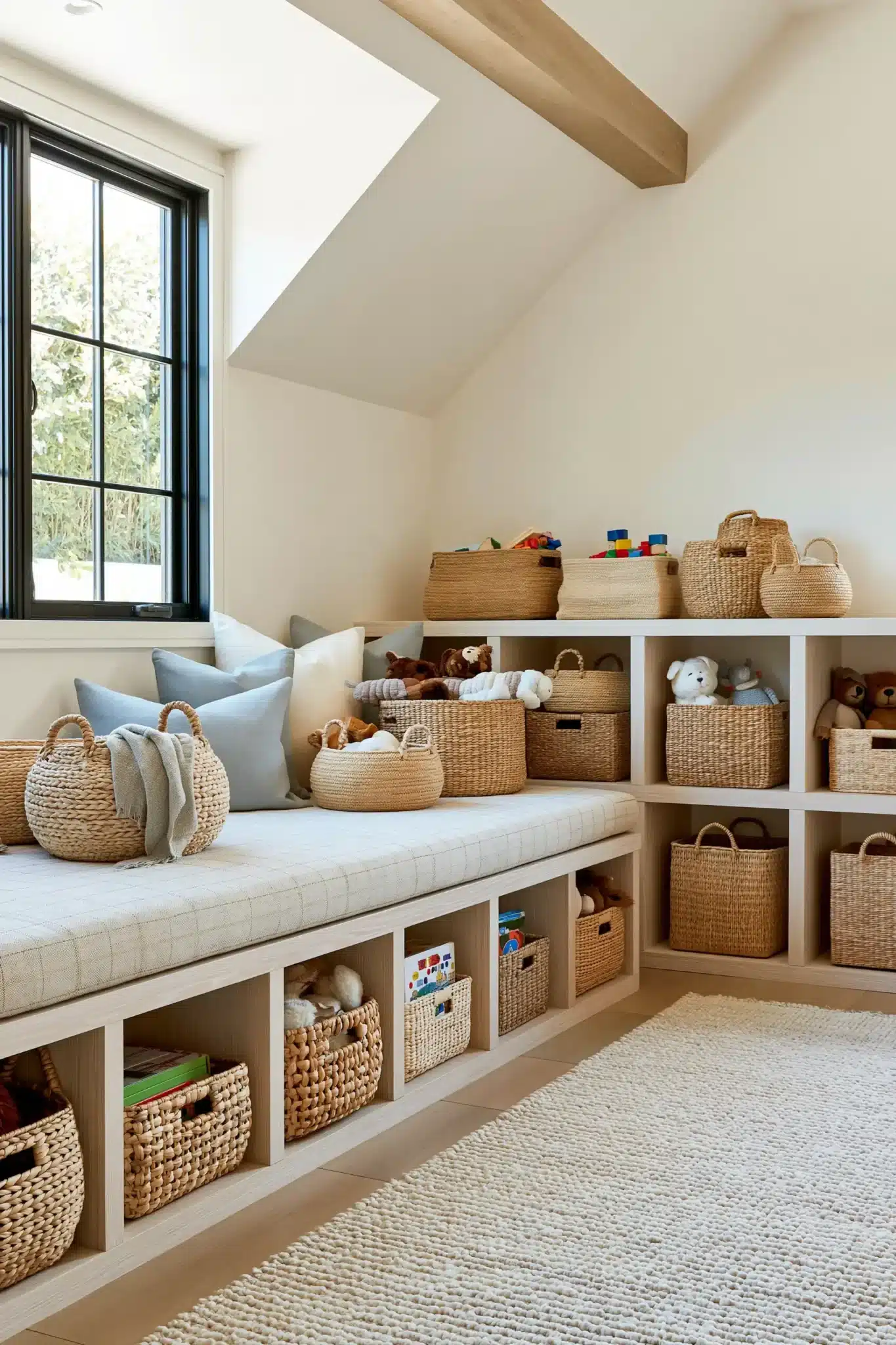
Woven baskets feel warmer than cold plastic tubs, and they fit right into the rest of your home. Grab a few sizes for blocks, books, stuffed animals, and pretend-play bits.
Slide them into cubbies, under benches, or straight onto open shelves. Choose bigger ones with sturdy handles so the toy migration from room to room gets easier.
8. Vertical Cabinets Conceal Clutter
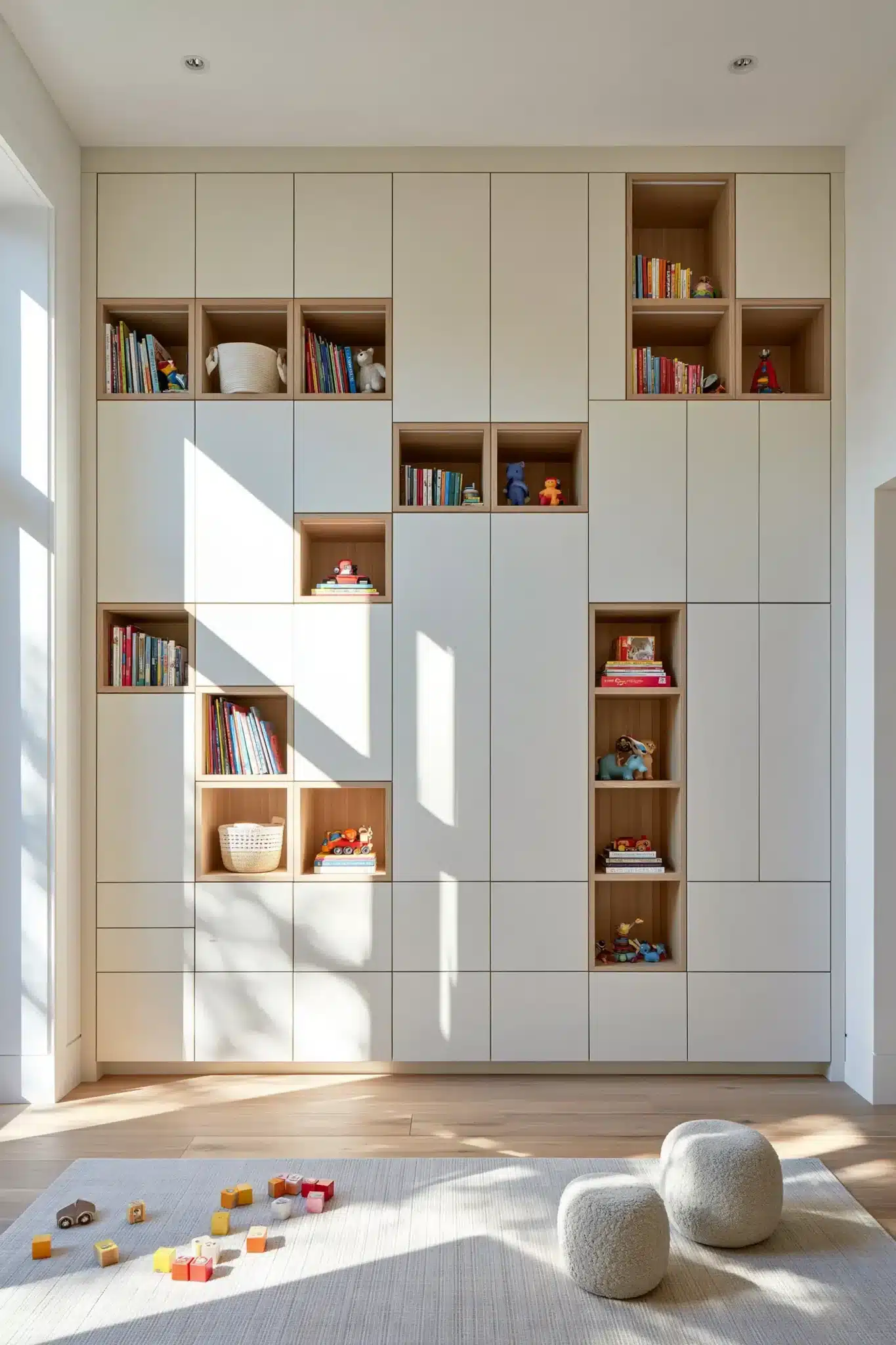
Stop staring at the floor and look up. Cabinets that stretch to the ceiling hide toys, books, craft stuff, and seasonal gear behind closed doors.
Keep kid favorites low, adult-supervision supplies high. Throw in a few open display shelves so the tall wall doesn’t feel like a fortress.
9. Modular Systems Change Easily
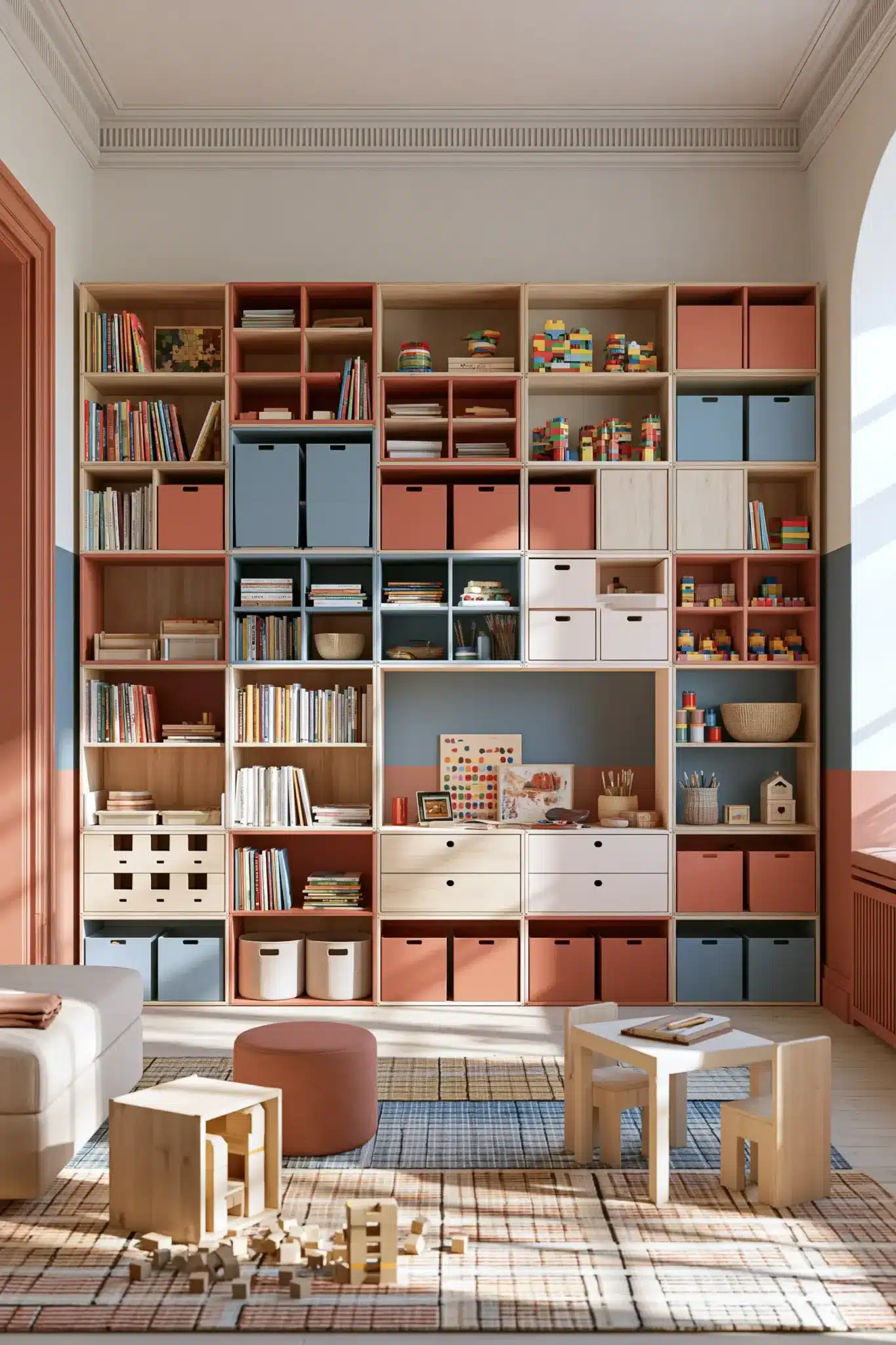
Kids’ interests flip faster than the weather, so build storage that flips with them. Modular units let you rearrange shelves, bins, and sections as collections grow and shrink.
Start small and add modules later instead of locking yourself into one layout. Mix shelf heights to carve out zones for books, games, baskets, and display pieces.
10. Labels Make Cleanup Easier
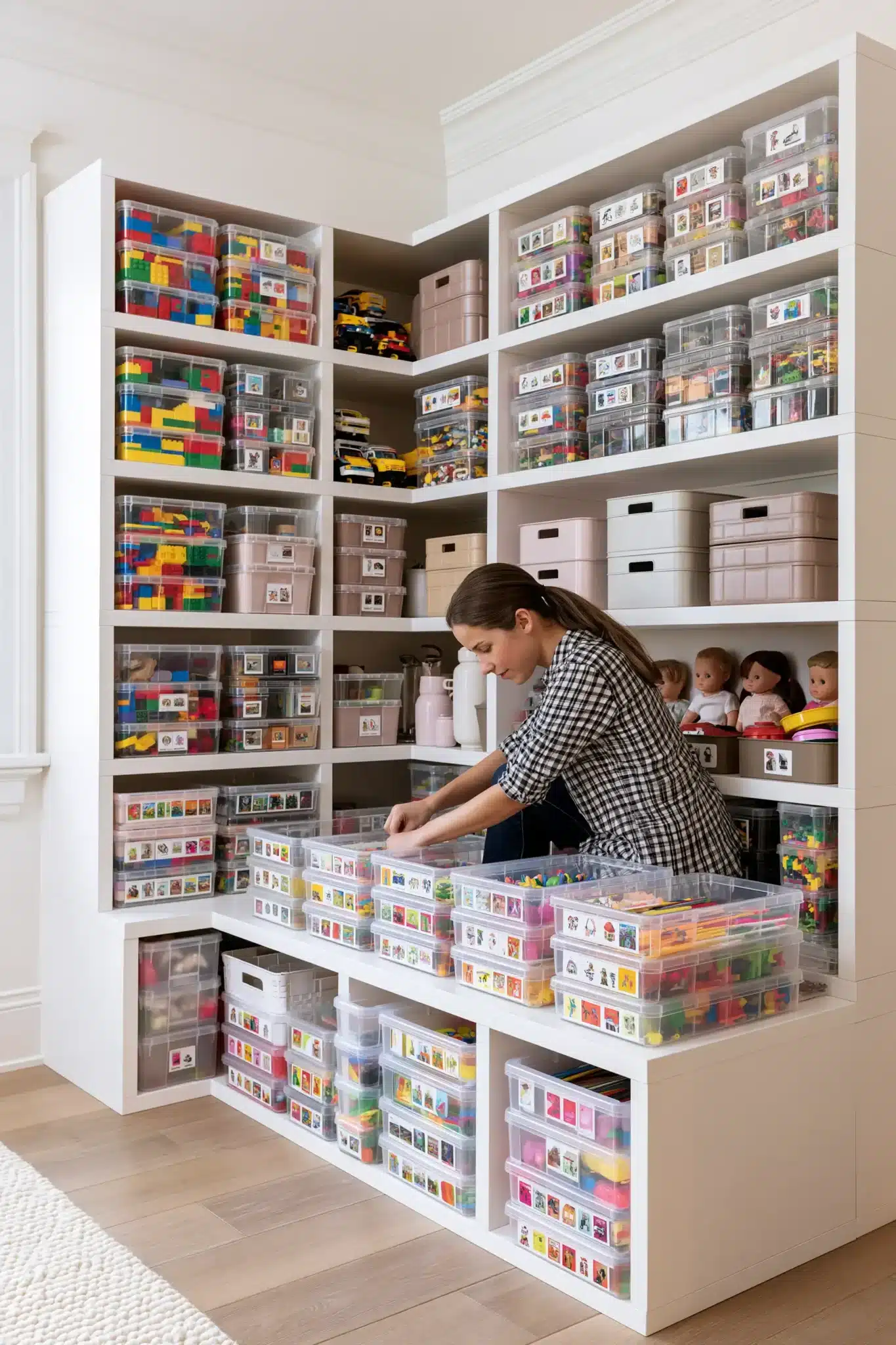
Labels turn “where does this go?” into a non-question. Mark containers for blocks, cars, dolls, puzzles, and craft bits so cleanup actually sticks.
Add little pictures next to the words so pre-readers can follow along. Use clear bins for tiny pieces and opaque ones when open shelving needs to look calmer.
11. Staircase Space Becomes Useful
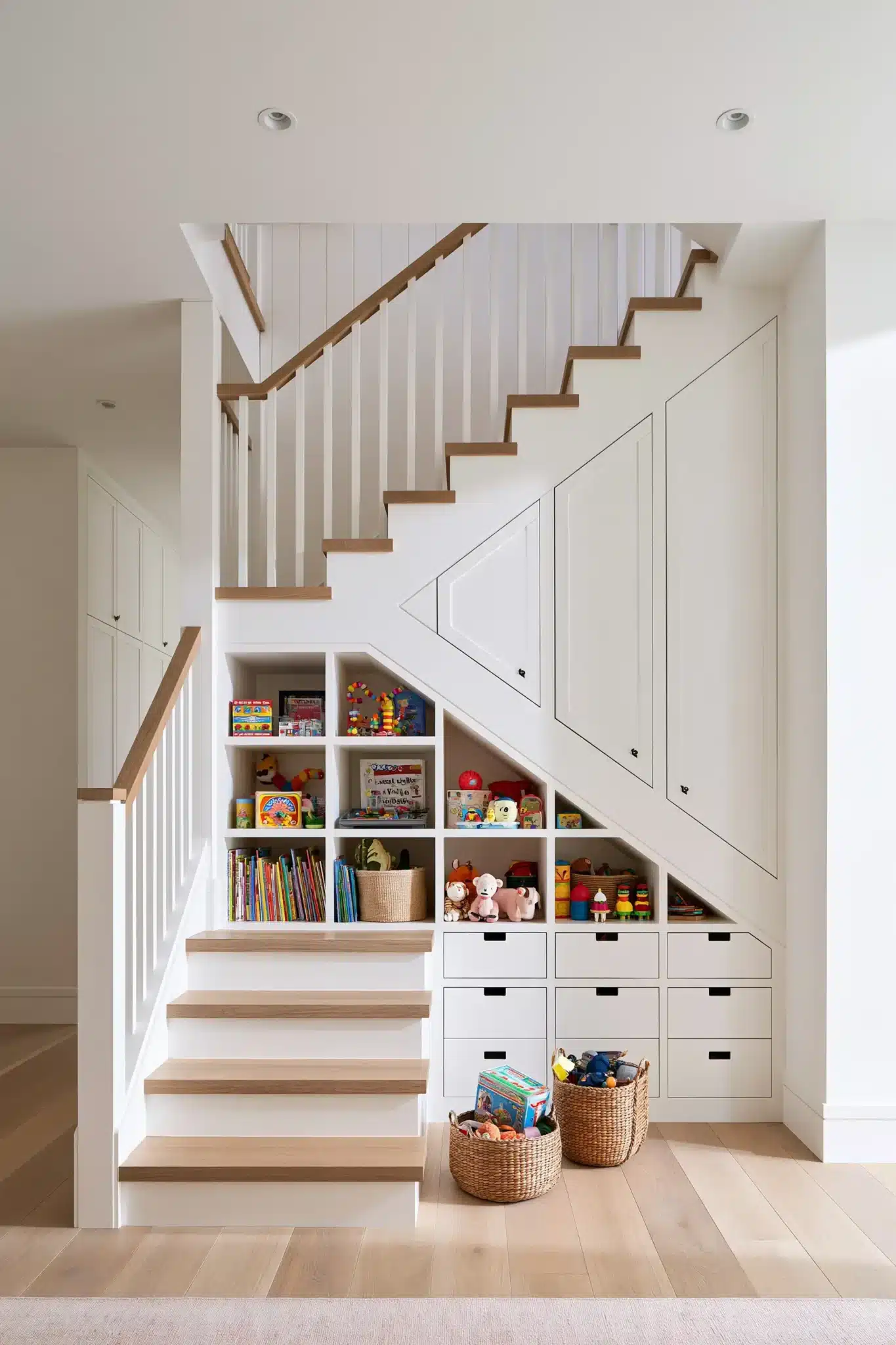
The triangle under your stairs is prime real estate most people waste. Fit it with cabinets, drawers, and cubbies and you’ve got a hidden storage zone.
Deeper compartments eat the oversized toys; smaller ones hold books and games. Match the cabinetry to the surrounding wall so it blends right in.
12. Floating Ledges Display Stories
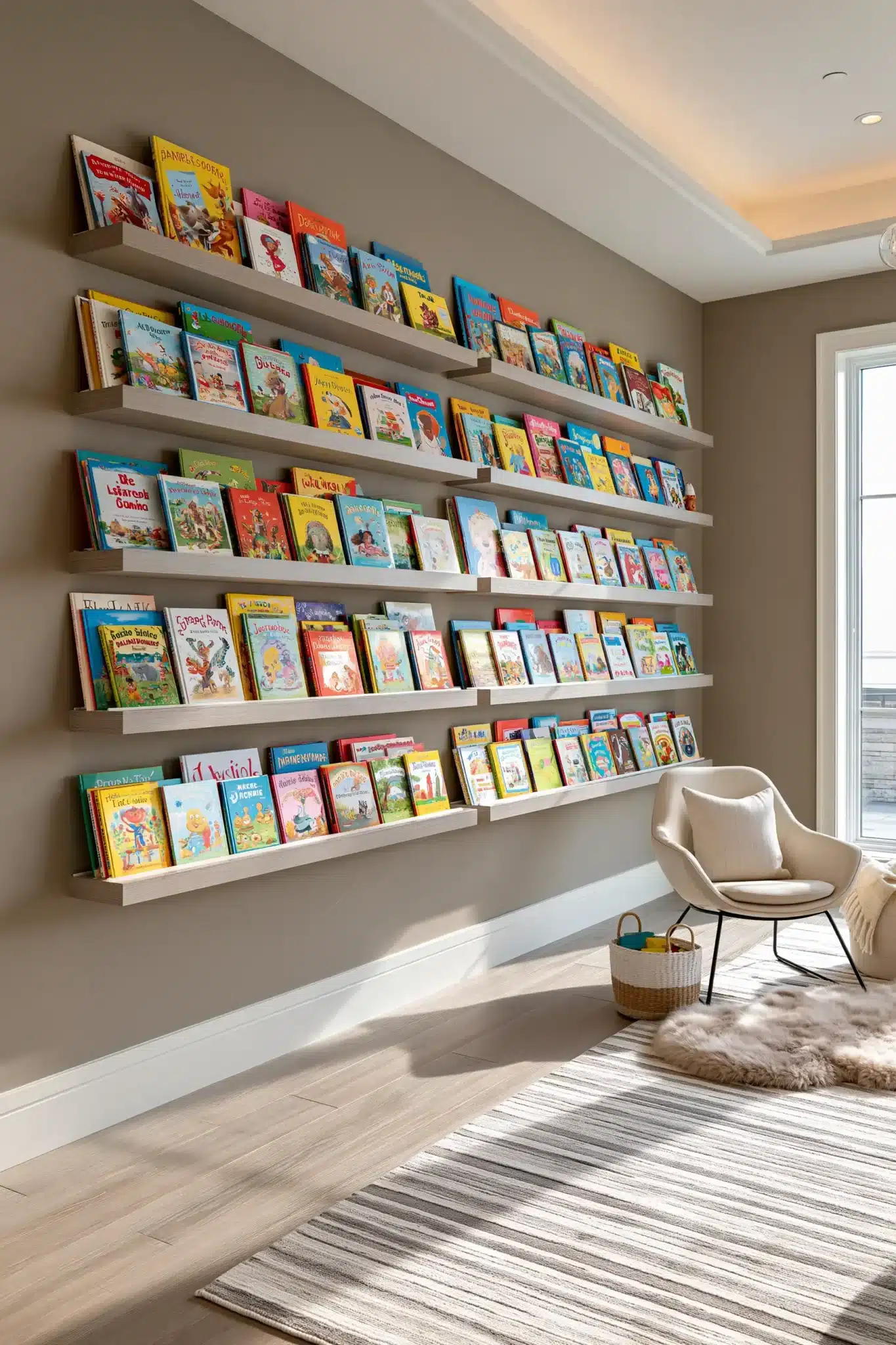
Floating ledges show off book covers instead of their spines — and kids actually pick books they can see. They take almost no floor space, perfect for tight rooms.
Stack a few rows at kid height so little readers grab stories solo. The front-facing setup makes rotating seasonal favorites a two-second job.
13. Craft Zones Stay Organized
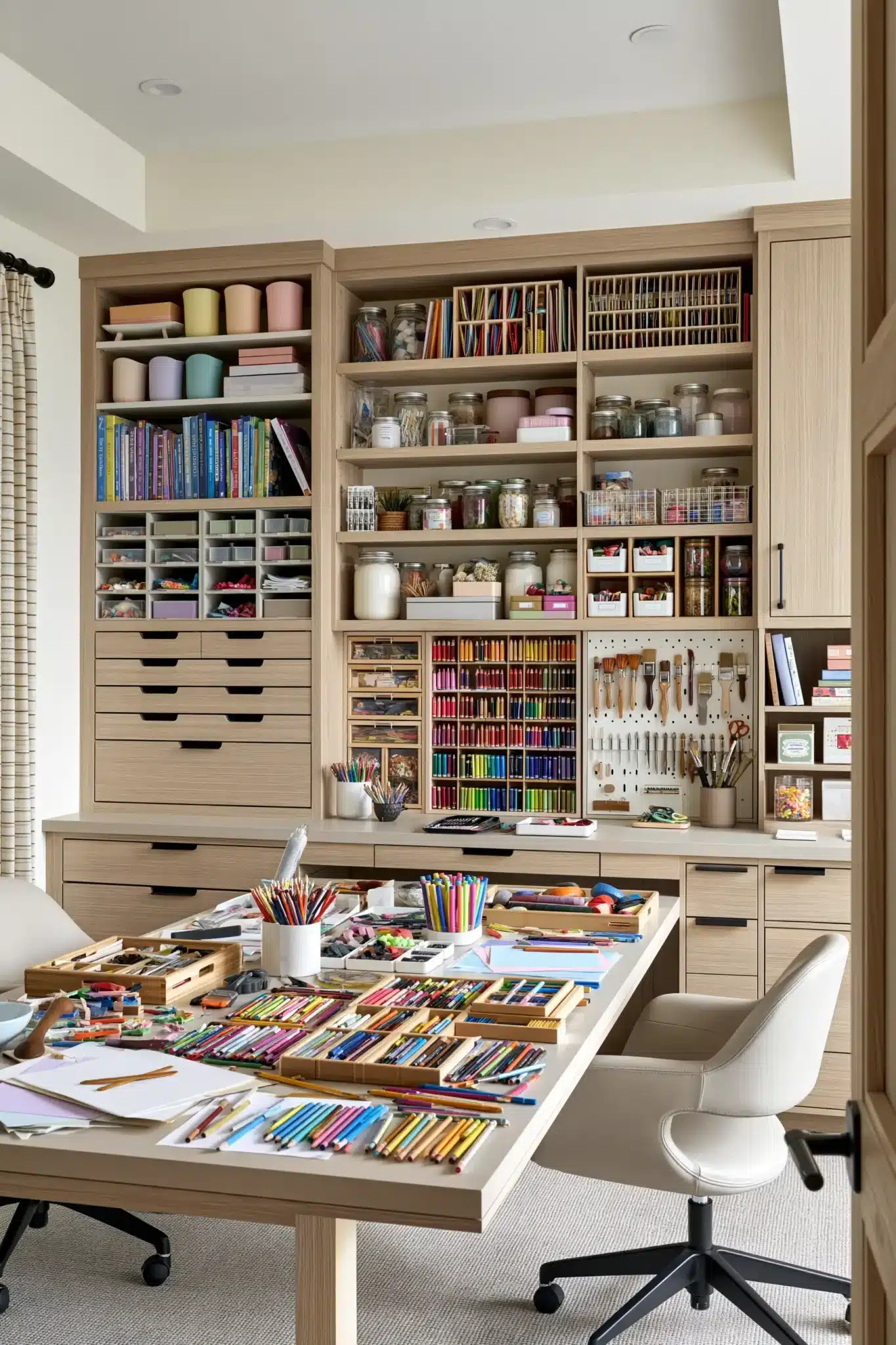
Give markers, paper, paint, and scissors one dedicated station and watch the mess stop migrating. Drawers, jars, trays, and small containers keep each supply in its lane.
Keep daily-use stuff within reach, messy/supervised stuff up high. Park a tabletop nearby so creating stays in one spot, not all over the house.
14. Cuddly Collections Find Order
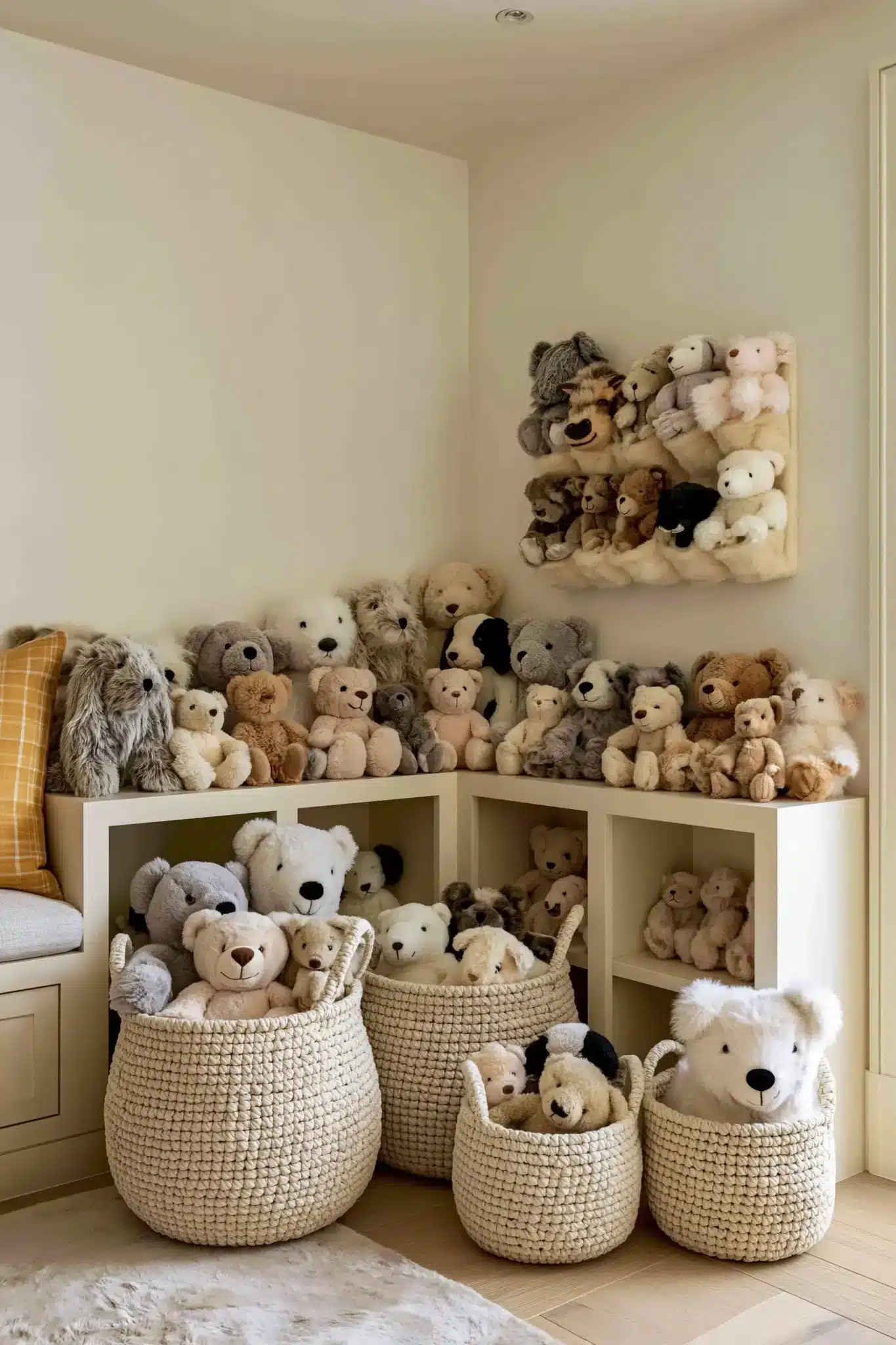
Stuffed animals have a way of claiming every bed, chair, and floor. Give them one official home — baskets, wall pockets, low shelves, or a soft enclosure.
Pick storage your child can reach so they fetch and return favorites solo. A big floor basket handles a modest herd; wall storage saves the day when the family multiplies.
15. Lego Stations Simplify Building
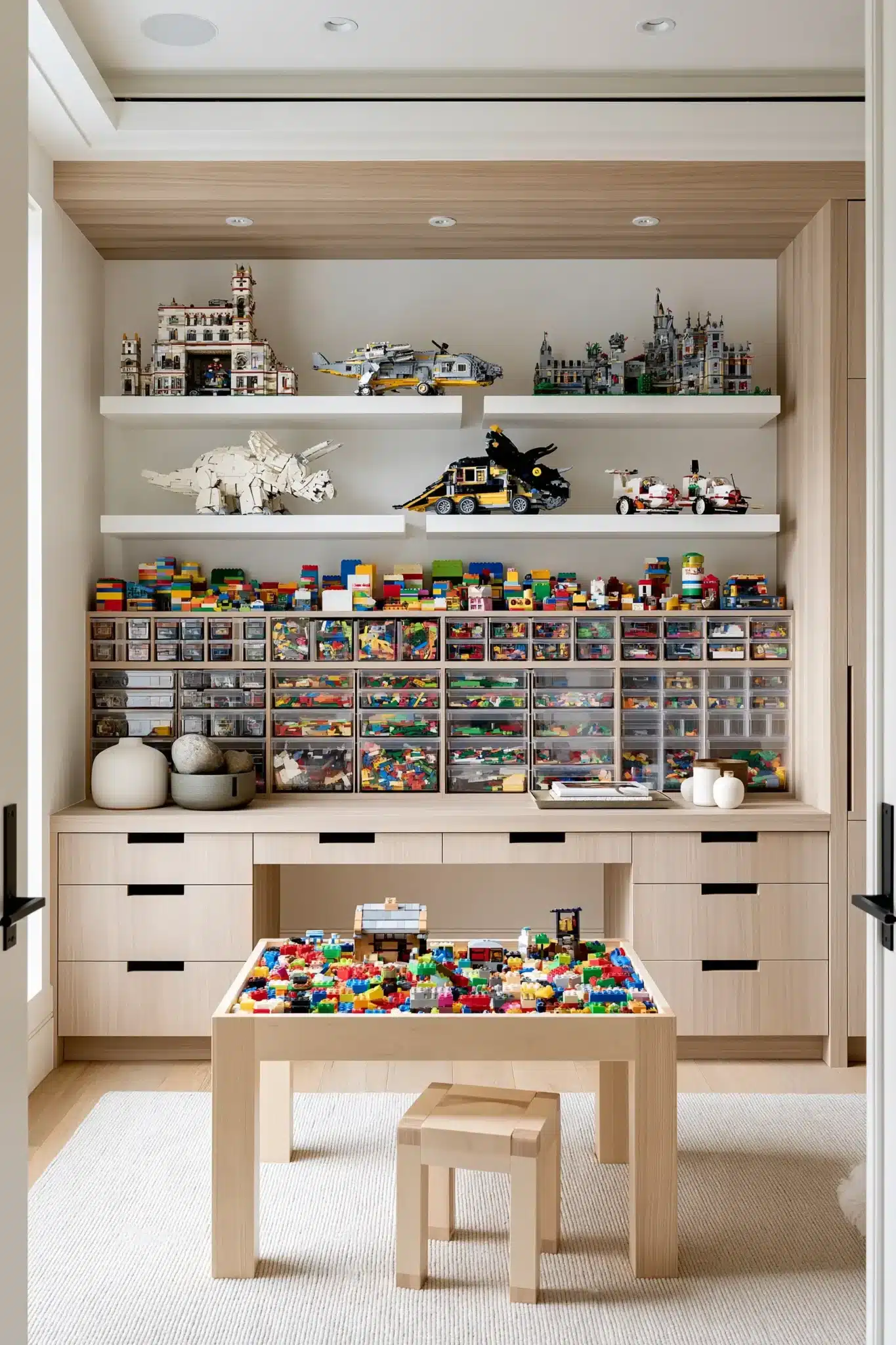
Hundreds of tiny bricks need a system, not a shoebox. Shallow drawers, divided containers, and clear bins let you sort by color, piece type, set, or finished build.
Reserve display space for completed creations so masterpieces don’t get smashed to clear the table. Keep storage near the building surface so pieces stop escaping across the floor.
Save this article
Enter your email and we’ll send it straight to your inbox.
16. Costume Closets Invite Imagination
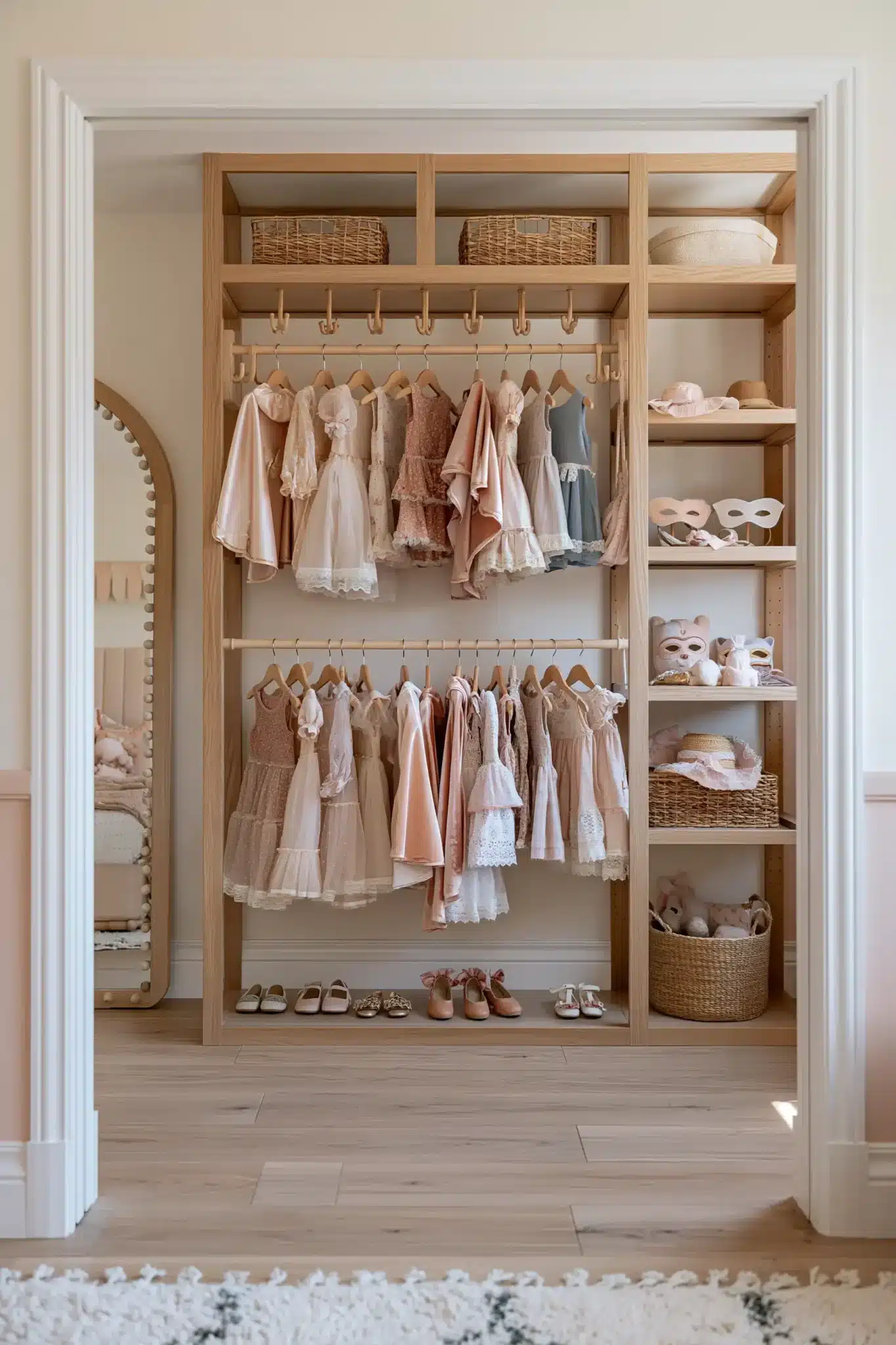
A tiny dress-up closet makes superhero capes and princess gowns easy to grab and put back. Hang rails, hooks, baskets, and shelves organize the whole pretend-play wardrobe.
Keep go-to costumes on low hooks; hats, masks, and shoes go in baskets. Add a kid-safe mirror and you’ve basically built a stage.
17. Rainbow Organizers Energize Rooms
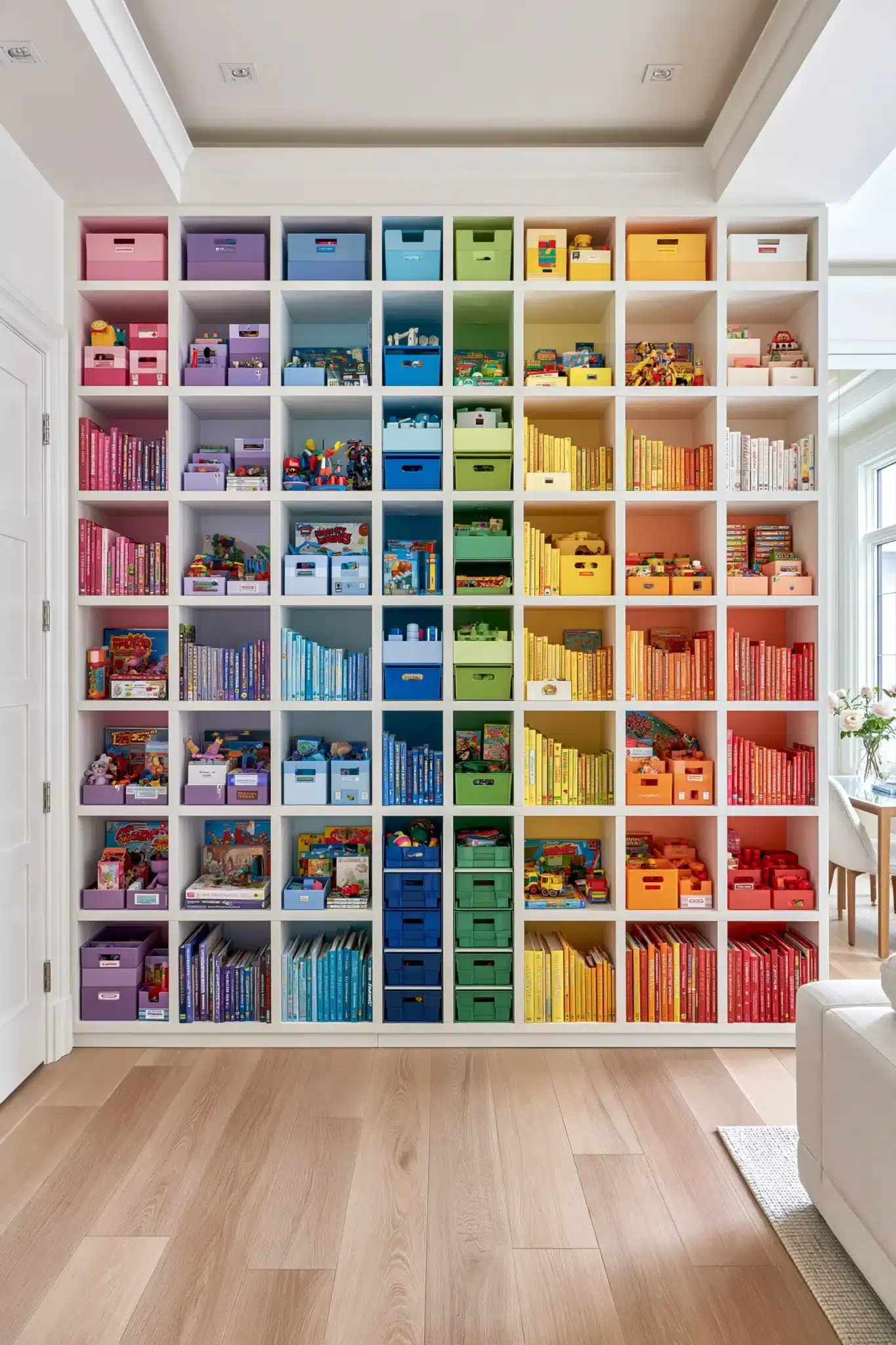
Why hide the organization when it can be the decor? A rainbow wall of bins, shelves, or cubbies gives every toy category a colorful home.
Go full-spectrum for max pop or pick softer coordinating shades. Keep the shelving simple underneath so the color energizes instead of overwhelms.
18. Kidlevel Cabinets Encourage Ownership
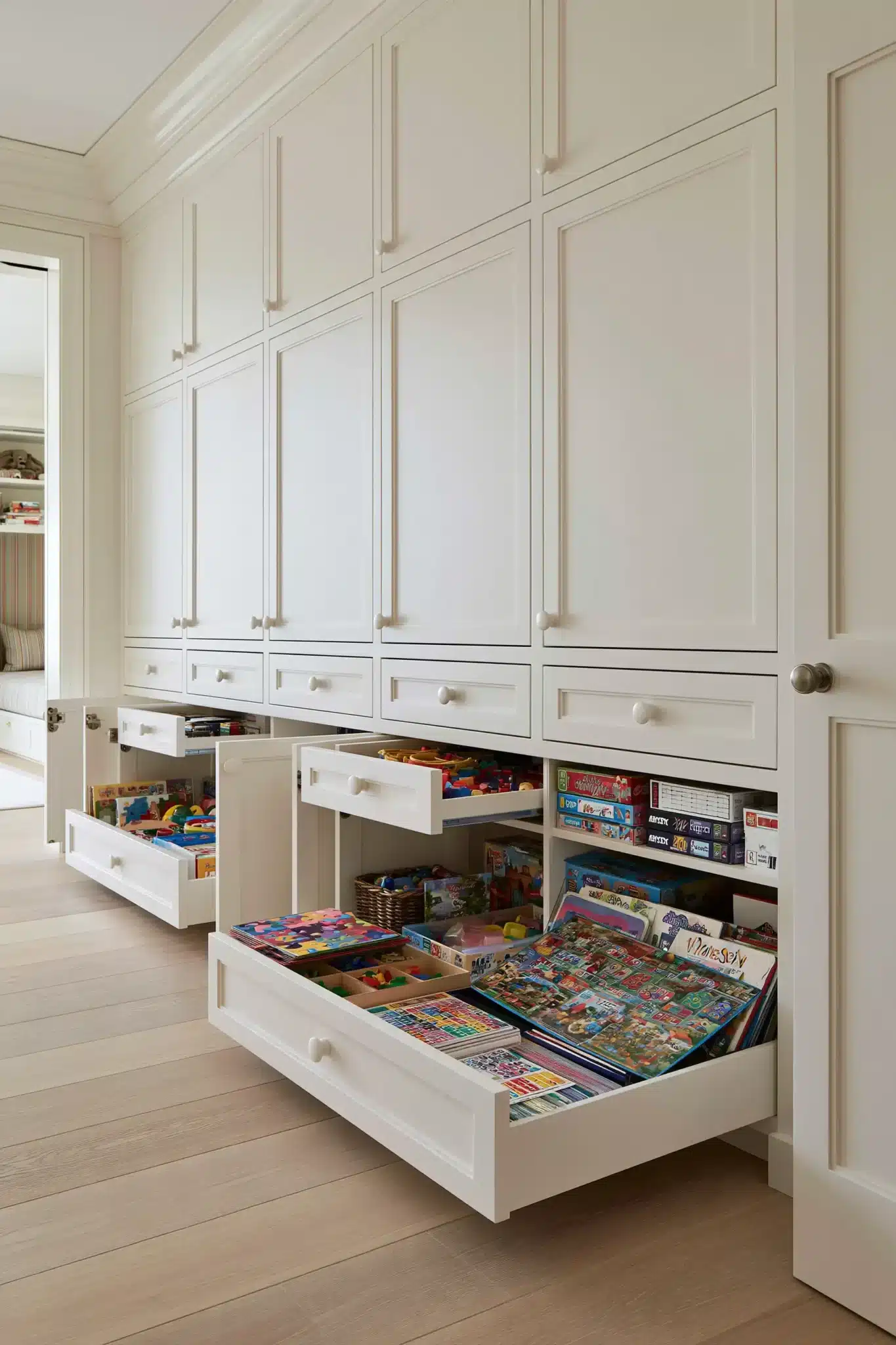
Storage built at their height quietly teaches kids to own their cleanup. Low cabinets put toys, puzzles, and games within easy grab.
Choose easy-grip handles and don’t overcrowd the bins. Closed doors hide the colorful chaos after playtime and the room instantly looks calmer.
19. Rotating Organizers Maximize Access
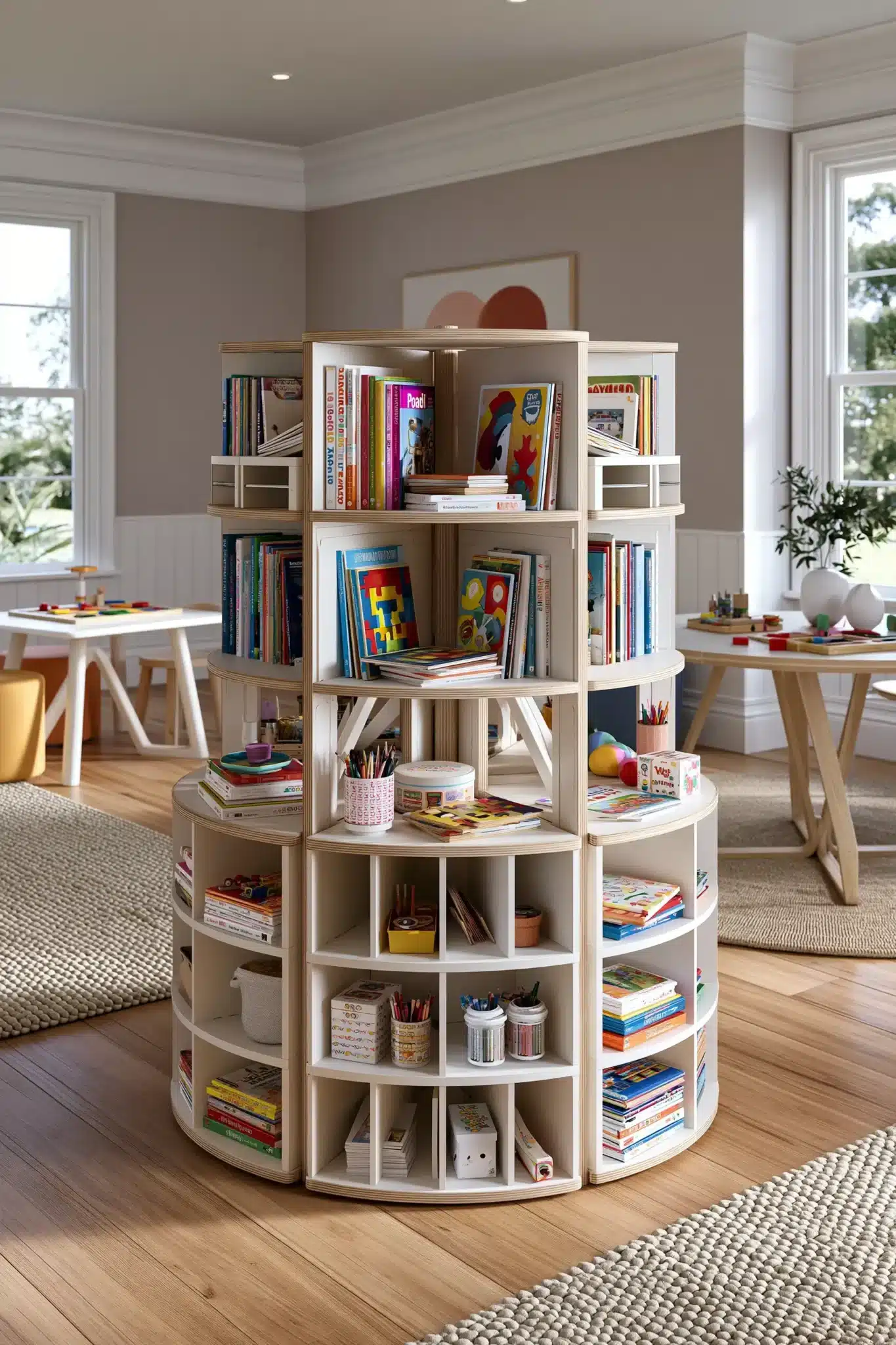
A spinning organizer packs several toy categories into a tiny footprint. Books, craft bits, small toys, and puzzles each get a side, all reachable with a turn.
Park it near an activity table or in a corner with room to spin. Small bins and dividers inside each section stop pieces from mixing as it turns.
20. Pegboard Walls Customize Storage
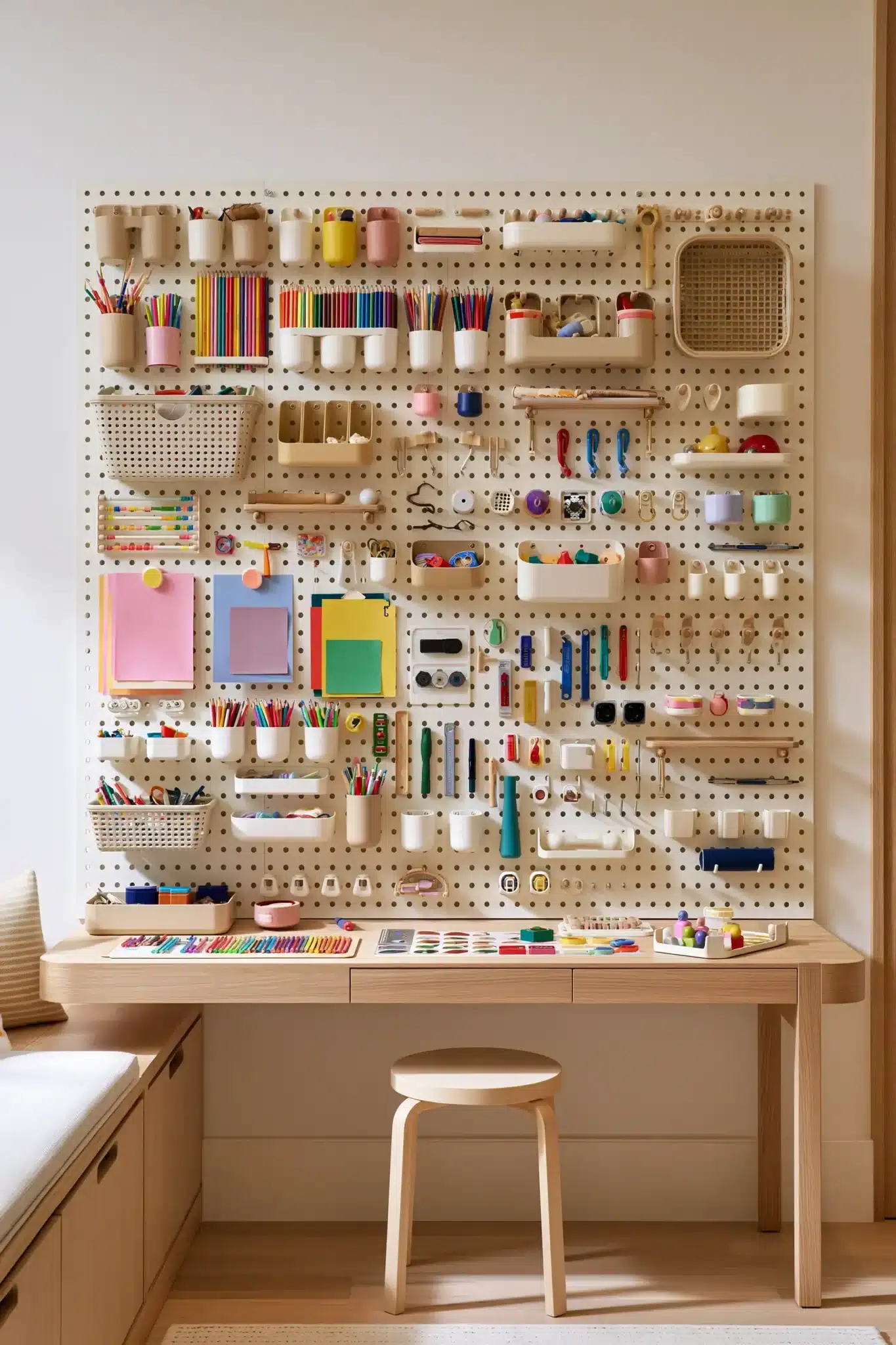
Pegboard is the ultimate “your rules” wall. Rearrange hooks, cups, baskets, and shelves whenever your kid’s interests shift.
Mount it above a desk so art supplies stay off the work surface but within reach. Coordinate the containers and the whole system looks intentional, not thrown together.
21. Window Seats Store Secretly
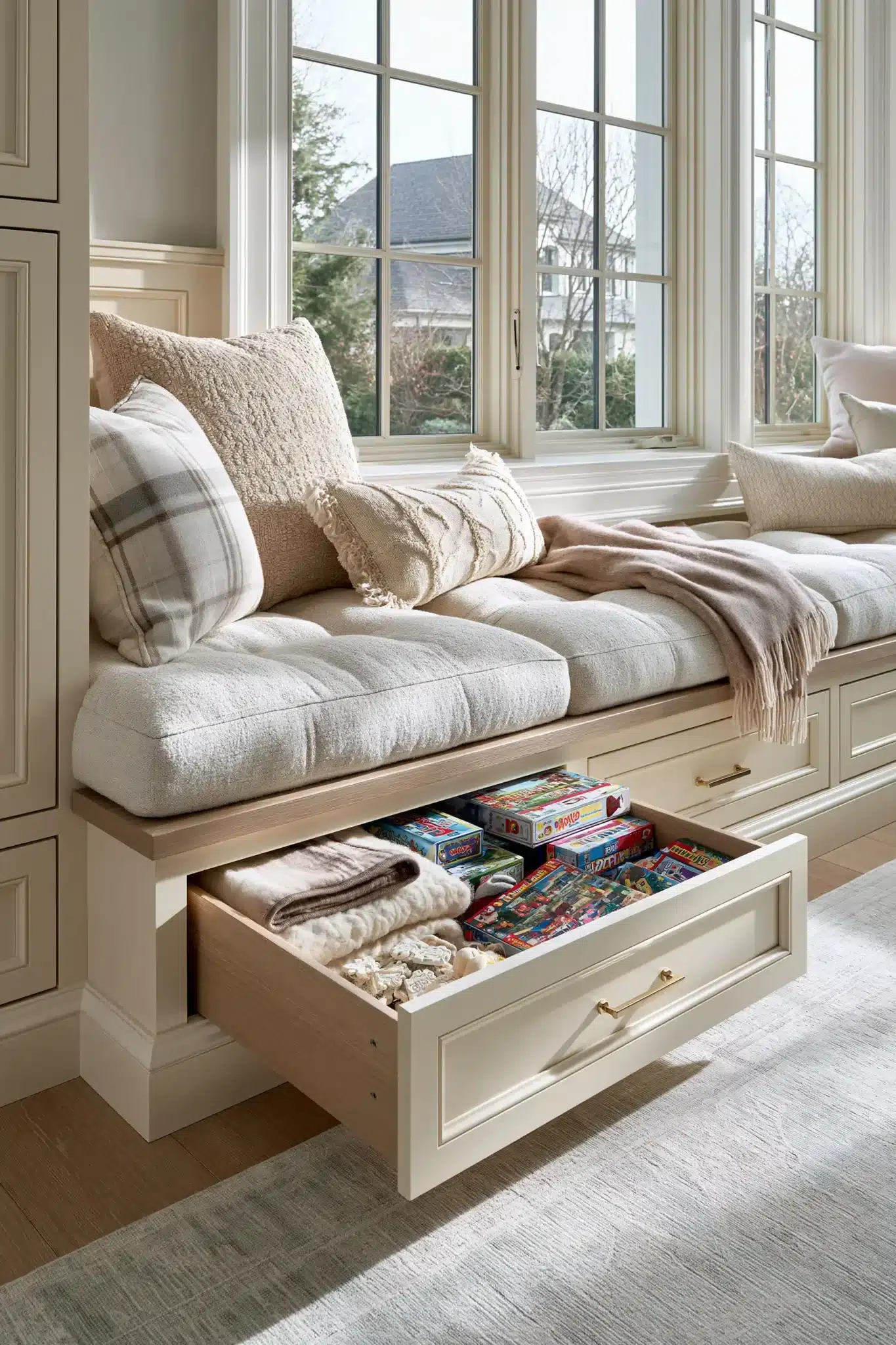
A window seat already wins on cozy; add drawers underneath and it wins on storage too. Toys, puzzles, blankets, and bulky gear disappear below the cushion.
Pile pillows on top for a reading nook without losing an inch of storage below. Pick full-extension drawers so back-row items don’t become lost artifacts.
22. Creative Cabinets Corral Supplies
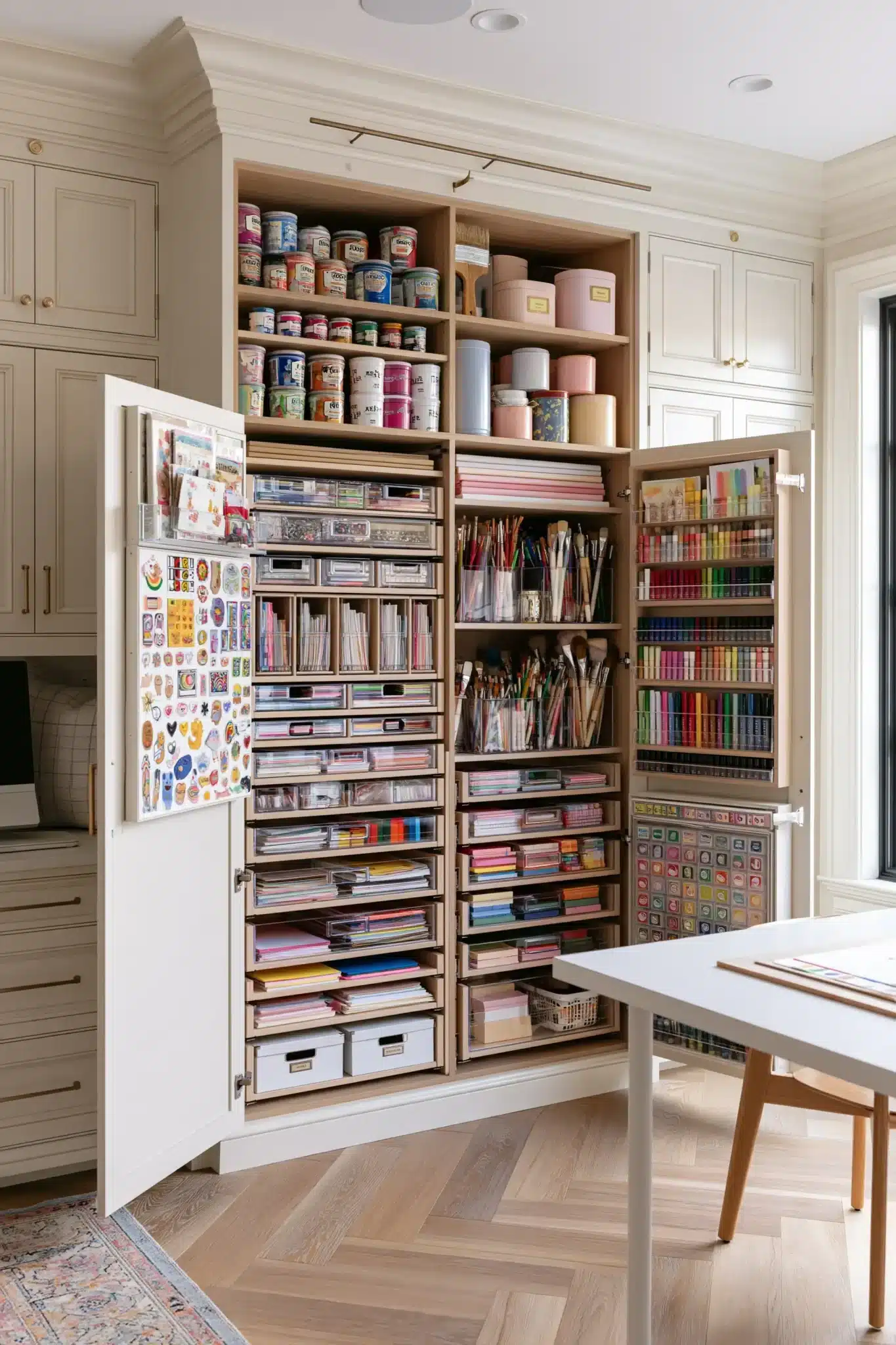
Messy art supplies deserve their own cabinetry. Drawers, trays, bins, and containers sort paint, crayons, markers, paper, glue, and stickers by type.
Keep washable everyday stuff low; supervised supplies ride high. Transparent containers let you spot a low paper or crayon count at a glance.
23. Open Cubbies Define Organization
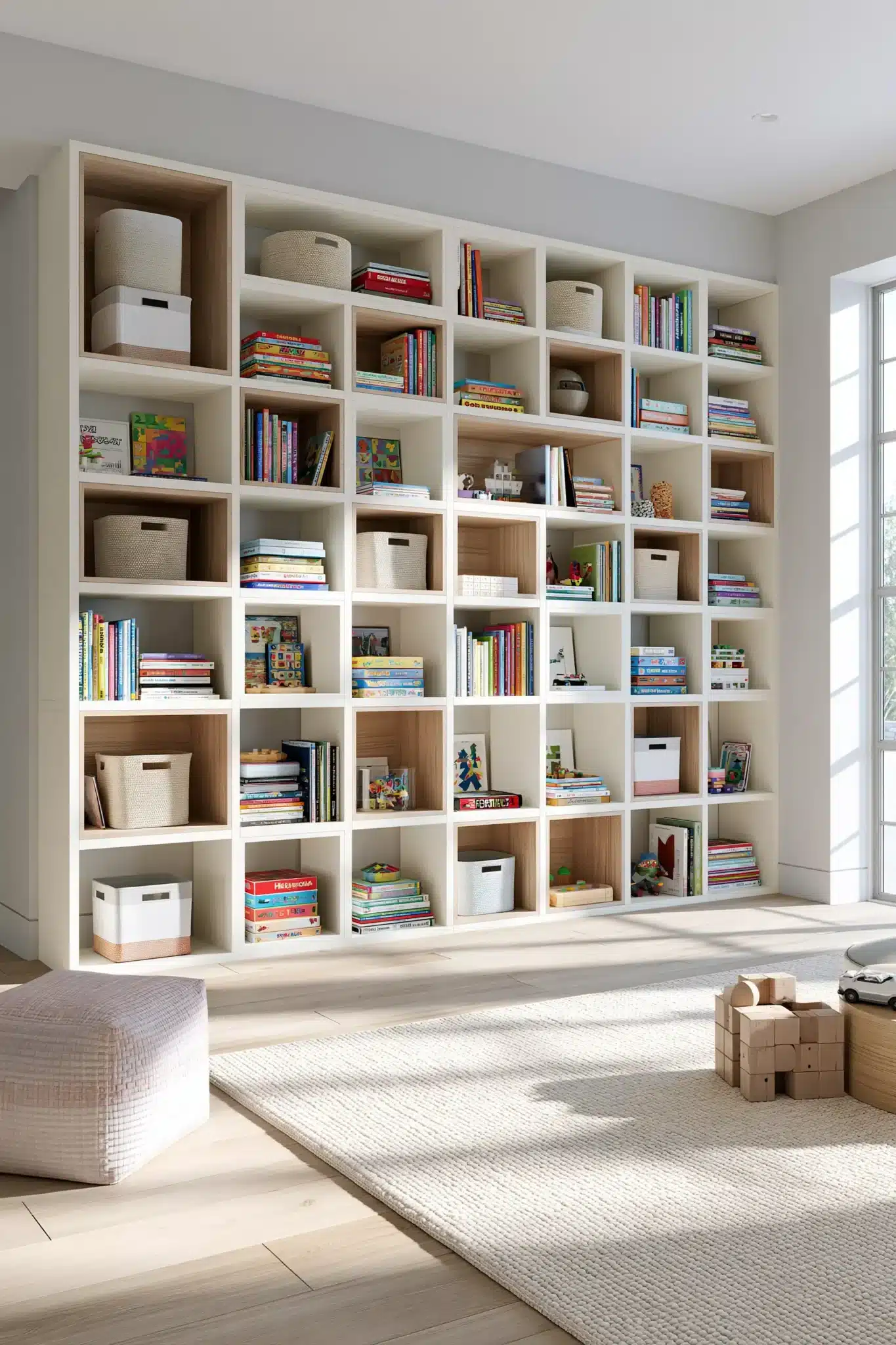
An open cubby wall makes “where things go” obvious at a glance. Fill compartments with baskets, books, games, big toys, and a few display pieces.
Vary the cubby sizes for visual interest and for awkwardly shaped objects. Baskets corral small toys while favorite books and decor stay out in the open.
24. Unused Corners Gain Function
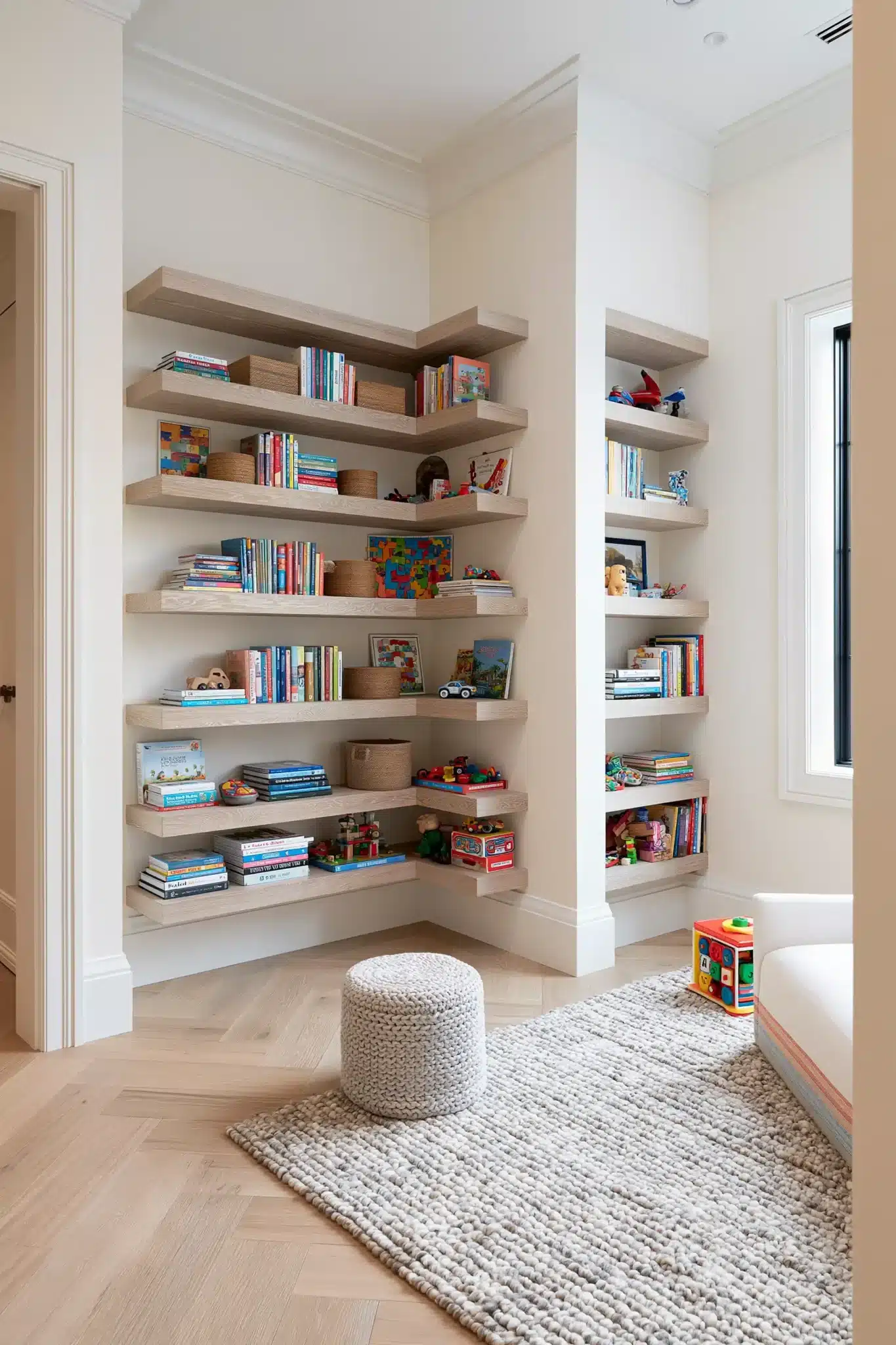
That forgotten corner can pull real weight with compact shelving. Books, baskets, puzzles, toys, and accents turn dead space into storage gold.
Float the shelves for an airy look or go freestanding when capacity matters more. Keep daily favorites on the low shelves so they stay within reach.
25. Sliding Storage Looks Sleek
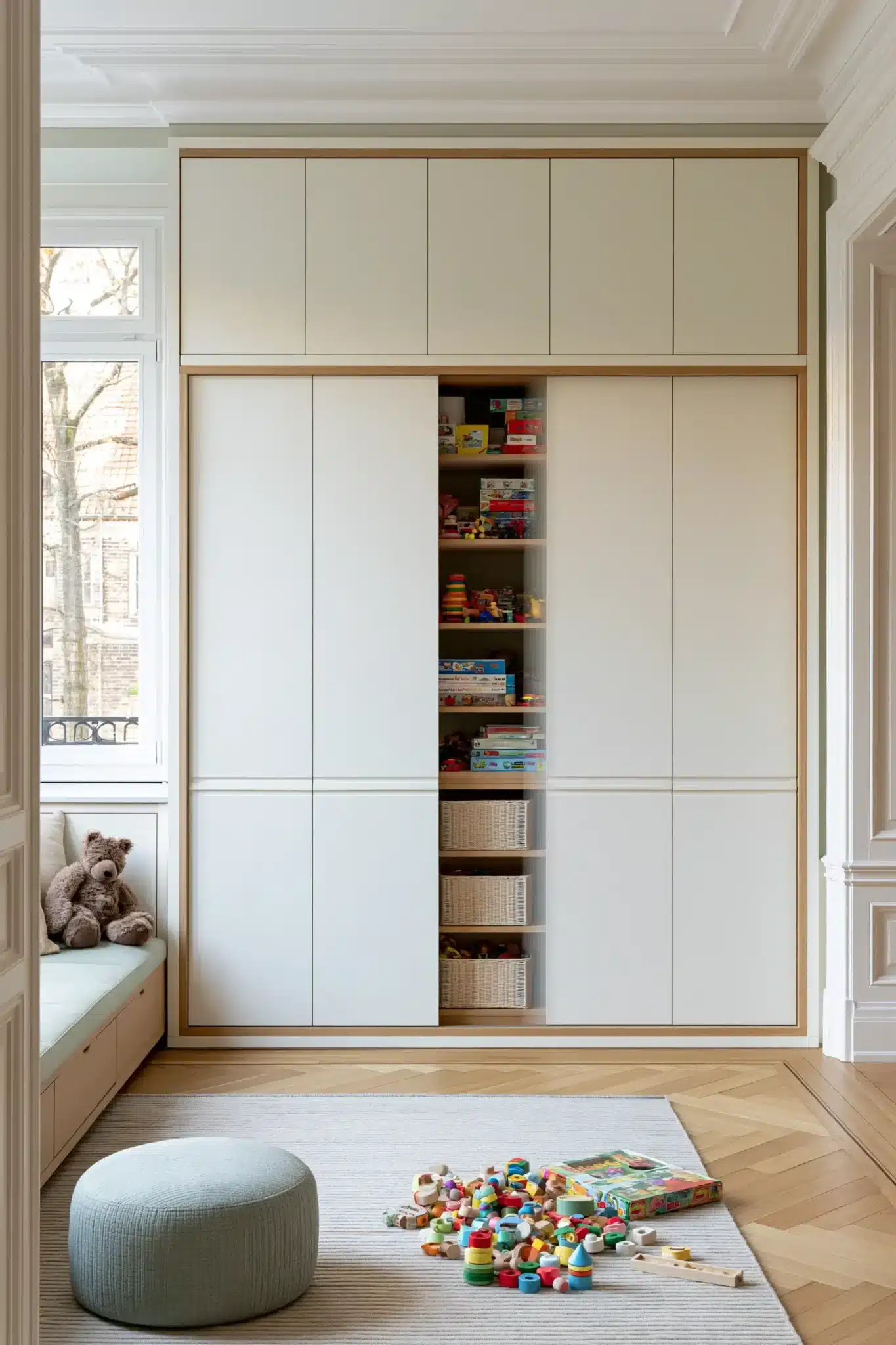
Sliding cabinets hide clutter without needing swing room for doors — a lifesaver when the playroom shares space with the living area. The streamlined look keeps things calm.
Add adjustable interior shelves for everything from small baskets to big games. Pick smooth, child-friendly slides so open space stays open for play.
26. Drawer Tables Support Activities
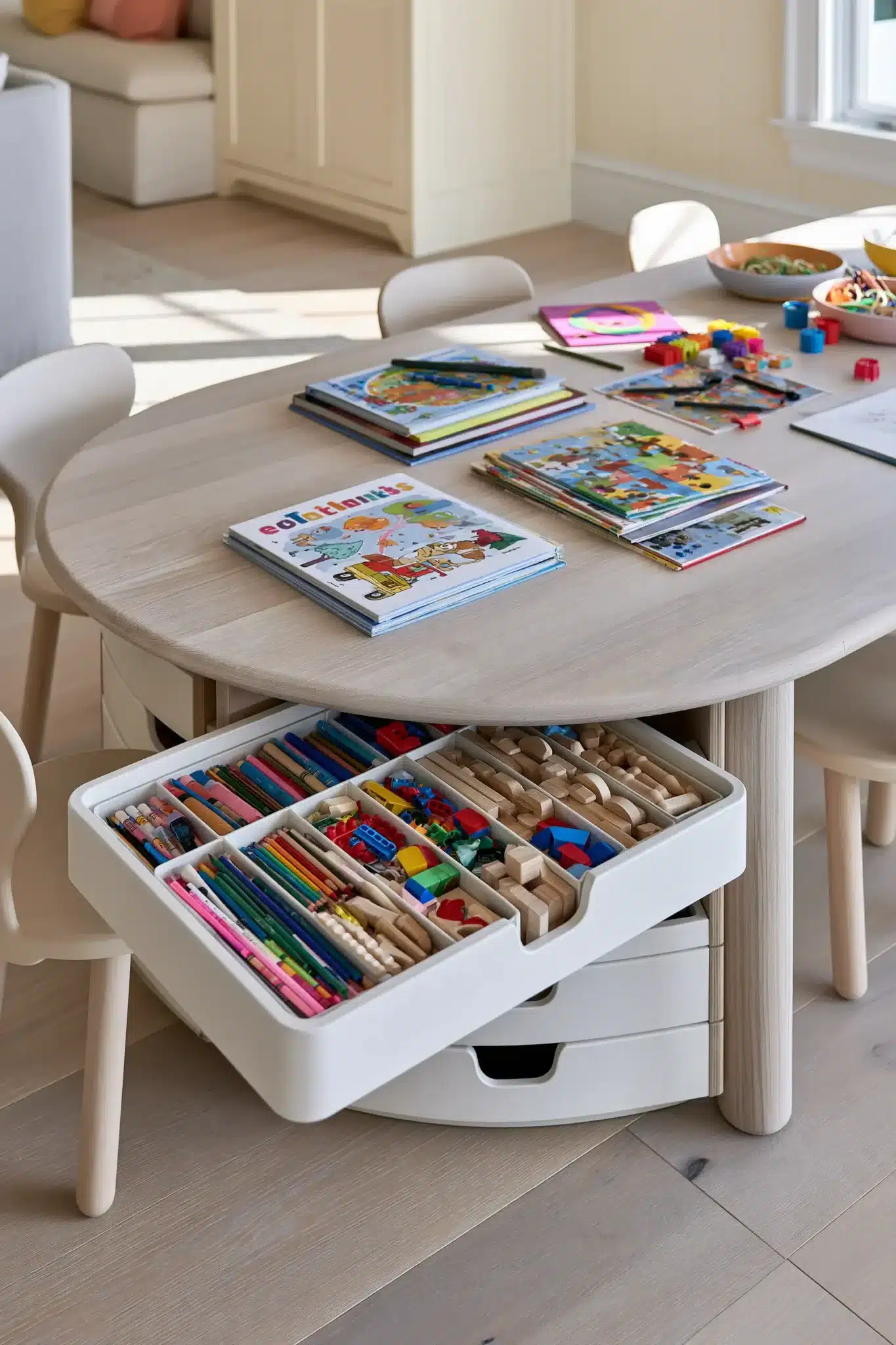
A play table with drawers puts supplies exactly where kids use them. Pencils, coloring books, bricks, puzzles, and train pieces live right under the work surface.
Wide shallow drawers suit small pieces; deeper ones tuck larger toys. Assign one activity per drawer so project-switching doesn’t mean a supply hunt.
27. Cozy Libraries Welcome Readers
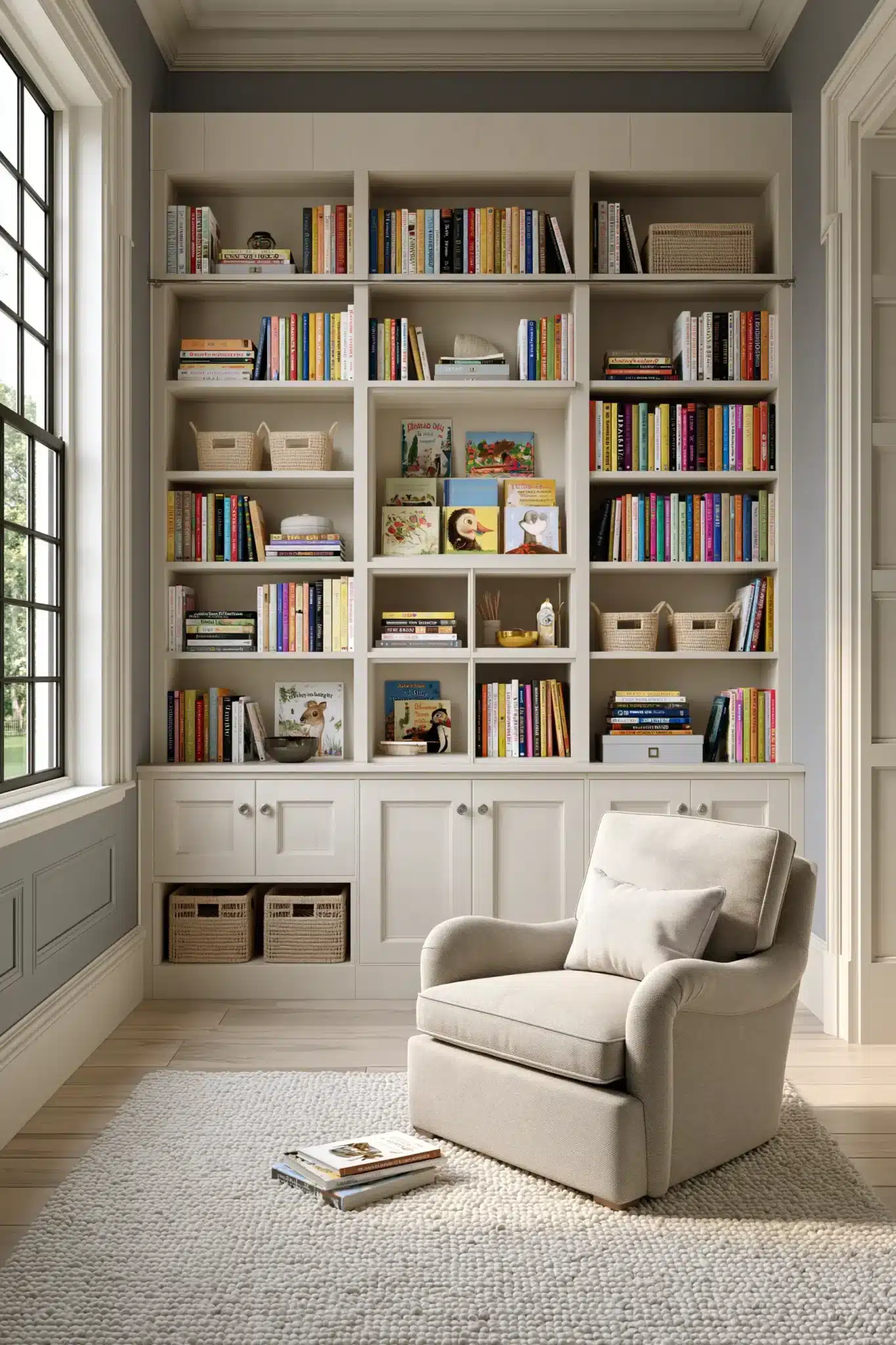
Carve out a reading destination and books finally get the respect they deserve. Standard shelves, front-facing displays, baskets, and small compartments keep the collection orderly.
Add comfy seating and reserve low shelves for stories kids pick themselves. Mix vertical and horizontal stacking to fit chunky picture books and early chapter books alike.
28. Streamlined Consoles Calm Clutter
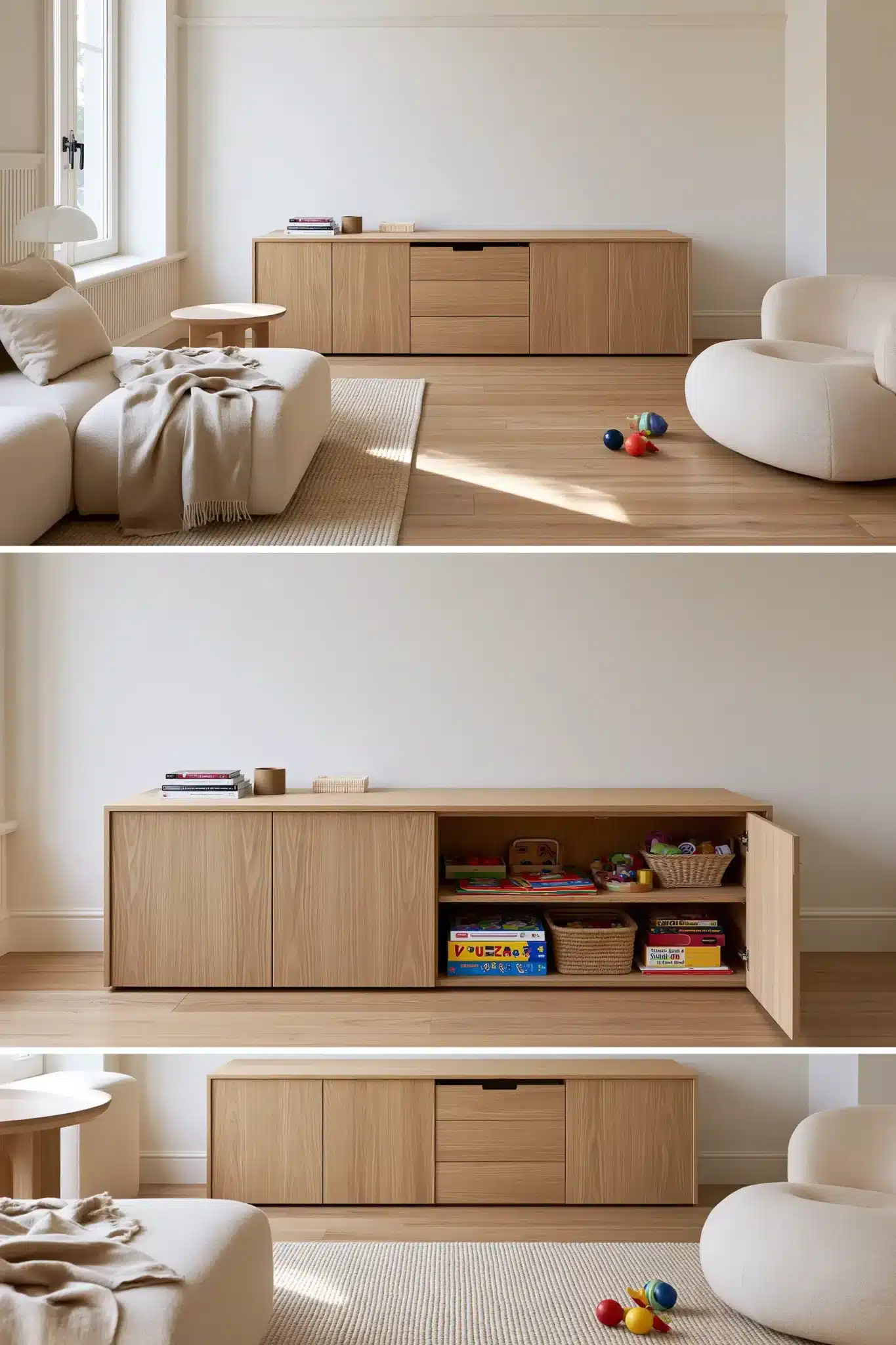
A streamlined console hides the colorful chaos when playtime’s over. Understated doors, drawers, or pull-out baskets coordinate with modern interiors while still holding plenty.
Keep the top mostly clear or dress it with a few favorite books. Organize the hidden interior by category so the sleek outside isn’t masking a tornado.
29. Small Spaces Store Smarter
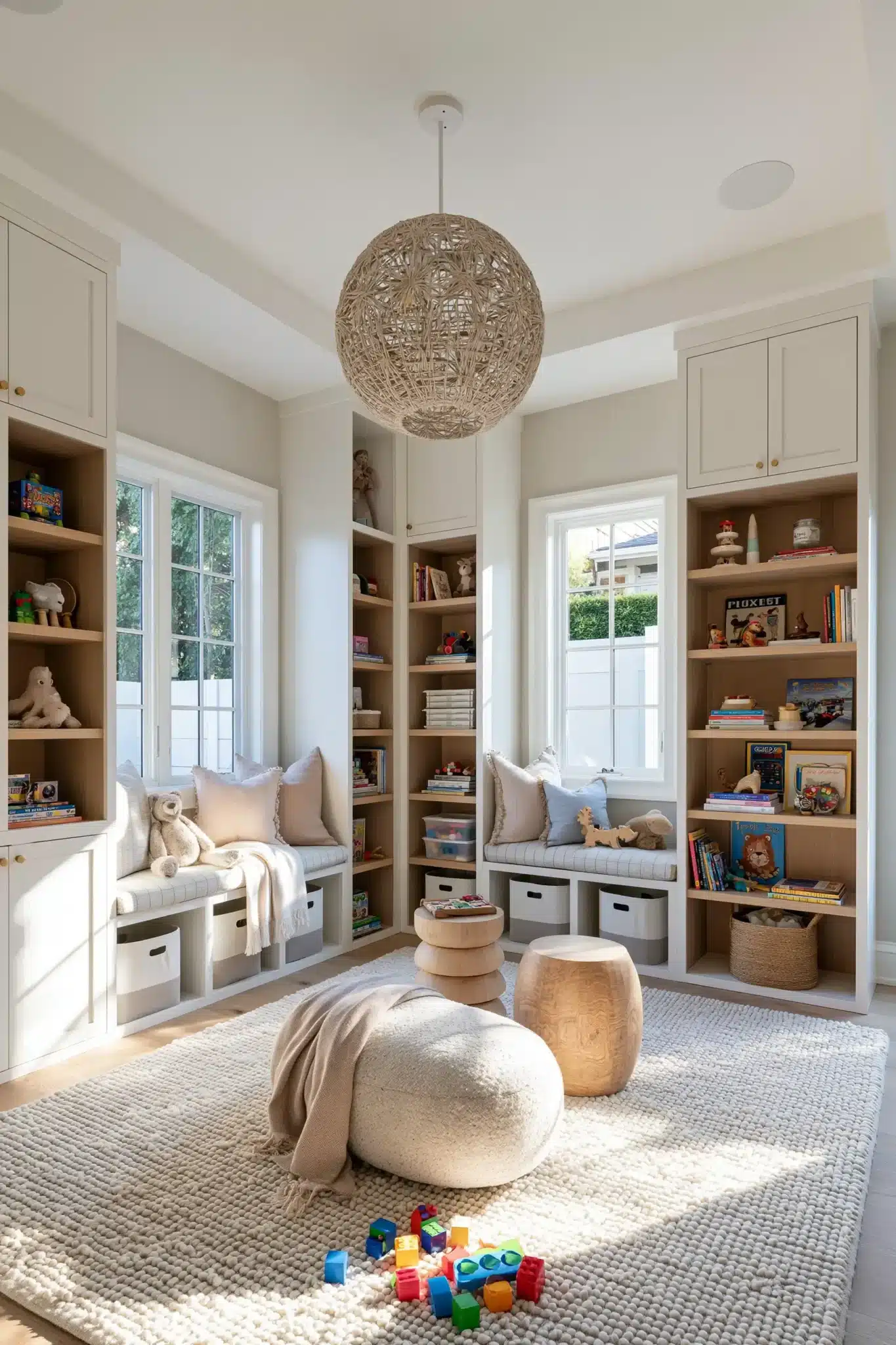
Tight square footage just means you plan harder. Narrow cabinets, stackable bins, compact shelving, wall organizers, and multi-use furniture give you real storage without crowding the room.
Treat your walls and overlooked nooks with the same care as the floor. Daily toys stay low and easy; occasional stuff rides high; skip the oversized furniture. If you’re hunting for more ways to make a room work harder, our dining room inspiration roundup has ideas that translate surprisingly well to a playroom.
Wrapping It Up
So there you have it — 29 ways to stop the floor from eating your sanity. The throughline is simple: build up, build low, and give every toy a real address. 😉
Pick two or three ideas that fit your space and start there; you don’t need to overhaul the whole room this weekend. Which one are you trying first? Tell me in the comments — I’m genuinely curious what sticks in your house.
Save this article
We’ll email you the link so you can find it again later.