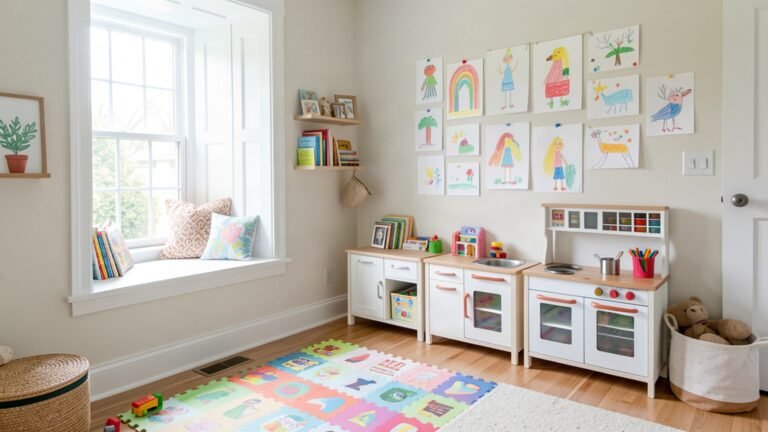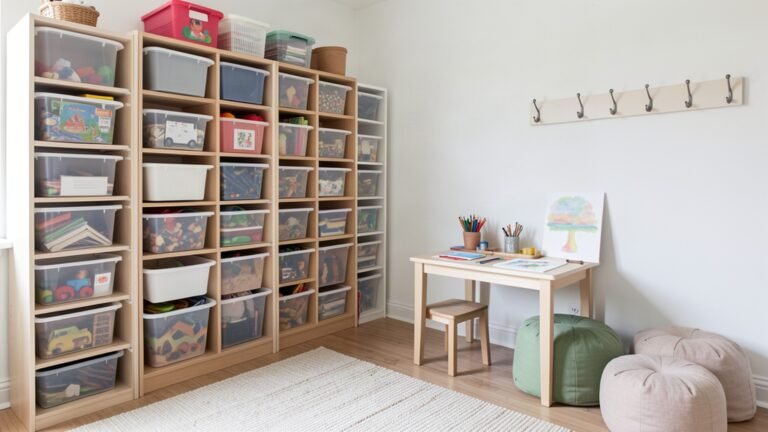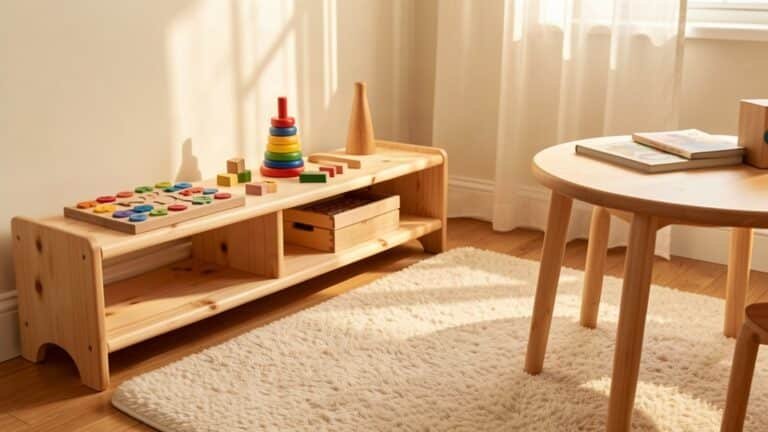


Think you need a spare bedroom to give your kids a real play space? You don’t. I’ve watched a glorified hallway closet turn into my niece’s favorite hangout — all it took was a smart layout and the guts to claim that weird corner you keep walking past. These 29 small playroom ideas lean on a few well-chosen storage pieces, a cozy reading nook, and some low shelving to do more for a cramped room than a truckload of toys ever could. 🙂
1. Compact Rooms Become Adventures
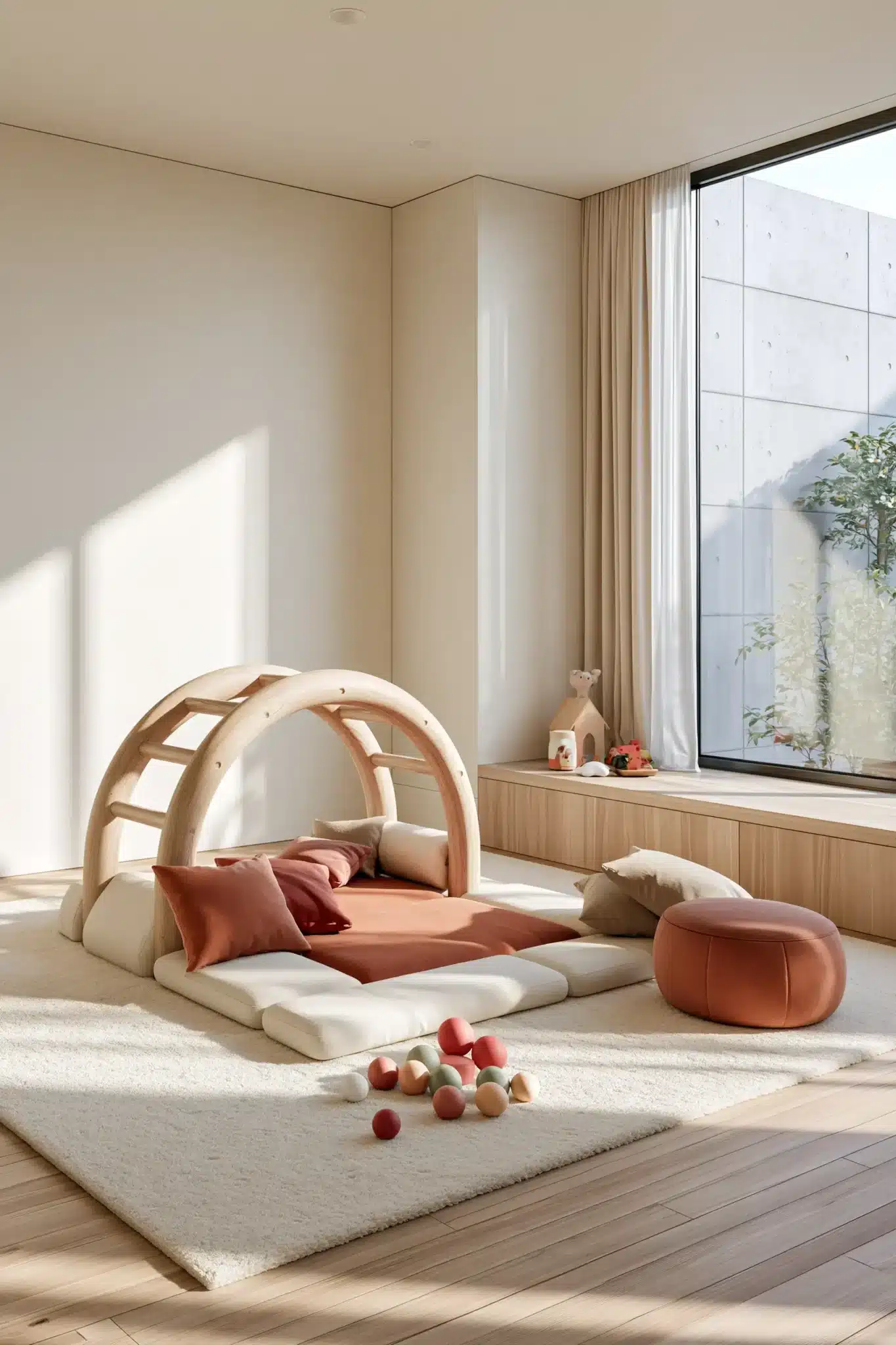
Small doesn’t mean boring. I’ve turned tight rooms into little worlds where kids explore, imagine, and lose track of time — no bulky furniture required.
Lean on clever storage, a couple of interactive touches, and cheerful accents instead of cramming the floor with stuff. This trick works especially well in apartments, bonus rooms, and compact bedrooms where open floor space is pure gold. Add comfy seating, toy storage they can actually reach, and one or two imaginative details, and every corner suddenly earns its keep.
2. Little Corners Fuel Creativity
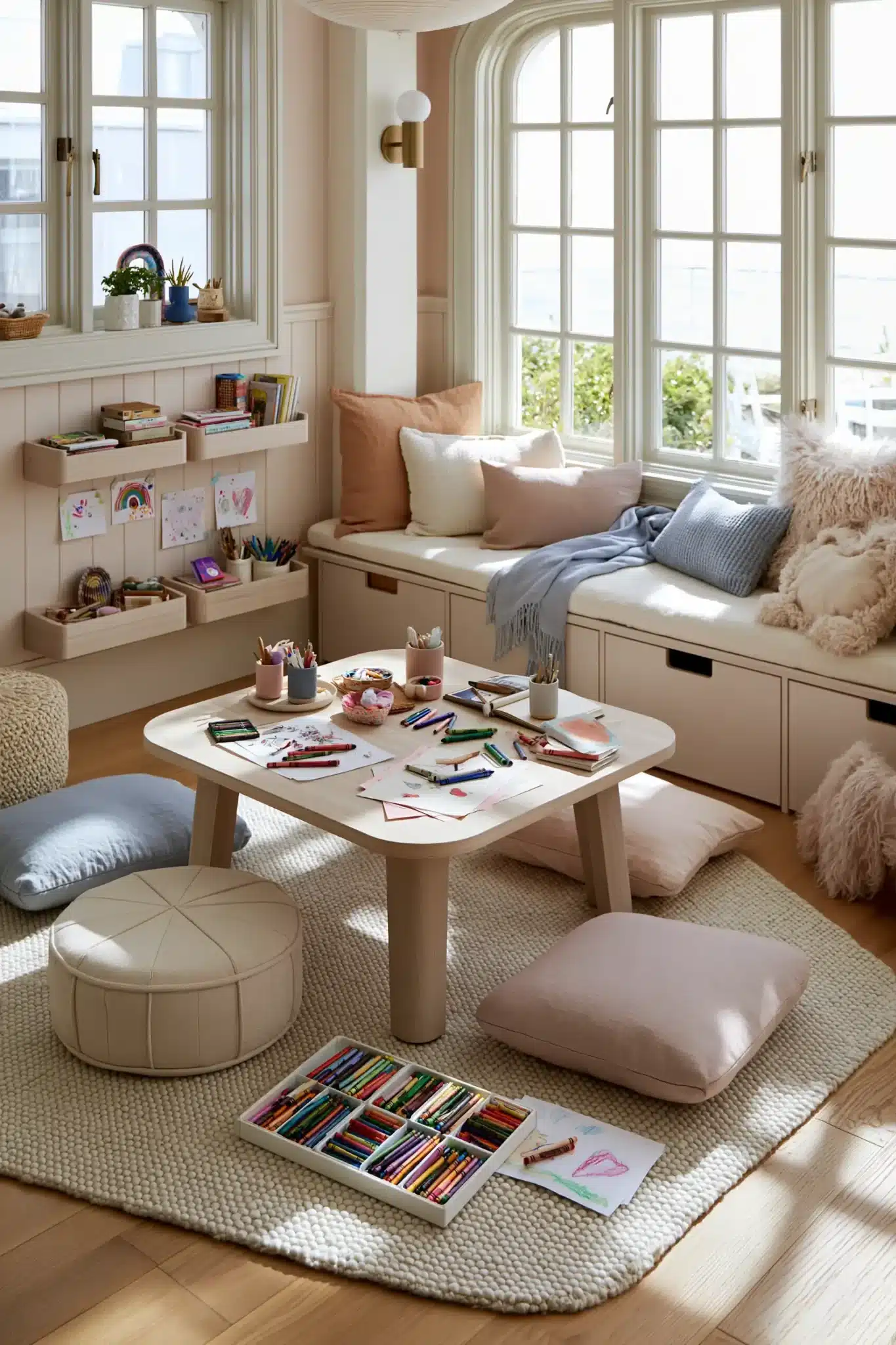
That overlooked corner by the window? It’s a creativity zone waiting to happen. A compact table, art supplies, floor cushions, and easy-reach storage turn it into a drawing and building station without eating the whole room.
Wall organizers and slim shelves keep supplies neat and visible, so kids actually want to use them. Renters and anyone short on square footage: a dedicated nook like this buys you a craft room without surrendering an entire bedroom.
3. Colorful Details Brighten Play
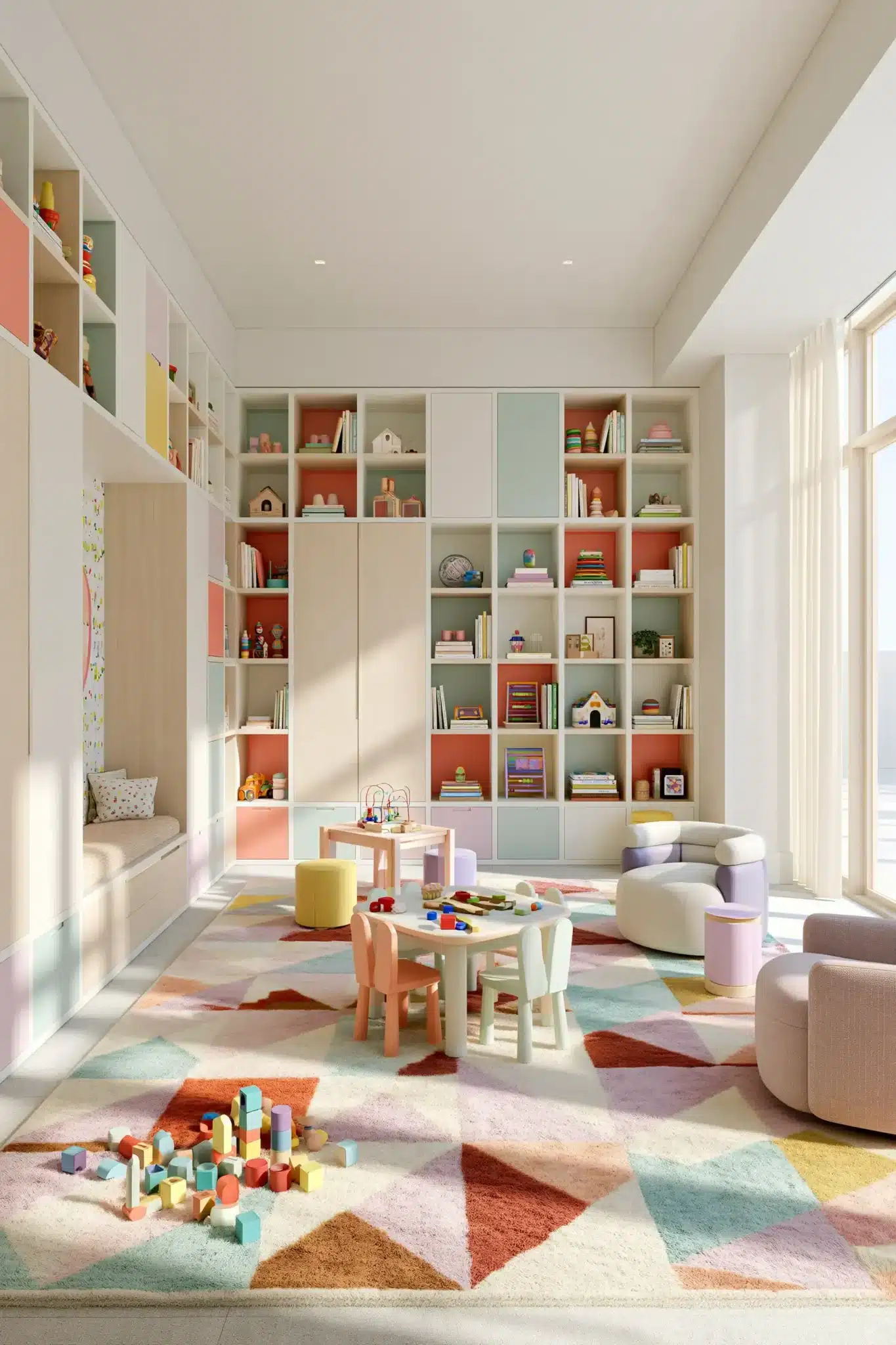
Start with a light backdrop, then let color do the shouting. Bright rugs, storage bins, artwork, and toys bring the energy while the big furniture stays quiet — so the room feels alive, not chaotic.
Keep storage low and open so kids grab their favorite activity and put it back solo. More floor stays clear, and the space reads as ‘fun,’ not ‘frat house.’
4. Multipurpose Pieces Save Space
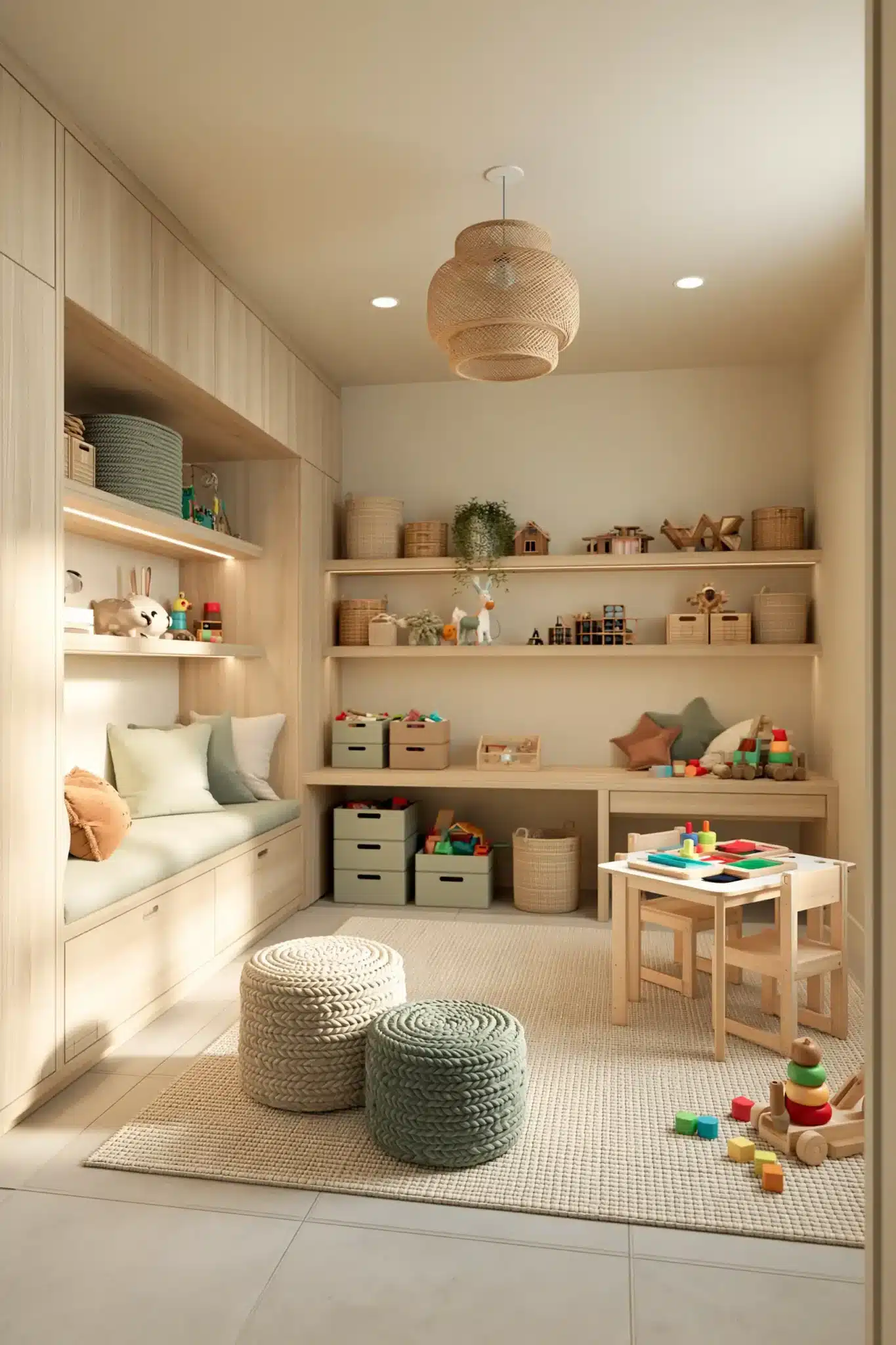
One piece, many jobs. Benches with hidden compartments, stackable bins, wall shelving, and a table that wears several hats are the MVPs of a small playroom.
Keep enough open floor for kids to shift gears through the day, then toss in a little color and a few accents so the room has personality instead of just function. Flexibility is the whole game here.
5. Whimsical Touches Inspire Stories
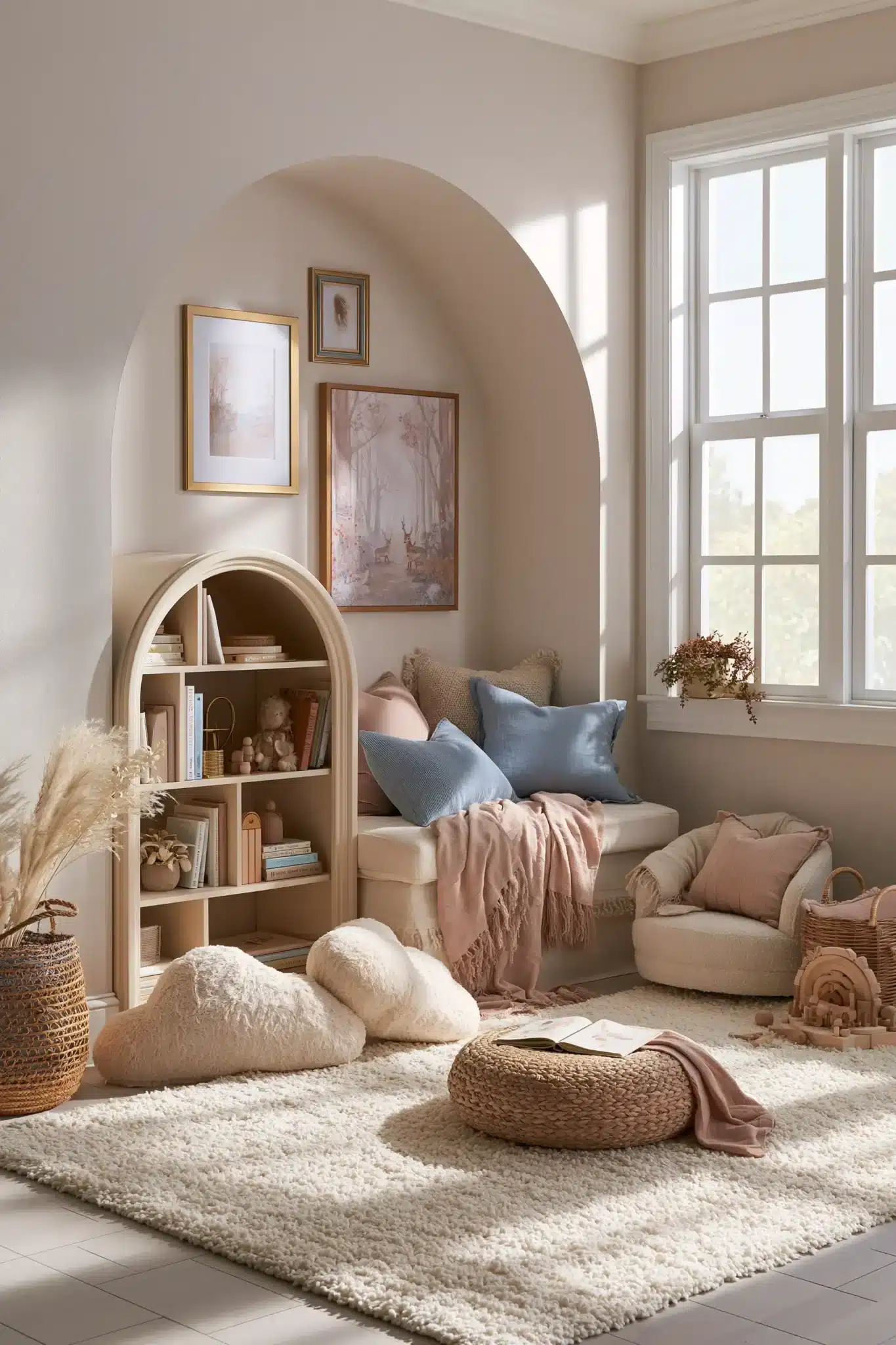
Soft textures, charming art, playful lighting, and a cozy seat equal instant storybook magic. Concentrate the whimsy in a few spots so you don’t drown the room in theme.
Tuck storage into pretty baskets and boxes that pull double duty as decor. The look stays enchanting now and still works when they’re teens.
6. Young Creators Need Studios
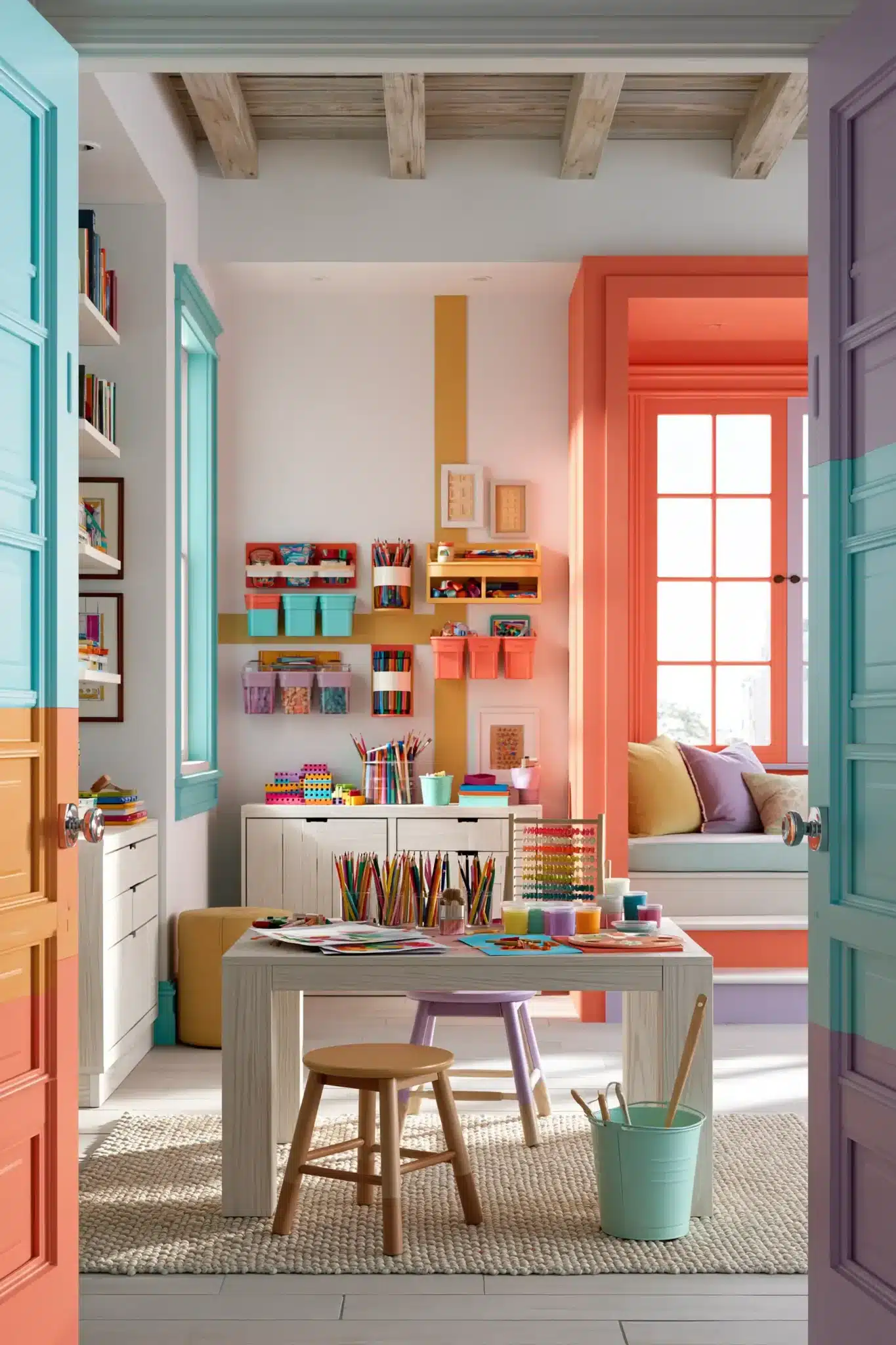
Give your little maker a mini studio where creative mess is allowed. A child-sized table, washable supplies, and reachable storage make it practical, while a shelf of finished projects makes it theirs.
Split art from books and toys into zones so the chaos stays manageable, and use vertical storage on narrow walls to hoard supplies without stealing floor.
7. Nordic Style Simplifies Play
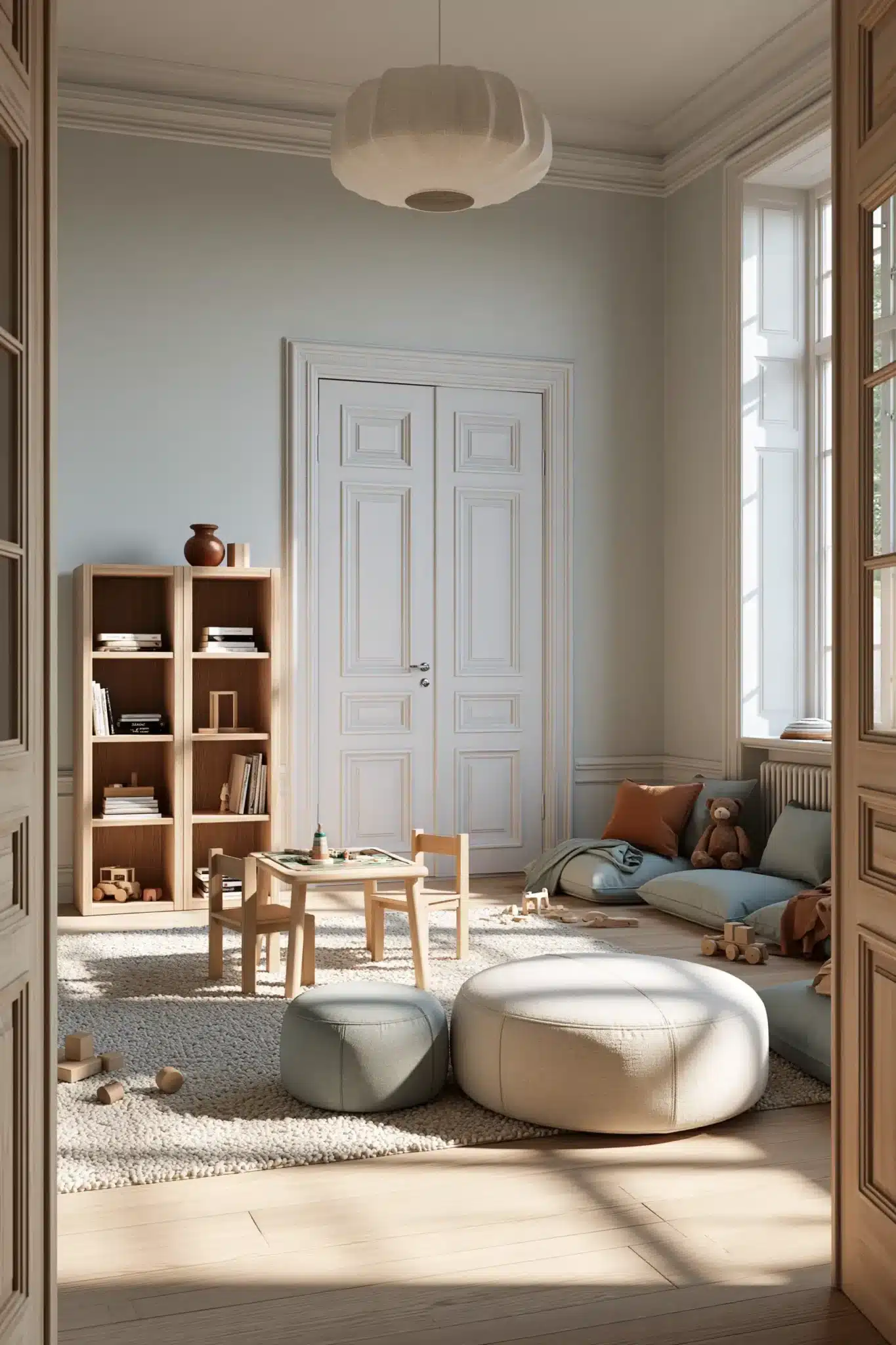
Scandi style is basically a cheat code for calm: clean lines, gentle colors, natural wood, soft rugs. Simplicity keeps a compact room from tipping into chaos.
Let it blend with the rest of your home so the play area doesn’t feel like a separate, louder planet. Warm it up with texture and a couple of cheerful accents, and you’re done.
8. Pastel Shades Create Calm
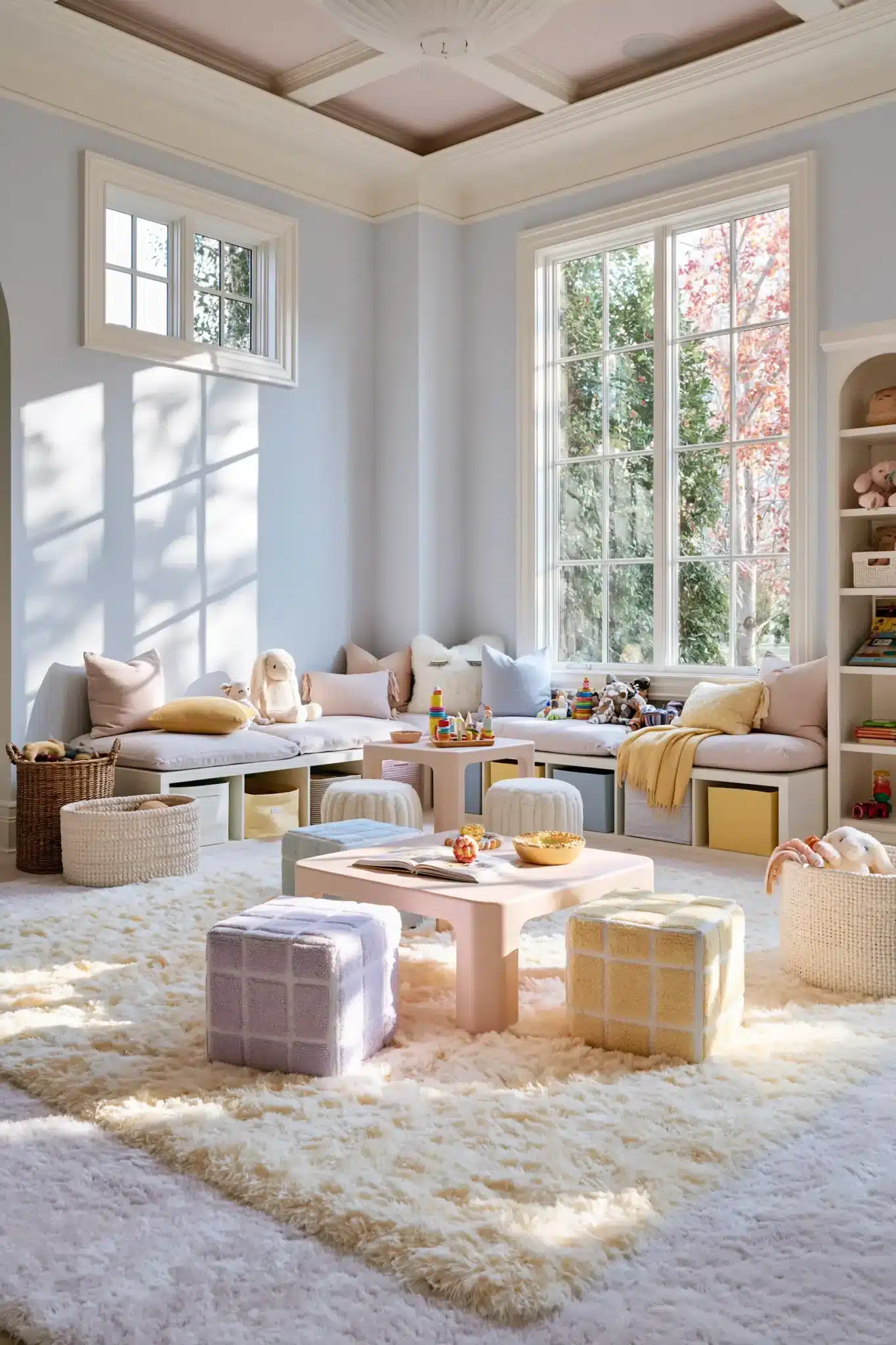
Pastels give a tiny play area a dreamy personality without shouting. Pick a few soft shades for storage, textiles, and details rather than painting every surface.
Compact furniture preserves floor space and carves out zones. Add a cushion or small rug for crash-time between crafts, and the busy toy-room vibe settles right down.
9. Low Shelves Build Independence
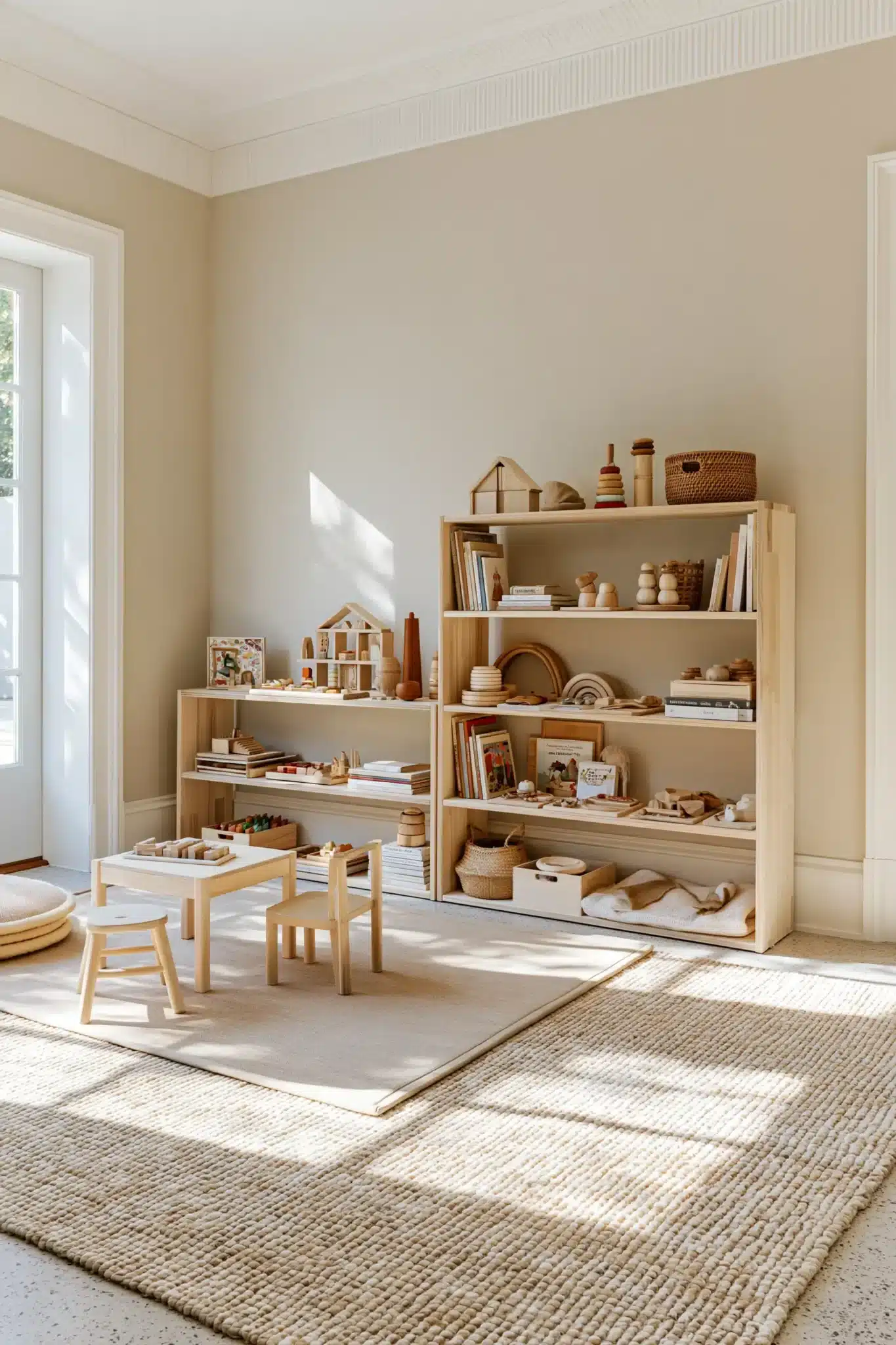
Montessori-style low shelving lets kids see and grab toys, books, and puzzles on their own. Rotate a small batch of activities so shelves stay interesting instead of overloaded.
I keep the furniture simple and the materials natural — calm enough for focused play, free enough for them to choose. Independence, minus the meltdown.
10. Rainbow Details Bring Joy
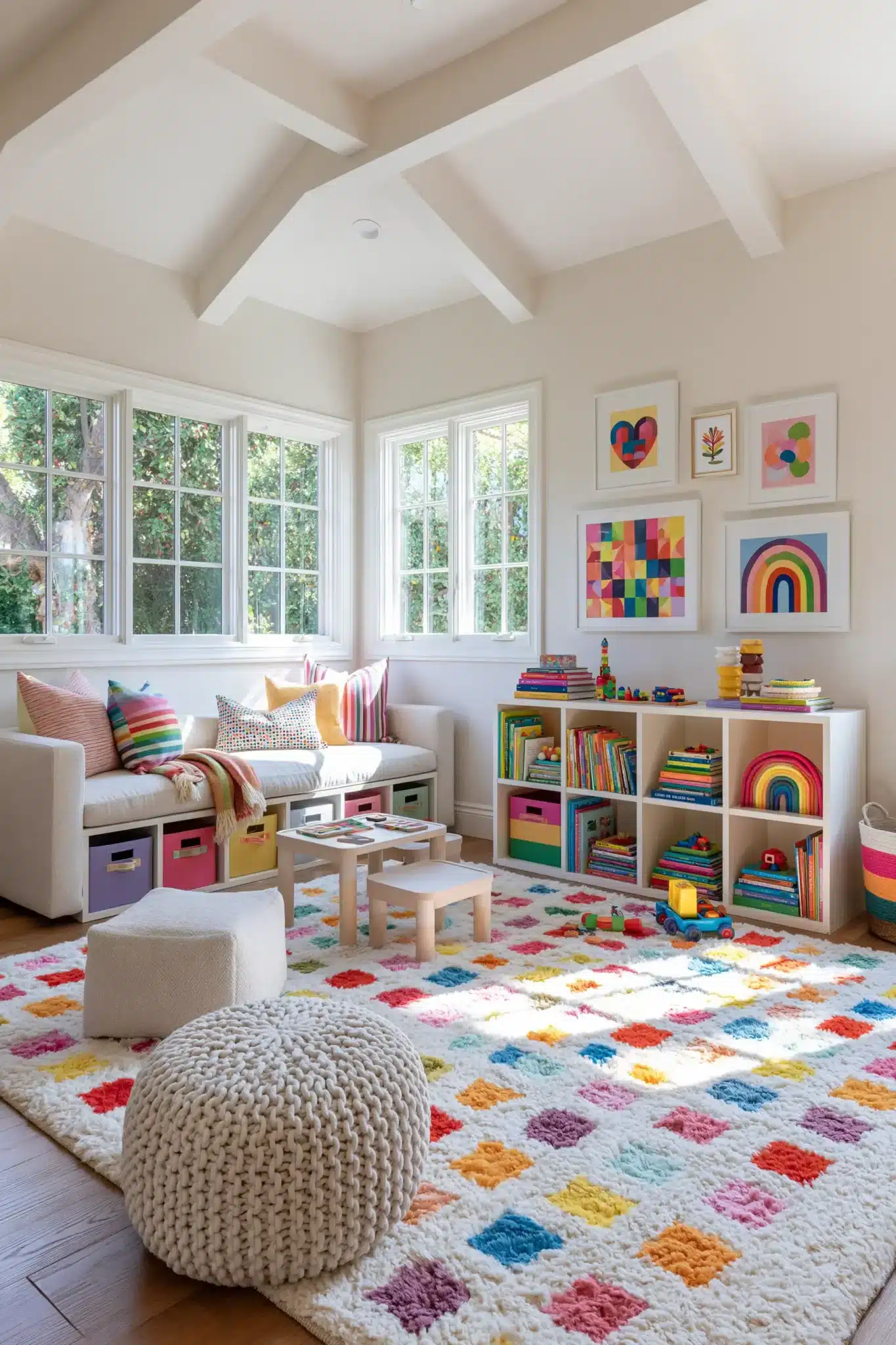
Neutral backdrop, then rainbow via toys, art, cushions, bins, or a playful rug. The room gets personality without feeling like a circus tent.
Make storage part of the color story with bins cute enough to leave out. Plenty of joy, still stylish, still manageable.
11. Smart Walls Store More
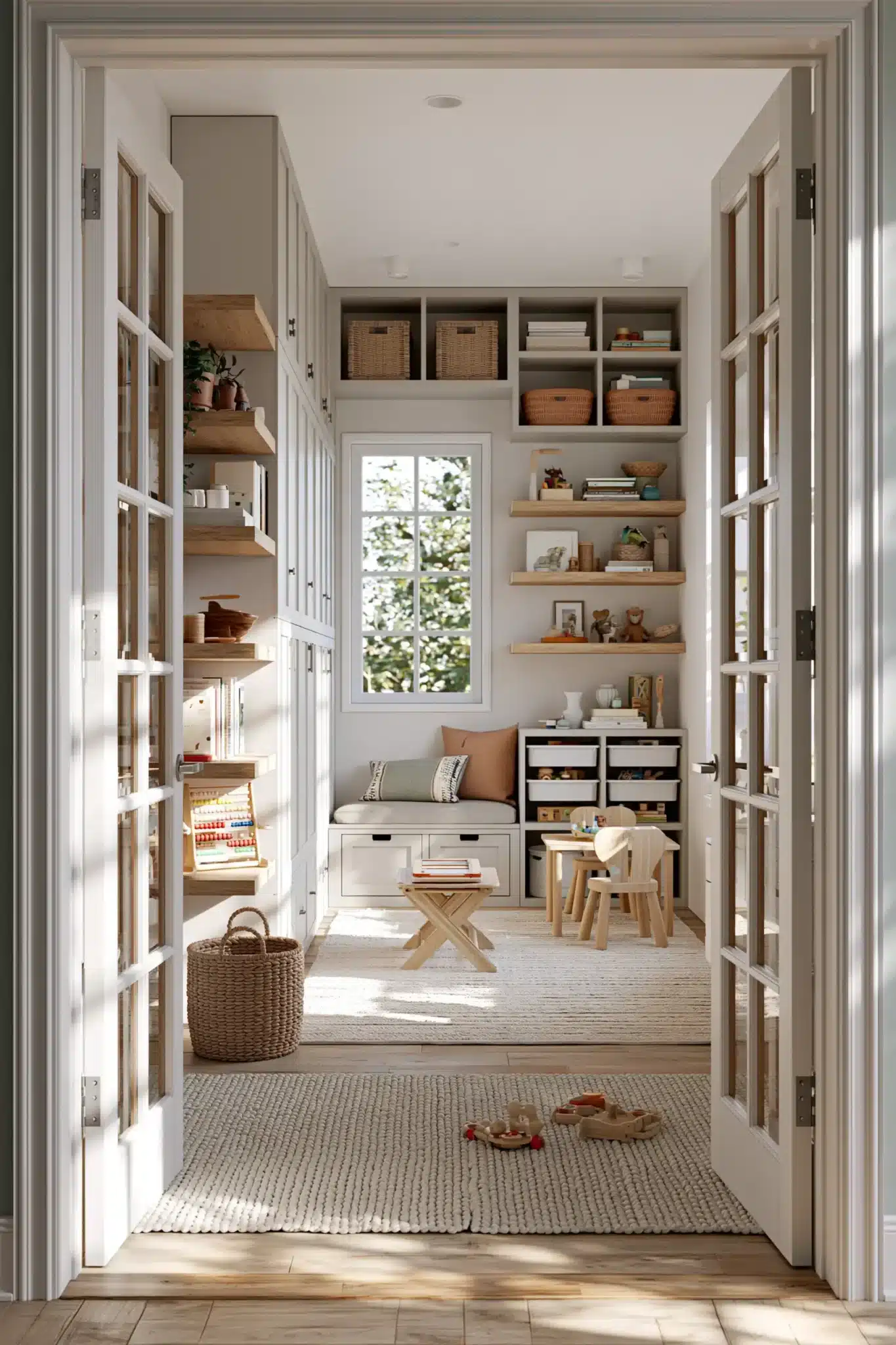
Square footage is short? Go vertical. Wall shelves and hanging organizers add storage without eating floor, so the room flips fast between blocks and pretend play.
Limit big furniture to the essentials and let adaptable storage do the heavy lifting. Even an awkward spare room becomes a daily destination.
12. Soft Neutrals Welcome Play
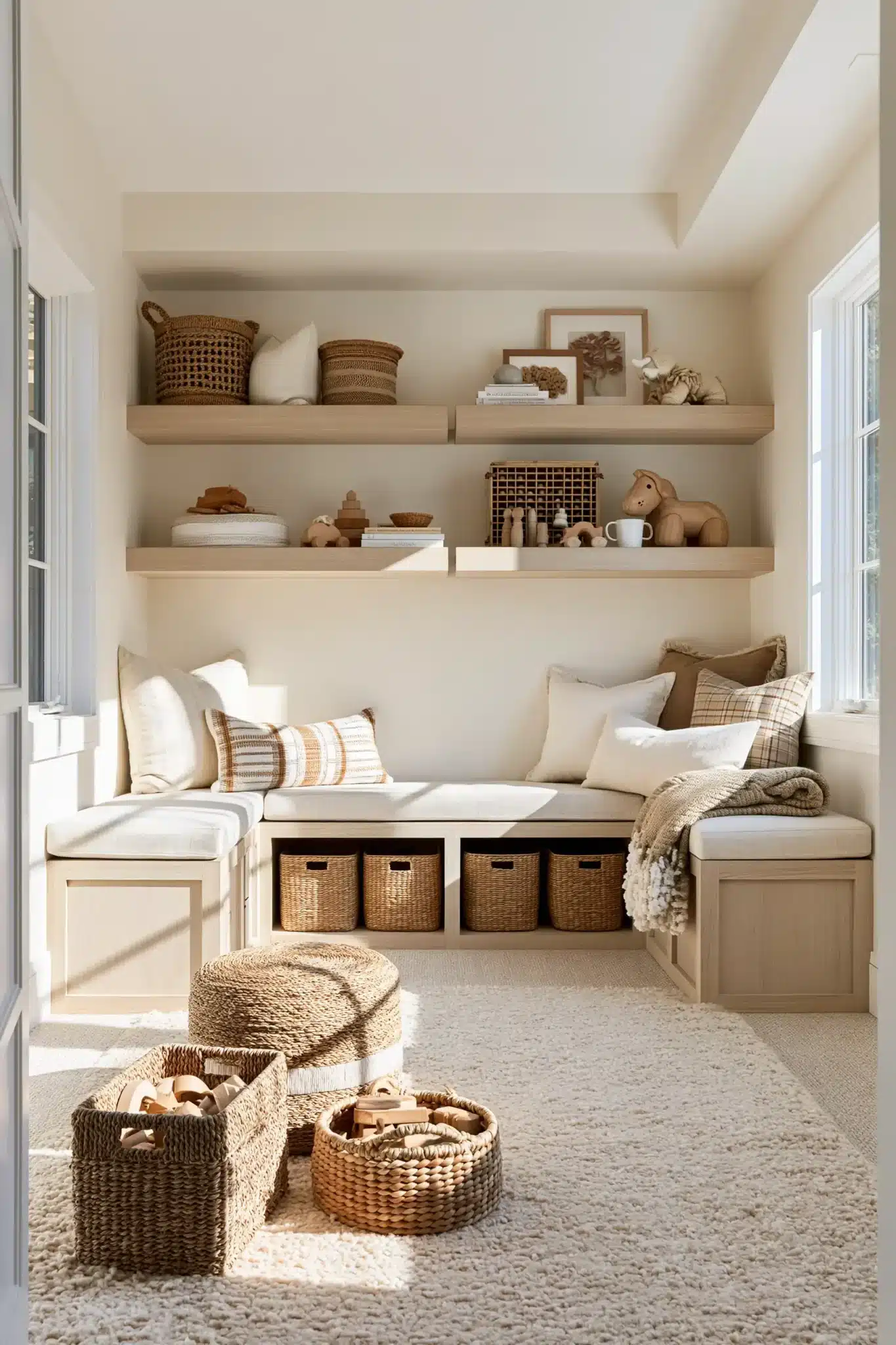
Warm neutrals — cream, beige, warm white, natural wood — set a peaceful base so toys and art provide the pop. A compact room reads bigger and calmer.
You don’t need bold color when texture and shape carry the personality. Woven baskets, plush rugs, and simple shelving add warmth while corralling the toy avalanche.
13. Active Kids Explore Indoors
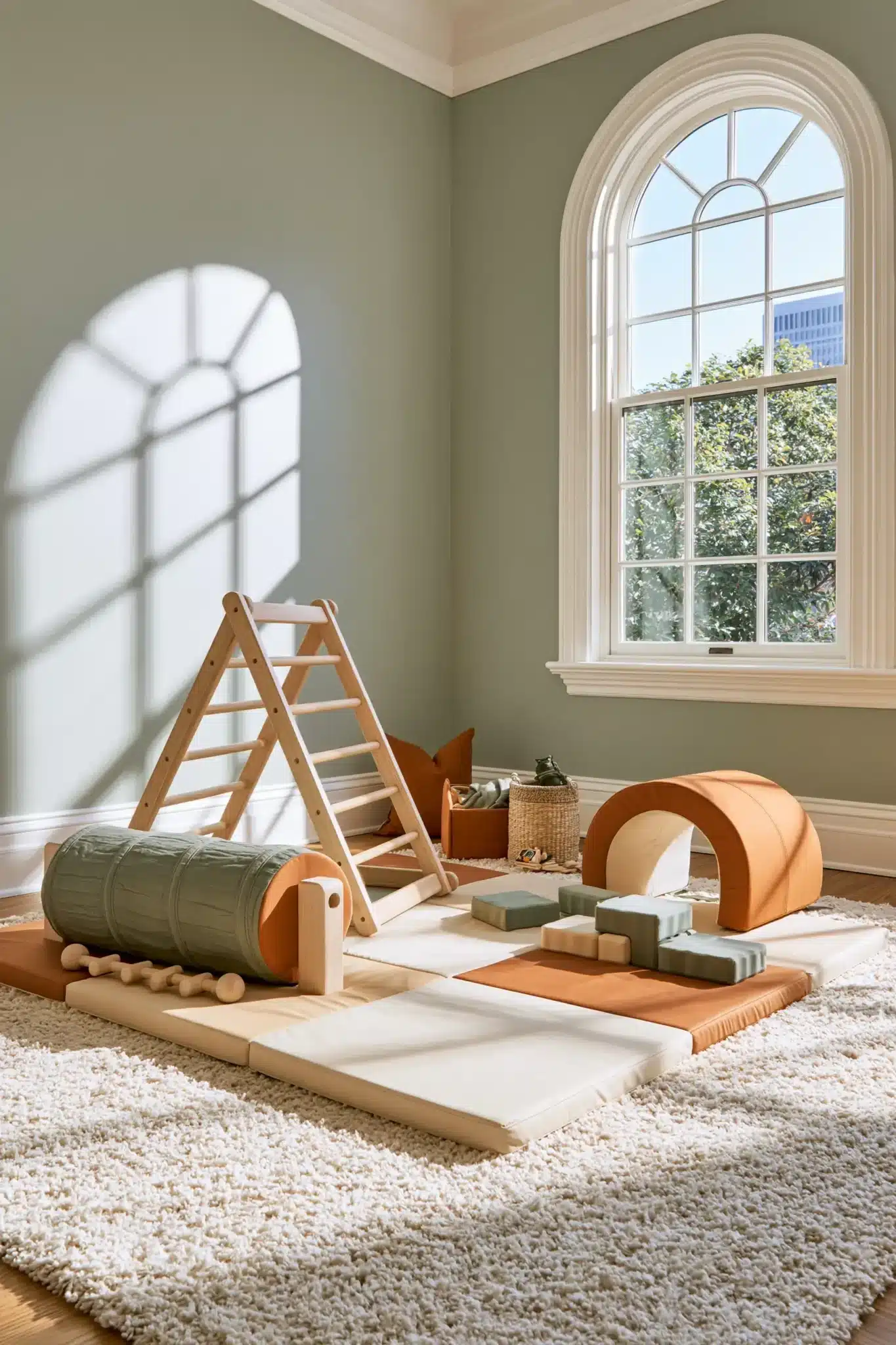
Rainy day? Build an indoor adventure zone. Soft flooring, a climbable feature, tunnels, and props along the walls keep the center open for full-speed chaos.
Pick storage that lets them shove equipment away fast when active play ends. Compact rooms feel way more exciting when kids can actually move.
14. Playful Learning Happens Naturally
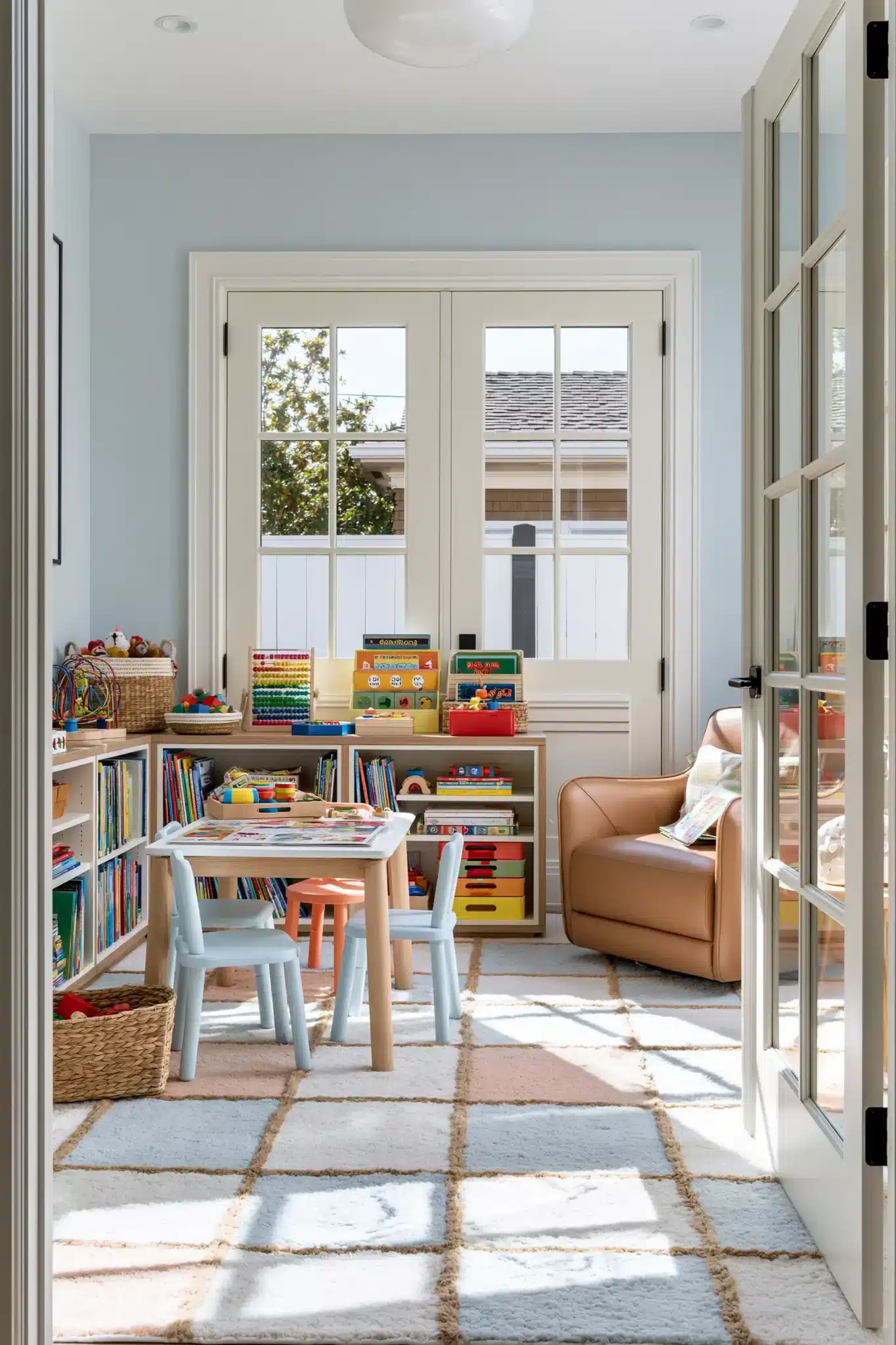
Make learning just another toy. Zone puzzles, books, and crafts, then add a comfy reading seat and a compact table for homework, games, and projects.
Colorful labels and low shelving make cleanup a kid job, not a parent chore. Education and play share the room without a turf war.
15. Forest Details Inspire Wonder
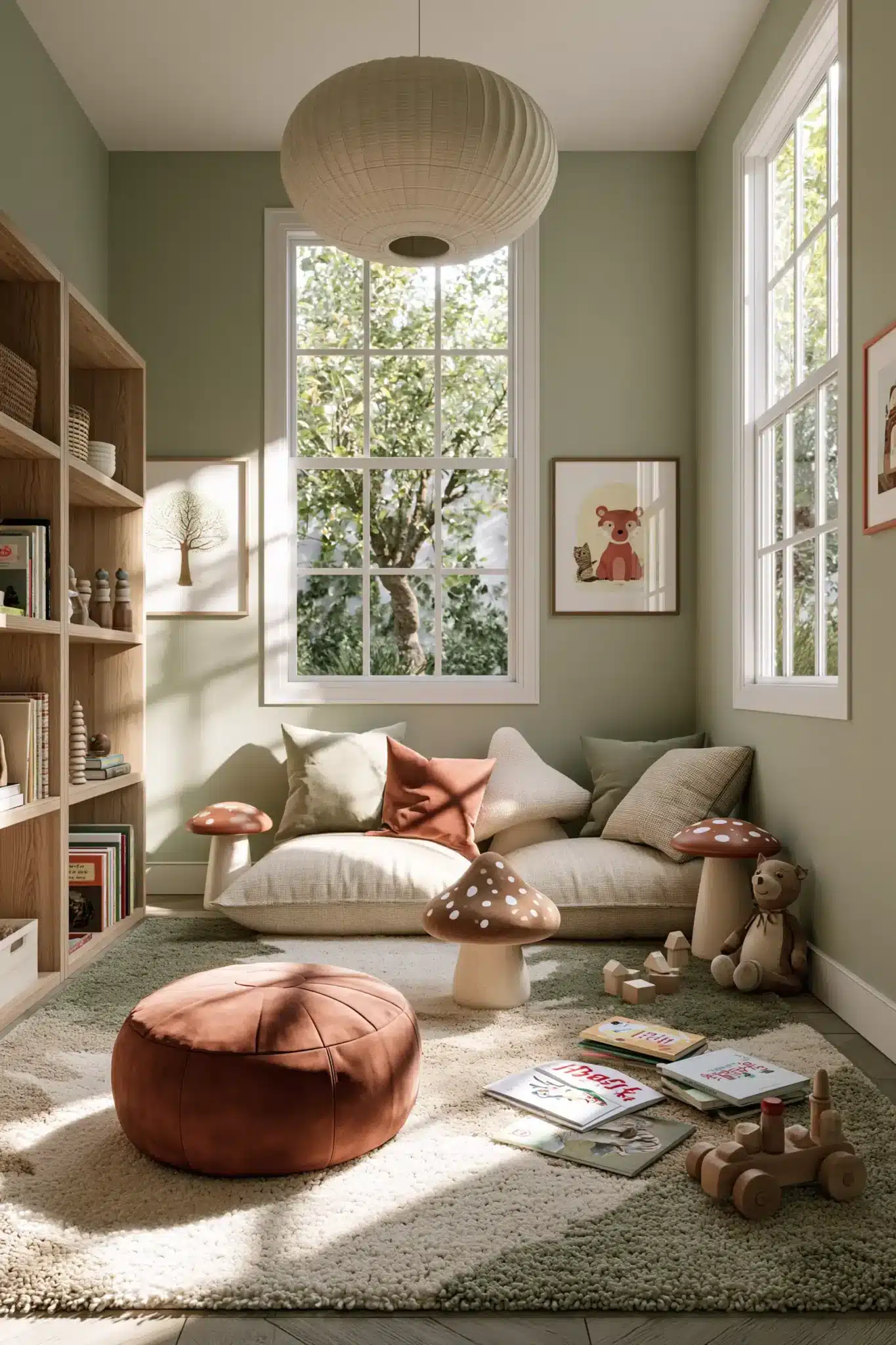
Bring the enchanted woods inside with forest shades, animal art, wooden accents, and soft furnishings. No elaborate decor required.
Keep big furniture neutral so themed bits swap easily as they grow, and add a storytelling spot. Baskets and low shelves store the gear without breaking the spell.
Save this article
Enter your email and we’ll send it straight to your inbox.
16. Graphic Shapes Modernize Playrooms
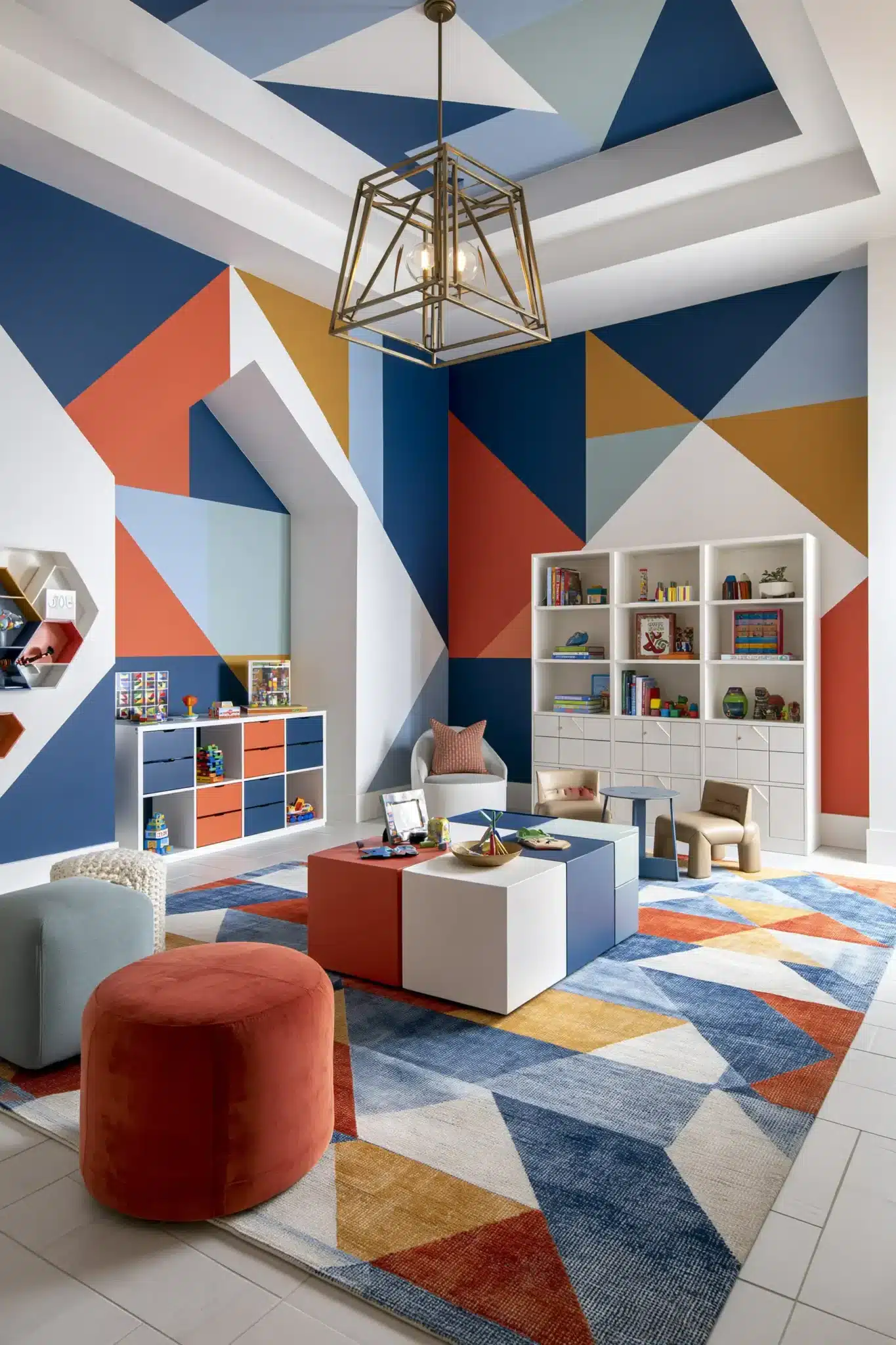
Bold geometric shapes and patterns inject modern energy. Patterned rugs, wall decals, storage cubes, or one statement wall — paired with simple furniture to stay clean.
Geometric accents even split activity zones without physical walls. Park toys in attractive storage so the patterns stay the star.
17. Hidden Nooks Become Adventures
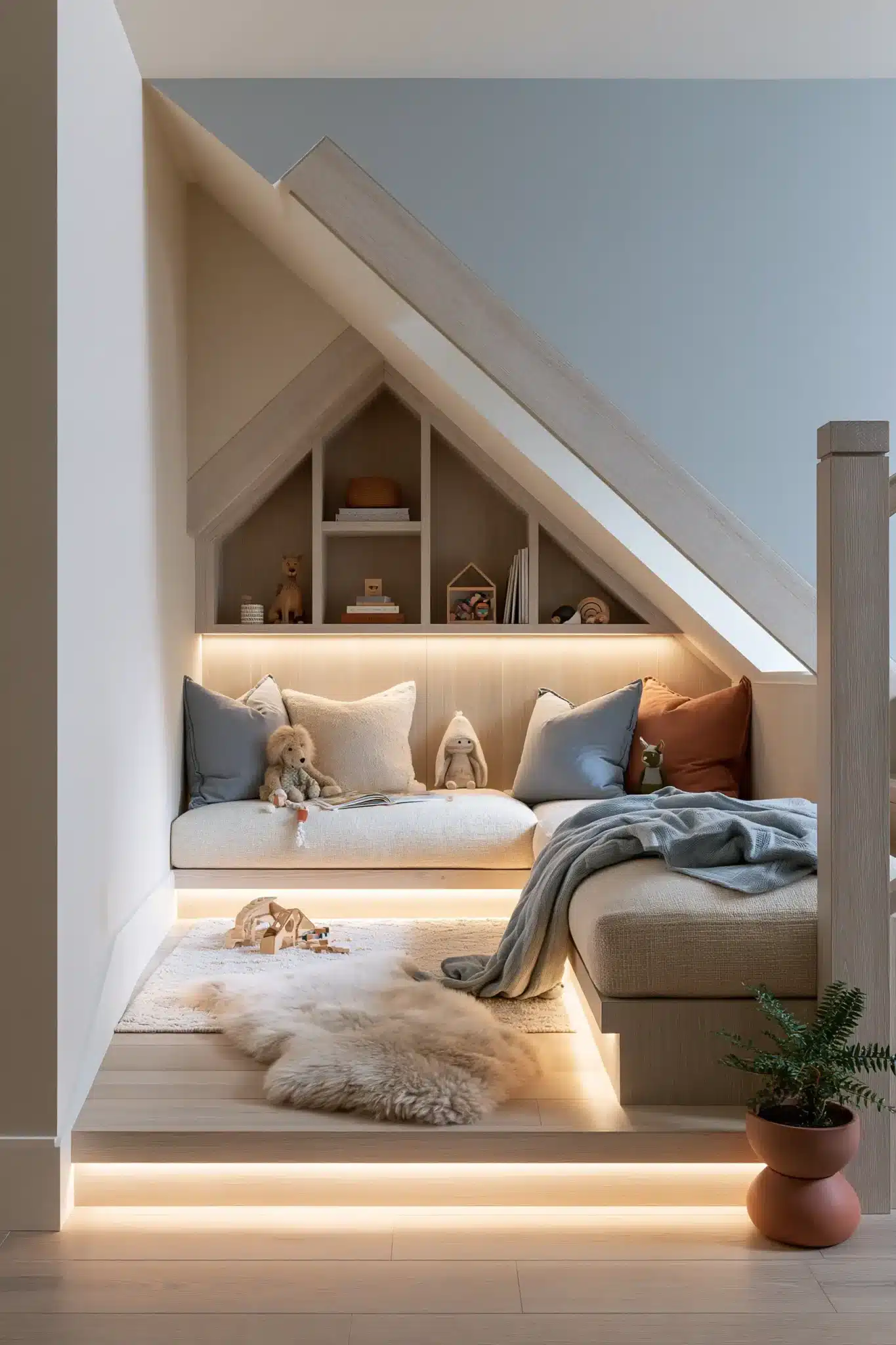
That dead space under the stairs? Prime real estate. Flooring, compact storage, playful lighting, and a few details turn it into a hideaway they’ll fight over.
The enclosed shape already feels private — perfect for pretend play and reading. Low, simple furnishings keep it cozy, not cramped. A clever hack for homes with no spare room.
18. Activity Walls Save Space
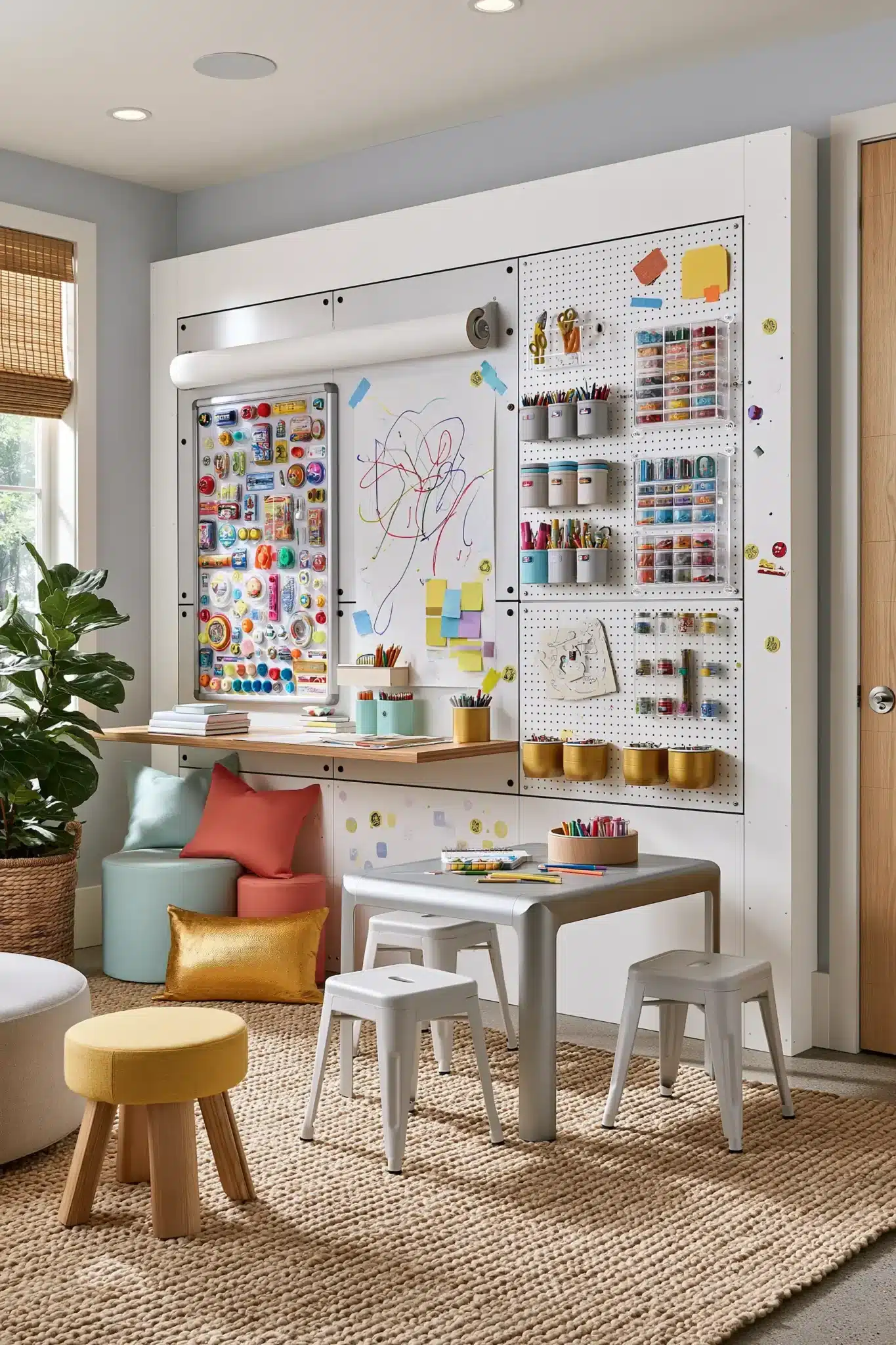
Your walls can do more than hold art. A chalkboard, magnetic board, paper roll, or craft organizer gives kids a place to draw and experiment — no bulky furniture needed.
Slim shelving or hanging containers keep supplies in reach. Narrow playrooms especially win when you protect every inch of floor.
19. Natural Light Expands Rooms
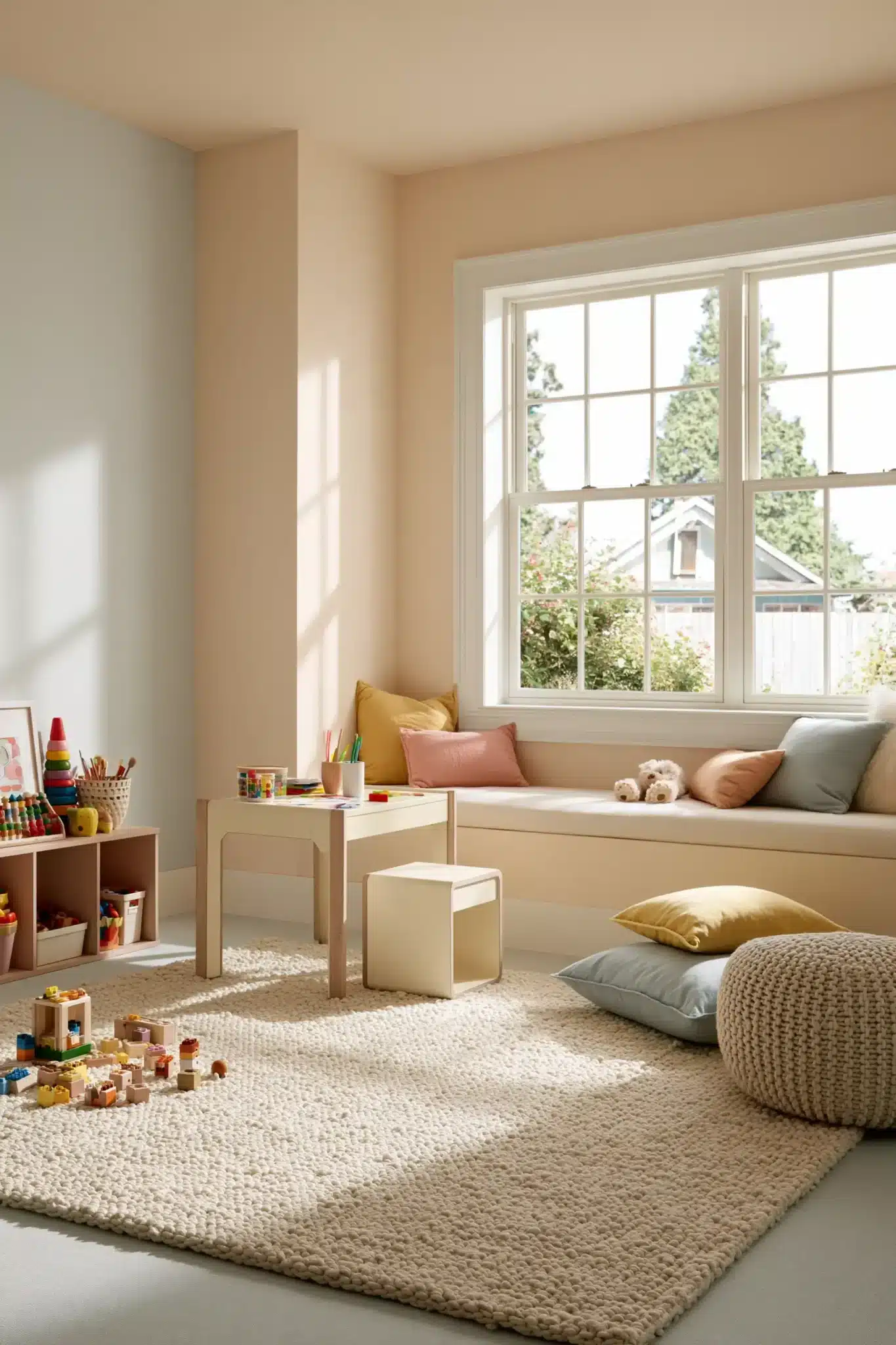
Sunlight is free square footage. Place activities near windows, skip tall storage that blocks light, and keep walls light so the room feels bigger.
The airy backdrop is perfect for reading, crafts, and building. Finish with cheerful textiles and a few colorful accessories for just enough playfulness.
20. Custom Storage Changes Everything
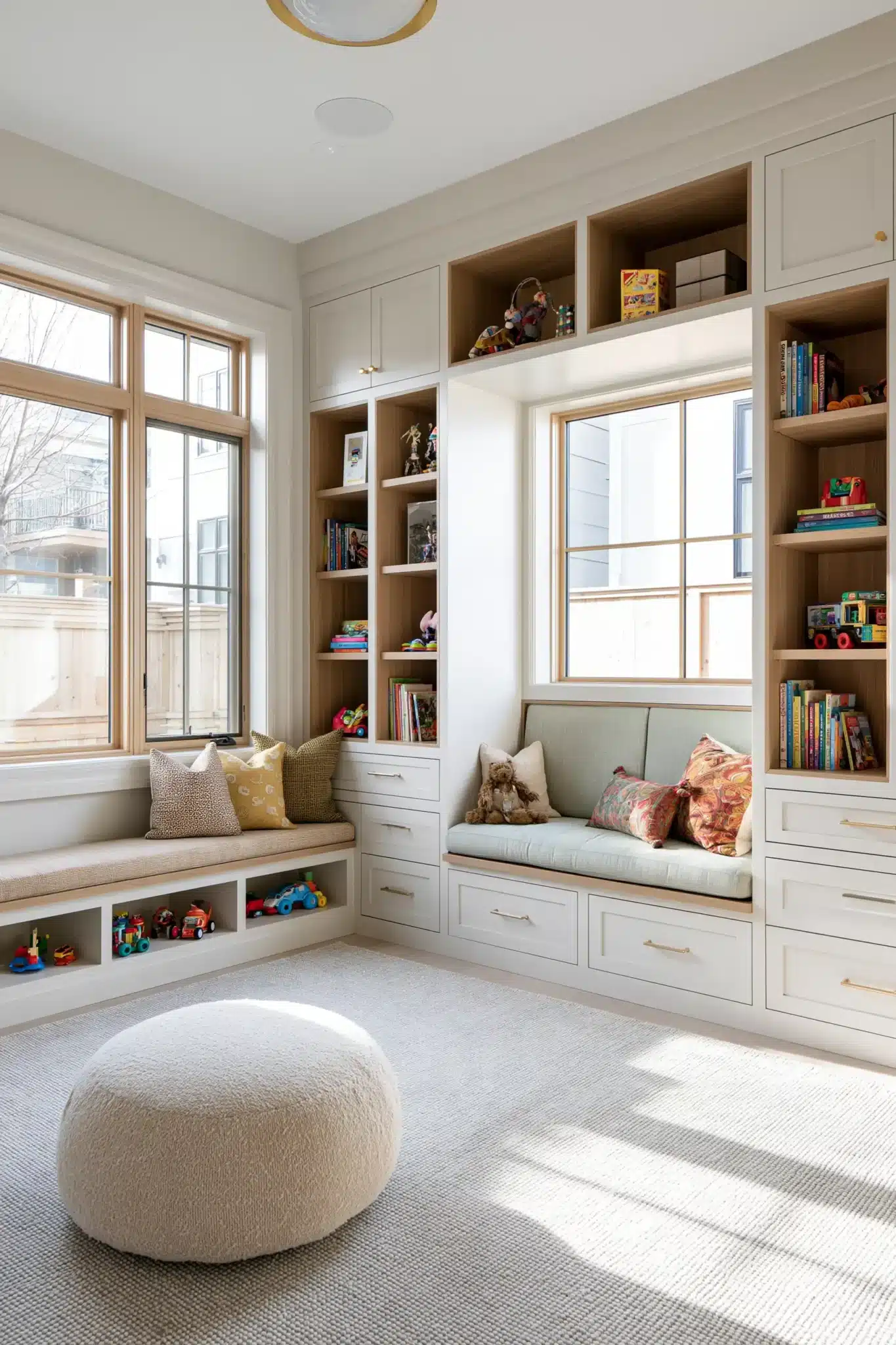
Built-ins make every wall work harder. Benches, shelves, drawers, and cubbies organize everything, and a cushioned seat doubles as a reading nook.
Mix compartment sizes so a book and a big toy each get a home. Freestanding furniture stays out, floor stays open.
21. Cozy Cottage Details Delight
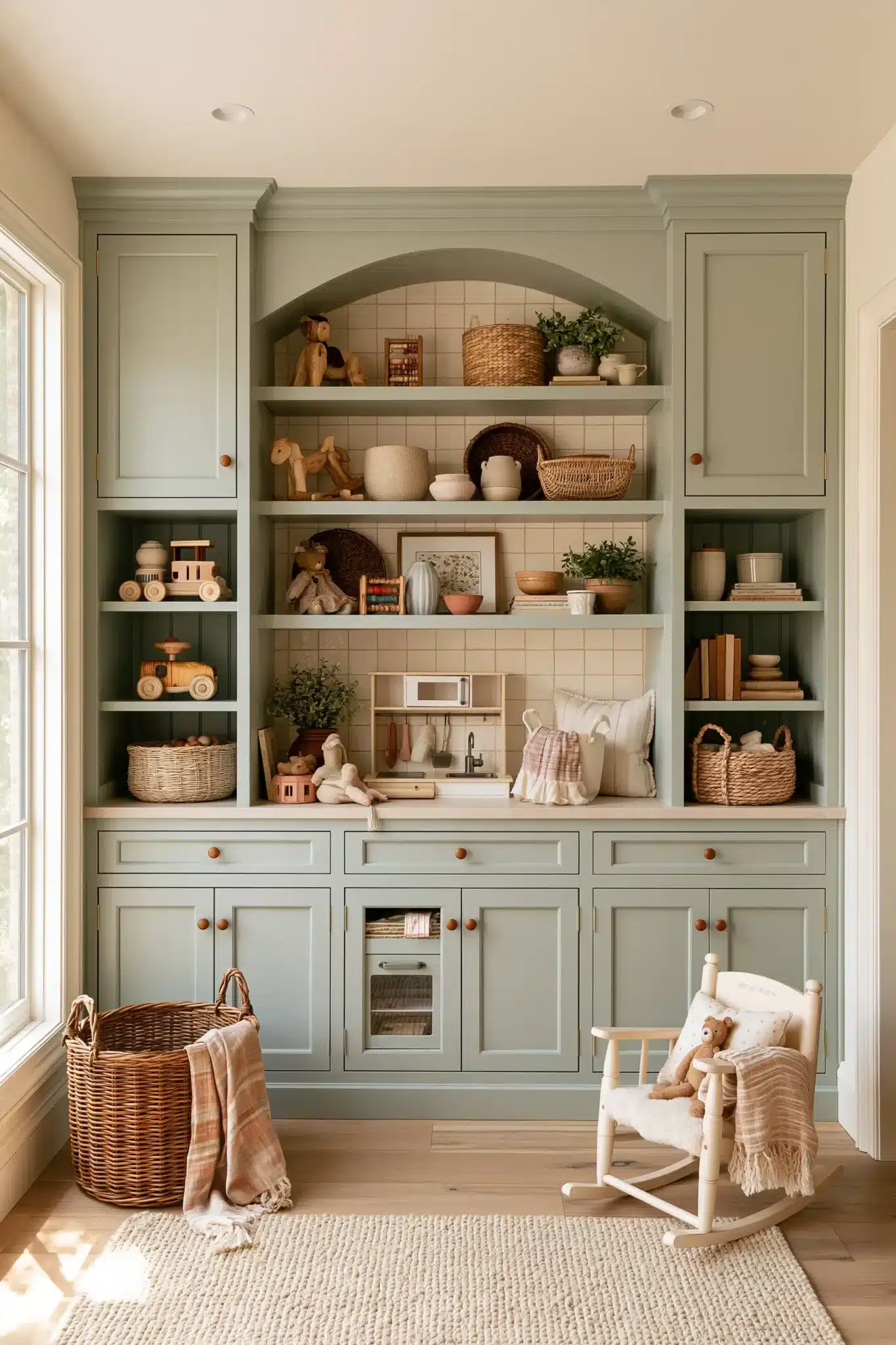
Soft shades, simple wood furniture, traditional baskets, and cozy textiles give cottage charm without going full theme park.
Add a little reading corner or pretend kitchen to match the mood. Pick decor that also works — so the room stays easy to live in and clean.
22. Mini Worlds Encourage Pretending
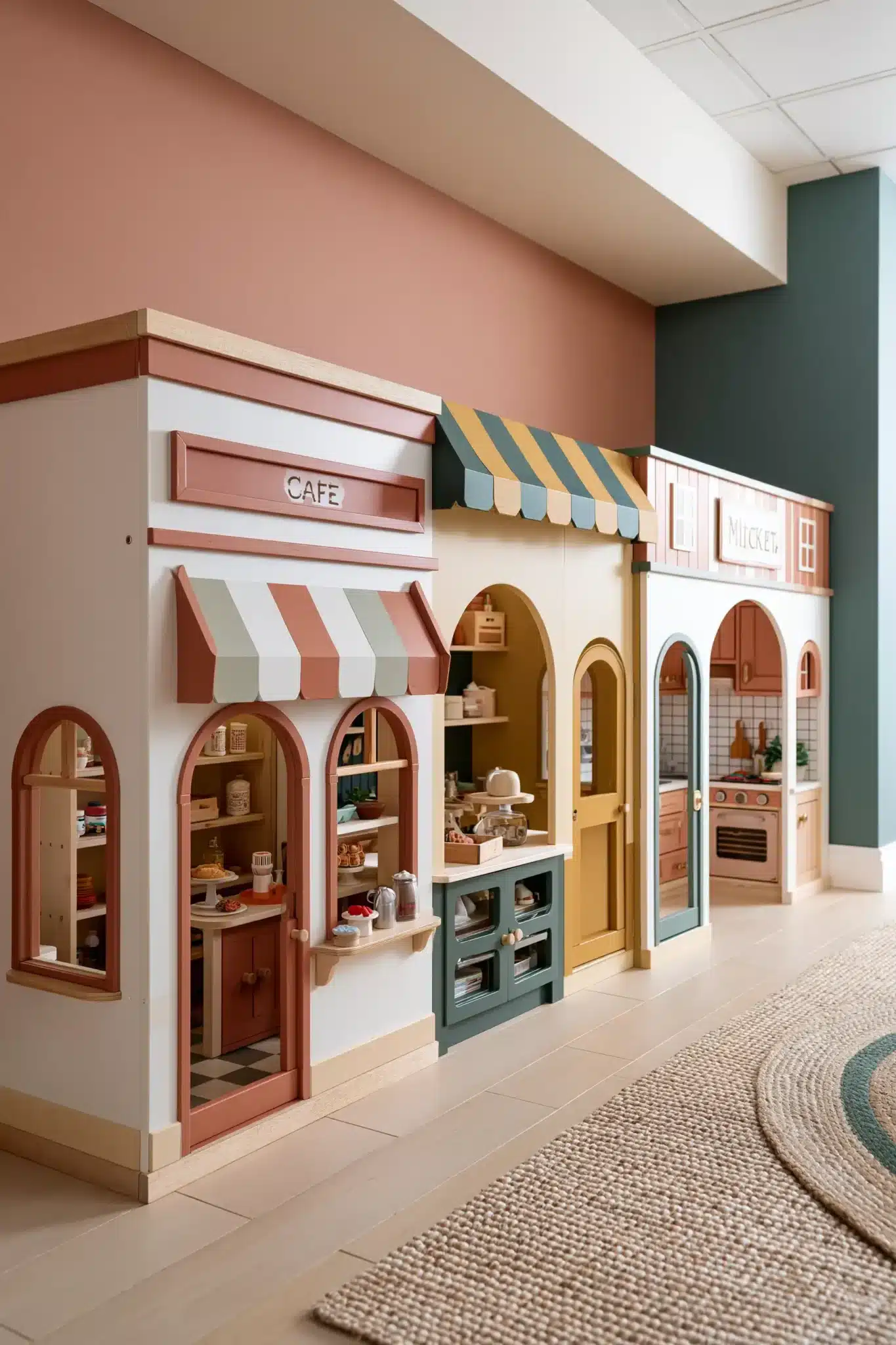
Build tiny worlds: a market, kitchen, workshop, café, or dress-up corner. Baskets, shelves, and wall details define each zone without oversized furniture.
Several pretend spots fit one compact room when you design tight. Swap props now and then so the stories stay fresh.
23. Gentle Sensory Spaces Soothe
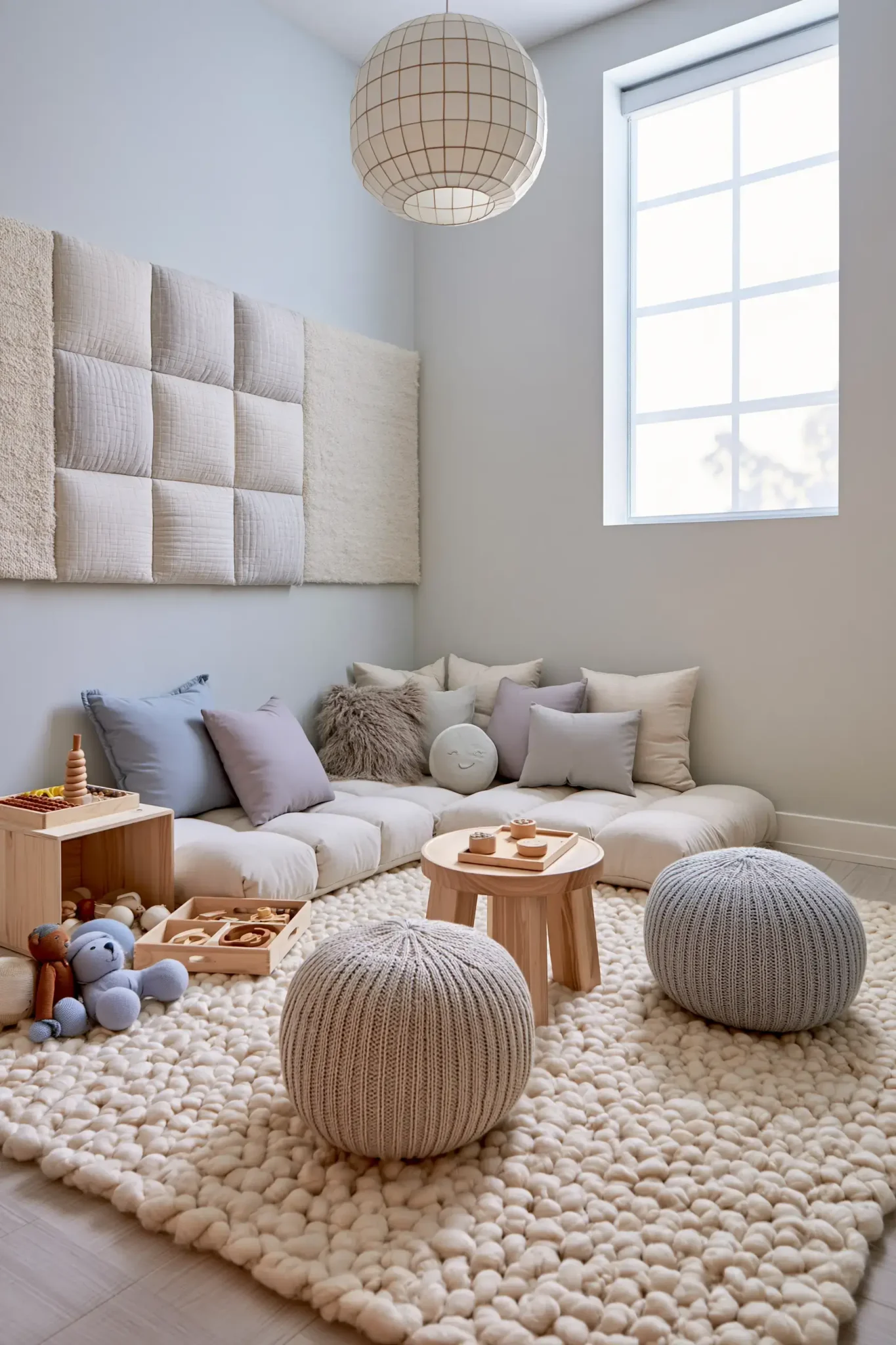
A sensory zone lets kids explore textures, sound, and movement at their own pace. Soft flooring, tactile toys, comfy seating, and a simple layout keep it inviting, not overwhelming.
Store extras behind closed doors so the room stays visually calm between sessions. Adapt it to what your family actually enjoys.
24. Favorite Toys Become Decor
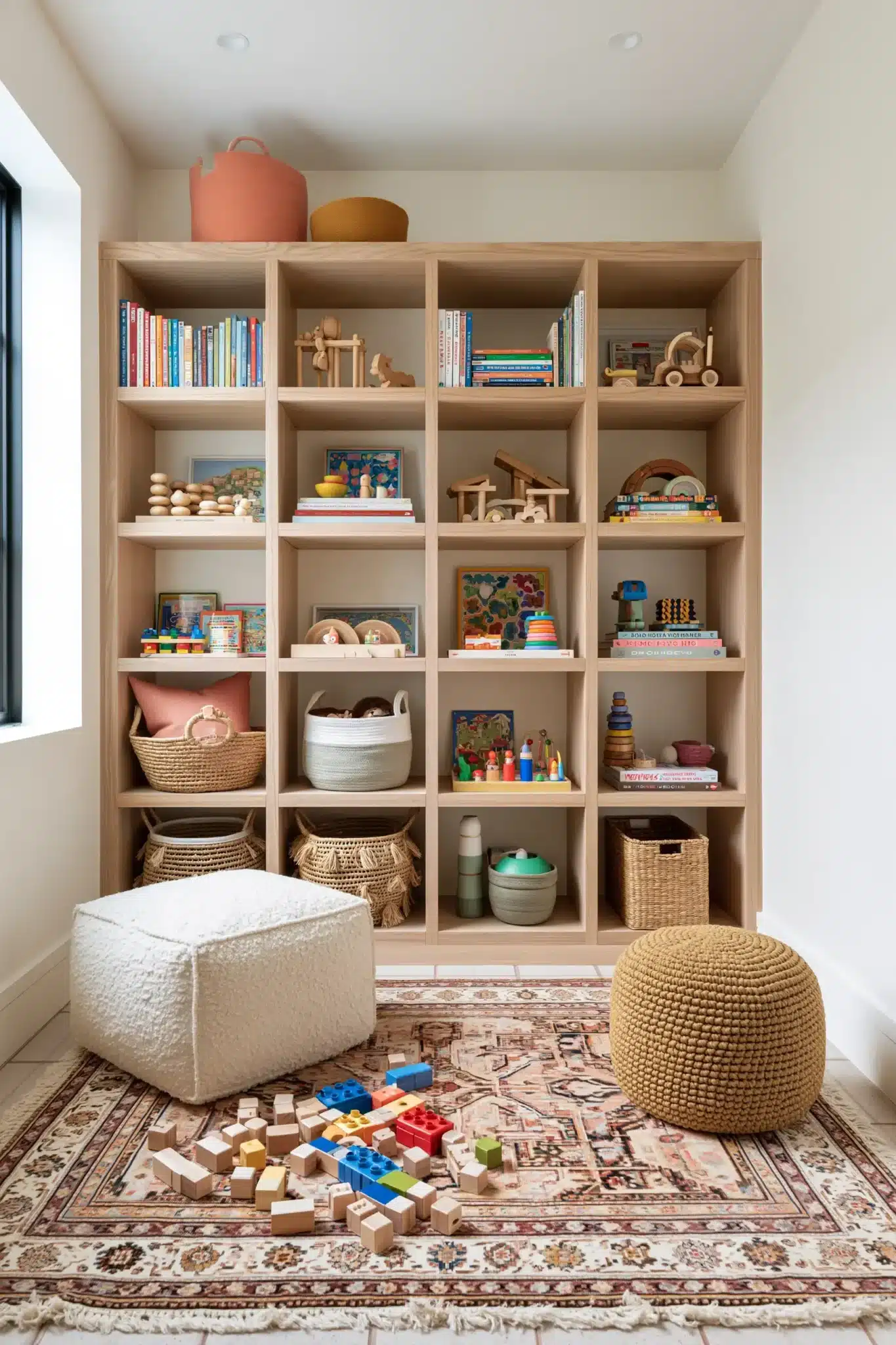
Stop hiding everything. Display favorite toys, books, and colorful objects on open shelving grouped by type — easier for kids to find and return.
Pair open shelves with baskets for the small stuff that shouldn’t be seen. Cheerful, not cluttered. Display storage is decor with a job.
25. Relaxed Boho Layers Charm
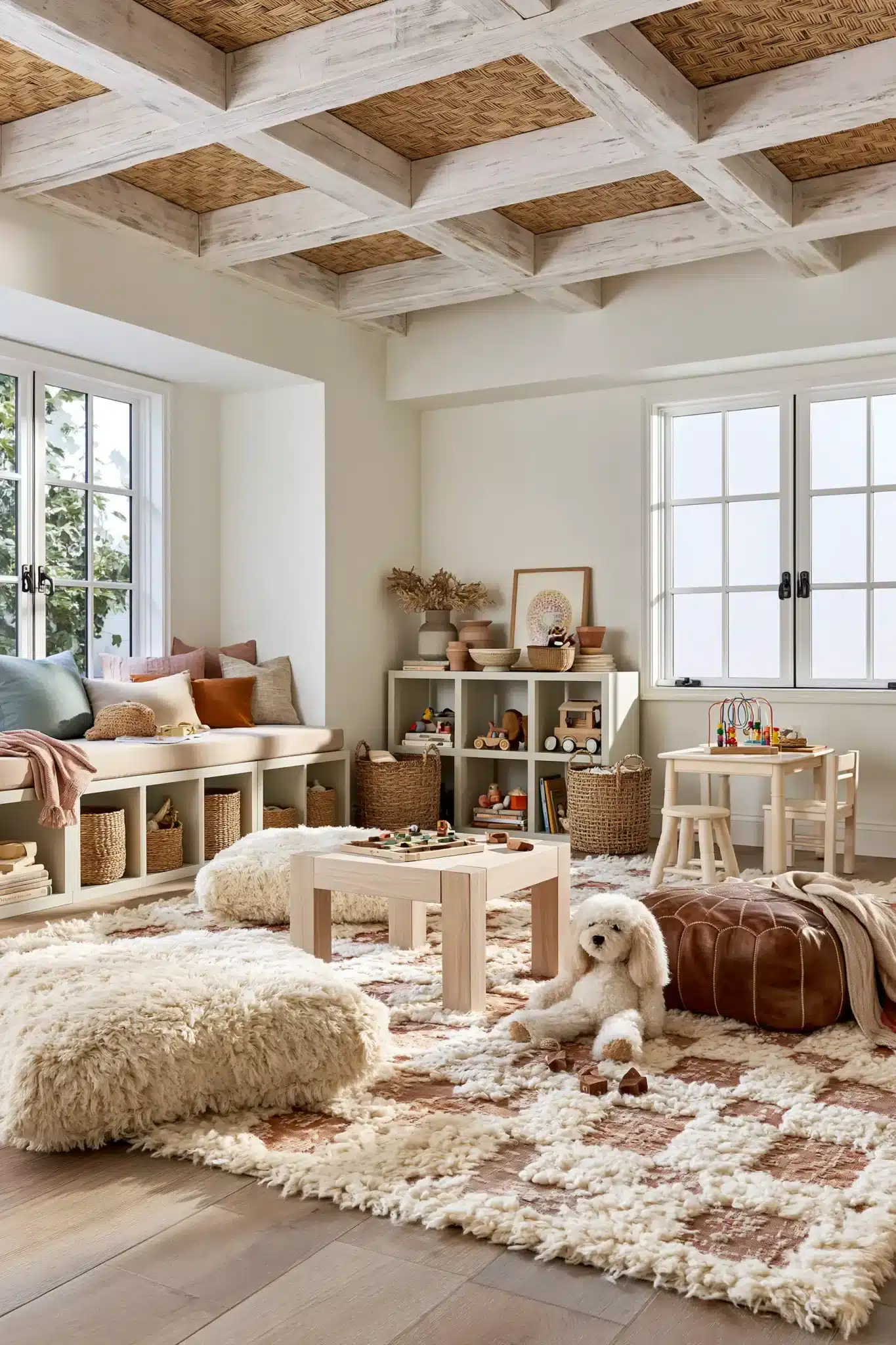
Layer a plush rug, floor cushions, warm wood, woven storage, and colorful accents for that easy boho feel. Low furnishings keep it roomy and toddler-friendly.
Add books, art, and handmade touches for soul. Just balance the layers with real storage so busy days don’t bury you.
26. Story Corners Welcome Readers
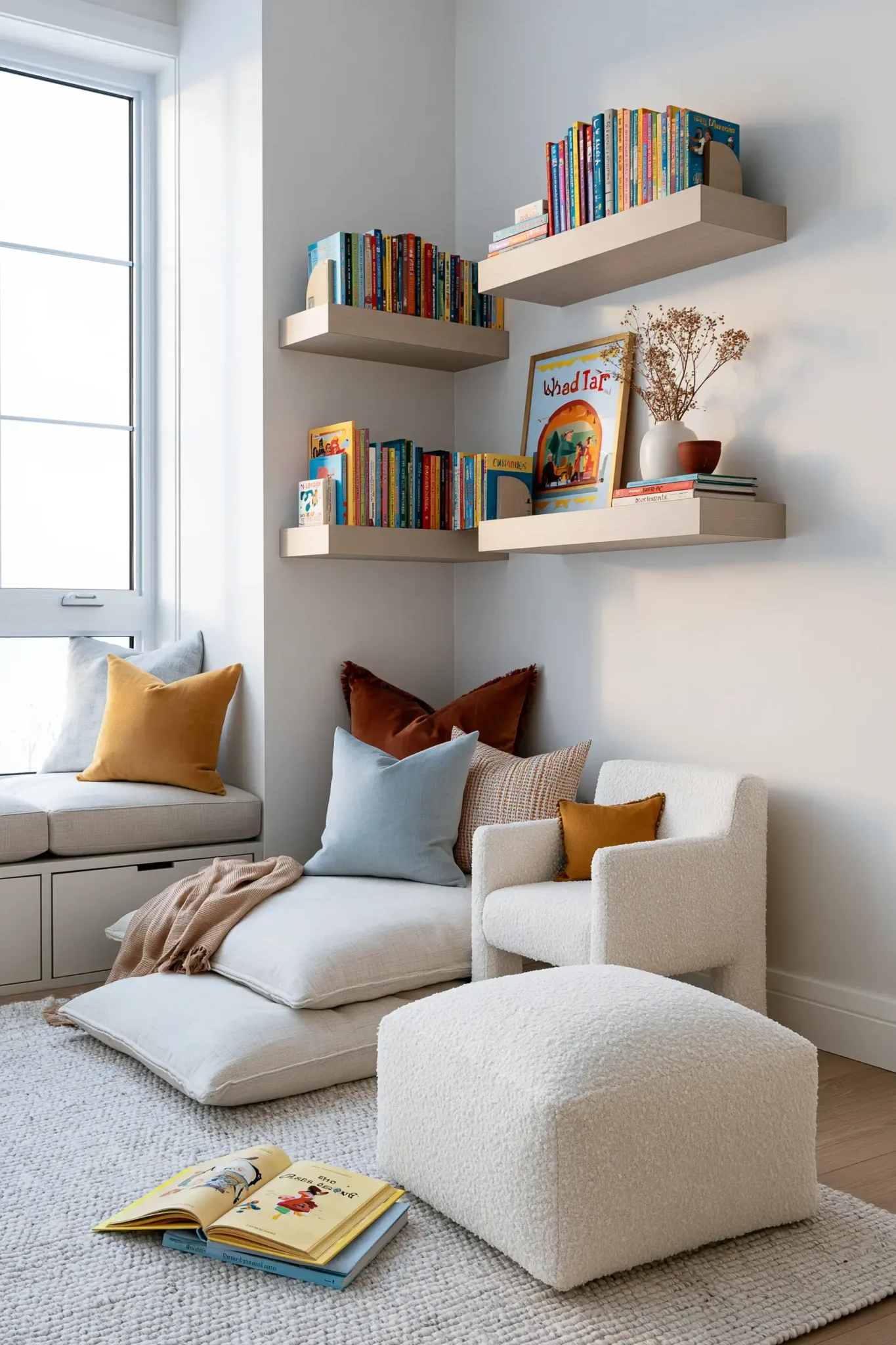
Make storytime an event with a reading nook built around their favorite books. Floor cushions, a small chair, forward-facing book storage, and soft light do it.
Books at kid height turn ‘pick the next story’ into part of the fun. A dedicated corner invites calm without stealing active-play space. Rotate titles to keep interest alive.
27. Adaptable Furniture Creates Flexibility
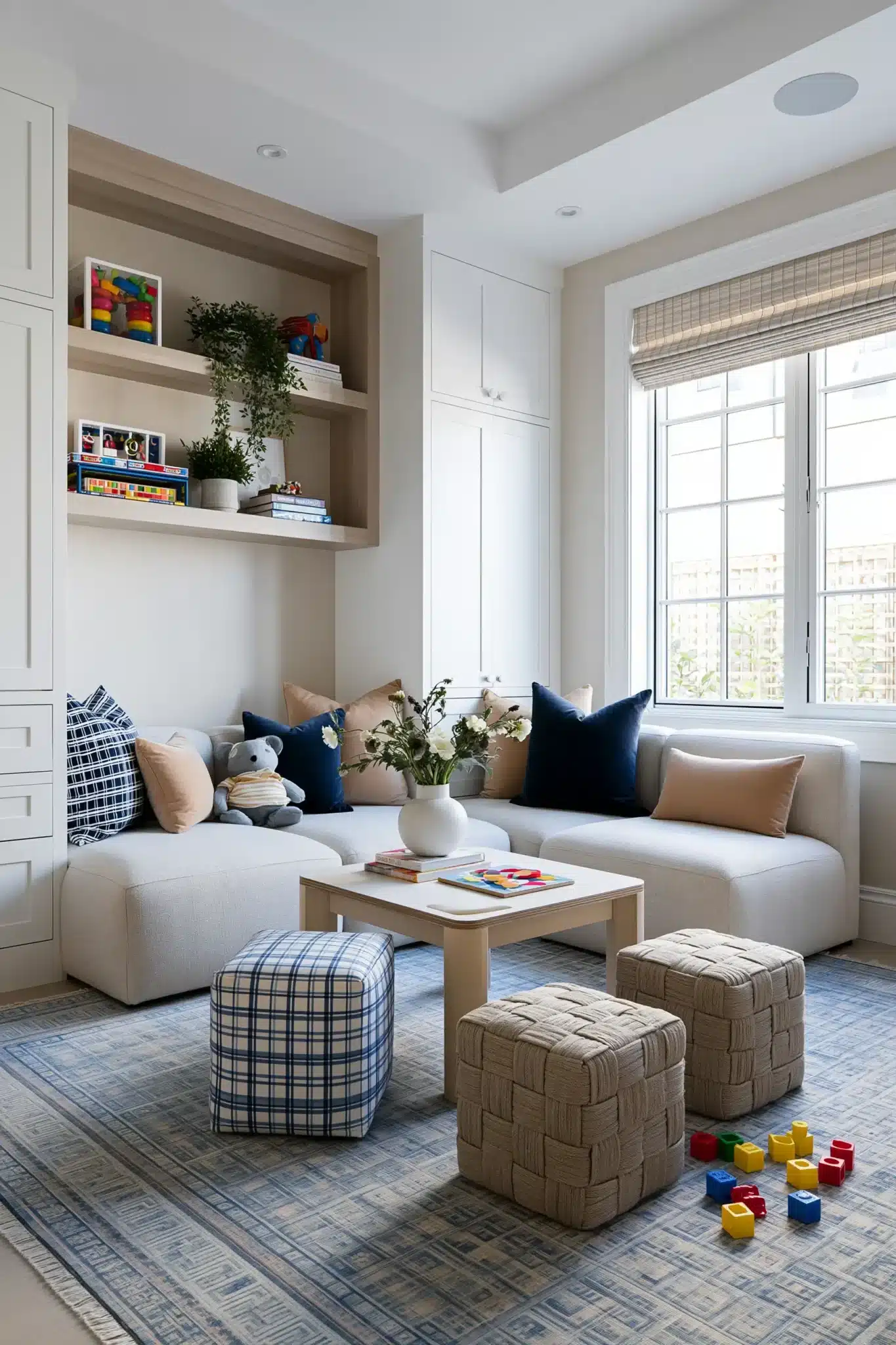
One room, many jobs. Movable seating, multipurpose tables, stackable storage, and lightweight pieces let the space flip from games to crafts to family time.
Apartments and multi-use rooms win big here. Coordinated storage packs toys away fast when the adults need the room back. If your playroom moonlights as a dining spot, our round table dining room ideas make the switch painless.
28. Magical Details Fuel Fantasies
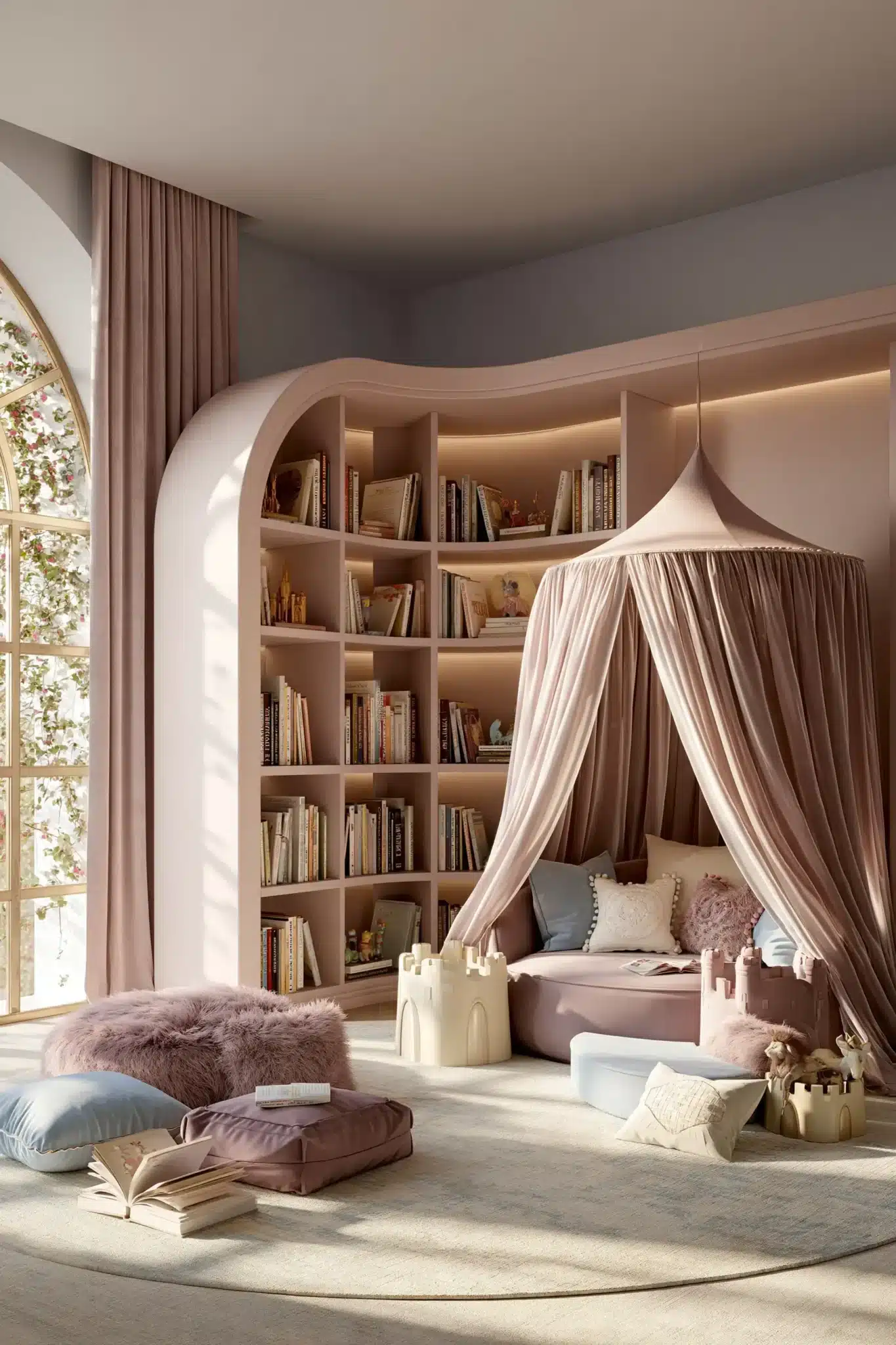
Turn an ordinary box of a room into an escape with fairytale details: dreamy colors, whimsical shapes, soft fabrics, storybook art. A cozy floor area becomes castles and imaginary worlds.
Keep storage simple so toys tidy up fast and the magic stays. Limited square footage feels surprisingly enchanted — no renovation required.
29. Organized Play Looks Beautiful
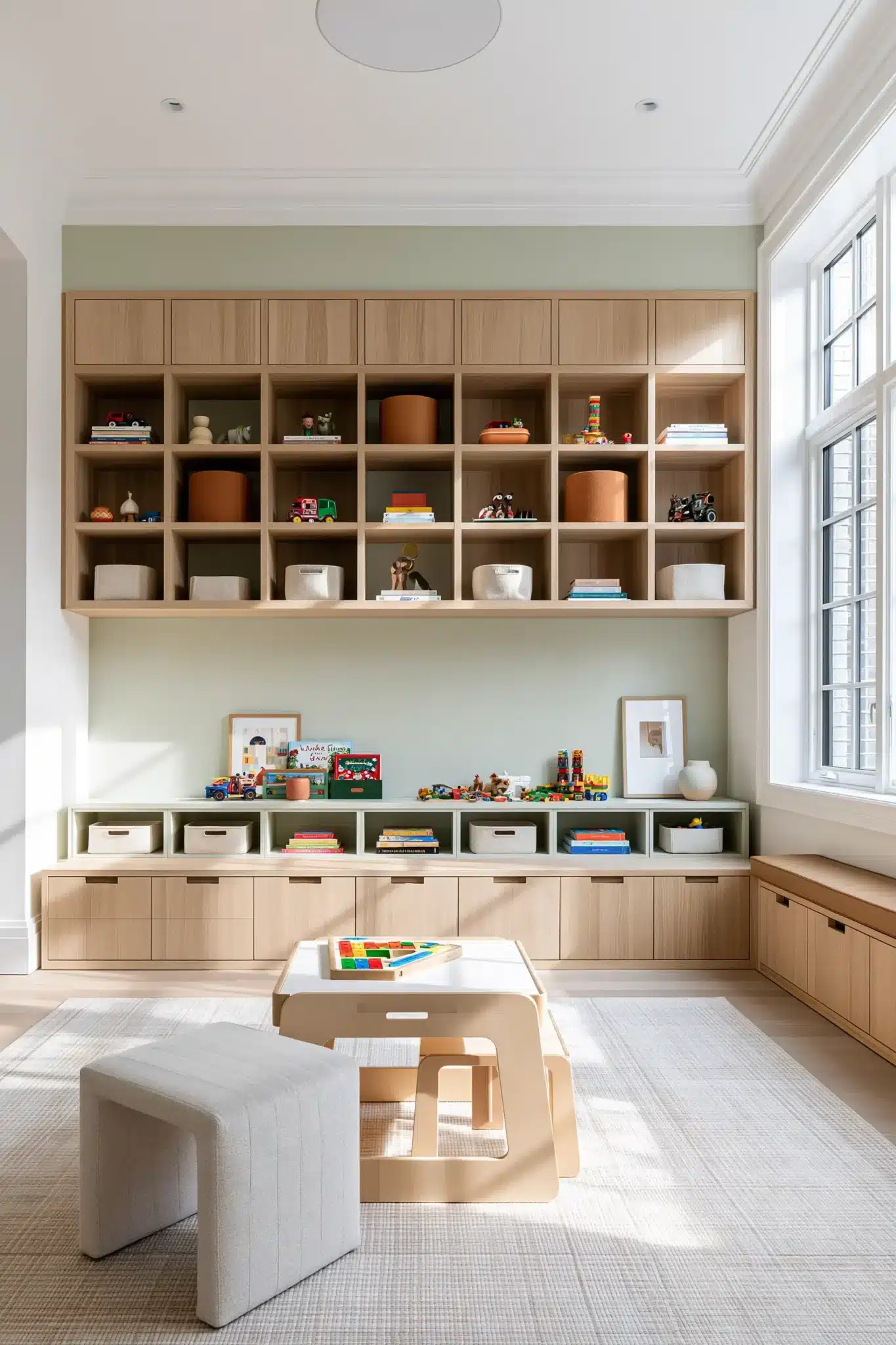
Style and function can share a room. Start with streamlined storage that controls clutter, then build around a simple palette, a comfy rug, and modern furniture kids still love.
Pick storage that outlasts the playroom years. Open cubbies for daily favorites, concealed bins for the small stuff. Looks polished, works hard.
Wrapping It Up
So there it is — 29 ways to make a ‘too small’ room feel like the best room in the house. Grab two or three ideas that fit your space and your kid, then riff from there. No renovation required, just a plan and a little nerve. 😉
For more room-by-room inspiration, browse our home decor archive and keep the ideas flowing.
Save this article
We’ll email you the link so you can find it again later.