

As we transition out of the vibrant holiday season, my thoughts turn to how I can cultivate a comfortable home atmosphere that embodies a tranquil and inviting winter aesthetic. I am keenly drawn to rustic style decor for its ability to create a cozy retreat that is at once restful and beautiful. There’s an undeniable charm in the rugged allure of interior rustic designs, with their warm textiles, distressed wood, and touches of nature seamlessly coming together to fashion a space where I feel utterly at peace.
Rustic decor has the unique capacity to simplify a space, reduce clutter and provide an escape from the bustle of daily life. In my own home, I look to curated spaces like those at lizmarieblog.com for inspiration, admiring how a navy blue and gold bathroom can exude elegance with complementary rustic accessories.
The true essence of rustic decor lies in the handpicked and homemade, from charming baskets perched above my television to the maroon throw pillows that invite a snug, laid-back vibe. It’s these personalized touches that truly help encase the sanctuary of home in the arms of charming designs.
Key Takeaways
- Transitioning into winter with rustic decor simplifies and warms up your living space.
- Key elements like homemade decor and seasonal accents contribute to a rustic atmosphere.
- Neutral palettes of rustic design ensure a calming environment, essential for a cozy retreat.
- Rustic style decor accentuates a connection to nature, uplifting the spirit of the home.
- Thoughtfully chosen rustic accessories are paramount in achieving a harmonious, inviting home.
Understanding Rustic Style and Its Origins
When I ponder the essence of rustic design style, I’m immediately drawn to its raw, natural charm, a trend that reveres the unrefined yet comforting aspects of nature. The unique beauty of what rustic design embodies is a story of time-honored traditions and a deep connection with the natural world, embracing rustic materials, and the inherent flaws and textures they present.
Exploring the Roots of Rustic Aesthetics
The roots of what is rustic design can be traced back to a diverse range of cultural interpretations, yet a core philosophy runs deep through them all. It is a celebration of the imperfection found in nature, much like the Japanese concept of wabi-sabi. This philosophy finds harmony in asymmetry, and serenity in the weathering and aging that rustic materials undergo.
Rustic Style Across Different Cultures
As I’ve observed, the principles of rustic interior design transcend geographic boundaries, seamlessly infiltrating various cultural decors. From a traditional log cabin nestled in the dense woods to an urban loft that celebrates exposed brick and reclaimed wood, rustic style is exceptionally adaptable. The crux lies in highlighting the natural imperfections — whether it’s the rugged lines in wooden beams or the irregularities in hand-hewn stonework. What does rustic look like in these settings? It embodies authenticity, with each piece carrying a narrative through the visible history etched in its surface.
- Authentic and hand-crafted furnishings that tell a story
- Natural elements like wood, stone, and metal, all proudly displaying their raw beauty
- The subtle blend of functionality with timeless artistry, inherent in types of rustic interior design
The allure of rustic design is unpretentious, warm, and intensely personal, reflecting a lifestyle that cherishes the simplicity and unparalleled beauty of the natural world.
Defining the Rustic Look: What Does Rustic Style Include?
The essence of the rustic look comes to life through materials that are as close to their natural state as possible. I appreciate the rustic look meaning—it’s about celebrating the character found in natural imperfections. Imagine walking into a space that immediately feels like a rustic farmhouse, with its rugged wooden beams and stonework that has stood the test of time. That’s the charm I aim to encapsulate in my approach to rustic interior design.
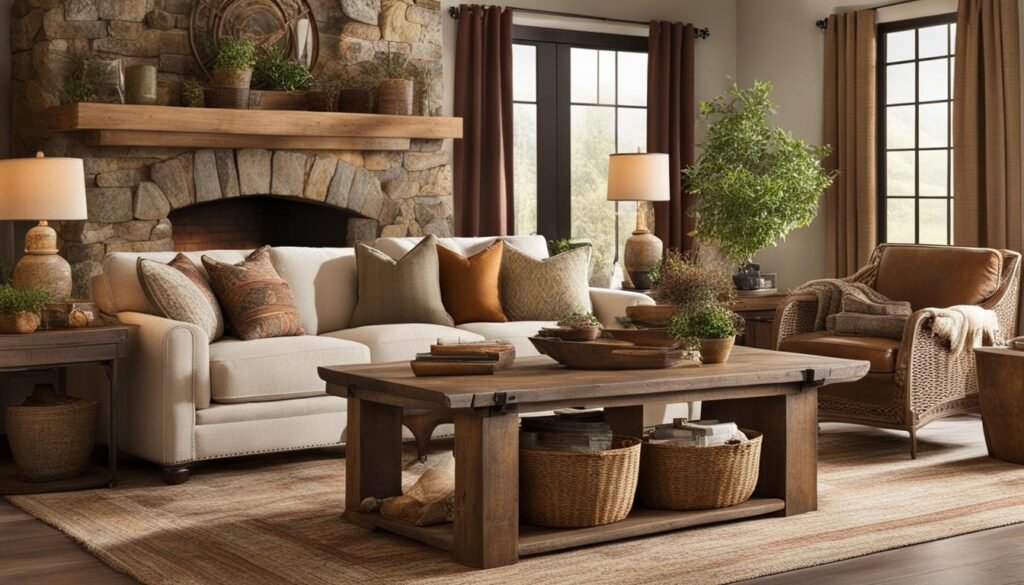
In my search to define what is rustic decor, I’ve found that it’s in the harmonious blend of rough textures and soft comfort. The distressed wooden furniture that tells a story, the natural stone accents grounding a room, and the soft, warm textiles that invite you to relax are staples of this aesthetic. Rustic chic is more than a style; it’s a narrative woven through the textures and colors of the space.
- Handcrafted wooden furniture that shows the marks of a craftsman’s chisel
- Stone countertops and fireplace surrounds, etched by time and the elements
- Rustic chic textiles, such as hand-woven throws and rugs
- Decor that honors the past, like vintage farm equipment repurposed into art
- Reclaimed objects that are given a second life, adding unique character to contemporary settings
Amidst this, there’s a special kind of elegance in merging rustic chic elements with modern design. This blend ensures that my living space is not only visually rich but also functional and current. This is the crux of rustic interior design; it respects the craftsmanship of the past while embracing the conveniences of the present. My devotion to this design philosophy means every corner of my home is infused with a story, character, and a warm invitation to live and love within its walls.
Key Elements of Rustic Style Decor
My journey through the rustic design landscape has taught me that the soul of this style lies in its grounding elements. When I step into a room adorned with rustic decor, it’s the materials that whisper tales of the Earth; it’s the authenticity that echoes through time. To truly honor the spirit of rustic interior design, one must embrace the core components that define its allure.
Natural Materials and Textures
It’s the tactile experience of rustic materials that set the cornerstone for this aesthetic. I’ve found that the victory of rustic interior design lies in the use of natural materials, each with their own story to tell. The rugged edges of reclaimed wood, the cold, unyielding surface of wrought iron, and the gentle embrace of natural fibers join hands to create an orchestra of textures.
- Wood: From sturdy oak beams overhead to pine planks beneath my feet, wood is the quintessential element in any rustic setting.
- Metal: Wrought iron hardware and copper accents add a touch of industrial strength, contrasting beautifully against the softness of wooden textures.
- Natural Fibers: Wool and linen, featured in throws or rugs, provide layers of comfort and warmth.
These materials do not just craft a rustic interior; they infuse life into the design, invigorating it with the essence of the outdoors.
Authenticity and Timelessness
The true beauty of rustic decor blossoms with time, much like a well-loved leather journal growing more captivating with each passing year. Authentic rustic decor celebrates the marks that narrate a journey, appreciating the scars as much as the pristine. In this design paradigm, timelessness is a revered concept.
- Handcrafted Artistry: Artisanal creations such as woven blankets and carved wooden furniture serve as a testament to craftsmanship.
- Aged Elegance: Items that wear their years gracefully, displaying a patina earned through time, are the crowning jewels of this design approach.
Incorporating elements that age gracefully ensures that my home reflects an enduring rustic charm—a living space that is both aesthetically pleasing and steeped in history.
The Role of Color in Rustic Style Interiors
When I weave the narrative of a rustic theme house, I not only construct a visual scene filled with tactile materials but also immerse my senses in the hues that evoke a sense of the pastoral idyll. The colors I choose paint a picture of farmhouse style living—an essay in subtlety and balance, revealing stories of the land and its simple grace.
Earth Tones and Neutral Palettes
In my approach to creating a country chic ambience, I embrace a palette inspired by the natural world. The earth tones of rich soil, the beiges of dry grasses, and the creams of gentle sheep wool are more than just colors; they are the essence of rustic life translated into visual form. This palette resonates with the textures of rustic materials, providing a soothing canvas that highlights, rather than distracts from, the vintage style elements. In my hands, these colors become an ode to pastoral tranquility.
Accentuating with Color and Texture
I find that introducing shabby chic accents serves to punctuate the calm with whispers of color. These are the flourishes—the gentle blush of a faded rose print, or the time-softened blue of worn denim—that ensure my space retains a sense of personality while respecting its serene roots.
The textures in this rustic symphony—burlap, wool, linen—reveal themselves with a gentle insistence, each one contributing a note of depth and richness to the broader harmony of the design. They are, in my view, the touchable reflections of nature’s diversity. To bring together these elements in a singular orchestration of shabby chic charm requires a deliberate, yet intuitive hand; a hand that I guide to ensure the outcome is cohesive and undeniably rustic.
- Untreated woods that whisper tales from the forest
- Aged metals that echo the clang of the blacksmith’s anvil
- Organic textiles that remember the fields they once adorned
As I layer these elements, I trust in their innate compatibility, for they each speak the language of the rustic idyll—a dialect of design that honors the authenticity and character bestowed by time.
Furnishing Your Home with Rustic Charm
When I think about bringing a sense of the great outdoors into my living spaces, filling them with rustic furniture and decor tops my list. The philosophy behind this style hinges on harnessing the raw and timeless beauty of nature, transforming spaces into quaint havens of tranquility and warmth. Opting for pieces that embody the spirit of handcrafted sophistication is like curating a visual narrative for your home, one that speaks of enduring grace and an earthy palette.
Choosing Rustic Furniture
In my pursuit of the ideal rustic chic ensemble, I gravitate towards items made from reclaimed or salvaged wood. These pieces aren’t just furniture; they are tapestries of stories past, often with rugged textures that invite touch and stir contemplation. Their imperfections are their charm, acting as visceral reminders of the natural world’s prowess and history woven into our everyday lives.
Rustic Accessories and Accents
My quest for authenticity doesn’t stop at large furnishings. Rustic accessories and accents are the jewels that enhance the ensemble—think wrought iron candle holders, hand-woven tapestries, or pottery that carries the telltale signs of being fashioned by human hands. I particularly adore the incorporation of vintage style elements that add layers of intrigue and nostalgia to the canvas of my home decor. They act as time machines, aesthetically transporting one to different eras where craftsmanship was revered.
- Salvaged wood coffee tables lending an inviting texture to conversations
- Antique picture frames telling their own tales on mantelpieces
- Vintage rugs underfoot, grounding the present in the patina of the past
- Rusted metal fixtures reimagined as avant-garde art
Creating a Rustic Theme House: Room by Room Guide
I believe in the power of designing a home that truly reflects one’s passions and preferences. That’s why carving out a rustic theme house resonates with my personal aesthetic. As I walk you through my home, room by room, you’ll see how the quintessential elements of the rustic house style come together to form a harmonious and authentic living space.
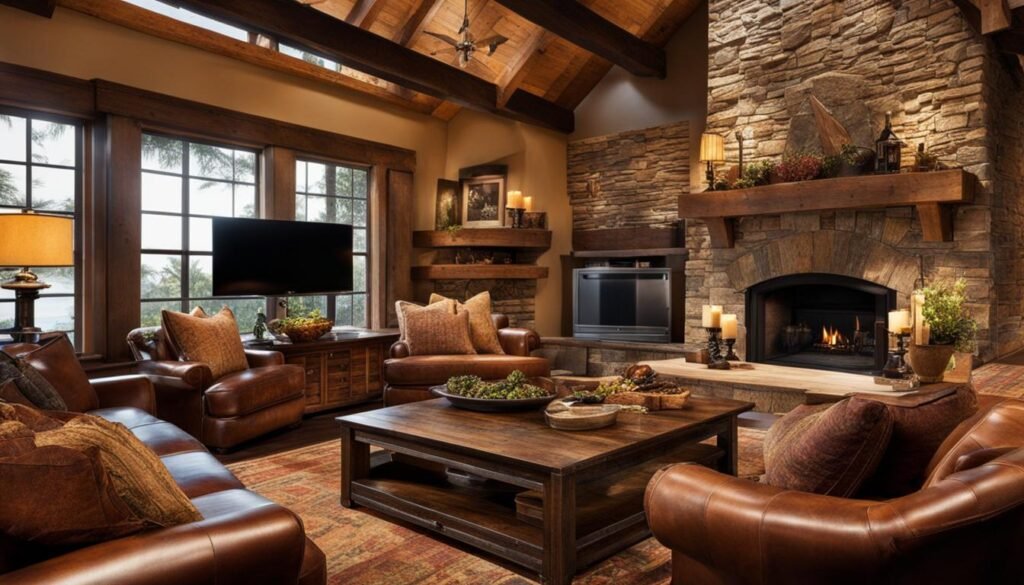
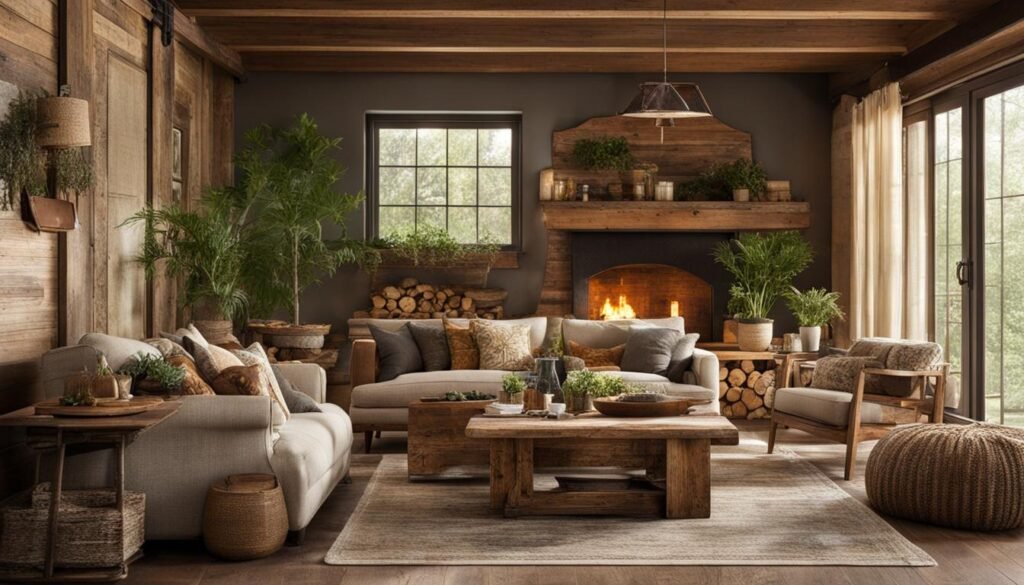
In the rustic living room, I invite warmth with a stone fireplace, serving both as a stunning focal point and a gather-round spot for chilly evenings. Flanking the fireplace, plush sofas upholstered in earthy tones and complete with chunky knit throw blankets invite relaxation. Central to this setup is a reclaimed wooden coffee table, rich with the history of its past life.
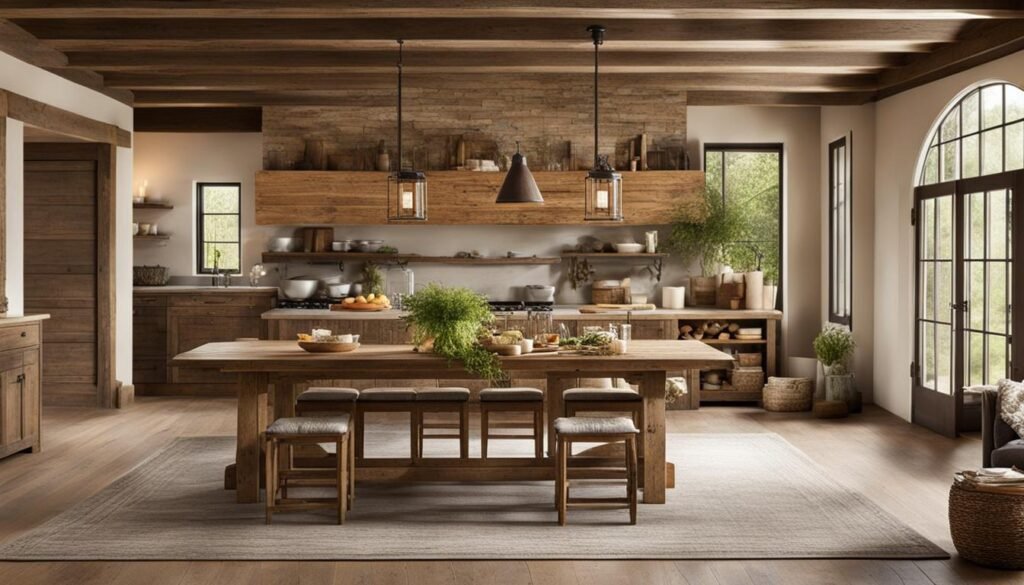
Adjacent to the living area is the heart of my home, the rustic kitchen. Here, cabinetry fashioned from weathered wood and topped with slate countertops echo the sturdy simplicity of a rustic farmhouse. A hefty, farmhouse table provides both a dining space and a spot for rolling out pastry dough or shucking summer corn.
Moving to the private quarters, the bedroom’s charm lies in a beautifully crafted four-poster bed, made of a dark, distressed wood that conjures images of a serene forest retreat. Layers of linen and wool in the bedding echo the textures found throughout nature, offering a tactile experience in harmony with a rustic aesthetic.
The bathroom doesn’t shy away from rustic touches either. For instance, a vanity crafted from natural wood is paired with matte, iron-finish fixtures and a freestanding tub, creating a spa-like atmosphere that embodies organic luxury.
- Comfortable, plush seating
- Wooden coffee tables
- Stone fireplaces
- Cabinetry made from reclaimed wood
- Rustic bed frames
- Layered, natural textiles
- Wood or stone bathroom vanities
My goal is to instill a sense of tranquility and earthiness within each room, ensuring that my home is simultaneously reflective of a rustic theme house and tailored to contemporary comforts. Whether enjoying the communal spaces or retiring to the intimate settings of bedrooms and baths, every corner of my rustic abode satisfies my longing for a simple, yet elegant homestead.
Maintaining the Aesthetic: Care for Rustic Materials
As someone deeply passionate about rustic materials and the timeless beauty they bring to any space, I’ve come to understand that the care for rustic design is as important as the design itself. Proper maintenance ensures that these materials age gracefully, preserving the sustainable rustic style that many of us cherish. The soul of authentic rustic decor lies within its ability to endure, echoing stories of the past while adapting to the present.
To maintain the natural appeal of wood, I recommend a routine of oiling or waxing. This not only conserves the wood’s luster but also safeguards it against the inevitable wear and tear of daily life. Similarly, metal elements need attention to prevent unwanted rust, all the while honoring the aesthetic’s rustic qualities. For textile pieces, regular cleaning is a must—treating the natural fibers with care, they continue to provide warmth and comfort in our living spaces.
- Inspect wood furniture seasonally and apply natural oil or wax as needed.
- Treat metal components with rust inhibitors and keep them dry to maintain their rustic charm.
- Use eco-friendly cleansers for textiles and follow the specific care instructions for each fabric type.
Embracing a sustainable rustic style goes beyond aesthetics; it extends to the conscientious practices applied in preserving these materials. Think of the environmental impact when sourcing and choose to refurbish rather than discard. This approach not only supports the environment but also reinforces the integrity and authenticity of the rustic pieces you cherish, ensuring they stand the test of time and continue to imbue your space with their inherent charm.
Combining Rustic Charm with Modern Amenities
As we explore the rich tapestry of design, a captivating trend emerges at the crossroads of heritage and innovation. In my quest to create spaces that resonate with history while accommodating contemporary conveniences, I have discovered the artful blend of rustic interior design with modern rustic sensibilities. This harmonious fusion fosters a cozy ambiance and ambience that celebrates the beauty of blending styles that, at first glance, may seem disparate.
Save this article
Enter your email and we'll send it straight to your inbox.
How to Blend Old and New for a Cozy Ambiance
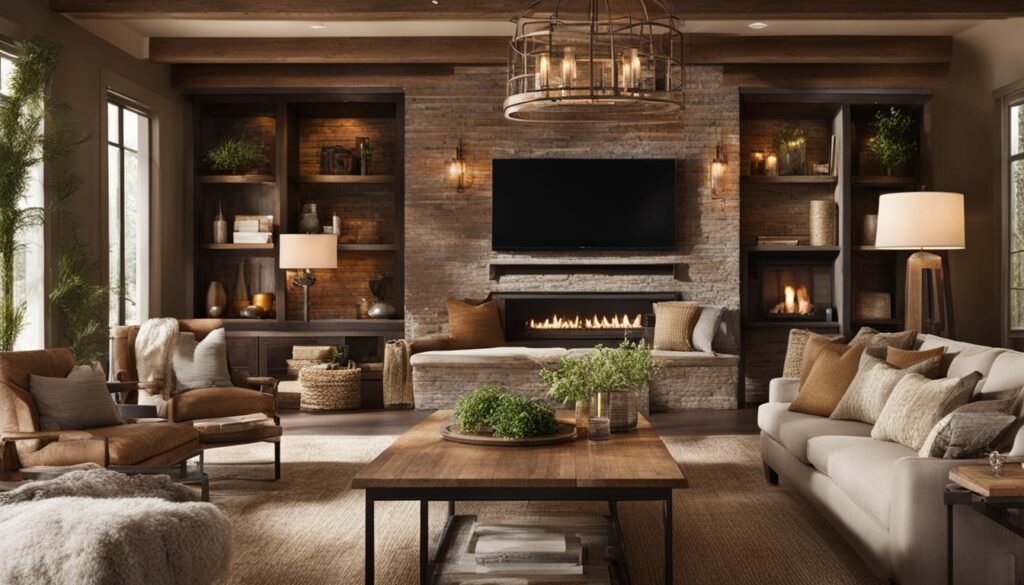
In this journey, the key lies in striking a delicate balance: retaining the genuine allure of rustic pieces while introducing sleek modern amenities. I find joy in juxtaposing an antique wooden console with a contemporary smart home system. The rustic chic aesthetic flows effortlessly as it bridges the past and present, ensuring each article not only serves a purpose but also tells a story.
Modern Rustic: A Fusion of Styles
The merger of natural elements with innovative design is what sets modern rustic style apart. I relish the challenge of selecting plush, textured fabrics to soften industrial accents or mixing reclaimed wood with glistening metals. This juxtaposition, when done judiciously, creates an eclectic yet cohesive feel within a home, honoring the authenticity of rustic roots while embracing the comfort and functionality of modern living.
- Emphasizing natural textures against modern minimalist surfaces
- Incorporating state-of-the-art appliances into traditional cabinetry
- Curating a collection of contemporary art within a space of exposed beams and stonework
My narrative as a designer echoes through each curated corner, where every element is an homage to the enchanting dance between eras—a celebration of a lifestyle that’s at once progressive and grounded in the charm of rustic living.
Rustic Style Decor for Special Occasions
As a seasoned enthusiast of rustic decor, I have seen how special occasions, particularly rustic weddings, are utterly transformational when incorporating raw materials and natural backdrops. The fusion of these elements is nothing short of magical, creating a warm, inviting atmosphere that celebrates love and togetherness amidst the beauty of simplicity.
Rustic Weddings: Romance Meets Raw Beauty
Imagine an aisle outlined with reclaimed wood benches and a canopy of intertwining branches above. This dreamlike setting is characteristic of rustic wedding design, where each detail echoes the untamed elegance of nature. Rustic event design values the authenticity of its venue and materials, favoring barns, outdoor settings, and durable, unrefined decorations that encapsulate a sense of enduring romance.
The essence of special occasions rustic style doesn’t end with the ceremony itself. It carries through to meticulously crafted details such as hand-lettered wooden signage, centerpieces featuring raw wood and seasonal florals, and dimly lit chandeliers that cast a soft glow upon guests—each element adding to a cohesive rustic narrative that guests will remember long after the final toast.
Seasonal Rustic Decor Tips
Outside of weddings, rustic style thrives through its adaptability to seasons and holidays. Post-holiday decor need not feel bare or desolate. With seasonal rustic decor, spaces are easily refreshed by focusing on the hearty, comfortable aspects of rustic design. Soft woolen throws, pinecone garlands, and candle arrangements create a cozy environment that feels entirely appropriate for wintertime gatherings or any special occasion.
- Highlight natural elements like pine branches or raw cotton for winter centerpieces.
- Use aged wood candle holders of varying heights for dynamic table settings.
- Incorporate organic textures such as linen tablecloths or jute placemats.
Every season offers unique inspiration for rustic decor that can turn a simple gathering into a memorable event. My advice? Let the season’s natural palette guide your decor choices, and the resulting ambiance will be effortlessly authentic.
Rustic Innovations: Sustainability and Upcycling
As someone deeply passionate about integrating rustic innovations into home design, I find that the natural alignment between rustic style and the principles of sustainability enhances the inherent charm of this aesthetic. By making environmentally friendly design choices, those of us who cherish the rustic look can also champion sustainable living.
Environmentally Friendly Rustic Design Choices
In my pursuit of embracing an environmentally friendly rustic style, I have discovered that every element in our living spaces can reflect a commitment to sustainability. This ethos is beautifully expressed through the use of reclaimed materials, which minimize environmental impact while adding rich, storied character to our homes. From the wide, weathered planks of barn wood flooring to the unique patina on repurposed metal fixtures, every choice can contribute to a greener future.
The Art of Upcycling in Rustic Decor
Upcycling is not merely a trend within the world of rustic design; it is a meaningful expression of creativity and respect for our resources. By reimagining how we use discarded items, we can give them new life and reduce waste. I have found joy in transforming retired textiles into lush tapestries that add warmth to a room or repurposing old doors into statement dining tables that stir conversation. This approach merges the rich history of materials with innovative design, fostering an eco-friendly approach to the cherished rustic decor.
Inspiration from the Experts: Showcase of Rustic Interiors
Delving into the world of rustic interior design brings me into contact with an array of encompassing, warm aesthetics that truly turn houses into featured rustic homes. As I explore the corners of professional rustic design insights, my appreciation for this style deepens, noting how each design case study reveals new layers and opportunities for personalization.
Professional Insights on Rustic Living Spaces
Gathering insights from top designers helps me understand the balance necessary for creating spaces that feel both ancient and freshly inviting. Designers often draw on a framework of natural textures and materials to craft environments that promote relaxation and authenticity.
Featured Rustic Home Tours and Design Case Studies
Recently, my journey led me to an open house event at a London townhouse renowned for its airy, rustic retreat design. The intricately laid stone fireplace and reclaimed wood beams transported me to a serene, untouched wilderness, illustrating the case for rustic tranquility within an urban setting.
Following this experience, a case study featuring a cozy French ski chalet caught my attention. The blend of vibrant hues and weathered wood finishes proved that rustic interior design can be both lively and refined.
No matter where these rustic gems are located—be it in the heart of New York or the mountain ranges of Montana—they each share a dedication to crafting spaces that feel grounded and inviting. As I continue to witness these transformations, my own design approach evolves, and I’m filled with an ever-growing repertoire of ideas to bring to those seeking the warmth of rustic interior design in their own homes.
Conclusion
In this harmonious journey through the essence of rustic style decor, we have uncovered the enduring charm and versatility that make it such a timeless choice for creating a personal sanctuary. It is this merging of the rugged beauty of nature with the comforts of modern living that crafts an inviting home atmosphere, resonating well beyond a mere design trend. Infusing my living space with rustic elements, I’ve embraced the soothing and grounding effect they bring into my everyday life, a testament to the allure of a timeless rustic aesthetic.
Embracing the Timelessness of Rustic Style Decor
My appreciation for rustic style decor has deepened as I’ve recognized its potential to withstand the fleeting whims of design fads. The earnest texture of weathered timber, the solidity of stone, and the enveloping warmth of woven textiles are not just elements of decor; they are storytellers of the past, narrating a history that serves as the perfect backdrop to the story of my life. This connection to a bygone era lends a timeless quality to my habitat, reminding me that beauty is often found in the simplicity and authenticity of these age-old materials.
Creating Your Own Haven with Rustic Design Elements
As I fashion my own personal rustic haven, I find myself selecting each piece with care, envisaging how it contributes not just to the aesthetic, but to the very spirit of my home. From the hefty, sturdy tables to the soft throw blankets that drape over my favorite armchair, each piece adds to the creation of a space that is not just seen but felt. My abode has transformed into a tactile, visual, and emotionally rich tapestry that is not just a living space but a testament to the boundless appeal of the rustic design philosophy.
FAQ
What defines rustic style decor?
Rustic style decor is characterized by a comfortable home atmosphere that embraces charming designs and a cozy retreat vibe. It typically includes natural materials like wood and stone, a handcrafted feel, and a nod to the outdoors. The style emphasizes authenticity, simplicity, and items that convey a sense of time.
Where does the rustic aesthetic originate from?
The rustic aesthetic has its roots in the principle of celebrating imperfection, drawing inspiration from the Japanese philosophy of wabi-sabi. It’s also historically connected to rural, country living where natural materials and craftsmanship were readily available and utilized in interior design.
Are there different types of rustic interior design?
Yes, there are several types of rustic interior design, such as rustic farmhouse, which includes farm-inspired elements; rustic chic, which combines rustic elements with elegance and grace; and more sub-styles that incorporate the foundational elements of rustic design in various ways.
What are the key elements of rustic materials in decor?
Key rustic materials include natural elements such as reclaimed or rough-hewn wood, wrought iron, and natural fibers like wool and linen. These materials help create a warm and inviting space with a focus on authenticity and textures that show signs of age or handcrafted touches.
How does color influence rustic style interiors?
Color is crucial in rustic interiors, with a palette mainly consisting of earth tones and neutrals that reflect natural inspirations. Browns, beiges, creams, and other muted tones create a soothing backdrop, while accent colors and textures add depth and character to the space.
What should I consider when selecting rustic furniture?
When selecting rustic furniture, look for pieces that embody the natural and imperfect qualities of the rustic aesthetic. This includes furniture made from salvaged wood, textural differences, and unique character. Accessories and accents should complement these pieces and continue the rustic theme throughout your space.
How can I create a cohesive rustic theme house?
To create a cohesive rustic theme house, incorporate rustic elements consistently throughout each room. This might involve wooden furniture in the living room, stone details in the kitchen, or natural textiles in the bedroom. Maintaining a consistent material palette and decor theme is key to achieving a harmonious rustic look.
How do I maintain the aesthetic of rustic materials?
Maintaining rustic materials involves regular care to preserve their natural beauty and function. Wood often needs to be treated with oil or wax, metals may require rust protection, and textiles should be cleaned and cared for according to their specific needs. Sustainability practices can also play a part in maintaining and choosing your rustic materials.
Can I blend modern amenities with rustic design?
Absolutely, blending modern amenities with rustic design is a popular approach in contemporary rustic interiors. It involves combining modern technology and comforts with the timeless charm of rustic elements. The key is finding a balance that honors both historical authenticity and contemporary functionality.
How is rustic style decor used for special occasions?
Rustic style decor can be adapted for special occasions, such as weddings, where it creates a romantic and elegantly raw setting. For seasonal decor, rustic elements offer a cozy and inviting atmosphere even after holiday embellishments are removed. Think natural backdrops, wooden decor, and warm lighting.
What are some environmentally friendly rustic design choices?
Environmentally friendly rustic design choices include using reclaimed materials, engaging in practices that reduce decorating waste, and upcycling. This not only maintains the authenticity of the rustic aesthetic but also reduces environmental impact and supports sustainability.
Where can I find inspiration for my own rustic space?
Inspiration for your rustic space can come from professional designers, showcase homes, and design case studies. Observing how rustic elements are implemented in different environments, from urban to rural settings, can spark ideas for your own home and help you understand how to blend rustic charm with your personal style.
Save this article
We'll email you the link so you can find it again later.


