Wabi Sabi, the Japanese aesthetic philosophy that celebrates imperfection and transience, finds its most exquisite expression in ceramics. This ancient art form transforms clay into storytelling vessels that honor the beauty of the weathered, the aged, and the naturally imperfect. From hand-thrown pottery with subtle asymmetries to pieces marked by time and elemental forces, Wabi Sabi ceramics invite us to see beauty in what is modest, humble, and authentically crafted. Explore these 29 captivating ceramic styles that embody the profound elegance of embracing life’s inherent imperfections.
1. Echoes of Antiquity
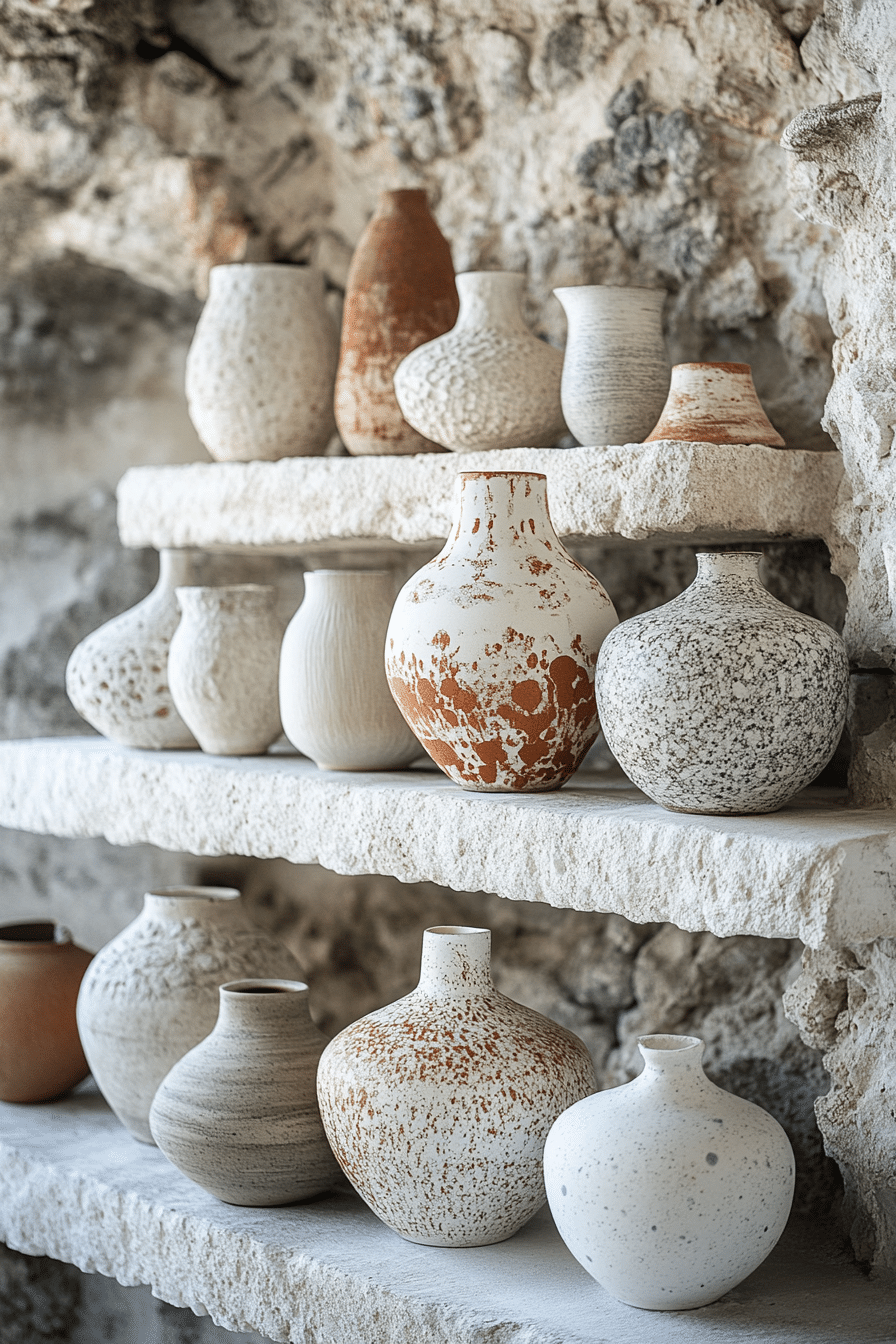
Echoes of Antiquity in Wabi Sabi ceramics highlight the timeless nature of traditional pottery. The imperfections in the form, such as uneven surfaces and cracks, embody the Wabi Sabi philosophy of valuing the beauty of the old and weathered. These pieces are rich in history, offering a deep connection to the past and an appreciation for enduring craftsmanship.
🖼 Steal This Look
- Paint Color: Sherwin-Williams Alabaster SW 7008
- Furniture: rough-hewn limestone floating shelves with chiseled edges
- Lighting: warm ceramic pendant with visible crackle glaze and dimmable Edison bulb
- Materials: raw limestone, unglazed terracotta, volcanic ash glaze, hand-thrown stoneware with crawling glaze
There’s something quietly grounding about running your palm over a shelf edge left deliberately crude—this room asks you to slow down and let the objects whisper their long histories rather than shouting for attention.
2. Flawed Elegance

Flawed Elegance in Wabi Sabi ceramics focuses on the charm of asymmetry and irregular forms. Each vessel is unique, with natural flaws that make it special, celebrating the imperfect over the perfect. These ceramics add character to any space, transforming it into a space that values authenticity and craftsmanship.
💡 Steal This Look
- Paint Color: Benjamin Moore Chantilly Lace OC-65
- Furniture: long low-profile concrete or plaster display console table
- Lighting: narrow beam LED track lighting with warm 2700K bulbs
- Materials: raw concrete, unglazed stoneware, dried botanicals, matte limestone
This is the kind of quiet moment that stops you mid-scroll—a shelf that feels collected over years, not ordered in a single afternoon.
3. Raw Clay Beauty

Raw Clay Beauty in Wabi Sabi ceramics embraces the simplicity of natural, unrefined clay. These pieces celebrate minimalism, with little decoration that allows the inherent beauty of the material to shine through. The design connects with the Wabi Sabi principle of tranquility, adding grounding energy to any space.
🌟 Steal This Look
- Paint Color: Farrow & Ball Shadow White 282
- Furniture: reclaimed wood farmhouse dining table with visible grain and knots
- Lighting: simple linen drum pendant light with warm LED bulb
- Materials: raw stoneware, unbleached linen, aged oak, matte ceramic glaze
This is the kind of tablescape that makes guests slow down and actually notice their food—the handmade irregularities remind us that beauty lives in the unpolished moments.
4. Patinated Perfection

Patinated Perfection in Wabi Sabi ceramics captures the beauty of age, where the surface and texture transform over time. The patina on these pieces tells a story of use and passage, adding character and depth to any environment. These ceramics are a beautiful example of how time adds value and charm.
🏠 Steal This Look
- Paint Color: Behr Weathered Moss N390-3
- Furniture: reclaimed wood apothecary cabinet with iron hardware
- Lighting: vintage brass gooseneck desk lamp with patinated finish
- Materials: oxidized copper, raw linen, aged teak, crackle-glaze ceramic
This is the corner that stops you mid-step—the one where you actually reach out to trace a crack with your fingertip instead of just passing by.
5. Rustic Charm

Rustic Charm in Wabi Sabi ceramics celebrates the unpredictable effects of raku firing, producing crackled glazes and unique color patterns. The dramatic nature of these pieces aligns perfectly with the Wabi Sabi embrace of the accidental and the imperfect. Each raku ceramic is one-of-a-kind, offering a special touch to any decor.
★ Steal This Look
- Paint Color: Valspar Dark Kettle Black 4011-2
- Furniture: reclaimed wood console table with live edge
- Lighting: single pendant with hand-forged iron cage and Edison bulb
- Materials: rough-sawn oak, oxidized metal, raw linen, unglazed terracotta
There’s something quietly brave about putting a deliberately cracked vessel at the heart of your space. It whispers that beauty doesn’t need fixing.
6. Cracked Glaze Creations

Cracked Glaze Creations in Wabi Sabi ceramics showcase the beauty of visible cracks in the glaze, often enhanced by contrasting hues. These cracks symbolize the imperfection and resilience that defines Wabi Sabi. With their textured surfaces, these ceramics bring an added dimension to any space.
💡 Steal This Look
- Paint Color: PPG Silvery Moon PPG1036-2
- Furniture: low walnut credenza with raw live-edge top
- Lighting: paper orb pendant with warm LED bulb
- Materials: unglazed terracotta, rough linen, oxidized metal, raw wood
This is the kind of piece that stops you mid-step—you find yourself running a finger along the veins of the glaze, reminded that beauty doesn’t need to be sealed or perfect.
7. Imperfect Shapes

Imperfect Shapes in Wabi Sabi ceramics highlight the beauty of unbalanced and unconventional forms. These asymmetrical designs challenge traditional symmetry and align with the Wabi Sabi view that beauty can be found in the unexpected. Asymmetrical ceramics create a striking focal point in any room.
★ Steal This Look
- Paint Color: Dunn-Edwards Whisper DEW340
- Furniture: plaster-finish console table with softly rounded edges and an intentionally uneven surface
- Lighting: oversized linen drum pendant with visible hand-stitched seams and warm dimmable Edison bulb
- Materials: raw stoneware clay, crackle glaze, unbleached linen, sun-bleached driftwood, hand-troweled plaster
This quiet windowsill moment feels like a breath held between seasons—there’s something deeply personal about living with objects that refuse to sit still or behave.
8. Aged Terracotta

Aged Terracotta in Wabi Sabi ceramics showcases the natural aging process of terracotta, where color and texture evolve over time. These pieces celebrate the beauty of impermanence, aligning with the Wabi Sabi view of honoring change. The warmth and earthiness of time-worn terracotta create a connection to both nature and history.
🎨 Steal This Look
- Paint Color: Clare Paint Olive Grove OL-06
- Furniture: low wooden garden bench with weathered teak finish
- Lighting: solar-powered brass path lights with warm 2700K glow
- Materials: unglazed terracotta, river stone, moss, raw teak, hand-thrown ceramic
This corner feels like morning light hitting something you’ve walked past a hundred times and suddenly really see—there’s peace in that familiarity.
9. Earth-Toned Hues

Earth-Toned Hues in Wabi Sabi ceramics incorporate soft, natural colors such as browns, greens, and grays that evoke a sense of calm. These earthy tones connect deeply with nature and align with the Wabi Sabi principles of organic beauty. They bring a peaceful energy to any space, making them versatile and tranquil additions to your decor.
★ Steal This Look
- Paint Color: Fine Paints of Europe Kasteel Grijs K-12
- Furniture: floating concrete display shelves with rough-hewn edges
- Lighting: adjustable brass track lighting with warm 2700K bulbs
- Materials: raw concrete, unglazed terracotta, oxidized iron, dried botanicals
This shelf setup feels like a quiet meditation corner—there’s something deeply grounding about living with objects that show their age and making process so honestly.
10. Exposed Clay Charm

Exposed Clay Charm in Wabi Sabi ceramics celebrates the natural texture and color of clay without the need for excessive glazing or painting. These pieces highlight the raw beauty of the material, embracing the unrefined and the tactile. Bare clay ceramics bring a grounding, earthy feel to any interior.
🌟 Steal This Look
- Paint Color: Backdrop Supermoon 0011
- Furniture: reclaimed wood console table with live edge
- Lighting: linen drum pendant with warm LED bulb
- Materials: rough-hewn oak, unbleached linen, raw terracotta, matte stoneware
This is the kind of corner that slows your morning down—a quiet pause by the window where your coffee tastes better in a bowl that isn’t perfect, and that’s exactly the point.
11. Handcrafted Wonders

Handcrafted Wonders in Wabi Sabi ceramics emphasize the individuality of each piece, showcasing the personal touch of the artisan. Every movement and imprint left in the clay reflects the human craft, adding a sense of authenticity to your decor. These hand-formed ceramics are perfect for creating a personal, inviting atmosphere in your home.
🌟 Steal This Look
- Paint Color: Sherwin-Williams Accessible Beige SW 7036
- Furniture: live-edge oak dining table with visible grain knots and natural imperfections
- Lighting: pendant light with hand-formed linen shade and aged brass hardware
- Materials: raw oak, unglazed stoneware, dried botanicals, slubbed linen, oxidized metal
This is the kind of tablescape that makes guests slow down and actually notice their food—these bowls hold stories, not just soup.
12. Weathered Whites

Weathered Whites in Wabi Sabi ceramics feature light-colored pieces that develop a natural patina over time. This gentle aging process creates a sense of history and character, celebrating the beauty of life’s subtle transitions. These ceramics add a timeless, peaceful quality to any room, softening the atmosphere with their delicate imperfections.
🌟 Steal This Look
- Paint Color: Benjamin Moore Aegean Teal 2136-40
- Furniture: reclaimed wood console table with visible grain and knots
- Lighting: simple ceramic pendant light with unglazed interior
- Materials: crackle-glaze ceramic, raw linen, oxidized metal, weathered oak
This is the kind of quiet corner that stops you mid-step—you don’t decorate it so much as let it settle in like a found object from another lifetime.
13. Tactile Textures

Tactile Textures in Wabi Sabi ceramics focus on the surface texture, inviting touch and close examination. From rough to smooth, these textures enhance the sensory experience and align with the Wabi Sabi philosophy of appreciating the tactile beauty of objects. Textured ceramics become an interactive part of your decor, drawing you in with their distinct feel.
🎨 Steal This Look
- Paint Color: Farrow & Ball Mouse’s Back 40
- Furniture: low-profile mango wood sideboard with visible grain and hand-rubbed oil finish
- Lighting: oversized linen drum pendant with warm brass ceiling canopy
- Materials: raw stoneware, slubby Belgian linen, unbleached cotton, aged brass, hand-planed wood
There’s something quietly grounding about running your thumb across a bowl rim that isn’t perfectly round; this corner asks you to slow down and actually touch your surroundings.
14. Organic Forms

Organic Forms in Wabi Sabi ceramics celebrate the beauty of irregular, flowing shapes inspired by nature. These forms mimic the patterns found in growth and erosion, creating a natural and sculptural element in your home. The unpredictability of these designs mirrors the Wabi Sabi appreciation for the unexpected and imperfect.
🏠 Steal This Look
- Paint Color: Behr Wheat Bread 720C-3
- Furniture: low-profile walnut coffee table with live edge
- Lighting: paper lantern pendant with irregular hand-formed shape
- Materials: raw stoneware, unpolished river rock, hand-formed paper, matte linen
There’s something quietly grounding about reaching for a bowl that doesn’t sit perfectly round—your hands remember that nature never draws a straight line, and neither should the objects we live with daily.
15. Coiled Craft

Coiled Craft in Wabi Sabi ceramics showcases the primitive technique of coil building, leaving the coils partially exposed to highlight the natural beauty of the method. This technique celebrates the handcrafted process and brings a rustic, ancient feel to your decor. Crude coil pots are perfect for those who value history and craftsmanship in their interior design.
🏠 Steal This Look
- Paint Color: Valspar Weathered Stone 5002-3B
- Furniture: reclaimed wood farmhouse console table with visible grain and knots
- Lighting: vintage brass adjustable-arm wall sconce with exposed Edison bulb
- Materials: raw terracotta, unglazed stoneware, distressed whitewashed wood, handwoven linen, aged brass patina
There’s something quietly powerful about running your fingers over those visible coil ridges—it’s a daily reminder that a human hand shaped this piece, not a machine.
Save this article
Enter your email and we'll send it straight to your inbox.
16. Stoneware Tales

Stoneware Tales in Wabi Sabi ceramics tell the story of durability, wear, and age through subtle staining and crazing. These marks add depth and character to the stoneware, making each piece a testament to everyday use and beauty in imperfection. The strong presence of stoneware enhances any space with its rich history.
✎ Steal This Look
- Paint Color: PPG Stonehenge Greige PPG1004-4
- Furniture: reclaimed wood open shelving with black iron brackets
- Lighting: oversized matte black pendant with exposed Edison bulb
- Materials: raw stoneware, weathered oak, hand-loomed linen, oxidized metal
This kitchen corner feels like a quiet morning ritual—there’s something grounding about reaching for a bowl that already holds the memory of a hundred meals.
17. Raw Edges

Raw Edges in Wabi Sabi ceramics highlight pieces with unfinished or roughly completed edges, embracing the beauty of incompletion. These edges evoke the impermanence and transience of life, making them a strong reflection of Wabi Sabi ideals. Raw-edged ceramics add a bold, authentic aesthetic to any interior.
★ Steal This Look
- Paint Color: Dunn-Edwards Birchwood DE6211
- Furniture: plaster-finish console table with a hand-troweled surface and zero visible hardware
- Lighting: single pendant with a raw linen shade and exposed brass socket
- Materials: unglazed stoneware, lime plaster walls, dried botanicals, unbleached linen, matte microcement
This corner feels like morning light in a quiet studio—there’s permission here to let things be slightly undone, which is exactly where the beauty lives.
18. Spontaneous Glazes

Spontaneous Glazes in Wabi Sabi ceramics focus on the fluid, often unpredictable application of glaze. These expressive techniques create unique patterns and textures that add artistic flair to each piece. The imperfections in the glaze application are highly valued for their beauty and individuality.
💡 Steal This Look
- Paint Color: Clare Paint Classic Beige 01
- Furniture: low walnut credenza with clean lines to display the ceramic as sculpture
- Lighting: adjustable brass picture light mounted above the display surface
- Materials: raw linen, aged oak, unglazed terracotta, hand-thrown stoneware
There’s something wonderfully unapologetic about a vessel this bold in a quiet room—it reminds you that wabi-sabi isn’t just about restraint, but about letting one imperfect thing command your full attention.
19. Charred Creations

Charred Creations in Wabi Sabi ceramics involve high-temperature firing techniques that leave behind striking, sometimes blackened surfaces. These pieces carry a sense of endurance and transformation through fire, offering dramatic beauty with a rustic, earthy quality. Charred ceramics make bold statements in any Wabi Sabi-inspired room.
💡 Steal This Look
- Paint Color: Fine Paints of Europe Sooty Black 1001
- Furniture: reclaimed barn wood console table with live edge
- Lighting: wrought iron wall sconce with exposed Edison bulb
- Materials: charred terracotta, rough-hewn oak, oxidized iron, unglazed stoneware
There’s something deeply grounding about living with pieces that have literally been through fire—they remind us daily that beauty persists after transformation.
20. Mended Beauty

Mended Beauty in Wabi Sabi ceramics embraces the art of repairing broken ceramics with gold or other noticeable materials, a technique known as kintsugi. This repair process celebrates resilience and renewal, adding profound meaning to the piece. Mended ceramics become symbols of healing and restoration, enhancing any Wabi Sabi decor.
✎ Steal This Look
- Paint Color: Backdrop Pashmina 0012
- Furniture: low-profile walnut credenza with raw-edge top
- Lighting: paper orb pendant with warm LED bulb
- Materials: unglazed stoneware, brushed brass inlay, handwoven linen, live-edge wood
This is the kind of piece that stops you mid-step—you don’t just see it, you feel the story of breakage and patience, and suddenly your own imperfect days feel a little more beautiful.
🌊 Get The Look
21. Elemental Sculptures

Elemental Sculptures in Wabi Sabi ceramics reflect the influence of natural forces, such as wind and water erosion, shaping the pieces into organic forms. These sculptures evoke the beauty of nature and the passage of time, bringing an elemental feel to your decor. The raw, sculptural nature of these ceramics adds a grounded, serene atmosphere to any space.
✎ Steal This Look
- Paint Color: Sherwin-Williams Accessible Beige SW 7036
- Furniture: low-profile walnut credenza with live-edge detail
- Lighting: arched brass floor lamp with linen drum shade
- Materials: hand-thrown stoneware, river rock, oxidized metal, raw linen, unfinished walnut
This piece demands you slow down and circle it—the voids and raw edges change character from every angle, like a found object from a riverbed.
22. Untamed Textures

Untamed Textures in Wabi Sabi ceramics showcase rough, unrefined surfaces that create a tactile and visual experience. These rugged textures embody the Wabi Sabi principles of embracing the unpolished and the imperfect. Each piece becomes a unique representation of artistry and authenticity.
🖼 Steal This Look
- Paint Color: Benjamin Moore Kendall Charcoal HC-166
- Furniture: reclaimed wood farmhouse dining table with live edge
- Lighting: oversized matte black pendant light with hand-formed ceramic shade
- Materials: raw stoneware clay, weathered oak, oxidized metal, coarse linen napkins
There’s something grounding about eating from a bowl that still holds the potter’s thumbprint—this kitchen corner reminds you that beauty lives in the unfinished.
23. Turquoise Accents

Turquoise Accents in Wabi Sabi ceramics introduce a vibrant splash of color to otherwise neutral pieces. The unpredictable beauty of turquoise glaze adds character and life to the ceramics, complementing the muted tones of traditional Wabi Sabi. These accents create a harmonious yet lively contrast in any room.
★ Steal This Look
- Paint Color: Farrow & Ball De Nimes No.299
- Furniture: reclaimed wood console table with visible grain and knots
- Lighting: hand-forged iron wall sconce with exposed Edison bulb
- Materials: weathered oak, crackle-glaze ceramic, oxidized metal, raw linen
This piece carries the quiet confidence of something that has weathered time—there’s comfort in owning a vessel that celebrates its own fractures rather than hiding them.
24. Speckled Elegance

Speckled Elegance in Wabi Sabi ceramics features gentle speckles that add texture and depth to the glaze. These subtle variations enhance the organic nature of the materials, making each piece unique and visually captivating. The speckled design is perfect for those seeking understated beauty with natural appeal.
🏠 Steal This Look
- Paint Color: Behr Silver Ash N520-1
- Furniture: concrete dining table with live-edge acacia wood bench
- Lighting: matte black pendant light with hand-blown seeded glass shade
- Materials: raw concrete, unbleached linen, oxidized metal, hand-thrown stoneware
There’s something quietly grounding about eating from a bowl that carries the fingerprints of its maker—this kitchen corner invites you to slow down and notice.
25. Faded Charm

Faded Charm in Wabi Sabi ceramics highlights the natural fading of colors and patterns as they age. This progression adds a sense of history and story to each piece, making them perfect for Wabi Sabi-inspired interiors. The faded facades bring a sense of quiet beauty, representing the passage of time.
★ Steal This Look
- Paint Color: Valspar Swiss Coffee 7002-16
- Furniture: low-profile walnut credenza with visible grain and natural oil finish
- Lighting: paper globe pendant light with handmade washi shade and warm LED bulb
- Materials: raw stoneware, unbleached linen, reclaimed teak, handwoven jute, oxidized metal accents
There’s something grounding about living with a piece that refuses to pretend it’s new—this vase asks you to slow down and notice how beauty softens over years, not minutes.
26. Thrown by Hand

Thrown by Hand in Wabi Sabi ceramics highlights the beauty of hand-thrown pottery, showcasing slight variations that make each piece unique. These handmade elements resonate with the Wabi Sabi appreciation for individuality and craftsmanship. Thrown ceramics bring warmth and authenticity to any space, celebrating the maker’s touch.
★ Steal This Look
- Paint Color: PPG Stonehenge Greige PPG1020-2
- Furniture: live-edge white oak dining table with visible knots and natural edge
- Lighting: oversized hand-formed linen pendant with raw brass canopy
- Materials: unglazed stoneware, raw white oak, slubby Belgian linen, matte black iron
There’s something quietly grounding about eating from a bowl that still holds the potter’s thumbprint—it turns an ordinary meal into a small meditation on human craft.
27. Woodfire Imprints

Woodfire Imprints in Wabi Sabi ceramics highlight the distinctive patterns created by wood firing. The ash and flame paths give each piece a one-of-a-kind finish, making it both rustic and uniquely beautiful. These ceramics bring warmth and earthy charm to your decor, adding a primal touch to the space.
✎ Steal This Look
- Paint Color: Dunn-Edwards Burnished Clay DET439
- Furniture: live-edge walnut console table with blackened steel hairpin legs
- Lighting: hand-forged iron pendant with exposed Edison bulb and amber glass shade
- Materials: rough-sawn reclaimed oak, crackle-glaze terracotta, raw linen, oxidized metal
This piece carries the memory of actual fire—there’s something deeply grounding about living with that elemental story on your mantel.
🎁 Get The Look
28. Mixed Masterpieces

Mixed Masterpieces in Wabi Sabi ceramics celebrate the beauty of combining diverse pieces to create a harmonious arrangement. The beauty of imperfections is embraced, making each piece distinct yet complementary. This eclectic approach creates a relaxed, personal setting, perfect for Wabi Sabi decor.
💡 Steal This Look
- Paint Color: Clare Paint Current Mood 02
- Furniture: reclaimed wood farmhouse dining table with visible knots and grain
- Lighting: pendant light with hand-formed ceramic shade in warm terracotta
- Materials: raw stoneware, oxidized copper, live-edge walnut, unbleached linen
This is the kind of table that invites lingering conversations over tea—no two sips feel the same because no two cups are identical, and that’s precisely the point.
29. Timeless Vintage Ceramics

Timeless Vintage Ceramics in Wabi Sabi ceramics showcase the charm of aged pieces that have acquired character through years of use. These ceramics often feature crackle glazes, crazing, and wear patterns, telling the story of past gatherings and experiences. Vintage ceramics bring continuity and depth to your decor, bridging past and present.
🏠 Steal This Look
- Paint Color: Fine Paints of Europe Hollandlac Brilliant Ashwood C2-30
- Furniture: reclaimed teak display shelf with live edge, low-profile Japanese tansu-style credenza
- Lighting: paper-shaded pendant with warm Edison bulb, brass swing-arm wall sconce
- Materials: raw walnut, unglazed terracotta, hand-thrown stoneware, linen, oxidized metal
This is the kind of shelf that stops you mid-step—you find yourself reaching for a vessel without knowing why, drawn to the thumbprints and firing marks of someone else’s hands.
Conclusion
These 29 Wabi Sabi ceramics highlight the beauty of imperfection and the charm of simplicity, offering endless inspiration for your home decor choices. By incorporating these unique, handcrafted pieces, you can create a space that feels serene, authentic, and deeply connected to nature. Whether you’re selecting tableware, decorative accents, or statement pieces, Wabi Sabi ceramics bring warmth and character to any room. Let these ideas inspire you to embrace the timeless elegance of Wabi Sabi in your home and celebrate the art of imperfection.
Save this article
We'll email you the link so you can find it again later.