My fascination with the raw sophistication of brutalist interior design has grown as I’ve delved into its brutal honesty—a style that continues to captivate urbanites in bustling cities across the United States. Embodying a bold unapologetic aesthetic through raw concrete interiors, steel, and glass, I acknowledge the charm it brings to modern spaces. From the mighty structures to minimalist brutalist interiors, there is a contemporary brutalist design that evokes the monumental allure, transforming compact urban dwellings into stylish and functional sanctuaries amidst the everyday hustle.
Key Takeaways
- Brutalist interior design is a statement of boldness and honesty, perfect for urban environments.
- Raw concrete interiors are central to achieving an authentic brutalist aesthetic in your space.
- Minimalist brutalist interiors embrace functionality while highlighting the beauty of the materials used.
- Interweaving contemporary brutalist design into modern homes offers a refreshing twist to interior decoration.
- The challenging but rewarding task of designing in the brutalist style lies in staying true to its principles while adapting to contemporary needs.
The Foundations of Brutalist Interior Design
As I delve into the world of brutalist architecture interior, I’m struck by the movement’s stark beauty and its unyielding strength. The textures and tones of béton brut come alive in the spaces that celebrate minimalist design, drawing inspiration from urban environments to create living areas that speak to a raw and unadorned elegance. In my exploration of this design phenomenon, the attributes that define brutalist interiors are as identifiable as the concrete they expose.
Origins and Evolution of Brutalism
Brutalism’s conception lies in the French term “béton brut,” indicating “raw concrete.” This design aesthetic arose during the 1950s as an antithesis to the refined and polished styles prevailing at the time. Architects like Moshe Safdie emerged as Brutalism champions, evident in iconic projects such as Montreal’s Habitat 67. Originally an architectural narrative, the brutal surrender to materials and form gradually permeated interior design, celebrating exposed raw materials and shunning the superfluous.
Defining Characteristics of Brutalist Spaces
Brutalist spaces are characterized by their monolithic presence, carved from the honesty of their materials. These environments are designed as palettes of texture, where the absence of ornamentation elevates the importance of form and function. As I consider the minimalistic essence of these designs, I am reminded of their adaptability—from the institutional to the intimately personal—and respect the vision that brings such urban-inspired spaces into contemporary habitation.
- Emphasizing structural elements: Exposed beams, blocky forms, and visible pipework are harmonized within the dwelling.
- Minimalist ethos: Less is more in brutalist interiors, where the limited use of decor highlights the boldness of the structures.
- Rigidity and geometry: Sharp angles and rigid box-like forms are hallmarks of this style, reflecting an urban-inspired space.
Thus, the reflections on brutalist architecture interiors reveal a deep appreciation for the aesthetics of minimalism, the boldness of béton brut, and the transformative power of urban-inspired design in creating robust, unique living environments.
Understanding the “Béton Brut” Aesthetic
The rugged charm of brutalist interior design is inseparable from its roots in the ‘béton brut’ aesthetic, a term I’ve embraced to describe the visceral impact of raw concrete and exposed materials in living spaces. This preference for authenticity uncloaks the beauty in the bare, industrial elements that were once hidden behind embellishments. As I explore these spaces, I find myself captivated by the honesty in the raw aesthetics—each surface tells a story of form, function, and undisguised tenacity.
Reflecting on the industrial brutalist design, it strikes me how its stark, unyielding presence mirrors the philosophy of Brutalism itself. This style isn’t just an approach to design; it’s a bold declaration that finds beauty in the untreated textures and materials such as concrete, steel, and glass. It’s a way to revel in the unrefined, undistorted truth of our environment’s elements.
- Raw concrete walls that exhibit the imprints of their forming panels
- Slabs of weathered steel adding a tactile dimension to the space
- Expanses of clear glass that break the boundary between indoors and nature
These features are not simply aesthetic choices; they embody a deeper meaning. To practice industrial brutalist design is to commit to a genuine display of unadorned strength—a narrative I’m keen to perpetuate through words and visual storytelling. From lofty warehouses converted into apartments to modern homes that borrow from the era of Brutalism, these spaces all share a reverence for the unmasked rawness of their materials.
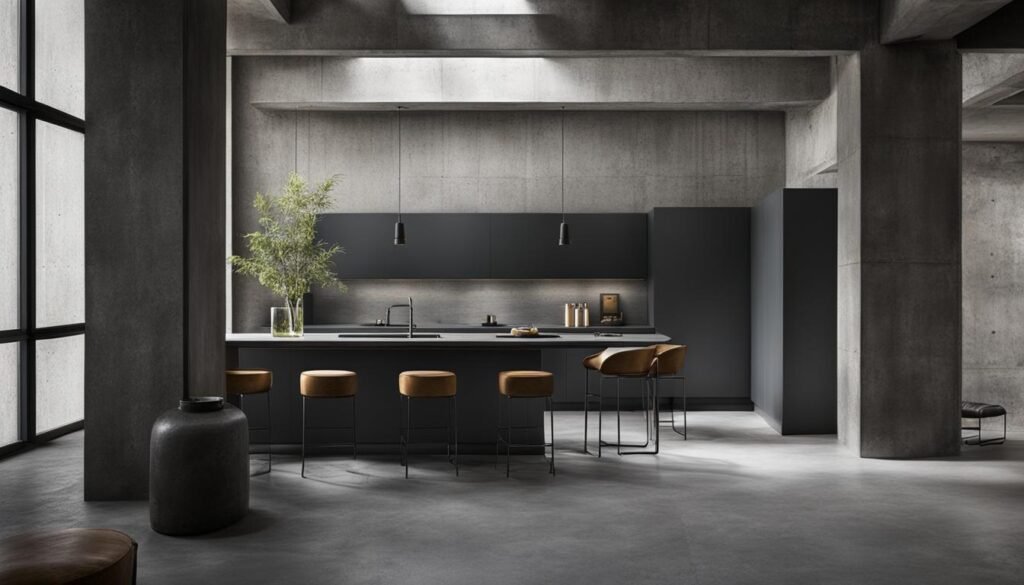
What further defines this aesthetic for me is the absence of disguise. Everything in a Brutalist space is laid bare—the history, the process, the imperfections. This creates a sensorial tapestry of raw aesthetics, one that compels me to look closer and appreciate the harmony between exposed materials and the environments they inhabit.
In my journey traversing these spaces, I’ve come to understand the deep resonance of ‘béton brut’. It’s a statement of resilience, a hymn to the elemental, and a challenge to the conventional. And in this symphony of raw concrete and steel, the timeless narrative of Brutalism continues to evolve, shaping my perception of architectural beauty and authenticity.
Incorporating Raw Concrete for Authentic Brutalist Appeal
As I explore the frontiers of brutalist interior design, my fascination with concrete interiors deepens. There’s no denying the gravitas it brings to a space—imbuing the room with an authenticity that speaks to the purist in me. From the impactful presence of concrete walls and floors to the understated elegance of brutalist-style furniture, the material’s versatility is unmatched. My journey into this realm further affirms that an industrial material like concrete can indeed become the cornerstone of a home’s aesthetic.
When I talk about incorporating concrete into a living space, there’s a gravity that accompanies its raw, unfinished charm. Concrete captivates with its stark, minimalist beauty—an unadorned canvas that compels the observer to appreciate its strength and texture. The use of brutalist decor compounded by the presence of concrete creates a harmonious environment that exudes both modernity and ageless appeal. It’s a balance I strive to achieve in every design.
Accentuating these spaces with brutalist style furniture emphasizes their strong character. The choice of furnishings is never incidental; each piece, whether in possession of clean lines or more organically inspired forms, contributes to the narrative of indomitable strength and sophistication that brutalist design commands. Let’s delve into the specifics:
- Floors and walls molded from concrete are not only durable but form a potent backdrop for abstract and geometric decors.
- Brutalist furniture with its honest construction and usually devoid of unnecessary ornamentation allies with concrete to celebrate functionalism.
- Artisanal concrete fixtures such as planters and custom sculptures add an intimate touch to the expansive feel of the materials used.
The allure of concrete within brutalist interiors is undeniable. It’s a choice that declares a staunch commitment to the raw beauty and underlying strength that this style venerates.
Maximizing Space: Brutalist Design in Urban Living
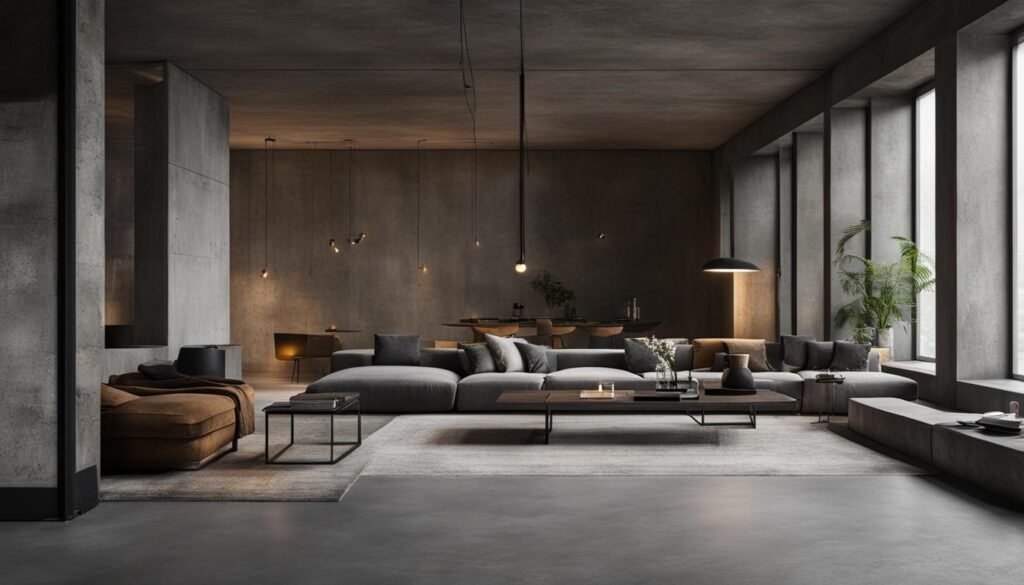
As I navigate the dense sprawl of city life, I recognize the challenge of making the most of every square foot. Brutalist design, with its inherent minimalist design and emphasis on structural integrity, offers a striking blueprint for transforming compact urban environments into expansive sanctuaries. In my dedication to creating contemporary interior design spaces that resonate with the rhythm of urban living, I explore how to apply Brutalist principles to achieve a harmonious balance between function and aesthetic.
Smart Use of Geometric Forms
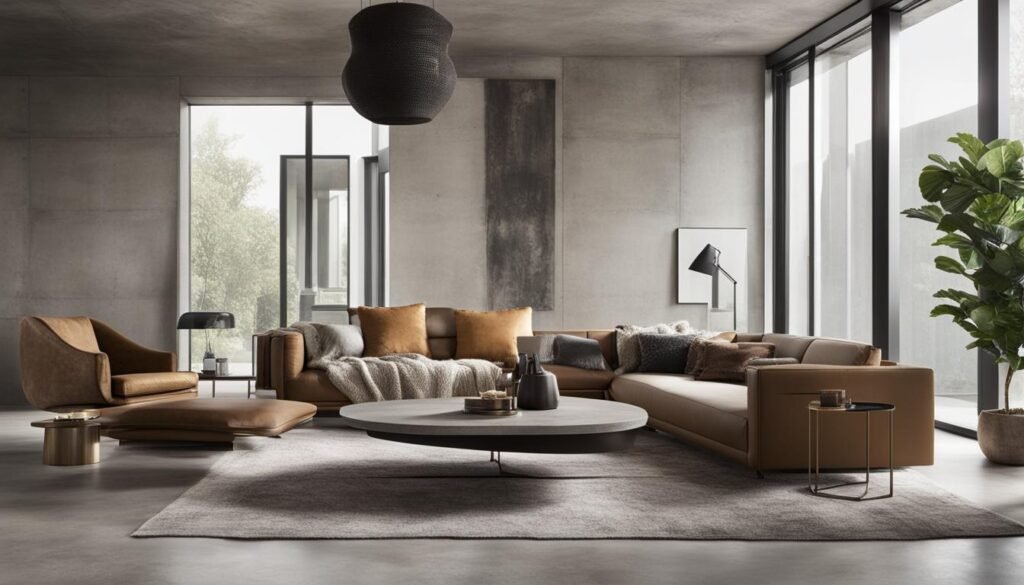
In my brutalist house interior, geometric forms are not mere accents; they’re essential elements that define spaces and provide a sense of order. I employ clean lines and angular furnishings to craft rooms that feel larger than life. The intentional placement of Brutalist pieces, from square concrete coffee tables to triangular shelving units, allows for smooth movement and an uncluttered atmosphere. This strategic organization ensures that each piece of furniture isn’t just present—it serves a purpose.
Natural Light in Brutalist Interiors
The brilliance of incorporating natural light in a brutalist living room cannot be overstated. It brings the stark beauty of Brutalist aesthetics to life, casting shadows and enhancing the raw textures of the materials used. My preference for large, unadorned windows bathes the room in a warm glow, while the strategic placement of mirrors amplifies this luminosity, crafting an ambiance that feels both expansive and intimate. Sheer curtains or blinds offer a soft touch that tempers the severity of Brutalist lines, fusing utility with serene elegance.
Industrial Influences and Minimalist Brutalist Interiors
As a fervent advocate of modern brutalist interior design, I find the incorporation of industrial decor into living spaces particularly transformative. The inherent ruggedness of materials like steel and glass when juxtaposed with minimalist aesthetics challenges our conventional wisdom of comfort and function.
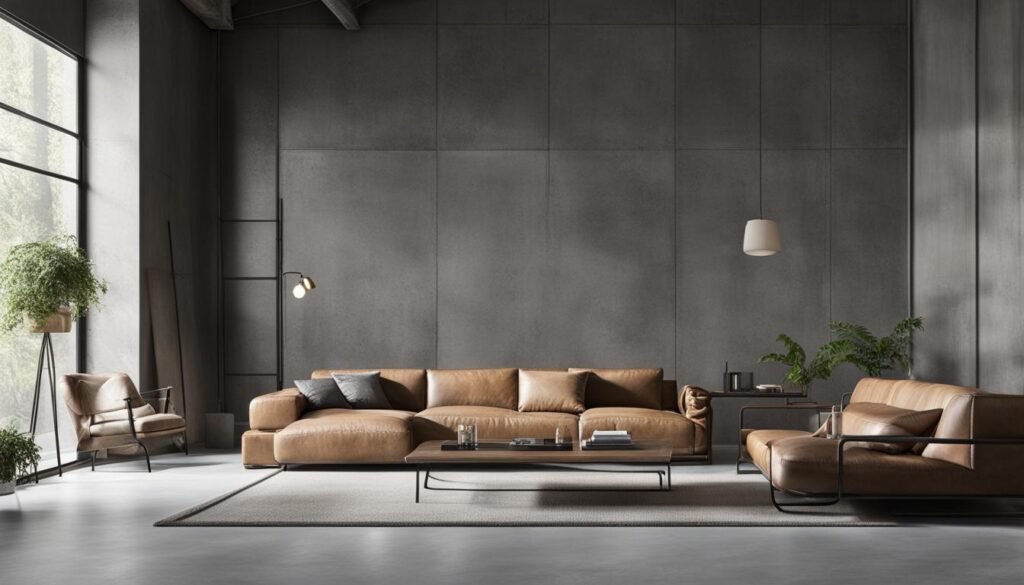
The impact of minimalist brutalist interiors lies in their simplicity; it’s about subtracting the non-essential and elevating the essential. Clearing clutter not only refines the visual experience but also honors the utilitarian roots of brutalist philosophy. These spaces are designed to be as straightforward as they are sophisticated, grounding inhabitants in an environment that’s both intimate and awe-inspiring.
- Substance over superficiality, revealing the soul of a space through its structural elements
- The understated sophistication of raw, unfinished textures meets precision and order
- Integration of functional components as part of the design narrative
In practice, minimalist brutalist interiors serve as a backdrop for the interplay of shadow and light, creating dynamic environments that change with the passing of the sun. This is a realm where the starkness of industrial components is softened by the thoughtful arrangement and the play of natural illumination within the space.
- Strategic placement of furnishings that complement the strong lines of raw concrete or brickwork
- Selection of contemporary art pieces that speak to the visceral impact of the brutalist ethos
- Use of muted color palettes to maintain focus on the textural depth and form
Ultimately, the spirit of industrial decor and minimalist brutalist interiors reminds me that there is profound beauty in the bare, unadorned skeleton of architecture. It stands as a testament to an aesthetic that is relentless in its honesty, yet versatile enough to adapt to the distinct rhythm of modern living.
Brutalist Furniture: Combining Form and Function
As a connoisseur of the unique and impactful design philosophy, I have always been enthralled by the way Brutalist furniture bridges the gap between aesthetics and utility. The raw energy of the brutalist style furniture resonates with those who crave both visual prowess and practicality in their living spaces. Through the interplay of geometric solidity and the practical aspects of design, these furniture pieces have carved a niche that appeals to the bold at heart.
Save this article
Enter your email and we'll send it straight to your inbox.
Iconic Pieces of Brutalism Furniture
When considering iconic Brutalist furniture, it’s hard not to acknowledge their monumental form and unyielding character. Think of a sturdy dining table with a solid concrete top, supported by a labyrinth of steel rebar—the epitome of functionality meets sculpture. It’s this sort of daring, unrefined elegance that not only defines an interior but also serves as a focal point of conversation and admiration.
Choosing Functional and Aesthetic Brutalist Furniture
When I’m in the process of curating pieces for a Brutalist-inspired space, my strategy revolves around marrying aesthetic boldness with the versatility of usage. The selection is key, searching for brutalist furniture that doesn’t just appeal to the visual but also stands the test of daily life. This dual purpose is pivotal. A cast iron bookshelf, for instance, isn’t merely for storage; it becomes part of the architectural fabric of the room, a testament to both form and function.
- Select pieces that exhibit crisp, geometric lines, embodying the movement’s architectural ethos.
- Opt for materials that age gracefully, acquiring character over time, such as patinated metals or worn leather.
- Ensure the functionality isn’t overshadowed by design—comfort and usability are paramount.
Incorporating brutalist style furniture into my projects is always a thrilling challenge. It demands an eye for scale, a respect for materiality, and a mindful approach towards the interplay of light and shadow. As these elements converge, each piece of Brutalist furniture I select not only elevates the space but also reaffirms a commitment to enduring design that’s unabashedly straightforward.
Modernist Brutalist Interiors: Contemporary Adaptations
As a passionate advocate for modernist brutalist interiors, I’ve witnessed the evolution of this brutalist design style from its post-war origins to its current, avant-garde expressions across residential spaces. The transformative nature of contemporary brutalist design fascinates me—how it can juxtapose the rawness of concrete with the sleek subtleties of modern minimalism. In my exploration, I’ve seen how these interiors stand out as sculptural artworks, breathing life into modern homes with a nod to historical authenticity.
This design paradigm, which was once characterized by a stark, monolithic look, has softened its edges and expanded its material palette. Yet, it maintains its defining features: an unadorned robustness and an intrinsic transparency of materials that remain compelling to this day.
- The use of concrete, whether polished, texturized, or left in its raw state, continues to be the central element in these living spaces.
- The geometric formality of brutalist structures offers a canvas for innovative, light-filled interiors.
- Integration of green elements, such as indoor plants, introduce vitality and softness to otherwise stark surroundings.
- Functionality is no afterthought—furniture and fixtures in these interiors insist on utility as much as on form.
My admiration for this style deepens as I see it adapt to diverse architectural landscapes, proving that it is not merely a relic but a living, breathing entity in the world of design. The language of modernist brutalist interiors whispers of a profound respect for material honesty and structural integrity, echoing through time with contemporary relevance.
Color and Texture: Amplifying Brutalist Interior Design
When I approach brutalist interior decor, I recognize that the interplay of color and texture isn’t just a detail; it’s foundational to the aesthetic. By manipulating these elements, I infuse a unique energy into the cold precision of brutalist forms, creating a contrast that feels both modern and timeless.
Creating Contrast with Color Palettes
Limited to a palette of neutrals, I deliberately introduce color to celebrate the starkness of brutalist design interior. A splash of burnt orange or a deep red can dramatically shift the visual experience, injecting a burst of vibrancy into the monolithic backdrop. This approach is not random; it’s strategic, ensuring that each color accentuates the surrounding materials.
Layering Textures in Brutalist Environments
My focus on texture is a quest to soften the starkness inherent in brutalist spaces. I layer materials like raw concrete with woolen rugs and silk curtains to add depth. The juxtaposition of smooth and tactile surfaces engages the senses and invites a more nuanced experience of the environment. Incorporating elements of eco brutalist interior design adds a sustainable dimension, proving that aesthetic appeal and environmental consciousness can coexist harmoniously.
In the arena of brutalist kitchen design, both color and texture play pivotal roles. Here, the rugged simplicity of concrete countertops set against sleek cabinetry and punctuated by bold, matte black fixtures exemplifies how contrasting elements elevate functionality to an art form.
- An expansive neutral backdrop highlights polished appliances.
- Wooden elements introduce warm tones and organic lines.
- Strategic lighting accentuates the kitchen’s architectural details.
It’s clear to me that the dynamism of brutalist interiors springs from the thoughtful integration of these components—a dance of color, light, and texture that makes each space sing.
The Role of Art in Brutalist Interiors
As a fierce advocate of the stark beauty inherent in Brutalist design, I often revel in the way art can transform a space. Within the raw embrace of unique brutalist decor, art pieces are far more than mere adornments—they stand as bold collaborators to the strong, unyielding forms of the architecture itself. Large-scale artworks, with their compelling presence, act not just to fill a space, but to create a dialogue; they speak to the hard lines and shadows, adding layers of meaning to the minimalist surroundings. In my experience, integrating art within brutalist interiors transforms stark spaces into dynamic environments rich with narrative.
My quest to find the perfect synergy between art and space often leads me to pieces that mirror the boldness of my brutalist architecture inspiration. Murals stretch across walls with an authority that equals the concrete they rest upon, while sculptures in metal or stone echo the raw complexity of their setting. Each piece becomes an integral component of the interior’s fabric, guiding the inhabitants through a sensory journey where every angle and surface tells a story. It’s this orchestration of form, space, and artistic expression that elevates a Brutalist interior from a mere collection of rooms to a curated experience.
In creating spaces that are profoundly aesthetic yet unyieldingly functional, I continuously strive to blend art seamlessly into the ethos of Brutalism. This approach not merely enhances the space visually, but also imbues it with an energy that is palpable—a unique brutality that stirs curiosity and introspection. Through this alchemy of art and architecture, an iconic brutalist interior becomes more than a place; it is an encounter, a testament to the power of design in shaping our perception and our experiences.
FAQ
What is the core concept behind brutalist interior design?
Brutalist interior design focuses on the raw, unadorned aesthetic of materials such as concrete, steel, and glass. It’s about embracing boldness and simplicity, where the truth of materials is celebrated, and minimal ornamentation is a key principle.
How does the term “Brutalism” relate to interior design?
The term “Brutalism” originates from the French phrase “béton brut,” meaning raw concrete. It ties to interior design through the use of unpretentious, durable materials and an emphasis on the raw structural forms typically associated with brutalist architecture.
Can brutalist design principles be applied to small urban homes?
Absolutely. Despite its origins in grand-scale architecture, brutalist design can be adapted to smaller spaces by incorporating elements like strong geometric forms, minimalist furniture, and clever use of natural light to enhance the sense of space.
What materials are commonly used in brutalist interior design?
In keeping with the industrial roots of Brutalism, materials such as raw concrete, exposed steel, and glass are commonly used. These materials reflect the honest, utilitarian nature of the brutalist aesthetic.
How do I choose furniture for a brutalist-inspired interior?
Select pieces that have strong geometric shapes and are made of materials that age well, like steel or leather. Furniture in brutalist interiors should be functional, serving multiple purposes, and aesthetically striking.
Are there any contemporary adaptations of brutalist design?
Yes, modernist brutalist interiors combine the raw and minimalist ethos of traditional Brutalism with contemporary design features. The aesthetic values are adapted to fit today’s lifestyle, resulting in spaces that are both functional and cutting-edge.
How important is color in brutalist interior design?
Color is critical in brutalist design to create contrast. A palette of neutrals highlights the form and texture of materials, while occasional pops of color add vibrancy and warmth to the setting.
What role does texture play in brutalist interiors?
Texture adds depth and softens the starkness of brutalist spaces. Combining smooth concrete with plush textiles or adding natural elements such as wood can introduce a warm and inviting feel to the typically austere brutalist environment.
How can art enhance a brutalist interior?
Art plays a transformative role in brutalist interiors, often serving to complement the bold and minimalist aesthetic of the space. Large artworks and sculptures can dramatize and elevate the raw functionalism of the environment.
Is it possible to have a cozy brutalist interior?
Yes, while brutalism may seem imposing, incorporating the right textures, art, and furniture can lend a cozy and inviting atmosphere to the space without compromising on the style’s characteristic boldness.
Save this article
We'll email you the link so you can find it again later.