

In my exploration of aesthetic spaces, I’ve come to appreciate the undeniable significance of interior design rules. True elegance lies in the meticulous application of decoration rules and basic interior design principles, where every piece of furniture and decor finds its rightful place within a grand scheme. At the forefront of my design philosophy is an unwavering commitment to the nuances of proportion and scale. It’s about crafting living areas that exude sophistication while remaining quintessentially livable.
My approach often aligns with the esteemed practices championed by experts at renowned design houses like Heal’s, where space isn’t just a dimension but a canvas for creativity. It’s a practice of aligning a sofa and coffee table in perfect symphony, maintaining a standard 45cm distance to ensure each piece serves both function and form. This alignment—the thoughtful relationship between size and space—is a critical design rule that can elevate your interior from simply functional to timelessly stylish.
Key Takeaways
- Understanding proportions is crucial to creating both aesthetically pleasing and functional spaces.
- Consider furniture sizing relative to room dimensions to maintain balance and comfort.
- Adequate spacing between furniture pieces enhances usability and flow within the room.
- Key design rules from top brands can inform your decoration choices and elevate your home’s elegance.
- The combination of design knowledge and practical application leads to sophisticated and livable interiors.
Establishing the Foundation with Proportions and Furniture Sizing
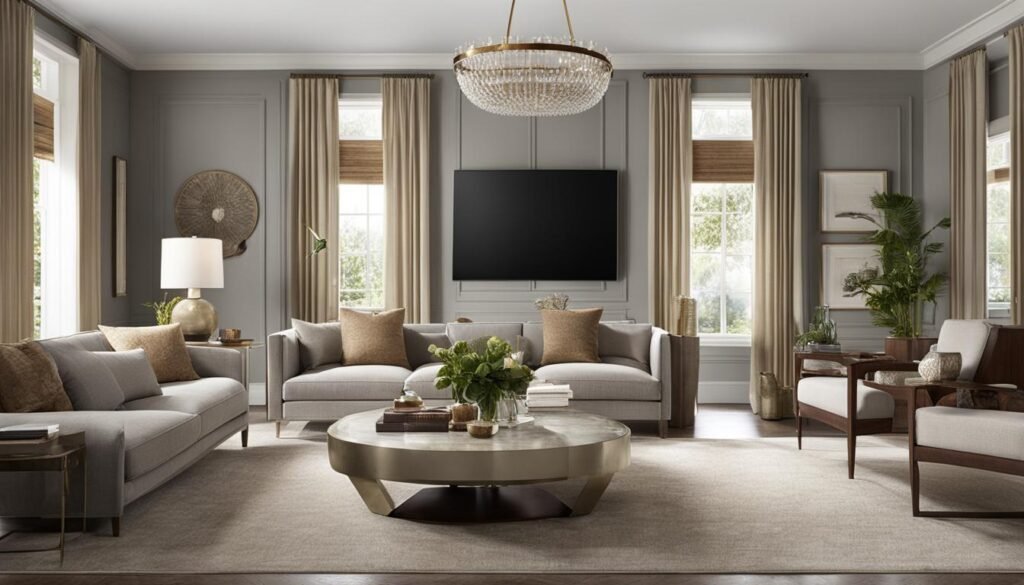
When I approach interior design, I consider proportions foundational, with furniture sizing playing a critical role. The relationship between room size and the objects within it is a cornerstone of the interior design standard. This begins with the often underestimated area rug, which provides a frame within which furniture can converse. To achieve harmony and cohesion, I recommend selecting a rug size that allows for at least the front two feet of your furniture to rest firmly on it, thus tethering your arrangement solidly to the ground, making the space feel more intentional and inviting.
- Outside mere aesthetics, such considerations promote functionality—a tenet of my interior designing guide.
- Height factors in as well—artwork hung too high disconnects from the furnishings while too low can disrupt the flow of a room. Maintaining a centered placement approximately 145cm (57 inches) from floor to the center of the artwork aligns with the human scale, fostering engagement and ensuring that pieces are appreciated comfortably from a standing or seated position.
- In pursuit of fundamental design guidelines, the breadth of curtains cannot be ignored. Curtains that are 1.5 to 2 times the width of the window advance a look that’s luxurious and well-tailored, as opposed to ones that merely flank the glass.
These interior design guidelines aren’t merely about standards; they’re about sculpting spaces that are as functional as they are aesthetically pleasing. My commitment to these principles guarantees a room that feels balanced, spacious, and meticulously designed, with a clear nod to both classic and contemporary sensibilities.
Centering on a Statement Hero Piece
As I delve deeper into the key design rules for interiors, I’m constantly reminded that among all the crucial interior design principles, choosing a focal point or a statement hero piece stands out as one of the most dynamic moves in design. This can take the form of an exquisitely oversized armchair, a grand light fixture, or even a vibrant piece of artwork that captivates and holds the gaze.
Aligning with important interior design guidelines, I often advise clients to select a hero piece that not only reflects their personal taste but also sets the stage for the rest of the room. It’s that splash of colour on a neutral palette, the bold pattern in a sea of solids, or the modern sculpture in a traditionally styled space that punctuates and energizes the interior.
- Select an object that resonates with you personally – it could be a luxurious velvet sofa, a vintage mirror, or a contemporary painting.
- Harmonize the room by reflecting the hero piece’s style or color in smaller items across the space, like throw pillows or decorative vases.
- Ensure the hero piece commands attention but doesn’t overwhelm—balance is key.
The introduction of a statement piece within an interior can alter not just the aesthetic but the very atmosphere of a room. Such elements serve as a conversation starter, a visual delight, and, when executed well, the embodiment of the room’s intended mood and style.
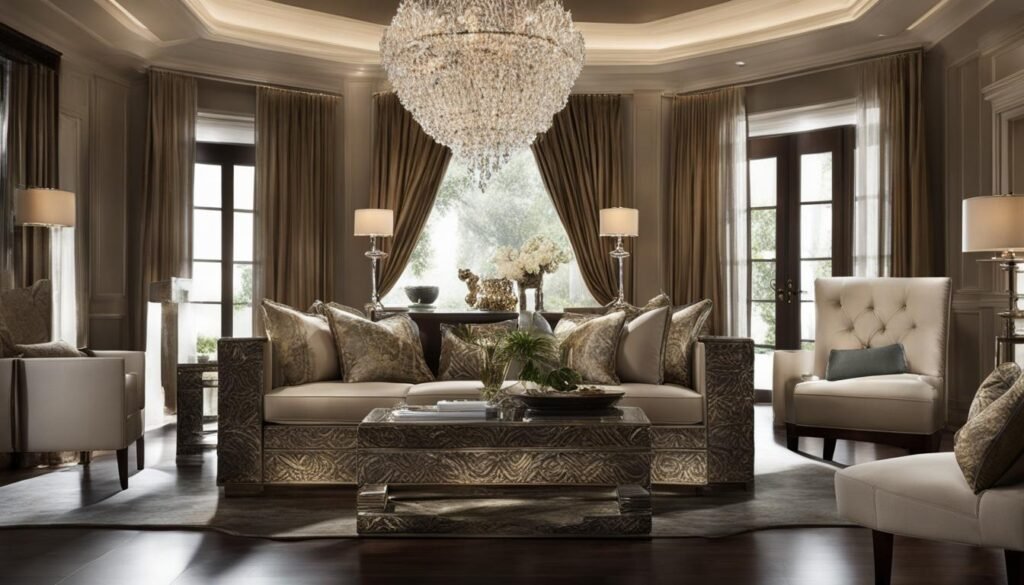
In conclusion, a hero piece is not merely an object within a space; it is the narrative anchor and the beacon that guides all other elements towards a cohesive and compelling design story. It’s these aspects that embody the quest for both beauty and function—a mantra for lovers of thoughtful interiors worldwide.
Cultivating Elegance Through Strategic Layering
As an advocate for interior design best practices, I firmly believe that mastering the art of layering is akin to painting a masterpiece. Layering isn’t just about piling on different elements; it’s about creating a harmonious blend of textures, patterns, colors, and fabrics. It’s one of the basic interior design principles that allows us to infuse character and warmth into any space.
Building Depth with Textures and Fabrics
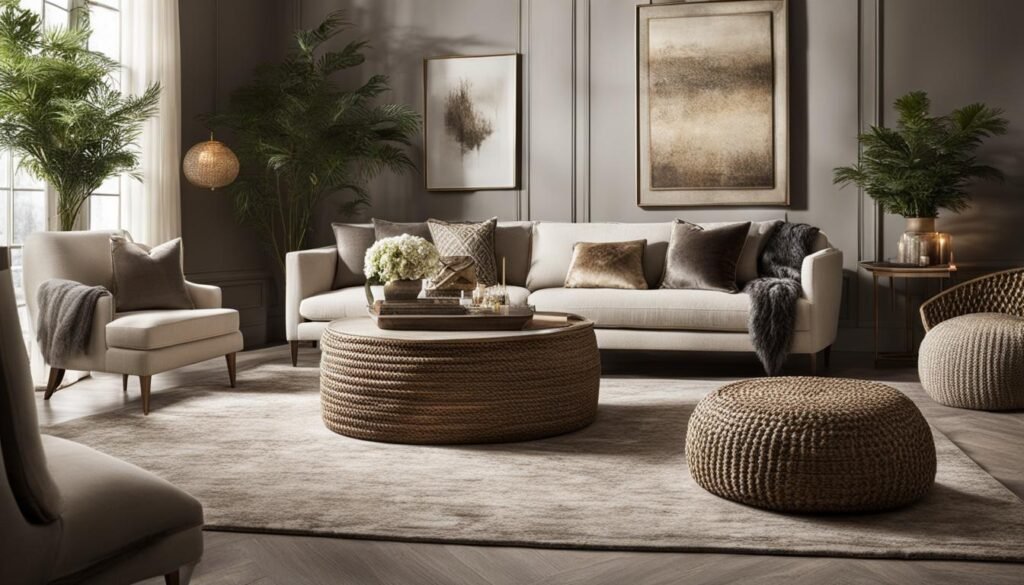
To embark on this sensory journey, one must first choose a dominant texture as the canvas—perhaps a lush, heavyweight curtain or an oriental rug. From this point, I weave in additional textures, building upon the foundation with contrasting fabrics such as plush throw pillows or a delicate, gauzy throw. Consider the following textiles for a rich, tactile experience:
- Velvet cushions for a touch of opulence
- Wool throws for comfort and warmth
- Linen draperies for lightness and airiness
- Silk accents to add a hint of luxury
These components act in concert, following the key design rules to enhance the space’s dimensionality and create a layered sanctuary.
Personalizing with Accessories
No room is complete without those personal adornments that tell the unique stories of those who dwell within. I practice the essential design rules by intentionally selecting accessories that not only fill spaces but also speak to the soul. Visualizing the end result, I curate a collection that varies in:
- Size, ensuring a dynamic range that pleases the eye
- Shape, to disrupt the uniformity of the room’s architecture
- Design, reflecting individuality and taste
This personalized approach delivers a depth that mass-produced decor simply cannot replicate, transforming houses into beloved homes.
Interior Design Rules for Enhancing Space
As an advocate for the power of design to transform living spaces, I often find myself uncovering the secret life of rooms that feel open and expansive, even with low ceilings. My recipe for such spaces blends fundamental interior design principles with clever visual tricks that lift the eye and spirit.
Creative Furniture Arrangement for Low Ceilings
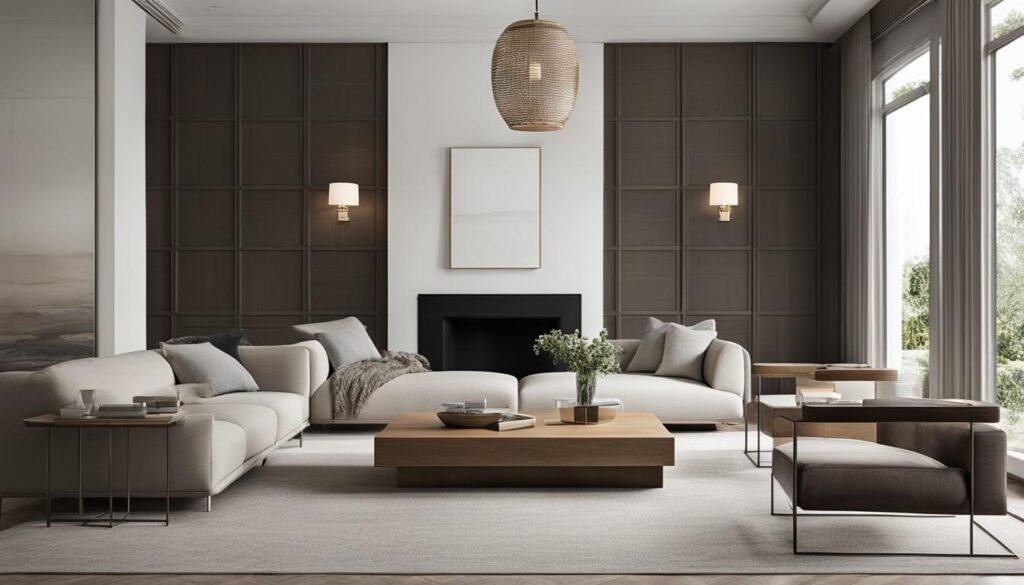
In my experience, creating an atmosphere of height begins with selecting the right furniture. Low-profile sofas and coffee tables set a baseline that, when combined with vertical accents, propel the gaze upward. It’s an example of how essential interior design principles can be applied to combat the cramped feeling that low ceilings can foster.
Creating Illusions of Height and Space
Another vital strategy is the use of color to unify a room’s vertical planes. I advocate painting walls, skirting boards, and ceilings the same shade to blur the boundaries that enclose a space. This is a classic tactic informed by important design principles, creating the illusion of a seamless stretch upward. Reflective surfaces and strategic lighting also play their roles in elevating a space, both literally and figuratively.
- Choose a monochromatic color scheme to visually raise the ceiling
- Integrate vertical stripes or patterns to enhance perceived height
- Position mirrors strategically to reflect light and create depth
Through these methods, which are firmly rooted in reputable design theories, even the most compressed spaces can breathe and stand tall. It’s about unlocking the potential of every inch, embracing height where breadth isn’t an option and redefining a room without the need for structural changes.
Mastering the Art of Lighting
As I delve into the world of interior décor, I’ve come to recognize that one of the top interior design rules is the strategic use of lighting. It’s about more than just illuminating a room; it’s about crafting an atmosphere that elevates every design element. When I select fixtures, my focus is on maintaining an equilibrium that complements the room’s proportions and enhances the functionality of the space.
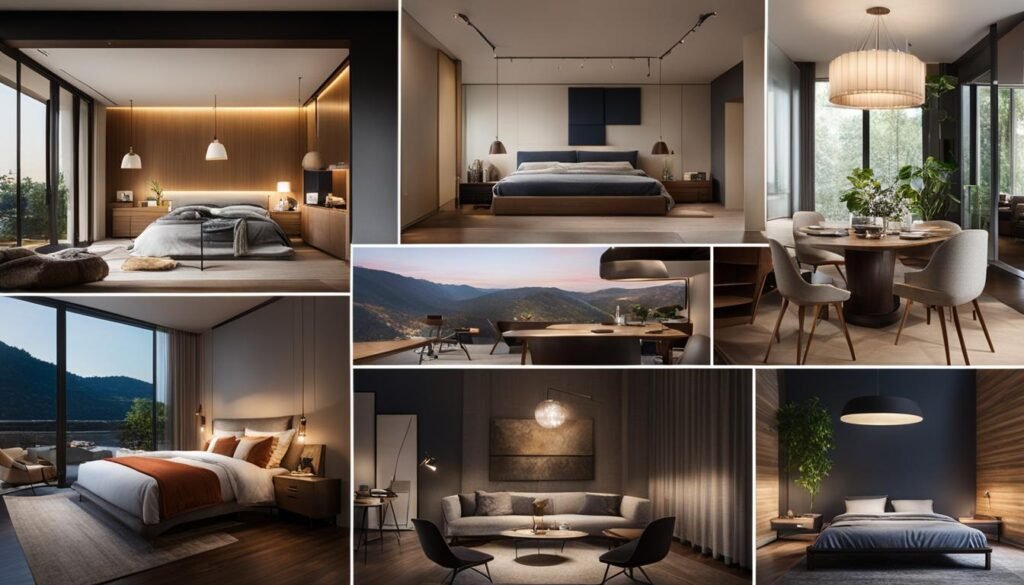
Through my experience, the essential interior design principles of lighting stem from a blend of ambient, task, and accent types. Each layer of light serves a unique purpose, and together, they introduce an inviting depth to any room. The ambient light offers a soft glow that sets the foundational mood, task lighting addresses functional areas for reading or work, and accent lighting spotlights the architectural features or treasured possessions.
Moreover, integrating natural light is not to be underestimated. It interacts with the color scheme of a room, changing dynamically throughout the day. Natural light’s interplay with materials and hues can transform the perception of space, revealing one of the top interior design guidelines – harmonizing artificial and natural light sources for a living, breathable design narrative.
- Choose lighting that corresponds with the room’s purpose; dazzling chandeliers for dining spaces or understated wall sconces for a serene bedroom.
- Position fixtures with precision, such as ensuring a chandelier is proportionate to the dining table, abiding by the rule of half to two-thirds the table’s width.
- Utilize dimmers for flexibility in a room’s ambience, adapting from a bright workspace during the day to a relaxed retreat by night.
By adhering to these top interior design rules, I carefully orchestrate a symphony of light that accentuates the beauty and functionality within every space. Lighting, when harnessed with mastery, does more than simply dispel darkness; it sculpts an interior into an experience, leaving a profound impact on those who enter.
Choosing and Placing Artwork with Precision
As I delve into the realm of interior design, I recognize that artwork is not just an accessory but a pivotal component that can dictate the ambiance of a room. To adhere to the necessary interior design rules, it is crucial to place these pieces with intent. I follow the fundamental design guidelines, which suggest that artwork should hang at a universally accessible eye level. This optimizes the connection between the piece and the viewer, ensuring an engaging experience at roughly 145cm from the floor to the midpoint of the art.
Eye-Level Framing for Artistic Balance
My practice in aligning artwork at eye level is more than a mere suggestion—it’s one of my unwavering interior design guidelines. By maintaining this standard, I create a gallery-like atmosphere within the home, allowing each piece to be appreciated fully without the need to strain or stoop. This approach carries the added benefit of providing a linear narrative as one moves through the space, drawing the eye with a rhythmic grace.
Harmonizing Art with Room Aesthetics
In the pursuit of a harmonious aesthetic, my guiding principle is context. Whether a piece stands on its own or is part of a collective gallery wall, its placement should harmonize with the surrounding interior elements—a fundamental design guideline I never overlook. The spatial relationship between art and furniture, complemented by the overall room decor, ought to be balanced, thus enhancing the cohesiveness of the space.
Fulfilling these necessary interior design rules is not an arbitrary task—it requires a keen eye for detail and a penchant for balance. Art, when placed with precision, has the capacity to transform a simple room into a sanctuary of expression and taste.
Save this article
Enter your email and we'll send it straight to your inbox.
Expanding Spaces with Mirrors
As I delve into the intricacies of interior design, one of my preferred key design rules involves the strategic use of mirrors to augment the perception of space within a home. The reflective power of a well-placed mirror can perform wonders, not only by bouncing light around a room to make it feel more expansive and airier but also by reflecting the beauty of your decor, doubling its presence and impact.
My crucial interior design tips include the use of large-scale mirrors to create focal points that draw the eye and expand visual space. For example, a mirror placed opposite a window brings in more natural light and offers views of the outdoors, effectively bringing the beauty of nature inside.
When working with rooms comprised predominantly of sharp angles and straight lines, I recommend introducing a mirror with a curvaceous frame or placing it to interrupt the linearity. This creates a more dynamic and inviting space. In compact areas such as entryways or corridors, mirrors can illuminate and give the illusion of a more generous area.
- Mirrors adjacent to unique artwork can double its visibility and appreciation.
- Strategically placing mirrors to reflect the glow of ambient lights enhances the room’s luminosity after sundown.
- In dining spaces, a mirror reflecting the table setting elevates the experience and ambiance of shared meals.
Furthermore, mirrors can also serve as an elegant solution for disguising imperfections or filling empty wall spaces. Reflective surfaces act as a canvas that dynamically changes with the environment, keeping the visual aesthetics fresh and engaging. In my design practice, mirrors are not just decorative elements but are pivotal to crafting an interior that feels as spacious as it is sophisticated.
Deliberate Selection of Surface Finishes
The spaces I craft are the embodiment of a narrative, a story where every detail contributes to the atmosphere I wish to imbue. As such, the selection of surface finishes is not a decision I take lightly. Comprising everything from the sleek sheen of a polished floor to the tactile allure of wall coverings, these elements are the underpinning of my designs, crucial in commanding the ambiance I envision.
When employing interior design rules of thumb, understanding the room’s function is paramount. My preference for flooring options like hardwood, with its warm, classic appeal, complements spaces that beckon for a touch of homeliness. Conversely, the clean, modern edge bestowed by concrete or tile flooring aligns itself with rooms that echo a more contemporary tone. The careful consideration of crucial interior design principles ensures a space is not just filled but thoughtfully curated.
Wall Treatments That Transform a Space
Wall finishes hold the power to utterly transform an area. My selection process weighs the room’s natural lighting and desired mood, deciding if walls should leap out as bold statements or weave seamlessly with the collective aesthetic. My aim is to create wall treatments that not only speak to the soul of the space but also enhance it, thus culminating the story told by the design.
Choosing a Flooring that Complements
The narrative extends underfoot with the choice of flooring. Hardwood offers whispers of tradition, while polished concrete mirrors the sleekness of a more modern tableau. Tile can evoke old-world charm or stark minimalism, highlighting my design’s versatility and attentiveness to such details. This intentionality in choosing a flooring that complements the space’s character is the hallmark of a designer who respects the craft.
Expressing Style with Window Dressings
My fascination with interior design has revealed the transformative impact that the right window dressings can have on a room’s aesthetics. Abiding by top interior design guidelines when selecting curtains not only defines the look but also sets the room’s mood. They are the crucial details that embody the important design principles of both luxury and functionality.
Finding the Right Curtain Length
Opting for curtains that gently touch or even gracefully puddle on the floor can convey a sense of opulence and fine taste. It is these crucial interior design principles that advocate for proper length, ensuring that the draperies do not fall short of elegance but rather sweep the observer off their feet—quite literally.
The Impact of Curtains on Room Dynamics
The influence of curtains extends beyond their appearance; it is about creating an important design principle within the room’s overall dynamics. By framing the windows, moderating the natural light, and adding texture, curtains provide a visual frame that accentuates the depth and compliments the room’s design scheme, epitomizing the essence of top interior design guidelines.
Incorporating Diverse Shapes for Visual Interest
As I delve deeper into the world of interior design, one of the essential interior design principles I always stand by is the infusion of diverse shapes to create a visually engaging space. It’s not just about aesthetics; it’s about shattering the common existence of squares and rectangles with a blend of curves and angles that offer tranquility to the eye. A prime example of this approach is the strategic placement of circular furniture pieces.
A round coffee table, for instance, brings softness to the rigid lines of a standard couch, inviting a more organic flow that enhances the room’s atmosphere. This interplay of shapes is one of the critical interior design rules of thumb that guides my work, ensuring that every room I touch is bestowed with its own unique character and charm.
- Integrating circular tables as focal points amidst angular furniture
- Using spherical lighting fixtures to add elegance overhead
- Incorporating rounded decor items that serve as conversation starters
In conclusion, when you blend circular elements with your existing decor, you create a counterbalance that is both pleasing and unexpected. It’s the sort of design detail that underscores the sophistication of a space, proving that in the world of interior design, the shape of things can indeed transform the shape of spaces.
Conclusion
In my endeavors to refine interior environments, I’ve consistently relied upon certain interior design rules that serve as the foundation for crafting spaces that exude elegance and balanced aesthetics. The journey through design is a dance between the tangible elements of form and the intangible qualities of light and space. Each step, from the calculated placement of furniture to the thematic statements made by artwork, is choreographed by important design principles.
With the application of top interior design guidelines, any space, regardless of size or function, can transform into an inviting and expressive home interior. As I share these principles, my aim is to empower you to see beyond the mere arrangement of objects within a room, to envision a cohesive narrative woven through every choice, from the grand statement pieces to the subtlest of window dressings. It’s the attention to every detail that crafts not just a room, but a story worth living in.
Ultimately, the true artistry in interior design lies within the balance—melding personal style with practicality, tradition with innovation, and bold statements with quiet subtleties. Whether you’re a seasoned designer or a fervent home decor enthusiast, these guidelines are your compass to navigate the vast seas of design options, ensuring that every decision leads you closer to a harmonious haven that’s uniquely yours.
FAQ
What are the basic interior design principles for furniture sizing?
The basic interior design principles for furniture sizing focus on understanding proportions. It’s about selecting pieces of furniture that are relative to the size of your room, leaving appropriate space for movement and aesthetic balance. For example, there should be about 45cm between seating and a coffee table, and a coffee table should be about two-thirds the length of the couch it’s paired with. Accurate measurements help create a space that is both functional and stylish.
How do I select a hero piece for my interior design?
A hero piece can be an oversized piece of furniture, a striking work of art, a vibrant rug, or a painted feature wall that captivates attention and enlivens the space. It should resonate with your personal style and create a harmonious design by echoing its color or form throughout the room. The hero piece should be central to establishing a space with a lasting impression and character.
Can you explain the concept of layering in interior design?
Layering in interior design refers to the thoughtful combination of color, texture, pattern, and fabric to create depth and character in a space. Start by selecting a dominant fabric, such as curtains or a rug, as your foundation, and add layers with smaller-scale textiles like cushions and throws. This practice enriches the space’s texture and adds individuality with various accessories that provide depth and interest.
What are some interior design rules for enhancing the sense of space?
To enhance the sense of space in interior design, you can arrange furniture strategically, particularly in rooms with low ceilings. Use low-profile furniture to draw the eye upward and paint walls, skirting boards, and ceilings in a unified color to blur boundaries and expand the visual space. Mirrors are also excellent tools for expanding visual space, adding light and depth to a room.
What is the best practice for interior lighting?
Best practices for interior lighting involve utilizing a mix of ambient, task, and accent lighting to add depth and dimension to a room. It’s crucial to take advantage of natural light and choose fixtures that maintain proportionality with the furnishings, such as chandeliers or pendant lights, which should be half to two-thirds the width of the surface they are illuminating.
How should artwork be chosen and placed within a room?
Artwork should be chosen based on the tone you want to set for the room and placed at eye level, around 145cm from the floor to the center of the piece, to create an accessible visual connection. Consider the artwork’s relationship to its surroundings, ensuring that it is proportionally balanced with furniture and complements the room’s overall aesthetics.
How can mirrors expand space in interior design?
Mirrors add light, depth, and the illusion of extra space to a room. They serve as elegant hero pieces when strategically placed to reflect views and amplify the dimension of a room. Mirrors can also balance the regularity of shapes, especially in rooms with lots of angular furniture, to create a sense of variety and visual flow.
What should I consider when choosing surface finishes like flooring and wall treatments?
When selecting surface finishes such as flooring and wall treatments, consider the function of the room and the mood you want to set. Hardwood floors may offer a warm, classic look, while concrete and tiles can provide a clean, modern edge. Wall finishes should match the room’s lighting conditions and either stand out as a statement or blend smoothly with the overall decor, enhancing the room’s narrative.
What are some essential design rules for window dressings?
For window dressings, ensure the curtains are the correct length, which often means touching or slightly pooling on the floor, and wide enough—with a combined width of panels that is 1.5 to 2 times the width of the window. Proper window treatments contribute to a room’s elegance by framing views, controlling light levels, and adding texture and color to the design.
How do diverse shapes contribute to interior design?
Integrating a mix of shapes can introduce an exciting visual dimension to a space, breaking the uniformity of the predominant squares and rectangles in furniture design. Incorporating curved elements, like round tables or mirrors, adds an organic flow and provides a visual counterbalance to structured forms, infusing dynamism and appeal into the space.
Save this article
We'll email you the link so you can find it again later.


