

As an enthusiast delving into the rich tapestry of interior design history, I find it fascinating to trace the art’s evolution. The field has persistently mirrored the beauty, functionality, and cultural undercurrents of its time. From the ancient Egyptians’ bold aesthetics to the present day’s sleek minimalism, interior design has undertaken a tremendous journey. We can appreciate this journey by exploring the significant milestones in interior design history and understanding how they inform our current design landscape.
The curiosity to understand the evolution of interior design brings me to a crossroads where the past informs the present and inspires the future. This crossroads is where the heart of my work lies—to inform others about the pivots and strides in historical interior design and their influence over today’s living spaces.
Key Takeaways
- Understanding the progression from ancient luxurious aesthetics to modernist minimalism in design.
- Recognizing the cultural and technological factors that have shaped interior design over centuries.
- Appreciating how ancient civilizations set the initial path for interior design aesthetics.
- Gaining insights into the influence of historical styles on contemporary interior design strategies.
- Exploring the impacts of societal shifts on the evolution and future trends in the field of design.
Ancient Inspirations: The Birthplace of Historical Interior Design Styles
As a passionate explorer of the history of design styles, my journey takes me back to when interior design began—a time when ancient civilizations not only built the foundation for contemporary spaces but also infused their culture and worldviews into their habitats. It’s fascinating to see how historical interior design styles have evolved from these ancient roots, each civilization contributing its page to the rich tapestry of our design heritage.
A Dive into Ancient Egyptian Opulence
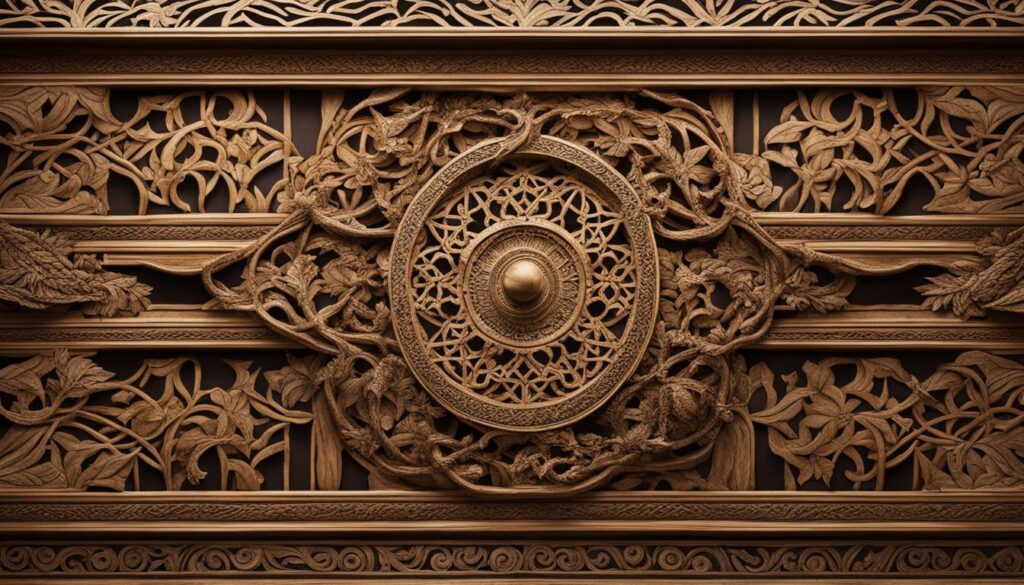
The grandeur of ancient civilizations interior design starts with the Egyptians. I am continually amazed by their use of bold colors in the living quarters of the elite—colors that represented divinity and life itself. Hues of red, blue, and gold were not merely aesthetic choices but reflective of their rich culture and beliefs. This union between functionality and elaborate symbolism marks a significant milestone in what feels like the very inception of the interior design story.
Greek Contributions to Balance and Beauty
The Greeks took a different yet equally impactful approach to interior design. Their contribution was through the emphasis on balance and beauty via simplicity. Incorporating geometric shapes and clean lines, they believed in a sense of harmony that is still appealing in modern design. It’s as if their historical interior design styles whisper the secrets of proportion and aesthetic principles that remain relevant today.
Roman Love for Luxury and Detail
Last, but certainly not least, the Romans’ appetite for luxury and detail has never ceased to capture my imagination. They embraced opulence through the use of marble, mosaics, and intricate adornments, elevating rooms from mere spaces to a stage for displaying wealth and sophistication. Their interiors, rich in texture and depth, carved a distinct niche in the history of design styles that continues to inspire the lavish elements in some of today’s high-end designs.
These epic beginnings of historical interior design styles impart invaluable lessons that guide current design philosophies and will undoubtedly echo into the creations of our future spaces. It is important to recognize and appreciate this heritage, as it provides a lens through which we can reflect on the trajectory of design that has brought us to our present aesthetic landscape.
Medieval Interiors: The Essence of Gothic and Romanesque Influences
As I delve into the historical interior design trends, it becomes clear that the medieval period represents a pivotal transition within interior design periods. Moving away from the Roman splendor that focused heavily on ornate aesthetics, medieval interior design pivoted towards a more functional approach before embracing the grandeur of Gothic influence.
The Shift from Roman Splendor to Medieval Functionality
In the aftermath of the Roman Empire’s fall, the European continent witnessed the rise of medieval architecture, which, in its infancy, chose utility over decoration. Homes and public buildings were simple, constructed mainly to serve their primary purposes. Yet, this functional viewpoint laid a robust foundation for the flourish of creativity that would follow.
Understanding Gothic Grandeur
When one thinks of historical interior design trends, Gothic architecture’s influence remains undeniable. The architectural grandeur that we associate with the medieval era is often thanks to the Gothic style. From the soaring arches to the celestial height of cathedral ceilings, the Gothic approach influenced not only architecture but also the interior spaces within.
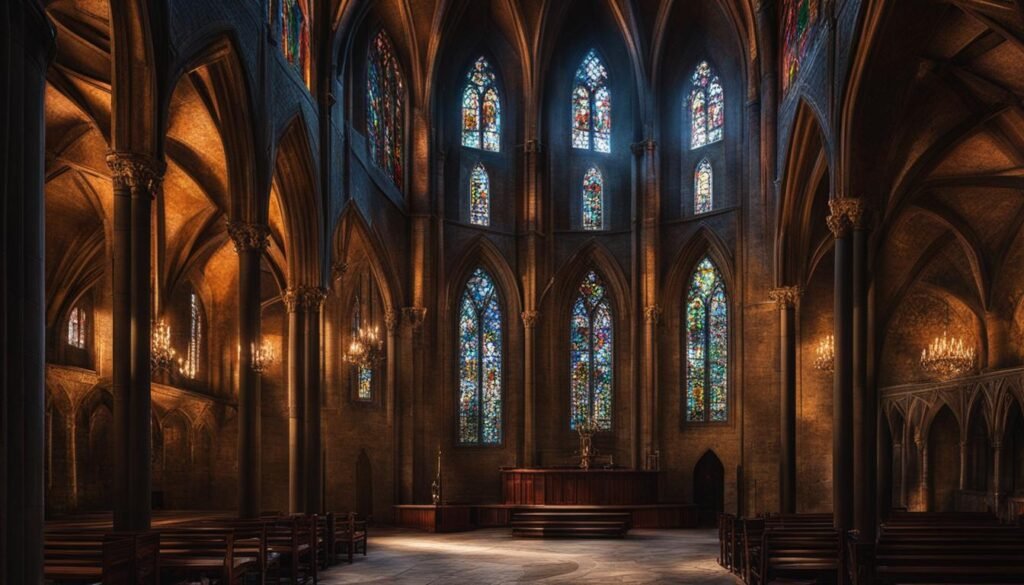
- The introduction of pointed arches and vaulted ceilings transformed the ambience of interiors, turning them into awe-inspiring spaces that connected earth and sky.
- Stained glass windows began to play a significant role not only as art but also in diffusing natural light that would illuminate interiors with vibrant colors.
- Heavy tapestries adorned the walls, providing both warmth and storytelling through intricate patterns and imagery, setting the stage for future design innovation.
Gothic elements led to interiors that felt both monumental and inviting, a departure from the previous era’s starkness. Despite the nagging misassumption that medieval interior design was dreary, this period planted the seeds of dramatic opulence that would influence centuries to come.
The Renaissance Transformation in Interior Design History
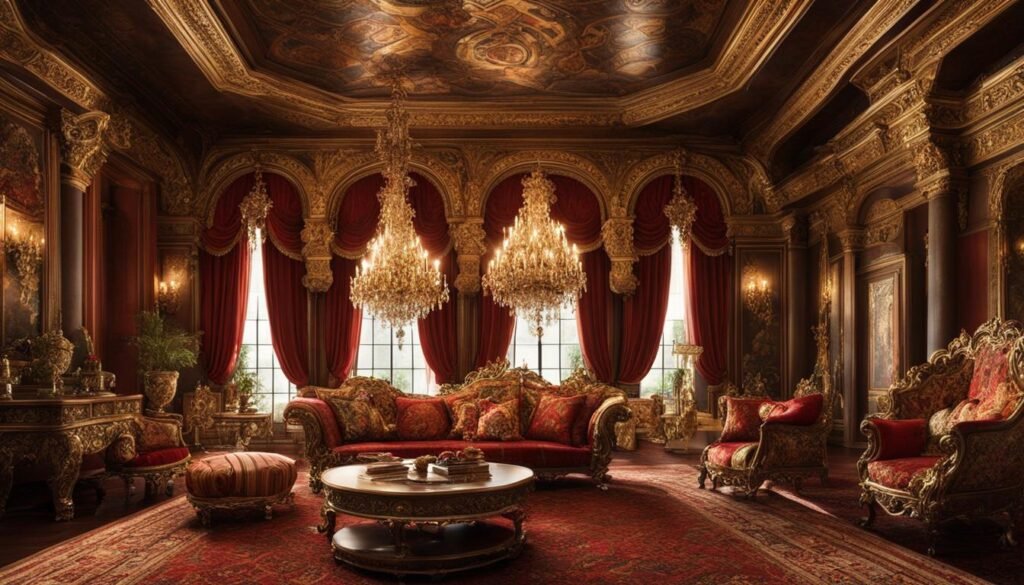
The opulence of the era was marked by a harmonious blend of art and architecture, creating an ambience that was both grand and intimate. Imagine walking through rooms where the ceilings told stories through intricate frescoes, and each piece of furniture was a testament to the artisan’s craftsmanship. The influential interior design movements of the Renaissance were driven by an admiration for classical antiquity, which meant a return to symmetry, proportion, and a celebration of the decorative arts that echoed the values of Greece and Rome.
- Resurgence of Classical Ideals – Interiors were designed with an eye for classical principles, seeking inspiration from the humanist ideals of balance and harmony.
- Lavish Use of Materials – Spaces were adorned with luxurious materials like velvet, silk, and brocade, alongside rich woods and gilded accents.
- Frescoes and Ceiling Art – Ceilings became canvases for artists to depict mythological and historical narratives, while walls were often lined with tapestries that insulated and embellished.
- Intricate Details – From coffered ceilings to elaborate fireplace mantels, the Renaissance brought a thoughtful complexity to interior elements that aimed to reflect perfection in every detail.
Through my explorations, I have come to appreciate how this era laid the groundwork for future design philosophies. The Renaissance’s legacy continues to inspire and evolve, as contemporary designers find innovative ways to weave its timeless principles into the fabric of today’s interior spaces. Truly, this era remains an indelible part of the tapestry that is Renaissance interior design history, painting a backdrop for our ongoing quest for beauty and function in design.
The Baroque and Rococo Periods: A Display of Dramatic Excess
As I delve into the intricate tapestry that is the interior design history timeline, I am captivated by the lavish historical interior design of the Baroque and Rococo periods. These epochs exemplify a zenith of artistic achievement, each with their distinct flair and cultural impact. The Baroque period’s interior design opted for sublime complexity to reflect the power of the church and nobility, while the Rococo era danced to a different tune, a more light-hearted and ornamental style that came to be revered for its aesthetic playfulness and charm.
The Baroque Style: A Visual Language of Power and Control
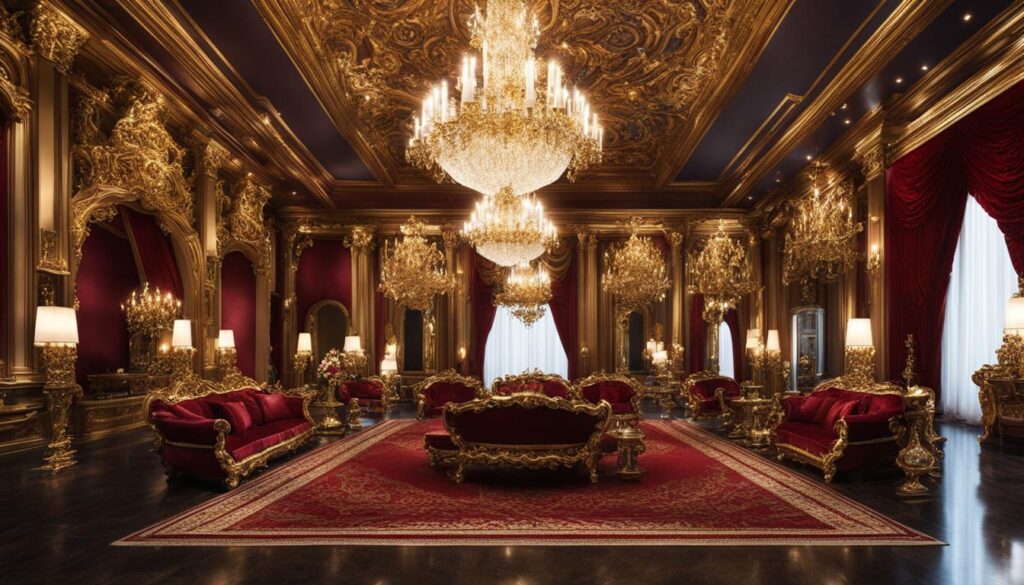
The Baroque era in interior design, historically spanning the 17th century, was a formidable force that utilized Baroque style interior design to communicate strength and dominance. Grandiose spaces were created, boasting sweeping curves, grand frescoes, and a dramatic use of light and shadow that seemed to bring the divine closer to earth. No element was too opulent; surfaces gleamed with the various textures of velvet, silk, and brocade, complemented by intricate gilded wood and meticulous stucco work. The palaces and churches of the time were the canvases upon which masters of the period such as Bernini and Borromini exhibited an almost theatrical lavishness.
Rococo Playfulness: An Affair with Lightness and Whimsy
In contrast to its predecessor, Rococo period significance lies in the enchanting escape it offered from the imposing grandeur of the Baroque. Originating in 18th century France, Rococo was celebrated for interiors that spoke of leisure and intimacy. With a penchant for assemblages of light pastels, the spirited use of asymmetry, and motifs inspired by nature, such as shells and flowers, Rococo interiors were a departure towards a more cheerful and decorative elegance. The salons of Paris became arenas for the elite to surround themselves with the delicate and intricate, a nod to the splendor they held dear, yet with a lightness that made it all the more inviting.
In my reflections on the opulence of the Baroque and Rococo periods, I am reminded of the power of interior design to not just capture the essence of its time but also to influence societal aesthetics and serve as a lasting symbol of cultural sophistication. These periods in our interior design history timeline have left behind an indelible mark of how spaces can encapsulate grand narratives and personal tales, all through the meticulous arrangement of form, texture, and color.
Interior Design History Through Neoclassical Clarity and Victorian Complexity
As I journey further into the history of interior design styles timeline, my exploration reveals a poignant contrast between the unadorned elegance of Neoclassical interior design and the intricate diversity of Victorian-style influence.
Neoclassical Design: Rebirth of Antiquity’s Grace
The Neoclassical style marked a resurgence of the timeless beauty found in ancient Greek and Roman architecture. Spaces designed in this style were synonymous with symmetry, harmony, and geometric clarity. This revival of antiquity emphasized grand columns, elegant pilasters, and a palette leaning towards muted tones with occasional bursts of captivating color. The value placed on light and airy rooms was perhaps a response to the periods of heavy ornamentation that preceded it.
Victorian Interiors: An Eclectic Fusion of Ornamentation
Contrastingly, the Victorian era encapsulated a veritable patchwork of historical influences, giving life to eclecticism in its truest form. Environments from this period were masterclasses in maximalism—walls were covered in opulent wallpapers, floors in elaborate carpets, and ceilings in decadent chandeliers. The Victorian devotion to an abundance of decorative details laid the groundwork for an interior design ethos that yearned to both impress and express—a microcosm of the industrial revolution’s wealth and progress.
My analysis reveals that the fabric of interior design history is a tapestry woven with threads of both simplicity and grandeur. The oscillation between these ideals continues to inspire contemporary designers, who draw upon the ideals of the Neoclassical for understated sophistication and the exuberance of the Victorian for lavish embellishment.
Interior Design Movements: Breaking Traditions with Modernism
The dawn of the 20th century was a transformative period for the arts and interior design witnessed perhaps the most radical shift with the rise of Modernism in interior design. Influenced by the technological advances and the changing social landscape, Modernism came to define modern interior design trends throughout history. My outlook on this era spotlights the essential precepts of functionalism and simplicity, hallmarks of this revolutionary movement.
Save this article
Enter your email and we'll send it straight to your inbox.
Reflecting back on my own professional experience, the principles of the Bauhaus School have consistently infiltrated modern aesthetics. This institution championed a philosophy that merged form with function, where every object’s design should be dictated by its purpose. It was this principle that became the guiding light for Modernism, promulgating an elegant, unembellished style that signified an absolute break from traditional interior styles.
- Rejection of ornate and cluttered designs in favor of clarity and function
- Utilization of industrial materials such as steel, glass, and concrete to create streamlined furnishings
- Incorporation of open-plan layouts to foster a sense of freedom and flow within living spaces
- Emphasis on horizontal and vertical lines, creating a sense of calm uniformity
In my evaluation, the ethos of Modernism not only reshaped our physical spaces but also redefined the conceptual landscape of design thinking. By stripping away the excesses of the past and focusing on essentials, Modernism established a new vocabulary for the art of interior design. Today, we see these trends reinterpreted and evolved, as modern designers continue to build upon the legacy of the Bauhaus and Modernist pioneers.
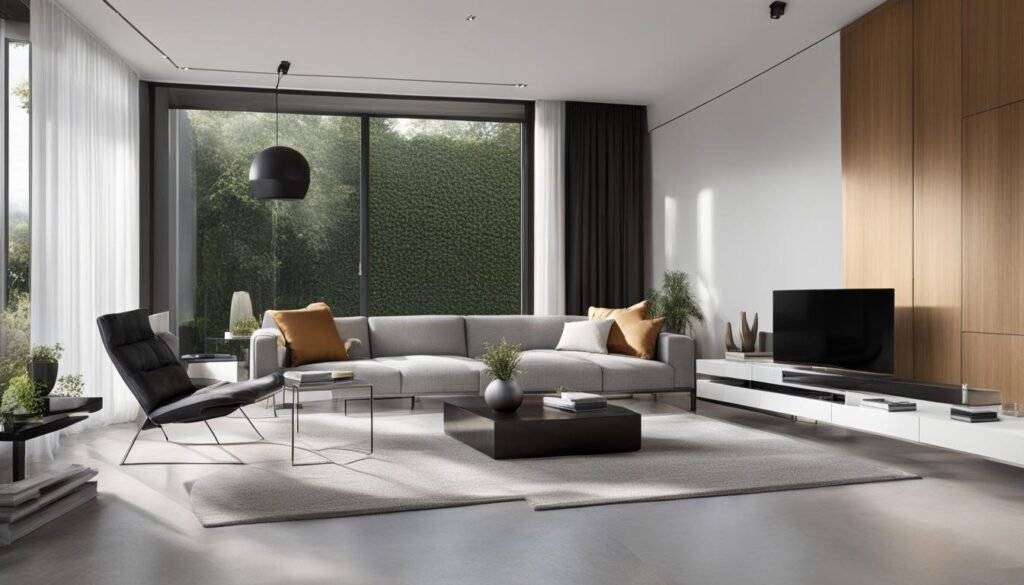
Postmodernism to Present Day: Eclecticism and Technological Integration
As I delve into the heart of postmodern interior design, it’s clear that the era embraced an exploration beyond the rigid rules of modernism. With a nod to the quirkiness of pop culture and the depth of historical themes, postmodernism transformed the approach to creating spaces. We explored this eclectic mix by introducing unexpected contrasts and vibrant patterns, which are now considered milestones in the design timeline.
The Playful Spirit of Postmodernism
The freedom that postmodernism brought to the design table is still palpable today. It provided a platform where self-expression and identity could be boldly showcased through design. I recall selecting whimsical furniture that paid homage to classical forms but boldly painted in neon, an echo of both the historical reverence and the playfulness inherent to postmodern principles. The texture and color became a language of irony, one that laughingly said, ‘Let’s not take this too seriously.’
Embracing Sustainability and Minimalism in Modern Interior Design
Fast forward to today, and I find that my design narrative frequently includes conversations around sustainability in design. Clients are not just interested in aesthetics; they’re deeply invested in ecological impact as well. This shift has prompted a beautiful marriage between design and nature—using recycled materials, implementing energy-efficient solutions, and advocating for a minimalist ethos that emphasizes quality over quantity.
- Reclaimed wood accents signifying a return to natural, sustainable materials
- LED lighting replacing traditional incandescent bulbs for a greener living space
- Smart home systems indicating the pinnacle of technological advancements in interior design
Moreover, as a professional interior designer committed to innovation, I’ve incorporated technological advancements seamlessly into my projects. Smart homes offer convenience and efficiency, allowing us to design spaces that are not only beautiful but also intuitively aligned with the occupant’s lifestyle. This approach to design demonstrates that when technology partners with aesthetics, the resulting environment is powerfully transformative.
Understanding the Significance of Interior Design History
As I delve into the realm of interior design, it becomes increasingly clear that the layers of history behind each stylistic choice form a rich tapestry narrating our cultural evolution. The significance of interior design history cannot be overstated, for it is not merely a record of aesthetic preferences but a mirror to societal shifts, technological advancements, and artistic movements that continue to influence the spaces we inhabit today. To truly master the art of interior design, I believe one must be attuned to this historical dialogue, allowing the whispers of the past to guide contemporary creations.
Learning from the Past: Historical Influences on Modern Interior Design
My exploration into the historical influences on modern interior design reveals a fascinating interplay of tradition and modernity. From the opulence of ancient civilizations to the restraint of the Bauhaus movement, these diverse chapters of history imbue modern design with a depth of character. By studying the principles and preferences of previous eras, I gain invaluable insights that enable me to blend the old with the new, crafting spaces that speak to both the past and the future. This process is not only a homage to bygone eras but a foundation upon which I can build innovative and forward-thinking designs.
Continuity and Change: The Timeline of Interior Design Evolution
The timeline of interior design evolution is marked by a fluid yet unbroken thread of continuity and change. Each epoch, from baroque grandiosity to postmodern eclecticism, serves as a foundation for the next, ensuring a chronological progression while still allowing for radical transformation. My study of this progression—this interior design history exploration—equips me with a predictive lens to gauge future directions in the field. Understanding where we have been allows me to anticipate where we are going, preparing to meet tomorrow’s design challenges with informed creativity and sustaining innovation.
FAQ
When did interior design as a profession actually begin?
Interior design as a recognized profession began to take shape in the 18th century, although the practice of creating designed interior spaces dates back to ancient civilizations. The profession became more formalized with the establishment of interior design schools and professional bodies in the 20th century.
How did ancient Egyptians influence interior design?
Ancient Egyptians are known for integrating bold colors, such as red, blue, and gold, into their interiors as well as intricate hieroglyphic and pictorial decorations. Their use of space and furnishings reflected a balance between aesthetic appeal and functional living, laying foundational principles for future design.
What are the key characteristics of Greek interior design?
Greek interior design emphasized harmony, proportion, and balance, utilizing geometric shapes and clean lines. The Greeks favored simplicity and precision, which have influenced the principles of design throughout history and continue to resonate in contemporary aesthetics.
How did Roman interior design differ from that of the Greeks and Egyptians?
Roman interior design built upon Greek foundations but introduced a level of luxury and detail that was unprecedented. They incorporated lavish materials such as marble and mosaics, and their interiors often featured expansive rooms, ornate furnishings, and intricate frescoes.
Why is the Gothic period considered significant in the history of interior design?
The Gothic period marked an era when design transitioned from the functionality of earlier medieval times to a grandeur reflected in towering cathedrals and palaces. This era introduced elements like pointed arches, ribbed vaults, and stained glass, which have influenced architectural and interior design lasting into the modern era.
What was the transformation caused by the Renaissance in interior design?
The Renaissance transformed interior design by reintroducing classical principles of symmetry, proportion, and perspective. This period saw an infusion of arts, such as frescoes and sculptures, into interiors, creating spaces that were both opulent and harmoniously balanced.
How do the Baroque and Rococo styles differ in terms of interior design?
Baroque style is characterized by its grandeur, drama, and dynamic movements, often featuring bold colors and contrasting light and dark elements. Rococo, in contrast, is more playful and whimsical, with light pastel colors, delicate ornaments, and asymmetrical designs. Both styles reflect the desires for extravagance and luxury of their times.
What marks the Neoclassical period in interior design?
The Neoclassical period’s hallmark is its return to the classic principles of ancient Greek and Roman design, favoring symmetry, simple geometries, and a restrained approach to ornamentation. This period sought to capture the essence of antiquity’s disciplined beauty.
How did Victorian interior design contrast with the Neoclassical style?
Victorian interior design contrasted sharply with the Neoclassical style by embracing eclecticism and excess. It often involved combining various historical styles and featured ornate furnishings, rich textures, and an abundance of decorative details, creating visually dense and diverse interiors.
What impact did Modernism have on interior design trends?
Modernism dramatically influenced interior design by promoting the idea of “form follows function.” This led to a reduction in ornamental excess, a focus on simplicity, and the usage of new materials and technologies to create functional, streamlined, and aesthetically clean spaces.
How does the sustainability trend influence modern interior design?
Sustainability has become a significant part of modern interior design, pushing designers to consider the environmental impact of materials, promote energy efficiency, and create spaces that minimize waste. The integration of natural elements and ecological principles is now a central component in contemporary design planning.
In what ways does learning historical interior design styles impact modern design?
Learning historical interior design styles provides designers with a deep well of inspiration and understanding of the cultural and aesthetic lineage of spaces. It enables them to discern patterns, adapt timeless principles to contemporary needs, and create innovative designs that resonate with historical significance.
Why is it important to appreciate the timeline of interior design evolution?
Appreciating the timeline of interior design evolution is critical to understanding how cultural shifts, technological advancements, and artistic movements have shaped the spaces we inhabit. It offers insights into how past styles inform current trends and helps forecast future developments in design.
Save this article
We'll email you the link so you can find it again later.


